
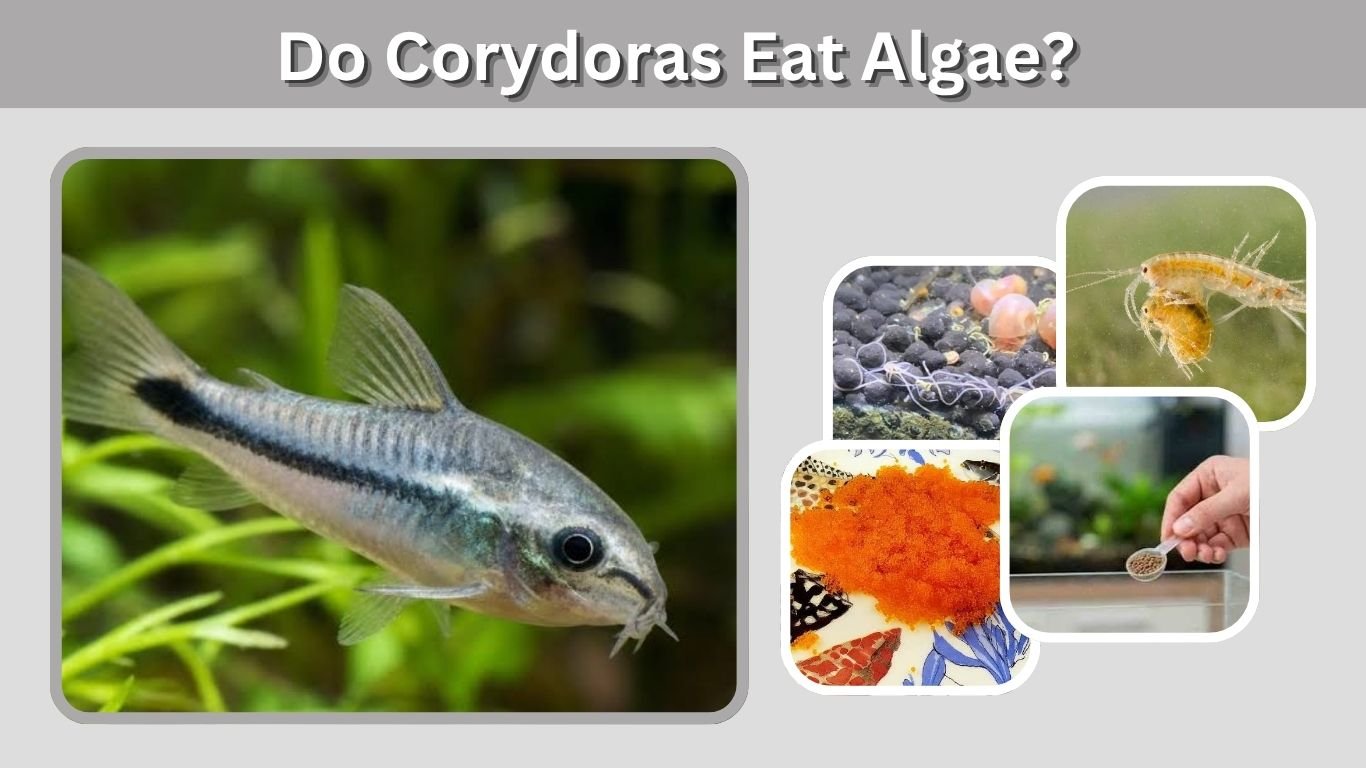
Corydoras catfish spend much of their day exploring the bottom of an aquarium, which often makes them look like algae eaters. However, their constant searching does not mean they can survive on algae or leftover fish food. These peaceful catfish need a varied diet that includes sinking pellets and protein-rich foods. Understanding what Corydoras actually eat also helps aquarium owners protect shrimp, snails, and baby fish. This guide explains their natural diet, feeding habits, and the foods that keep them healthy in a community tank.
Do Corydoras Eat Algae?
Corydoras may accidentally consume small amounts of algae while searching for food, but they are not true algae-eating fish. Their mouths are designed for collecting small food particles and invertebrates rather than scraping algae from aquarium surfaces.
Unlike Otocinclus catfish, Corydoras cannot effectively remove algae growing on glass, rocks, or decorations. They primarily search the substrate for edible organisms and food particles.
Sometimes, Corydoras appear to eat algae because they are searching for tiny organisms living within algae and biofilm.
Even pygmy, panda, and albino Corydoras are not dependable algae eaters. They require regular feeding with nutritionally complete aquarium foods.
For controlling aquarium algae, Otocinclus catfish, nerite snails, and Amano shrimp are generally better choices, provided their individual care requirements are met.
Can Corydoras Eat Algae Wafers?
Yes, Corydoras can eat algae wafers. Many commercial wafers contain fish meal, plant ingredients, vitamins, and other nutrients that make them attractive to bottom-feeding fish.
However, algae wafers should not automatically become their only food. Choose a nutritionally complete sinking food suitable for Corydoras and supplement it with appropriate animal-based foods.
What Do Corydoras Eat?
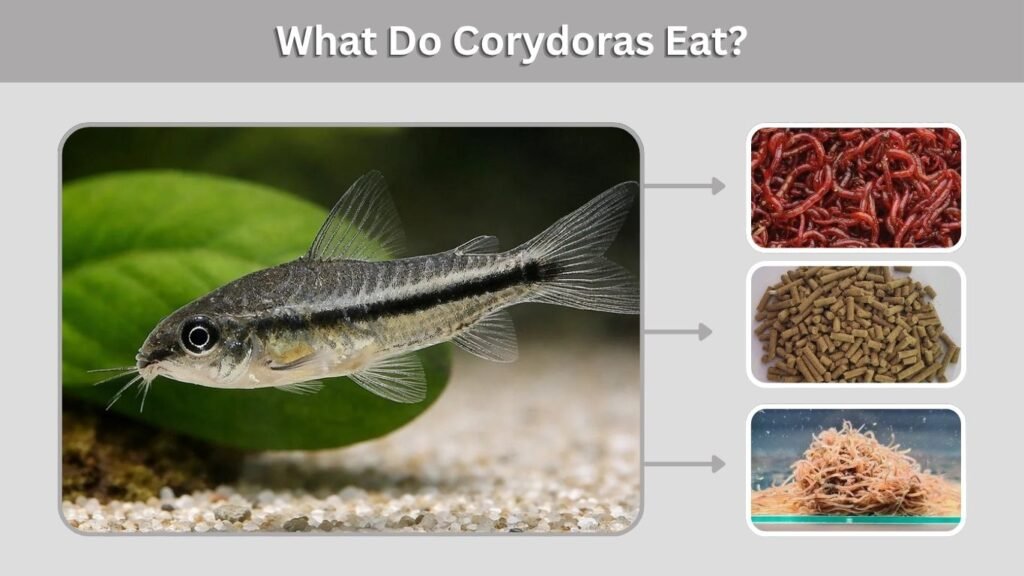
Corydoras are omnivorous bottom feeders that consume both animal-based and some plant-derived material. Their diet naturally contains substantial amounts of small aquatic invertebrates.
Providing different food types supports healthy growth, normal activity, and successful breeding.
What Do Corydoras Eat in the Wild?
Wild Corydoras inhabit freshwater rivers, streams, and other aquatic environments in South America. They explore sandy or muddy surfaces using their sensitive barbels to locate food.
Their natural diet can include insect larvae, small worms, tiny crustaceans, and edible organic particles. Some algae and plant material may be swallowed during feeding, but these are not their primary nutritional sources.
Best Foods for Corydoras Catfish
The following foods are suitable for most aquarium Corydoras:
- Sinking pellets: Provide balanced nutrition and reach fish feeding near the substrate.
- Bloodworms: Offer animal protein and work well as occasional treats.
- Brine shrimp: Supply additional nutrition and encourage natural feeding behavior.
- Daphnia: Small aquatic crustaceans suitable for many Corydoras species.
- Blackworms: Encourage natural foraging and provide protein.
- Sinking wafers: Convenient foods that can provide a mixture of animal and plant nutrients.
A high-quality complete sinking food should form the foundation of their diet, with frozen or live foods providing variety.
What Do Pygmy Corydoras Eat?
Pygmy Corydoras are miniature catfish with extremely small mouths. They eat many of the same foods as larger Corydoras, but their meals must be appropriately sized.
They enjoy tiny crustaceans, microscopic aquatic organisms, baby brine shrimp, microworms, and finely crushed sinking pellets.
Pygmy Corydoras may also pick at biofilms containing microorganisms. However, they cannot survive on biofilm or algae alone.
Unlike larger Corydoras, pygmy Corydoras frequently swim through the middle levels of an aquarium. Offering small foods that slowly sink helps them feed naturally.
A mixture of finely crushed complete pellets and occasional live or frozen foods provides good dietary variety.
Do Albino and Panda Corydoras Eat Algae?
Albino and panda Corydoras follow similar feeding patterns. Neither is an effective algae cleaner.
Both benefit from quality sinking foods, small worms, brine shrimp, and other suitable aquarium foods. Their feeding requirements depend more on species, size, and nutritional needs than body coloration.
Do Corydoras Eat Shrimp?

Corydoras generally coexist peacefully with adult freshwater shrimp, including cherry shrimp and Amano shrimp.
Most Corydoras do not actively hunt healthy adult shrimp. Their relatively small mouths and gentle feeding behavior make them suitable companions in many community aquariums.
However, newly hatched shrimp are small enough to be eaten accidentally or opportunistically.
Shrimp babies hiding among plants or searching for food near the substrate may encounter foraging Corydoras.
Dense Java moss, other fine-leaved plants, and small hiding spaces can improve shrimp survival. Nevertheless, a separate breeding aquarium offers greater protection for baby shrimp.
Do Corydoras Eat Snails?
Corydoras generally do not eat healthy adult aquarium snails. Their mouths are not designed for crushing hard shells, making them ineffective for controlling snail populations.
Small baby snails or exposed snail eggs may occasionally be consumed while Corydoras search for food.
However, this behavior is inconsistent and should not be considered reliable snail control.
Most Corydoras can live peacefully with nerite, mystery, and other common aquarium snails.
If unwanted snails become numerous, reducing excess food and manually removing snails is usually more effective than relying on Corydoras.
What Else Do Corydoras Eat?
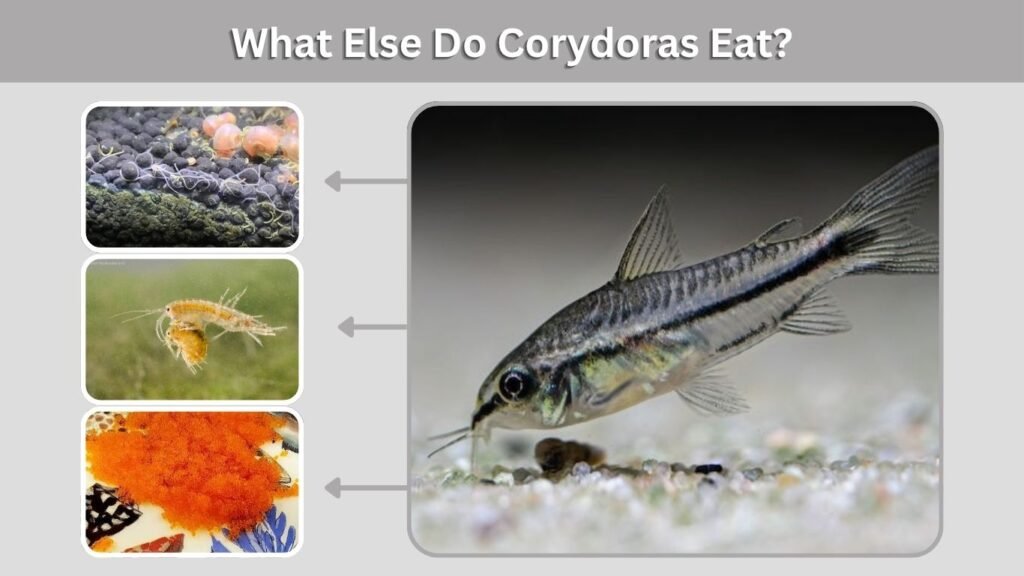
Corydoras are opportunistic feeders, meaning they sometimes consume small organisms they encounter while foraging.
However, not everything they investigate is suitable as a regular food source.
Small Organisms and Aquarium Waste
- Detritus worms: Corydoras may eat small worms found in the substrate.
- Planaria: They may occasionally consume small flatworms but cannot reliably control infestations.
- Scuds: Small individuals may be eaten when they are accessible.
- Fish fry: Newly hatched guppy fry or other tiny fish may be eaten opportunistically.
- Fish eggs: Corydoras can consume exposed eggs, including their own.
- Dead fish: They may scavenge dead animals, but dead fish should be removed promptly.
- Fish poop: Corydoras may investigate waste but do not use fish feces as a nutritious food source.
Corydoras may also nibble soft vegetables such as blanched zucchini or cucumber, although individual fish vary in their interest.
Healthy aquarium plants are generally safe from Corydoras feeding. These catfish do not normally consume substantial amounts of living plant tissue.
How to Feed Corydoras Properly
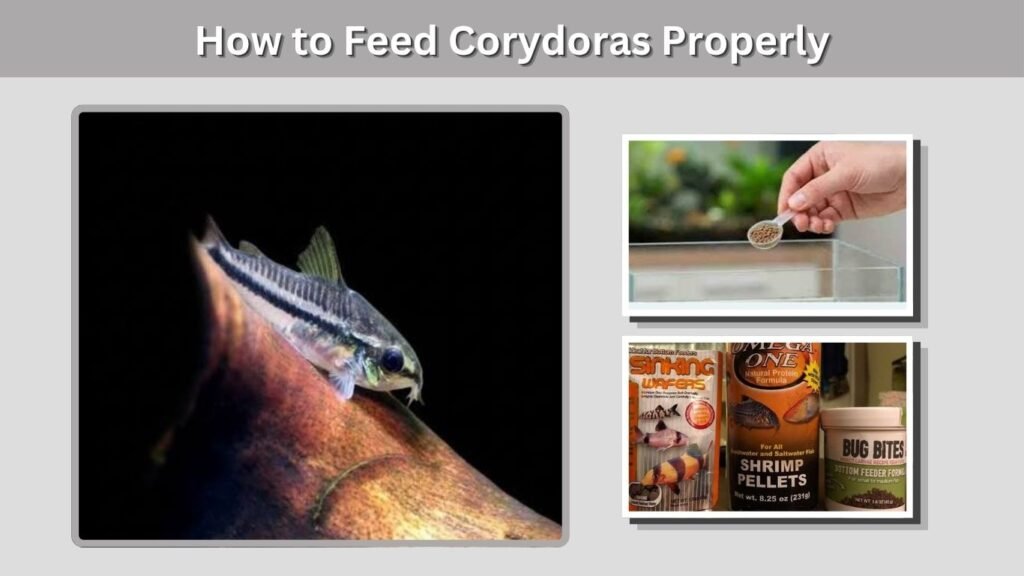
Feeding Corydoras requires more attention than simply allowing leftover community fish food to reach the bottom.
Because they are relatively slow feeders, faster tank mates may consume their food before they receive enough.
Essential Feeding Tips
- Feed daily: Offer one or two appropriately sized meals, adjusting portions to the fish’s needs.
- Use sinking foods: Ensure food reaches areas where Corydoras naturally forage.
- Provide variety: Combine complete commercial food with occasional frozen or live treats.
- Distribute food: Place food in several locations so less assertive fish can eat.
- Monitor leftovers: Remove uneaten food before it decomposes and affects water quality.
How to Tell if Corydoras Are Eating Enough
Healthy Corydoras usually demonstrate active foraging, steady growth, and appropriately rounded bodies.
An unusually sunken belly, prolonged food refusal, or unexplained weight loss may indicate insufficient feeding or illness.
Observe individual fish during meals rather than assuming everyone receives food.
If Corydoras stops eating, check aquarium water quality, food availability, temperature, and potential competition from tank mates.
FAQs
1. Do Corydoras Eat Hair Algae?
Corydoras do not effectively consume hair algae. They may explore algae-covered surfaces while searching for tiny organisms, but they cannot remove significant algae growth. Proper maintenance and appropriate algae-eating species are better solutions.
2. Do Corydoras Eat Their Own Eggs?
Yes. Adult Corydoras sometimes eat their own eggs after spawning. Removing eggs to a separate, properly maintained breeding container can improve survival rates and protect developing embryos from hungry adults.
3. Can Corydoras Eat Bloodworms Every Day?
Bloodworms are suitable for Corydoras, but they are best offered as part of a varied diet rather than the only daily food. A complete sinking food should provide their essential nutrients.
4. Do Corydoras Eat Baby Guppies?
Corydoras may eat newly born guppy fry if they encounter them and can fit them into their mouths. However, they are not active fry hunters. Dense vegetation can provide protection for vulnerable baby fish.
5. Do Corydoras Eat Fish Poop?
No. Corydoras do not depend on fish poop for nutrition. They may accidentally pick up waste while searching the substrate, but aquarium maintenance remains necessary to remove accumulated debris and maintain healthy water conditions.