
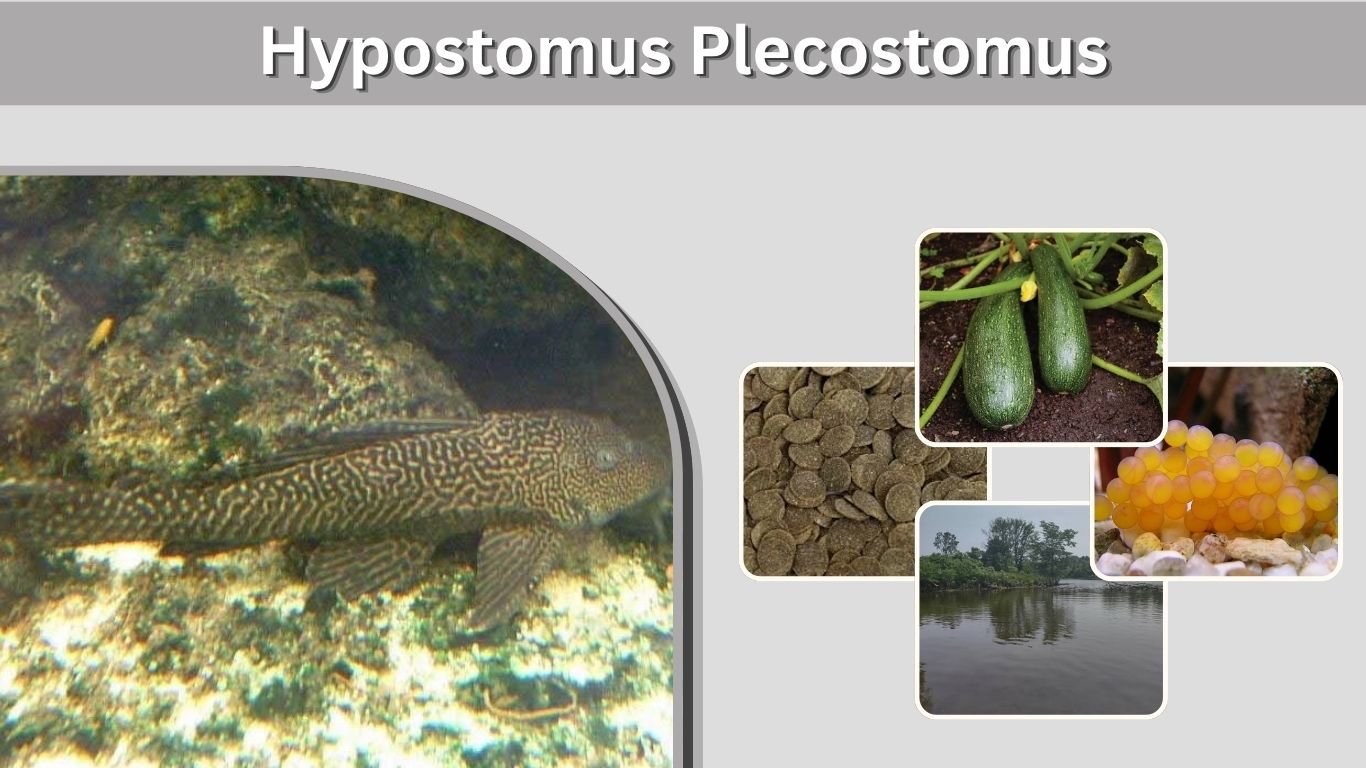
Hypostomus plecostomus is a freshwater armored catfish commonly known as the suckermouth catfish or common pleco. Popular for its algae-eating habits and unusual appearance, this South American fish is often kept in home aquariums. However, its large size, feeding requirements, and territorial behavior demand careful planning. Many fish sold under this name also belong to other pleco species. Understanding its identification, habitat, diet, lifespan, breeding behavior, and aquarium requirements can help fishkeepers provide suitable conditions and avoid common care mistakes.
What Is Hypostomus Plecostomus?
Hypostomus plecostomus is a species of bottom-dwelling catfish belonging to the family Loricariidae. Its scientific name was established from the species originally described by Carl Linnaeus in 1758.
The fish is recognized for its armored body, downward-facing sucker mouth, and ability to graze on algae-covered surfaces. It is primarily active during darker hours and often hides beneath rocks or driftwood during the day.
Scientific Classification
| Classification | Name |
| Scientific name | Hypostomus plecostomus |
| Common names | Suckermouth catfish, spotted pleco |
| Family | Loricariidae |
| Order | Siluriformes |
| Genus | Hypostomus |
| Native region | Northern South America |
| Diet | Omnivorous |
| Habitat | Freshwater rivers and swamps |
One important distinction is that many aquarium fish advertised as common plecos are actually species of Pterygoplichthys, not genuine Hypostomus plecostomus.
Hypostomus Plecostomus Appearance and Identification
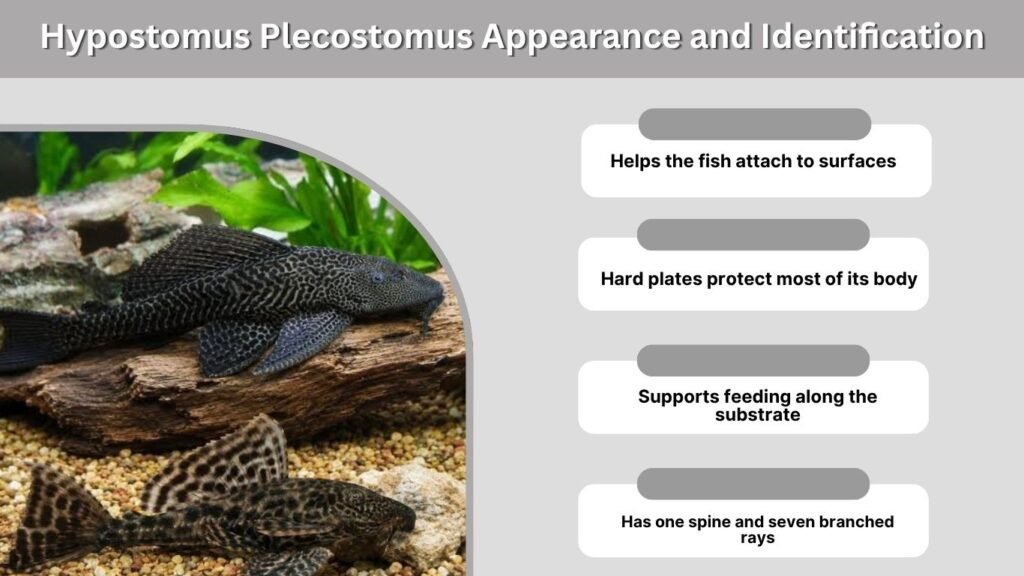
This species has an elongated, flattened body covered with hard bony plates that provide protection from predators. Its broad head and downward-facing mouth help it attach to underwater surfaces and collect food.
Body coloration is usually brown, gray, or olive, often with darker markings. Individual appearance can vary with age, surroundings, and species identification.
Key Physical Characteristics
- Sucker-shaped mouth: Helps the fish attach to surfaces and scrape edible material.
- Armored body: Hard plates protect most of its body.
- Broad head: Supports feeding along the substrate.
- Dorsal fin: Has one spine and seven branched rays.
- Strong pectoral fins: Assist movement and stability near the bottom.
- Camouflaged coloration: Makes the fish less noticeable among rocks and submerged wood.
These features make the fish recognizable, although similar plecos often require closer examination for accurate identification.
Hypostomus Plecostomus Size and Lifespan
Hypostomus plecostomus grows substantially larger than many small community aquarium catfish. FishBase reports approximately 28 cm (11 inches) as a common total length and 25 cm as a recorded standard length, which excludes the tail fin.
Some fish sold under the common pleco name grow to 45–50 cm (18–20 inches), but these are frequently different species, especially Pterygoplichthys. Confirming identification is important when estimating maximum size.
How Long Does Hypostomus Plecostomus Live?
Plecos can commonly live around 10–15 years in suitable aquarium conditions, although lifespan varies among species and individuals.
Stable water quality, sufficient space, balanced nutrition, and low stress contribute to long-term health. Owners should consider these fish a long-term commitment rather than a temporary solution for aquarium algae.
Hypostomus Plecostomus Habitat and Natural Distribution
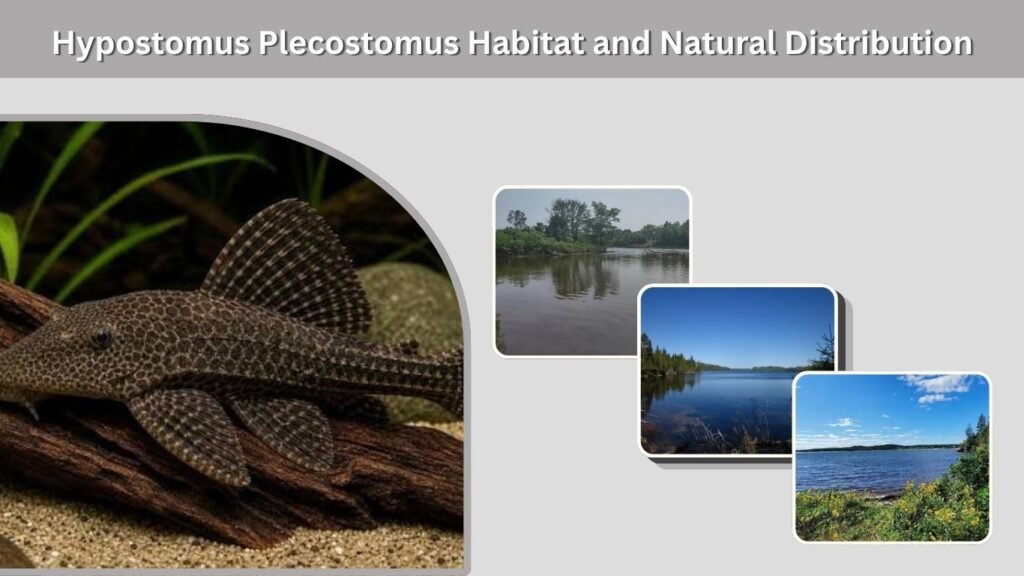
True Hypostomus plecostomus is native to coastal river systems of the Guianas in northern South America.
It inhabits lower river sections, slow-moving muddy waters, and swamp environments. These habitats provide submerged surfaces for feeding and sheltered areas for resting.
FishBase also records its ability to tolerate certain brackish conditions, although freshwater remains the normal choice for aquarium keeping.
Hypostomus Plecostomus Tank Size and Setup
Providing a sufficiently large aquarium is essential because plecos need a swimming room, hiding spaces, and efficient filtration.
For large fish sold as common plecos, a tank of approximately 75–100 US gallons or more is a useful starting consideration, depending on the confirmed species, adult dimensions, and tank footprint.
Larger Pterygoplichthys may need considerably more space. A long aquarium with adequate bottom area is preferable to a tall, narrow tank.
Ideal Aquarium Water Conditions
| Parameter | Recommended Starting Range |
| Temperature | 23–27°C (73–81°F) |
| pH | 6.5–7.8 |
| Ammonia | 0 ppm |
| Nitrite | 0 ppm |
| Nitrate | Keep low with maintenance |
| Water movement | Moderate |
| Lighting | Moderate with shaded areas |
These are practical captive-care targets rather than strict survival limits. Natural tolerance can be broader.
Aquarium Decorations and Substrate
A well-designed aquarium should contain several resting areas and surfaces for natural feeding behavior.
Smooth gravel or sand can work as substrate. Add large pieces of aquarium-safe driftwood, rounded stones, and secure caves.
Strong filtration is important because larger plecos produce considerable waste. Regular water changes prevent organic material from accumulating and help maintain suitable conditions.
What Does Hypostomus Plecostomus Eat?
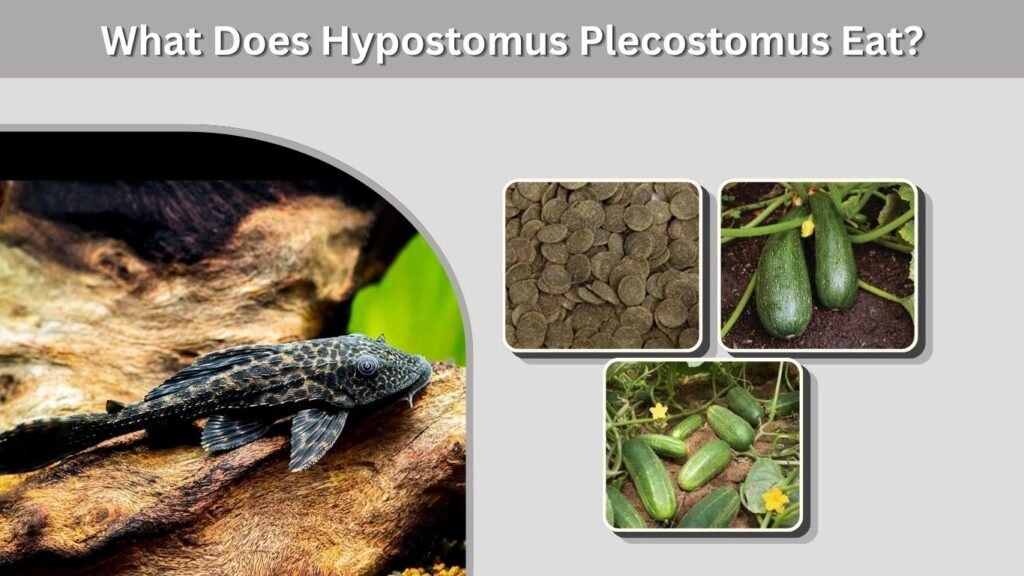
Hypostomus plecostomus is an omnivorous fish that feeds on algae and small aquatic animals in its natural habitat.
Although it is commonly sold as an algae cleaner, aquarium algae alone cannot reliably provide balanced nutrition.
A varied feeding routine supports proper growth and activity.
Best Foods for Hypostomus Plecostomus
- Algae wafers: Convenient sinking foods containing plant-derived nutrients.
- Zucchini: A suitable vegetable supplement when softened or blanched.
- Cucumber: Provides dietary variety but should not replace complete food.
- Spirulina-based foods: Useful plant-rich supplements.
- Sinking pellets: Provide essential nutrients in a convenient form.
- Small invertebrate foods: Appropriate animal protein can supplement the diet.
Feed portions that the fish can consume without leaving excessive waste. Remove uneaten vegetables after several hours to prevent deterioration of water quality.
Does Hypostomus Plecostomus Eat Other Fish?
Healthy adult fish are not normally its primary prey. However, plecos may opportunistically consume dead animals, fish eggs, or small vulnerable organisms.
Large individuals may occasionally disturb slow-moving fish while grazing, especially when food is inadequate. Proper feeding and suitable tank mates reduce these risks.
Hypostomus Plecostomus Tank Mates
The species can coexist with many peaceful freshwater fish when the aquarium provides sufficient space.
However, adult plecos may become territorial around hiding places or compete with other bottom-dwelling species.
Suitable Tank Mates
Potential companions include appropriately sized tetras, rainbowfish, peaceful barbs, and other compatible community species.
Avoid overcrowding the bottom of the aquarium. Keeping multiple large plecos together may result in territorial disputes, particularly in smaller tanks.
Goldfish are generally unsuitable companions because of differing environmental requirements and the possibility of plecos disturbing them. Discus also require careful consideration because some large plecos may rasp at the bodies of slow-moving fish.
Hypostomus Plecostomus Breeding and Reproduction

Breeding Hypostomus plecostomus in a typical home aquarium is difficult. Successful reproduction requires suitable environmental conditions and secure spawning locations.
FishBase reports that this species deposits eggs on smooth rocks or in depressions, with parental egg guarding.
Other plecos may use caves or excavated nesting chambers, so breeding information should not be transferred between species without confirmation.
Male and Female Differences
Distinguishing male and female Hypostomus plecostomus is difficult through ordinary visual inspection.
Subtle differences in body shape or breeding condition may occur, but these are not dependable identification methods.
An experienced aquarist may need to examine mature fish carefully before attempting to establish a breeding pair.
Hypostomus Plecostomus vs. Pterygoplichthys Pardalis
These two armored catfish are frequently confused because they share a sucker mouth, spotted coloration, and similar feeding behavior.
However, they belong to different genera and have important anatomical differences.
| Feature | H. plecostomus | P. pardalis |
| Genus | Hypostomus | Pterygoplichthys |
| Dorsal fin | Shorter base | Longer, sail-like |
| Dorsal soft rays | Usually 7 | Typically 9 or more |
| Body | Armored, spotted | Armored, spotted |
| Aquarium trade | Often mislabeled | Commonly sold as common pleco |
Counting dorsal-fin rays is more reliable than judging color alone. This distinction is useful when purchasing juvenile plecos, which can look remarkably similar.
Hypostomus Plecostomus and Invasive Species Concerns
Suckermouth catfish introduced outside their natural range can harm native aquatic ecosystems.
Some invasive populations disturb sediments, compete with native organisms, and contribute to erosion through burrowing activities.
However, many introduced fish historically identified as Hypostomus plecostomus are actually Pterygoplichthys species.
Aquarium owners should never release unwanted plecos into rivers, ponds, or other natural waterways. Responsible rehoming protects both the fish and local wildlife.
FAQs
1. Is Hypostomus Plecostomus a Good Algae Eater?
Yes. It naturally grazes algae and other edible material from submerged surfaces. However, it cannot replace proper aquarium maintenance and requires supplemental food. Its potentially large adult size also makes it unsuitable for many small tanks.
2. Is There an Albino Hypostomus Plecostomus?
Albino and golden plecos are available in the aquarium trade, but these names do not guarantee the fish is Hypostomus plecostomus. Many pale-colored common plecos belong to other species, so identification should be checked carefully.
3. Are Hypostomus Plecostomus Bottom Dwellers?
Yes. These catfish spend considerable time near the substrate, resting beneath decorations and grazing on submerged surfaces. They may also attach themselves to aquarium glass, rocks, and driftwood using their specialized sucker-shaped mouths.
4. Can Hypostomus Plecostomus Live With Betta Fish?
Combining them is generally impractical because of the pleco’s size and space requirements. Although a peaceful betta may coexist with some bottom feeders, a large pleco needs a much bigger aquarium than most betta setups provide.
5. How Much Does Hypostomus Plecostomus Cost?
Prices vary with location, fish size, availability, and accurate species identification. Juvenile common plecos may be inexpensive, but long-term costs are much higher because suitable large aquariums, filtration systems, food, and maintenance are essential.
