
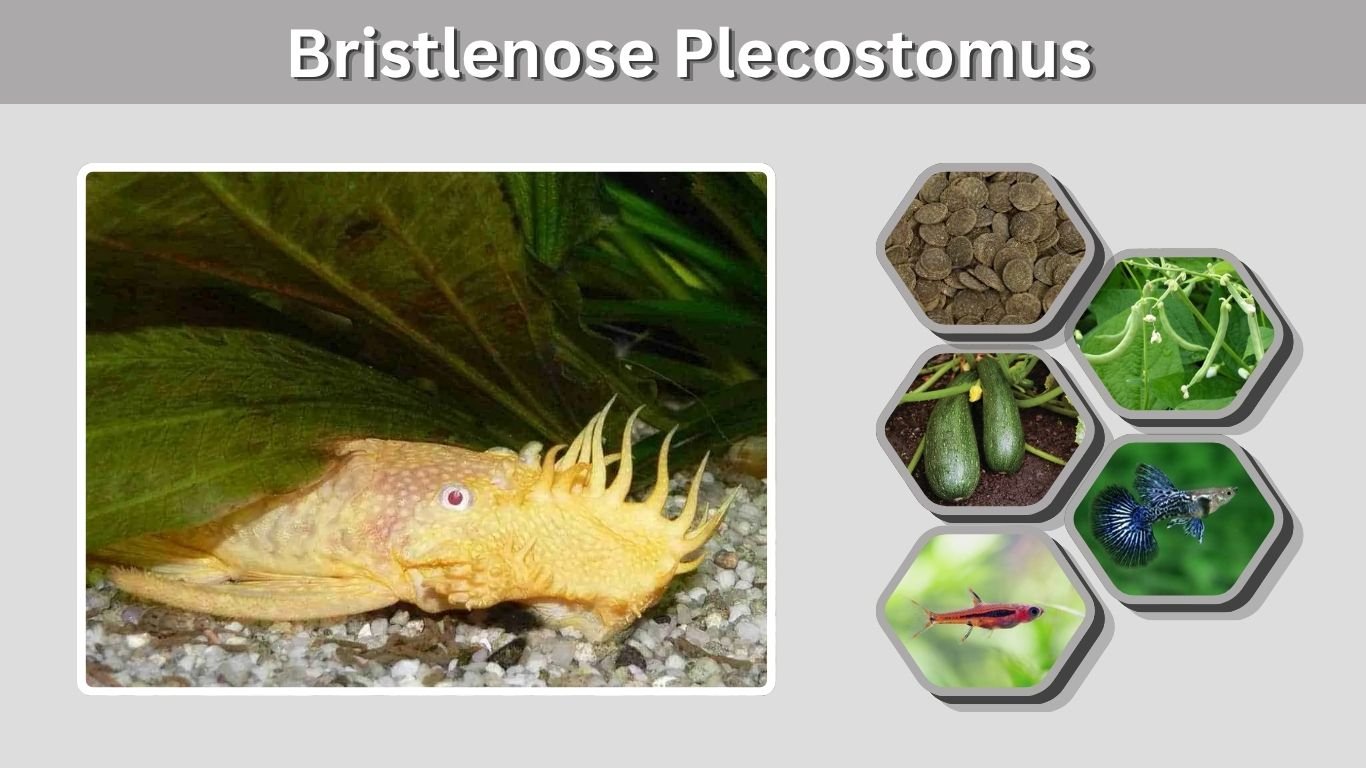
The Bristlenose Plecostomus is a popular freshwater catfish known for its distinctive facial bristles, algae-eating behavior, and peaceful nature. Unlike larger common plecos, bristlenose plecos stay relatively small, making them suitable for many home aquariums. They come in several attractive varieties, including albino, longfin, and super red. However, these fish still require proper feeding, clean water, and adequate hiding places. This guide explains their size, lifespan, diet, tank requirements, breeding habits, and essential care tips for keeping them healthy.
What Is a Bristlenose Plecostomus?
The Bristlenose Plecostomus is a small, armored freshwater catfish belonging to the genus Ancistrus. It is also called the bristlenose pleco, bushynose pleco, or bristlenose catfish.
Many commercially available bristlenose plecos are identified as Ancistrus sp. because their exact species or captive-bred ancestry is uncertain.
These fish are native as a group to South America, where different species inhabit freshwater rivers and streams. Their sucker-shaped mouths help them graze on algae, biofilm, and other edible materials covering submerged surfaces.
Bristlenose Plecostomus Quick Facts
| Feature | Details |
| Scientific name | Ancistrus spp. |
| Family | Loricariidae |
| Adult size | 4–6 inches |
| Lifespan | Approximately 5–10 years |
| Tank size | 20–30 gallons or larger |
| Temperature | 72–79°F (22–26°C) |
| pH | 6.0–7.5 |
| Diet | Primarily herbivorous omnivore |
| Temperament | Peaceful, sometimes territorial |
| Care level | Beginner-friendly |
Bristlenose Plecostomus Appearance and Size
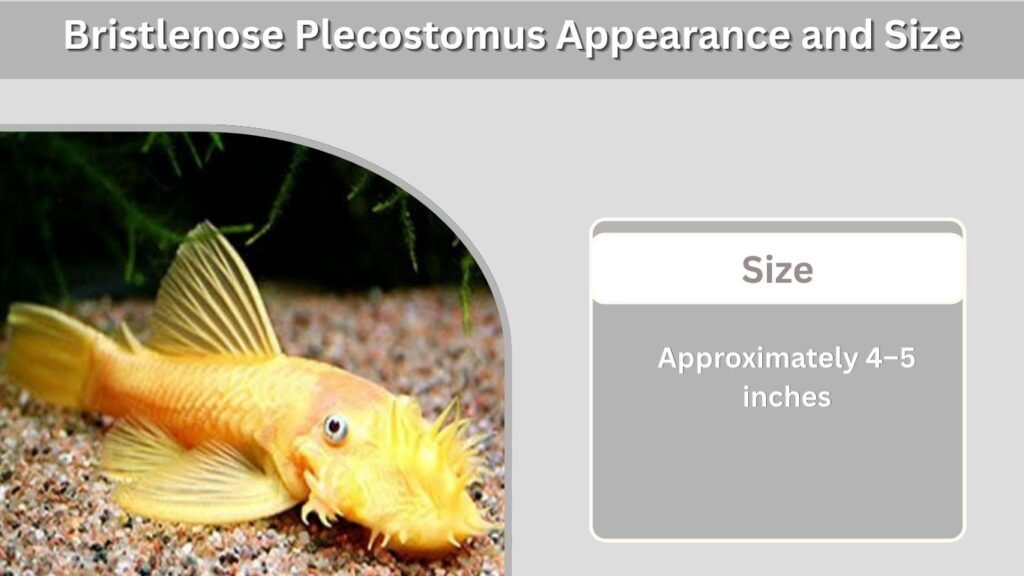
Bristlenose plecos have flattened bodies protected by hard bony plates. Their broad heads, sucker-shaped mouths, and distinctive facial tentacles make them easily recognizable.
Most aquarium varieties have brown, gray, or black bodies with lighter spots. Selective breeding has produced yellow, orange, red, and long-finned forms.
How Big Do Bristlenose Plecostomus Get?
Most common bristlenose plecos grow approximately 4–5 inches long, although some individuals reach 6 inches.
Their smaller adult size makes them more manageable than large common plecos, which may exceed 18 inches depending on the species.
Bristlenose plecos grow most noticeably during their juvenile stage, with development influenced by nutrition, genetics, and aquarium conditions.
Male vs. Female Bristlenose Plecostomus
Adult males typically develop prominent branching bristles across the snout and upper head. Females usually have a smoother face, sometimes with small bristles around the mouth.
Young plecos are difficult to sex because these features become more obvious as they mature.
Popular Bristlenose Plecostomus Varieties
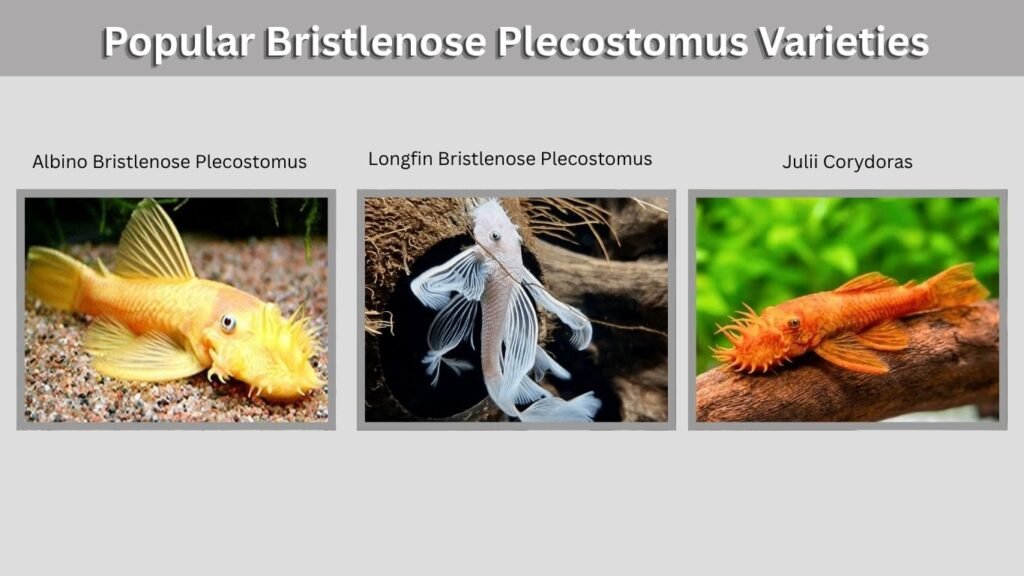
Bristlenose plecos are available in several attractive color and fin varieties. Many are captive-bred forms, although some trade names refer to distinct Ancistrus species.
Understanding the differences helps aquarium owners choose fish based on appearance and care requirements.
1. Albino Bristlenose Plecostomus
Albino bristlenose plecos have pale yellow or cream-colored bodies and reddish eyes. Their light coloration makes them particularly noticeable against dark aquarium decorations.
They generally require the same aquarium conditions and balanced diet as standard captive-bred bristlenose plecos.
2. Longfin Bristlenose Plecostomus
Longfin bristlenose plecos have extended dorsal, pectoral, and tail fins that create an elegant flowing appearance.
Their delicate fins benefit from smooth decorations and peaceful tank mates that will not nip them.
3. Longfin Albino Bristlenose Plecostomus
This variety combines pale albino coloration with extended fins. It has a yellowish body, reddish eyes, and flowing fins.
Its care requirements are similar to those of other common captive-bred bristlenoses, although fin damage should be monitored.
4. Super Red Bristlenose Plecostomus
Super red bristlenose plecos display bright orange to reddish-orange coloration. The intensity varies among breeding lines and individuals.
These attractive fish need the same basic nutrition, hiding places, and stable water conditions as other common bristlenose forms.
5. Blue-Eyed Lemon Bristlenose Plecostomus
Blue-eyed lemon bristlenose plecos have light yellow coloration and blue eyes rather than the reddish eyes associated with albino varieties.
They are especially popular among aquarists interested in unusual ornamental plecos.
Starlight bristlenoses are another popular option, but the name commonly refers to a distinct form such as L183, often identified as Ancistrus dolichopterus, rather than simply another color variation.
Bristlenose Plecostomus Tank Size and Setup
A properly designed aquarium supports the natural feeding and hiding behavior of bristlenose plecos.
A 20-gallon long aquarium is a practical minimum for one typical adult, while 25–30 gallons or more provides additional room. Larger aquariums are preferable for groups or breeding projects.
Ideal Aquarium Requirements
- Filtration: Use an efficient filter to maintain clean, oxygen-rich water.
- Temperature: Maintain approximately 72–79°F (22–26°C).
- Substrate: Choose smooth gravel or sand.
- Driftwood: Include aquarium-safe wood as shelter and a grazing surface.
- Hiding places: Provide caves, rocks, and shaded areas.
- Plants: Add hardy aquarium plants for cover and a natural appearance.
- Water changes: Perform regular partial changes based on water tests.
Bristlenose plecos prefer stable conditions and moderate water movement. Good oxygenation is particularly important for their long-term health.
What Do Bristlenose Plecostomus Eat?
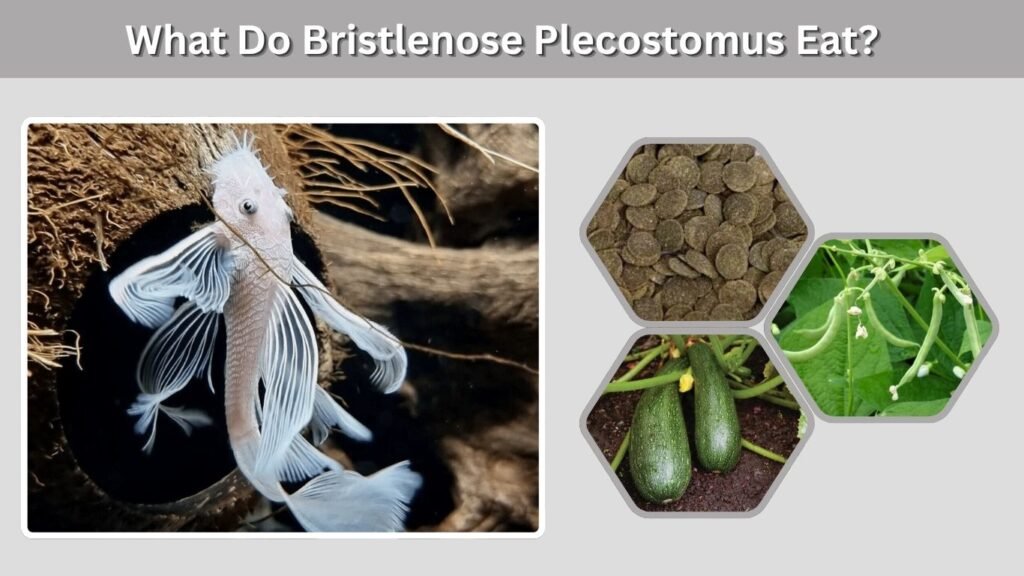
Bristlenose plecos primarily graze on algae, biofilm, and other organic materials found on underwater surfaces.
However, relying entirely on aquarium algae can lead to nutritional deficiencies because naturally available food varies.
A balanced diet should include quality sinking foods and suitable vegetables.
Best Foods for Bristlenose Plecos
- Algae wafers: Provide essential plant-based nutrients.
- Blanched zucchini: A popular vegetable supplement.
- Cucumber: Offers variety and additional moisture.
- Spirulina foods: Supply useful plant-derived nutrients.
- Green beans: Suitable when softened and prepared without additives.
- Sinking pellets: Provide more complete nutrition.
- Occasional protein: Small amounts of suitable animal-based foods can supplement their diet.
Feed enough to maintain a healthy body condition without leaving excessive leftovers. Remove uneaten vegetables before they spoil.
Bristlenose plecos may also graze naturally on aquarium driftwood, rocks, and glass.
Bristlenose Plecostomus Lifespan
Bristlenose plecos commonly live approximately 5–10 years in captivity, and some may survive longer with excellent care.
Their lifespan depends on water quality, diet, genetics, environmental stability, and disease prevention.
Poor filtration, overcrowding, inadequate nutrition, and stressful tank conditions can shorten their lives.
Regular observation is important because plecos often hide during daylight hours. Changes in feeding behavior, physical appearance, or activity may indicate health problems requiring attention.
Bristlenose Plecostomus Tank Mates
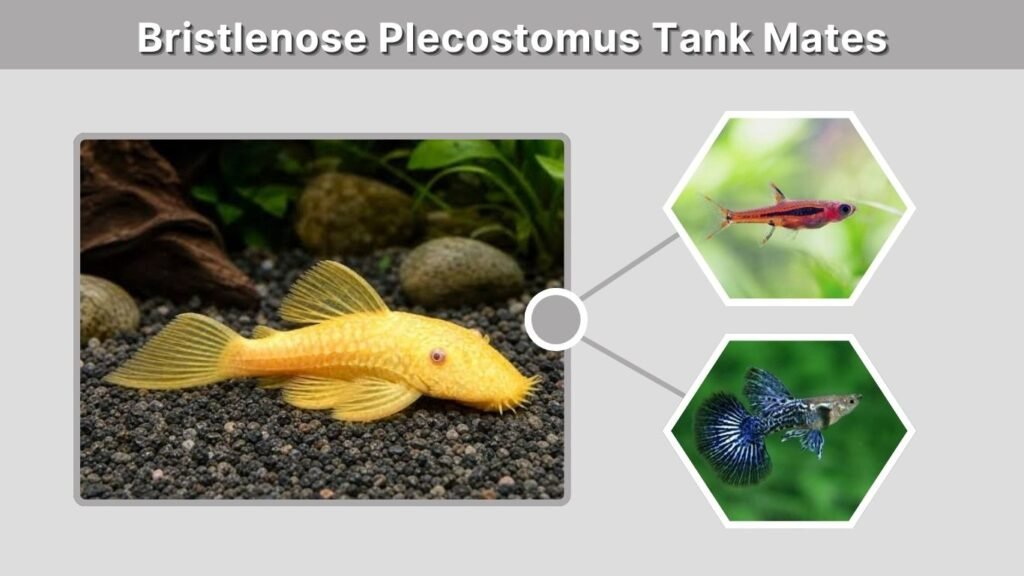
Bristlenose plecos are generally peaceful toward other fish and can live successfully in many freshwater community aquariums.
Suitable companions often include tetras, rasboras, guppies, peaceful gouramis, and Corydoras, provided their environmental needs are compatible.
However, mature males can become territorial toward other bristlenose plecos, especially when competing for caves.
Avoid overcrowding and provide multiple shelters when keeping more than one. Very aggressive fish or known fin-nipping species may be unsuitable companions, particularly for longfin varieties.
Bristlenose Plecostomus Breeding and Reproduction
Breeding bristlenose plecos is relatively straightforward compared with many other aquarium catfish.
A healthy mature pair, stable water conditions, suitable food, and a secure cave can encourage spawning.
How to Breed Bristlenose Plecostomus
- Select a mature pair: Choose healthy adult males and females.
- Prepare a breeding cave: Provide a narrow, secure spawning shelter.
- Maintain excellent water quality: Keep conditions stable and oxygen levels adequate.
- Offer nutritious food: Feed complete sinking foods and fresh vegetable supplements.
- Observe the male: After spawning, he guards and fans the eggs.
- Care for the fry: Once their yolk sacs are absorbed, provide appropriate small foods and grazing surfaces.
Females usually deposit clusters of orange eggs inside the breeding cave. The male guards them until hatching, commonly after approximately four or five days, depending on temperature.
The fry remain dependent on their yolk sacs briefly before beginning to feed independently.
Bristlenose Plecostomus Price and Buying Tips
Bristlenose plecos are widely available through aquarium stores, specialized breeders, and online fish retailers.
Prices vary according to age, size, color variety, fin type, and local availability. Standard brown bristlenoses are generally less expensive than unusual longfin or selectively bred color forms.
Before purchasing, inspect the fish for healthy eyes, intact fins, normal breathing, and a reasonably rounded abdomen. Avoid individuals with obvious injuries or severe weight loss.
Confirm the species or variety with the seller, and quarantine new fish before introducing them to an established aquarium.
FAQs
1. Are Bristlenose Plecostomus Good Algae Eaters?
Yes. Bristlenose plecos graze on many types of soft algae and biofilm. However, they are less effective against hair algae and some stubborn algae types. They still require regular supplemental feeding and routine aquarium maintenance.
2. Can Bristlenose Plecostomus Live Alone?
Yes. A single bristlenose pleco can live comfortably without another pleco. They are not schooling fish, and keeping one individual may reduce territorial competition in smaller community aquariums.
3. Do Bristlenose Plecostomus Eat Aquarium Plants?
They usually leave healthy plants alone, but they may rasp soft leaves, particularly when insufficient food is available. Providing balanced meals and hardy plants helps reduce unwanted grazing damage.
4. Can Albino and Regular Bristlenose Plecos Breed?
Yes. Compatible albino and normally colored bristlenose plecos belonging to the same breeding population can reproduce. The appearance of their offspring depends on inherited color genes and parental genetics.
5. How Often Should You Feed Bristlenose Plecostomus?
Feed suitable sinking foods regularly, generally once daily, while adjusting portions to their body condition and available natural grazing. Offer vegetables several times weekly and remove leftovers promptly to maintain clean water.