
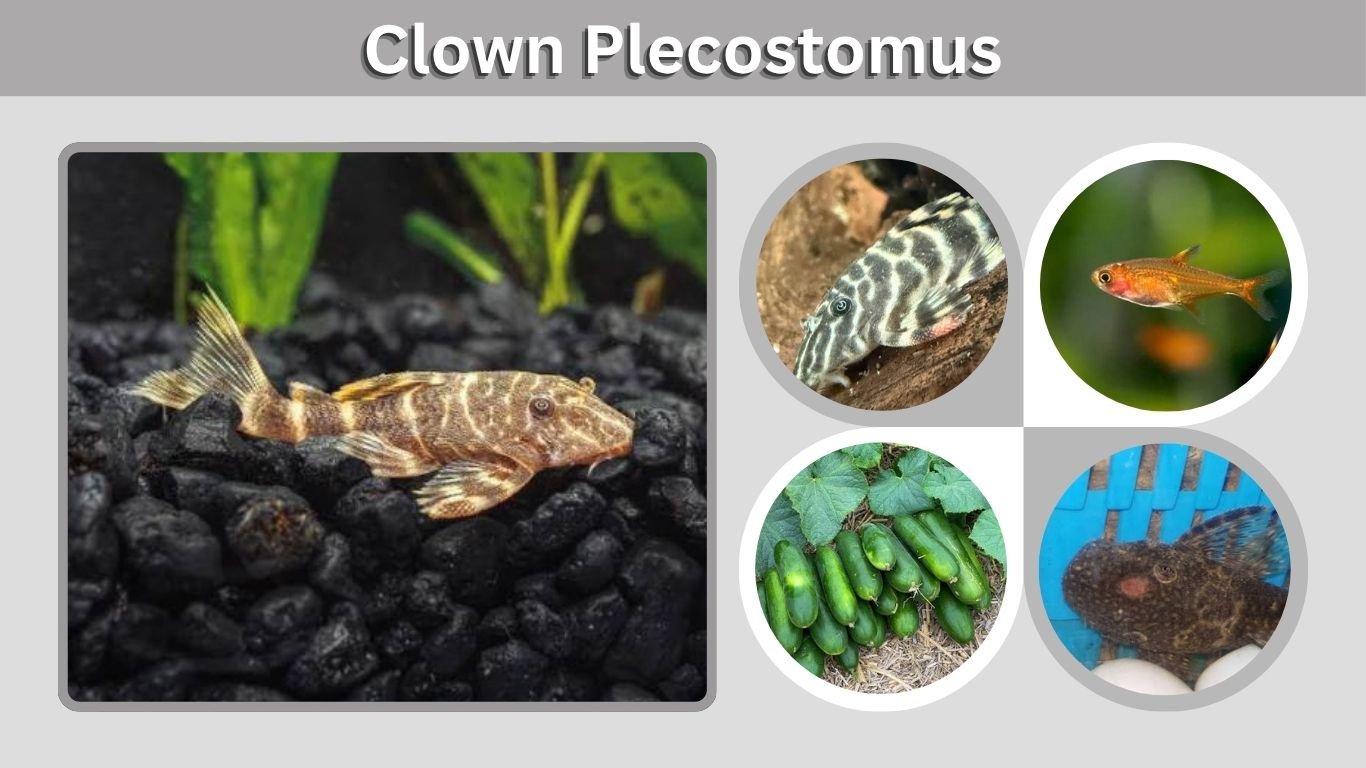
The clown plecostomus (Panaqolus maccus) is a small freshwater catfish known for its striking striped patterns and peaceful personality. Unlike larger pleco species, clown plecos remain relatively small, making them suitable for many home aquariums. These bottom-dwelling fish spend much of their time hiding among driftwood and exploring their surroundings after dark. Understanding their tank requirements, feeding habits, and natural behavior is essential for keeping them healthy. This guide covers everything you need to know about clown plecostomus care, including size, diet, lifespan, breeding, and tank mates.
What Is a Clown Plecostomus?
The clown plecostomus is a freshwater catfish belonging to the Loricariidae family. Native to the Orinoco River drainage in Venezuela, this species naturally inhabits environments containing submerged wood, roots, and other underwater structures. It is commonly called the clown pleco, clown panaque, or ringlet pleco.
Appearance and Identification
Clown plecos have dark brown bodies decorated with irregular yellow, cream, or orange bands. Their patterns vary between individuals, giving each fish a distinctive appearance.
Their flattened bodies, sucker-shaped mouths, and armored skin are typical characteristics of plecos. These adaptations help them attach to submerged surfaces and search for food.
The species is commonly identified by the aquarium trade numbers L104 and L162. However, the similarly named mega clown pleco, L129, is a different species.
How Big Do Clown Plecostomus Get?
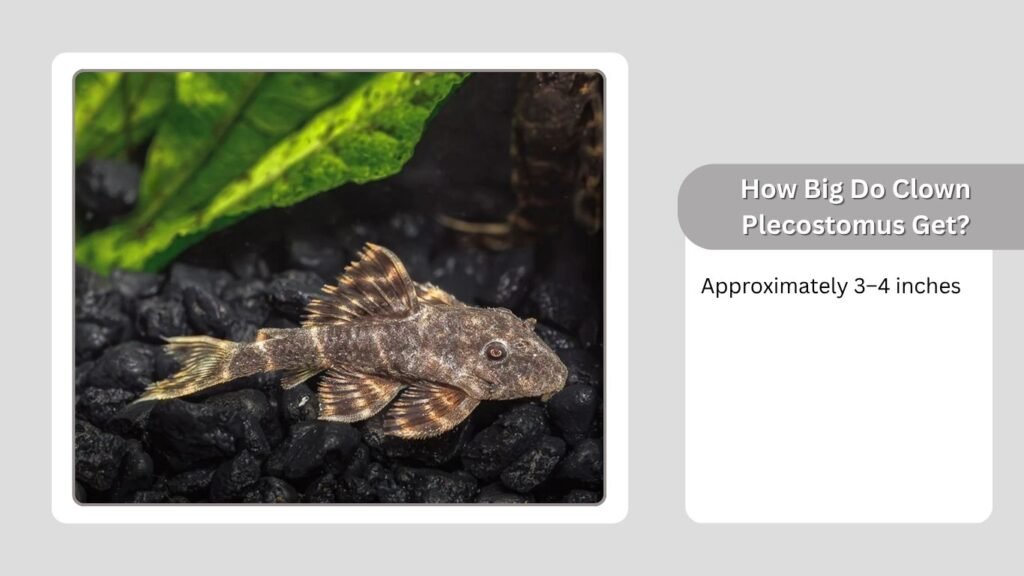
Clown plecostomus generally reach approximately 3–4 inches (7.5–10 cm) in total length, including their tails. Most mature individuals remain around 3.5 inches, making them significantly smaller than common plecos.
Their compact size makes them appealing to aquarists who want an attractive bottom-dwelling fish without needing an exceptionally large aquarium.
Clown Plecostomus Growth Rate
Clown plecos grow relatively slowly compared with many larger catfish. Growth depends on water quality, nutrition, genetics, and environmental conditions.
Young fish may take several years to reach their full adult size. Providing nutritious food and stable water conditions supports healthy development.
Clown Plecostomus Lifespan
A healthy clown plecostomus commonly lives around 10 years, and some individuals may survive 10–12 years or longer with excellent care.
Proper nutrition, suitable water parameters, and reduced stress are important for maintaining long-term health.
Clown Plecostomus Tank Size and Setup
A properly designed aquarium should resemble the sheltered freshwater environments where clown plecos naturally live. Although these fish remain small, they need sufficient bottom space, hiding places, and reliable filtration.
Minimum Tank Size
A 20-gallon aquarium is a practical minimum for one clown plecostomus, although a 25–30-gallon tank provides additional space and greater flexibility.
A longer aquarium is generally preferable to a tall one because clown plecos spend most of their time near the bottom.
Avoid overcrowding the aquarium, especially when keeping other bottom-dwelling species.
Ideal Water Conditions
Clown plecos prefer warm, stable freshwater with moderate water movement and good oxygenation.
Recommended aquarium conditions include:
- Temperature: 73–82°F (23–28°C)
- pH: 6.5–7.5
- Water hardness: Approximately 2–15 dGH
- Water movement: Moderate
- Ammonia and nitrite: 0 ppm
Maintain water quality through regular testing, filtration, and partial water changes. Sudden changes in temperature or water chemistry can cause unnecessary stress.
Substrate, Driftwood, and Decorations
Driftwood is one of the most important components of a clown plecostomus aquarium.
These fish naturally rasp submerged wood and feed on associated organic material and biofilm. Therefore, suitable aquarium-safe driftwood should always be available.
Include smooth rocks, ceramic caves, and shaded areas to provide additional shelter. Sand or smooth gravel works well as a substrate.
Live aquarium plants can also create a more natural environment. However, leave enough space around wood and hiding places for movement.
What Do Clown Plecostomus Eat?
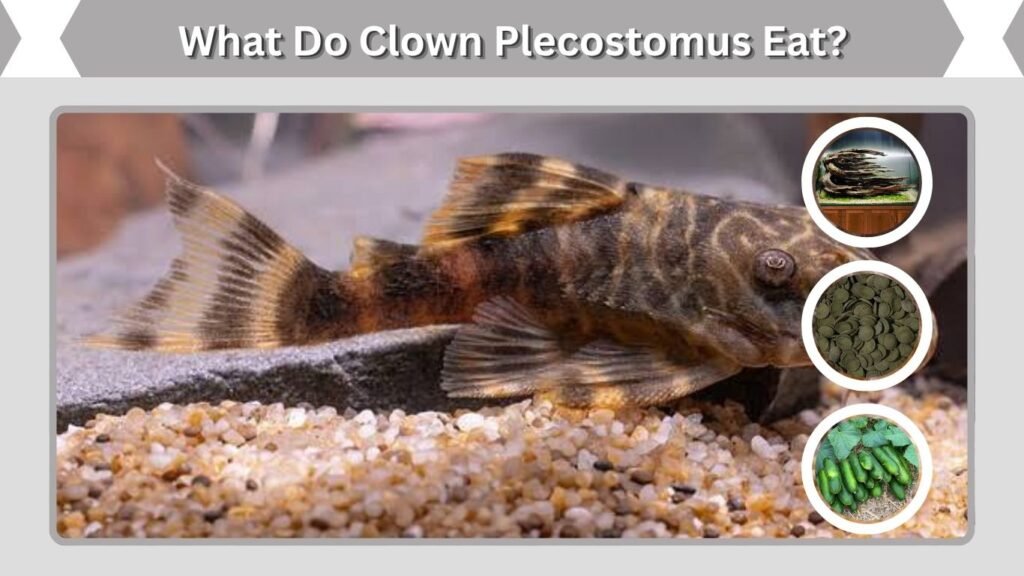
Clown plecos are specialized wood-grazing catfish that consume wood particles, biofilm, and associated organic material. Unlike some other pleco species, they should not be expected to survive on aquarium algae alone.
A balanced diet is necessary to provide adequate nutrition.
Best Foods for Clown Plecostomus
Suitable foods include:
- Aquarium driftwood: Provides a natural grazing surface and wood particles.
- Algae wafers: Supplementary commercial food containing plant-based ingredients.
- Zucchini: Softened or blanched slices suitable for bottom feeders.
- Cucumber: An occasional vegetable supplement.
- Spirulina-based foods: Provide additional plant-derived nutrition.
- Occasional animal-based food: Small amounts of appropriate sinking or frozen food can add variety.
Although clown plecos consume wood, the wood itself should not be treated as a complete source of nutrition.
Feeding Schedule
Offer supplementary food in the evening, when clown plecos become more active.
Provide small portions and observe how much the fish consumes. Remove uneaten vegetables before they begin decomposing.
Because wood-grazing plecos can produce considerable waste, regular substrate cleaning and efficient filtration are especially important.
Clown Plecostomus Behavior and Tank Mates
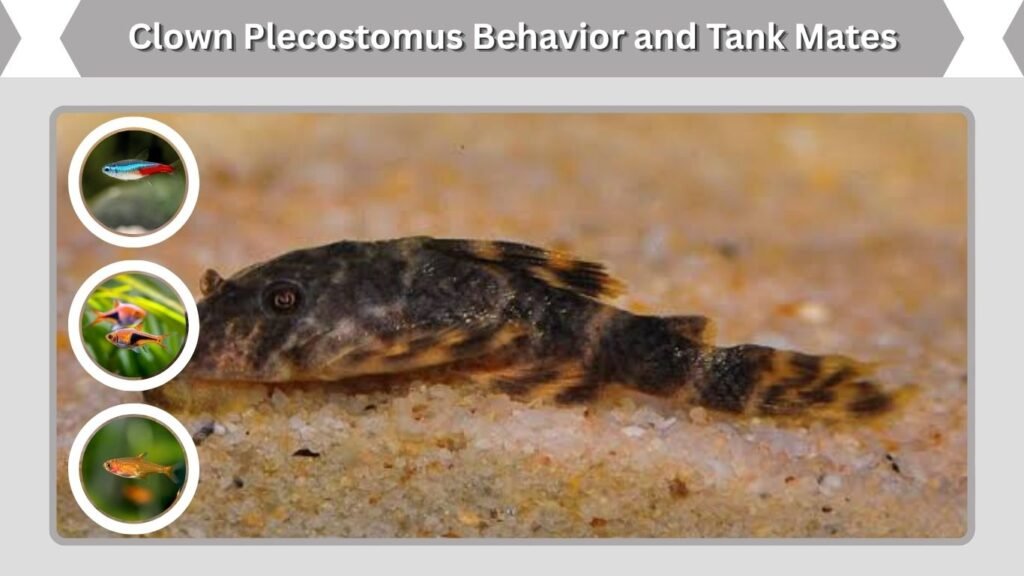
Clown plecos are generally peaceful, shy fish that prefer spending daylight hours beneath driftwood or inside caves.
They are primarily nocturnal, becoming more active when aquarium lighting decreases.
Although they rarely bother other community fish, they may defend preferred hiding places against other plecos.
Best Tank Mates
Compatible aquarium companions may include:
- Neon tetras
- Harlequin rasboras
- Ember tetras
- Peaceful Corydoras species
- Guppies
- Honey gouramis
- Peaceful freshwater shrimp
Always ensure that tank mates share compatible temperature and water requirements.
A clown pleco may also live with a peaceful betta in a sufficiently large aquarium, provided both fish have separate territories.
Tank Mates to Avoid
Avoid keeping clown plecos with large predatory fish, aggressive cichlids, or species that constantly disturb bottom-dwelling fish.
Goldfish are generally unsuitable companions because their preferred water temperatures and aquarium requirements differ.
Keeping multiple clown plecos together requires extra space, driftwood, and separate hiding areas to minimize territorial disputes.
Clown Plecostomus Breeding
Breeding clown plecostomus in captivity is possible, although it can be challenging for inexperienced aquarists.
These fish are cave spawners. Successful reproduction generally requires mature, compatible adults, excellent water conditions, and secure breeding shelters.
Male and Female Differences
Adult males may develop more prominent bristle-like odontodes around their bodies and fins, particularly during breeding.
Females typically appear fuller around the abdomen when carrying eggs.
However, identifying the sexes can be difficult in young fish.
Breeding Conditions
Provide narrow breeding caves, suitable driftwood, and stable, well-oxygenated water.
A compatible pair may eventually spawn inside a sheltered cavity. The male typically guards the eggs until they hatch.
Newly hatched fry initially rely on their yolk sacs before beginning to feed independently.
Young clown plecos require appropriate fine foods, access to wood and biofilm, and consistently clean water for healthy growth.
Common Clown Plecostomus Health Problems
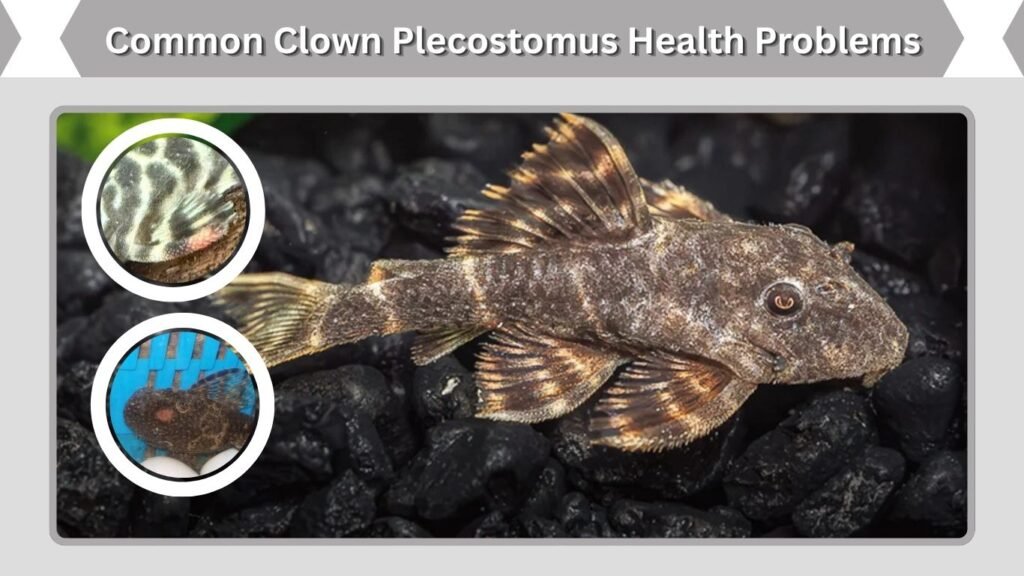
Clown plecos are reasonably hardy when kept in suitable conditions. However, poor water quality, inadequate nutrition, and stressful tank environments can contribute to health problems.
Common warning signs include:
- Loss of appetite: May indicate stress, illness, or inappropriate feeding.
- Damaged fins: Can result from aggressive tank mates or physical injuries.
- Unusual white spots: May indicate a parasitic infection.
- Rapid breathing: Can suggest poor oxygenation or water-quality problems.
- Weight loss: May develop when fish cannot obtain enough suitable food.
Regularly monitor water parameters and observe your fish’s appearance and behavior. Persistent symptoms should be assessed by an aquatic veterinarian or experienced fish-health professional.
FAQs
Are Clown Plecostomus Good for Beginners?
Yes. Clown plecos can be suitable for beginners who maintain established aquariums with clean water, adequate filtration, and appropriate driftwood. Their relatively peaceful temperament and small adult size make them easier to accommodate than larger pleco species.
Do Clown Plecostomus Eat Algae?
Clown plecos may consume some algae and biofilm, but they are not particularly effective aquarium algae cleaners. Their natural feeding behavior focuses heavily on submerged wood and associated organic material. They also require suitable supplementary foods.
Can Clown Plecostomus Live Alone?
Yes. Clown plecostomus do not need to live in groups and can thrive individually. Keeping one fish is often easier because individuals may become territorial toward other plecos, especially when suitable hiding spaces are limited.
Can Clown Plecostomus Live With Betta Fish?
Clown plecos and bettas can sometimes live together because they occupy different aquarium areas. However, compatibility depends on individual temperament, tank size, and hiding places. A properly equipped aquarium of at least 20 gallons is recommended for this combination.
How Often Should You Feed a Clown Plecostomus?
Provide access to suitable driftwood continuously and offer supplementary foods regularly, preferably during the evening. Adjust feeding quantities according to the fish’s condition and appetite. Remove uneaten vegetables to prevent deterioration in aquarium water quality.