
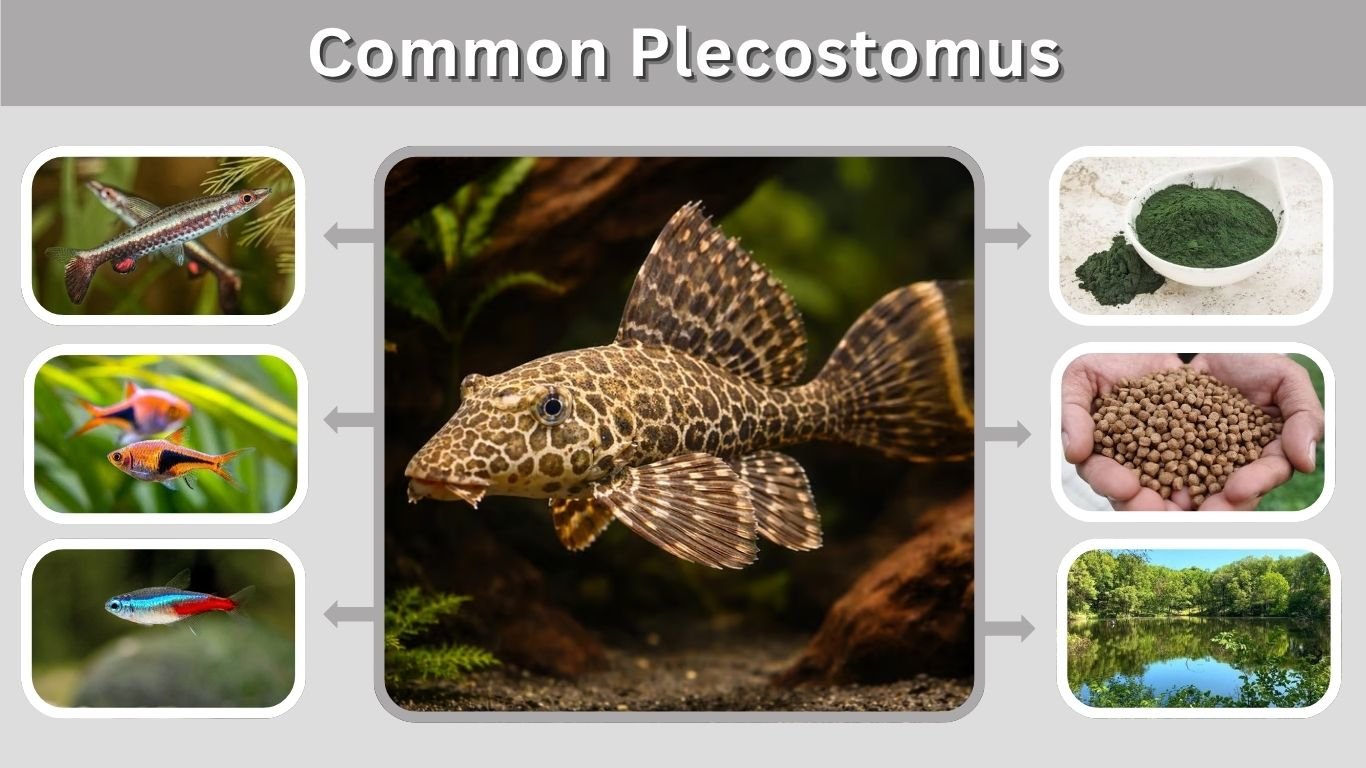
The common plecostomus is a popular freshwater catfish known for its armored body, sucker-shaped mouth, and algae-grazing behavior. Often called the common pleco or suckermouth catfish, this fish is frequently sold as a small aquarium cleaner. However, many common plecos grow surprisingly large and require spacious aquariums. Understanding their adult size, diet, tank requirements, and behavior is essential for responsible fishkeeping. This guide explains everything you need to know about common plecostomus care, including growth rate, lifespan, tank mates, breeding, and pond suitability.
What Is a Common Plecostomus?
The common plecostomus belongs to the Loricariidae family of armored freshwater catfish native to South America. The scientific name Hypostomus plecostomus refers to one particular species, but aquarium stores frequently sell related fish, including Pterygoplichthys pardalis, under the same common name.
These fish naturally inhabit rivers, streams, and other freshwater environments where they graze on submerged surfaces.
Common Plecostomus Appearance
Common plecos have elongated bodies covered with protective bony plates. Their broad heads, downward-facing mouths, and strong fins help them move along the bottom and attach to underwater surfaces.
Most display brown, gray, or olive coloration with dark spots or patterns. Their appearance varies depending on the exact species.
How Big Do Common Plecostomus Get?

Common plecostomus size varies considerably because multiple species share the same trade name. Many commonly sold plecos reach approximately 12–20 inches, while some large Pterygoplichthys species can approach 24 inches.
The true Hypostomus plecostomus is generally smaller than some of these large sailfin plecos.
Knowing the exact species helps determine the aquarium space needed.
Common Plecostomus Growth Rate
Young common plecos can grow rapidly when provided with nutritious food, clean water, and adequate space.
Growth is often fastest during the juvenile stage before gradually slowing as the fish matures.
A small pleco purchased from a pet store may outgrow a beginner aquarium much sooner than expected. Poor living conditions can restrict healthy development but do not make a small aquarium suitable permanently.
Common Plecostomus Tank Size and Setup
Common plecos need spacious aquariums with strong filtration and plenty of swimming room. Their adult dimensions and substantial waste production make them unsuitable for most small home aquariums.
Minimum Tank Size
For the largest common plecos, an aquarium of approximately 150–180 gallons or more is a sensible long-term target.
A verified smaller species may require less, but a large aquarium footprint remains essential. Tanks around six feet long are often appropriate for large adults.
A 10-gallon or 20-gallon aquarium cannot accommodate an adult common pleco.
Ideal Water Conditions
Stable freshwater conditions are essential for maintaining healthy fish.
Recommended general parameters include:
- Temperature: 74–82°F (23–28°C)
- pH: 6.5–7.8
- Water hardness: Approximately 5–20 dGH
- Ammonia: 0 ppm
- Nitrite: 0 ppm
These ranges are general guidelines. Exact requirements may differ between species.
Substrate and Decorations
Provide smooth gravel or sand, large pieces of driftwood, and secure hiding places.
Caves, rocks, and sturdy aquarium decorations help plecos feel comfortable during daylight hours.
Choose decorations that cannot collapse when a large fish moves underneath them. Strong filtration and regular partial water changes are especially important because common plecos produce considerable waste.
What Do Common Plecostomus Eat?

Common plecostomus are generally omnivorous fish that consume algae, biofilm, plant material, detritus, and other available foods.
Although they graze on algae, they cannot survive on aquarium algae alone. Adults may also become less interested in algae as their dietary requirements change.
Best Foods for Common Plecostomus
Offer a varied diet containing appropriate plant-based and commercial foods.
Suitable options include:
- Algae wafers: Provide convenient sinking nutrition.
- Zucchini: Offers a useful vegetable supplement.
- Cucumber: Can be offered occasionally.
- Shelled peas: Provide additional plant material.
- Sinking catfish pellets: Help maintain balanced nutrition.
- Spirulina-based foods: Supply plant-derived nutrients.
- Occasional protein-rich foods: Add dietary variety when appropriate.
Driftwood also provides grazing surfaces, shelter, and associated biofilm.
Feeding Schedule
Feed common plecos regularly, preferably during the evening when they become more active.
Young fish require portions appropriate to their size, while larger adults consume considerably more food.
Remove leftover vegetables before they deteriorate. Observe your fish’s body condition to ensure it receives sufficient nutrition.
Common Plecostomus Behavior and Tank Mates
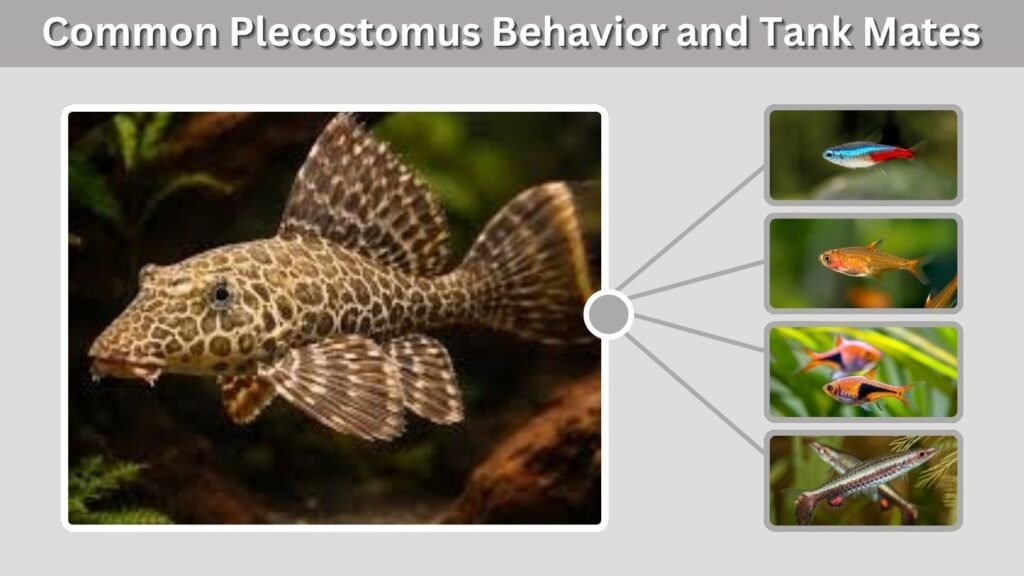
Common plecos are primarily bottom-dwelling fish that spend much of the day resting beneath decorations.
They generally become more active after dark.
Although young plecos are often peaceful, mature individuals may become territorial, particularly toward other bottom-dwelling fish.
Suitable Tank Mates
Appropriate companions depend on aquarium size, temperament, and water requirements.
Potential tank mates include larger peaceful tetras, rainbowfish, and certain peaceful barbs.
Some medium-sized community fish can coexist with common plecos when sufficient space is available.
Avoid overcrowding the bottom of the aquarium.
Tank Mates to Avoid
Keeping multiple large plecos together can lead to territorial competition.
Slow-moving fish such as discus and angelfish may also be vulnerable to unwanted rasping or attachment behavior from large plecos.
Very small aquariums, aggressive fish, and incompatible water conditions increase stress and should be avoided.
Common Plecostomus Lifespan and Health
Common plecostomus typically live around 10–15 years under suitable aquarium conditions. Some individuals may survive longer with excellent care.
Their long lifespan makes them a significant commitment for aquarium owners.
Common Health Problems
Poor water quality and inadequate feeding can contribute to several health issues.
Warning signs include:
- Loss of appetite
- Sunken abdomen
- Damaged fins
- Unusual white spots
- Rapid breathing
- Persistent inactivity or abnormal swimming
Check aquarium water parameters whenever unusual symptoms appear.
Maintain effective filtration, avoid overcrowding, and quarantine new fish when possible. Persistent illness should be assessed by an aquatic veterinarian.
Can Common Plecostomus Live in a Pond?
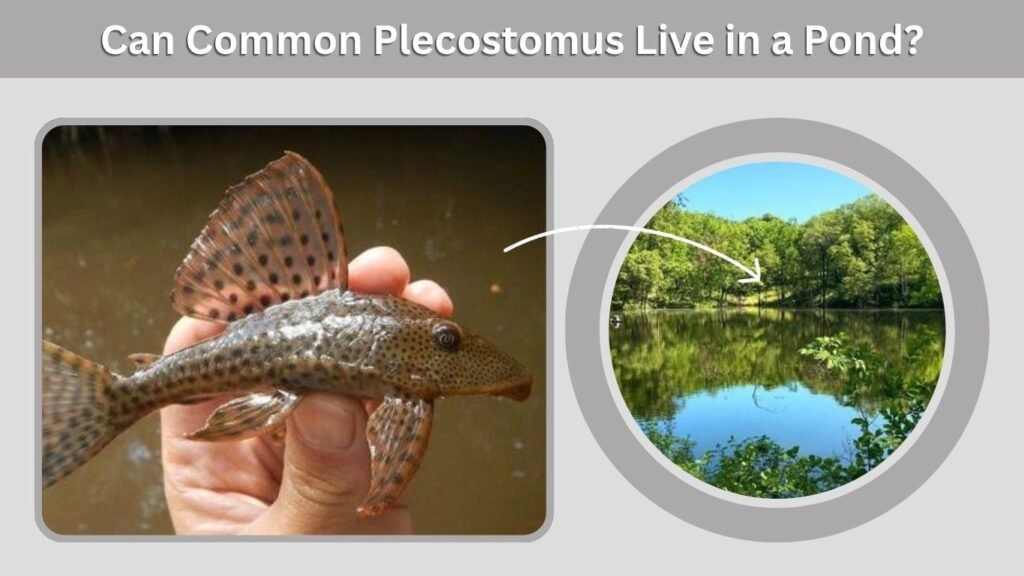
Common plecostomus can live in sufficiently large, appropriately maintained outdoor ponds in suitable warm climates.
However, water temperature must remain within the fish’s tolerated range throughout the year.
Cold winters make many outdoor ponds unsuitable unless reliable temperature control is available.
Ponds also require adequate filtration, oxygenation, shelter, and secure barriers against escape.
Common plecos should never be released into rivers, lakes, or natural waterways. Introduced suckermouth catfish can harm native ecosystems, and local restrictions may apply.
Common Plecostomus Breeding
Breeding common plecostomus in ordinary home aquariums is extremely difficult.
Several commonly sold large plecos reproduce by excavating nesting burrows in suitable banks or substrates.
Successful commercial breeding has occurred in warm outdoor pond systems where appropriate conditions are available.
Sex differences are difficult to identify reliably in many species, especially when fish are immature.
Because of their large adult size and specialized reproduction requirements, breeding these fish is generally unsuitable for beginners.
FAQs
Can a Common Plecostomus Live in a 10-Gallon Tank?
No. A 10-gallon tank is unsuitable for a common plecostomus as a permanent home. Even young fish can quickly outgrow such limited space. Large adults require significantly bigger aquariums with appropriate filtration and bottom space.
Do Common Plecostomus Stop Growing in Small Tanks?
No. Common plecos do not naturally stop growing to match aquarium dimensions. Restricted space, stress, and poor water quality can interfere with healthy development, but this is harmful rather than an appropriate way to control growth.
Can Common Plecostomus Live With Bristlenose Plecos?
They sometimes coexist in exceptionally spacious aquariums with separate territories and multiple hiding places. However, adult common plecos may become territorial toward bristlenose plecos, making this combination unsuitable for many ordinary community tanks.
How Long Does a Common Plecostomus Live?
A well-maintained common plecostomus often lives 10–15 years, depending on its species and care. Good nutrition, suitable aquarium dimensions, consistent water parameters, and effective filtration contribute to a healthy lifespan.
Are Common Plecostomus Good for Beginners?
Common plecos are hardy, but their large adult size makes them challenging for many beginners. Smaller species, such as bristlenose or clown plecos, are generally more practical alternatives for aquarists with modest aquarium space.
