
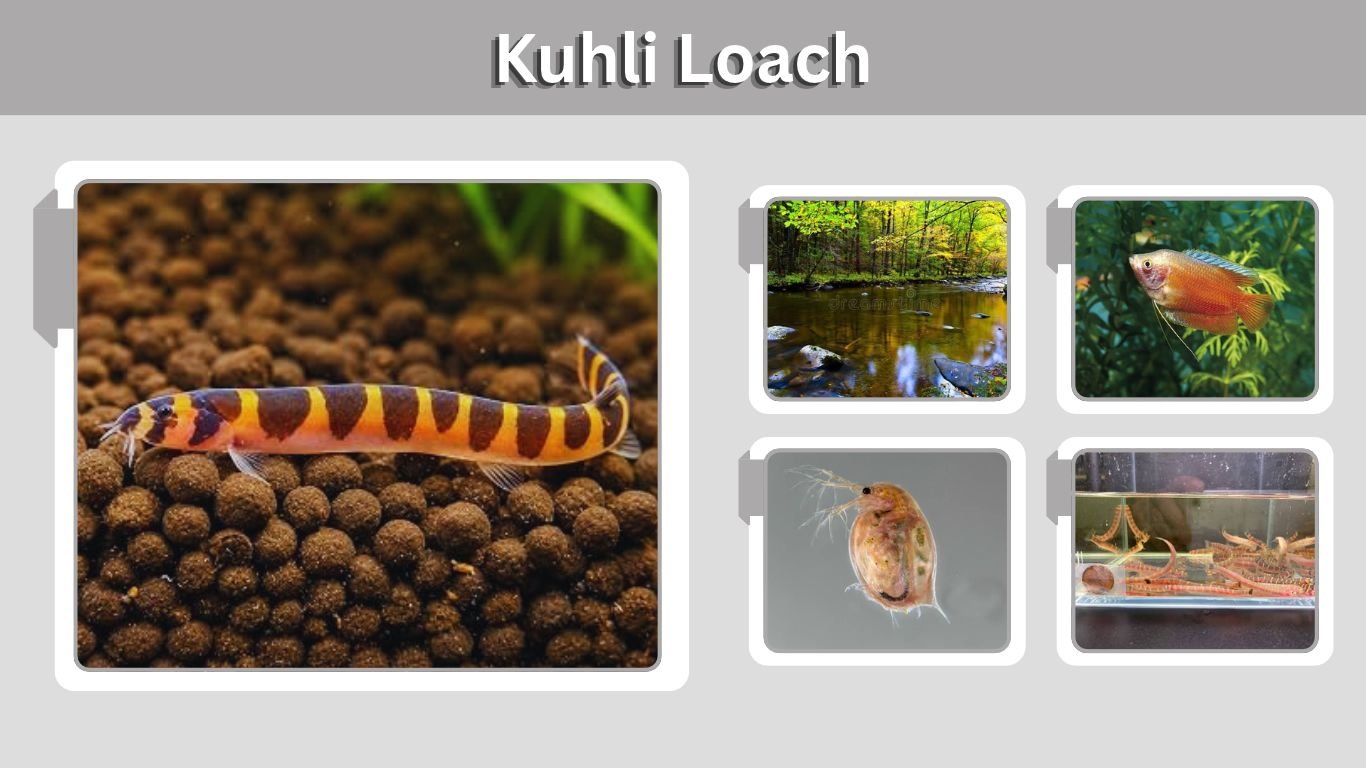
The kuhli loach is a small, peaceful freshwater fish known for its slender, eel-like body, unusual swimming movements, and secretive behavior. Popular among aquarium enthusiasts, kuhli loaches spend much of their time exploring the substrate, hiding beneath decorations, and searching for food.
These tropical fish belong to the genus Pangio and originate from parts of Southeast Asia. Their distinctive appearance, gentle temperament, and compatibility with many community fish make them attractive aquarium inhabitants.
Although kuhli loaches are relatively easy to maintain in a suitable aquarium, they require soft substrate, clean water, appropriate tank mates, and companionship from other kuhli loaches.
Kuhli Loach Species Overview
Kuhli loaches belong to the family Cobitidae, which includes several species of small freshwater loaches.
The name kuhli loach is commonly associated with Pangio kuhlii, although aquarium shops frequently sell other closely related species under the same name.
| Feature | Description |
| Common name | Kuhli Loach |
| Scientific classification | Pangio species |
| Family | Cobitidae |
| Origin | Southeast Asia |
| Adult size | Usually 3–4 inches |
| Lifespan | Commonly 5–10 years |
| Diet | Mainly small invertebrates and sinking foods |
| Temperament | Peaceful |
| Activity | Mostly nocturnal or crepuscular |
| Tank size | 20 gallons or larger recommended |
| Group size | At least 5–6 |
| Care level | Easy to moderate |
How to Identify a Kuhli Loach
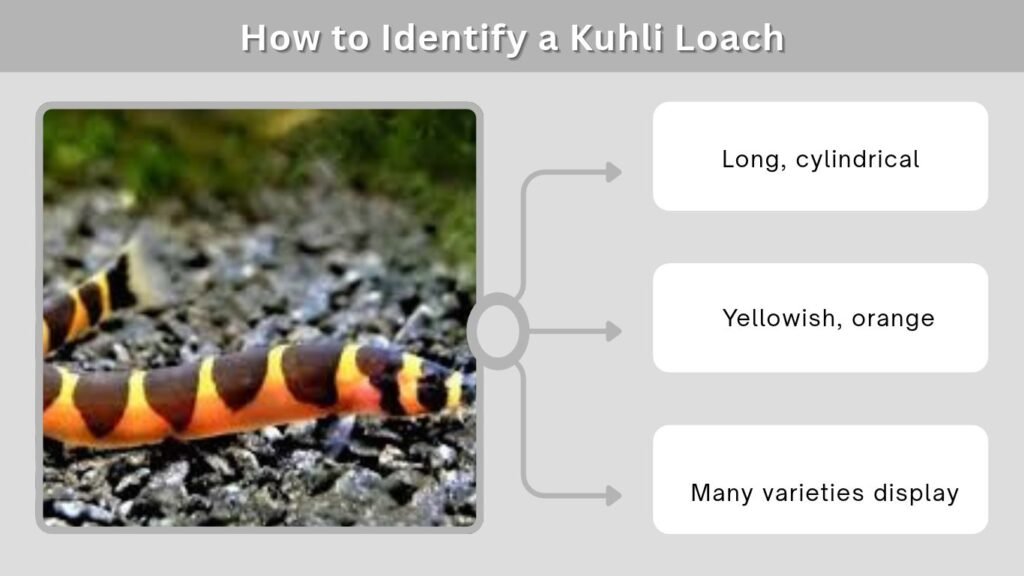
Kuhli loaches have elongated bodies that resemble miniature eels or snakes. Their flexible shape allows them to move through narrow spaces between plants, rocks, and aquarium decorations.
Identification Features
- Body shape: Long, cylindrical, and eel-like.
- Body color: Yellowish, orange, brown, or dark depending on the species.
- Stripes: Many varieties display dark vertical bands.
- Head: Small with a downward-facing mouth.
- Barbels: Short whisker-like structures surrounding the mouth.
- Fins: Small, rounded, and positioned toward the rear of the body.
- Eyes: Small eyes with a protective spine located beneath each one.
- Size: Most commonly sold species reach approximately 3–4 inches.
These features help distinguish kuhli loaches from other small bottom-dwelling aquarium fish.
Common Types of Kuhli Loaches
Several related species are sold under the kuhli loach name. Although their body shapes and behaviors are similar, their coloration and markings can differ.
Black Kuhli Loach
The black kuhli loach (Pangio oblonga) has a dark brown to nearly black body without the prominent yellow-and-black bands seen on many striped species.
It typically reaches around 3 inches long and has a peaceful temperament. This variety is also sometimes called the chocolate or Java loach.
Striped Kuhli Loach
The striped kuhli loach is recognized by its yellowish or orange body with dark vertical markings.
Many striped fish sold in aquarium stores belong to Pangio semicincta, although similar-looking species may also be marketed under this name.
Giant Kuhli Loach
The giant kuhli loach (Pangio myersi) is a comparatively robust species with a thicker body and distinct dark markings.
Despite its name, it remains a relatively small aquarium fish rather than growing to the size of larger loach species.
Other Kuhli Loach Varieties
Aquarium stores may also advertise golden, silver, albino, or neon kuhli loaches.
Some names describe color variations rather than scientifically distinct species. Correct identification may require examining body markings and other physical characteristics.
Where Do Kuhli Loaches Live?

Kuhli loaches naturally inhabit tropical freshwater environments throughout parts of Southeast Asia.
Depending on the species, they occur in Indonesia, Malaysia, Thailand, and neighboring regions.
Their habitats include slow-moving streams, forest waterways, and shallow areas with sandy or muddy bottoms.
Fallen leaves, submerged roots, and aquatic vegetation provide shelter from predators.
Many kuhli loaches prefer shaded environments where they can hide during daylight and search for food when light levels decrease.
How Big Do Kuhli Loaches Get?
Most commonly kept kuhli loaches grow to approximately 3–4 inches (7.5–10 cm) long.
Some species remain slightly smaller, while others develop a thicker body.
Their growth depends on nutrition, genetics, water conditions, and overall aquarium care.
Young kuhli loaches may initially measure only 1–2 inches. They gradually reach their adult size over time.
Unlike clown loaches, kuhli loaches remain relatively small and can live comfortably in appropriately maintained medium-sized aquariums.
Kuhli Loach Tank Size and Setup
Kuhli loaches require an aquarium that offers sufficient bottom space, hiding places, and stable water conditions.
Recommended Tank Size
A 20-gallon aquarium, particularly a longer model with more floor space, is a practical starting point for a small group of kuhli loaches.
Although some species can survive in smaller setups, larger aquariums provide more stable conditions and additional room to explore.
Keeping multiple kuhli loaches together is important because these fish naturally seek companionship.
Best Aquarium Substrate
Fine sand is an excellent substrate for kuhli loaches.
They frequently search through the bottom material for food and may partially bury themselves.
Sharp gravel can damage their sensitive bodies and barbels.
Suitable aquarium decorations include driftwood, smooth stones, small caves, leaf litter, and live plants.
All decorations should be secure, and openings around filters should be protected because kuhli loaches can squeeze into surprisingly small spaces.
Kuhli Loach Temperature and Water Parameters
Stable water conditions are essential for healthy kuhli loaches.
Requirements vary slightly among species, but many commonly kept varieties prefer warm, soft, slightly acidic freshwater.
| Parameter | Recommended range |
| Temperature | Approximately 70–79°F (21–26°C) |
| pH | Generally acidic to neutral |
| Water hardness | Soft water preferred |
| Ammonia | 0 ppm |
| Nitrite | 0 ppm |
| Water movement | Gentle to moderate |
A reliable aquarium heater and filtration system help maintain stable conditions.
Regular partial water changes also prevent waste accumulation.
Always check the specific requirements of the species being kept because fish sold under the kuhli loach name are not necessarily identical.
What Do Kuhli Loaches Eat?

Kuhli loaches are primarily small-invertebrate feeders that search the substrate for worms, insect larvae, tiny crustaceans, and other edible organisms.
In aquariums, they accept various sinking foods.
Best Food for Kuhli Loaches
Suitable foods include:
- Sinking bottom-feeder pellets
- Frozen bloodworms
- Live or frozen brine shrimp
- Daphnia
- Small worms
- Quality sinking granules
Providing different foods helps support balanced nutrition.
Because kuhli loaches often become active after dark, feeding shortly before or after the aquarium lights go off can help ensure they receive enough food.
They should not be expected to survive entirely on leftover food from other fish.
Do Kuhli Loaches Eat Snails and Shrimp?
Kuhli loaches are generally not effective snail-eating fish.
Unlike clown loaches, they do not normally hunt healthy adult aquarium snails. They may occasionally consume tiny organisms, eggs, or decaying material.
Kuhli loaches are also usually compatible with adult freshwater shrimp.
However, very small shrimp babies may occasionally be eaten if encountered.
Aquarium owners keeping valuable breeding shrimp should therefore provide plenty of hiding places and consider the possibility of some young shrimp being lost.
Kuhli loaches are not dedicated algae eaters either. Their diet should consist primarily of suitable prepared foods and small animal-based foods.
Best Kuhli Loach Tank Mates

Kuhli loaches are peaceful fish that generally coexist well with other small, nonaggressive freshwater species.
Suitable tank mates may include:
- Small rasboras
- Peaceful tetras
- Corydoras catfish
- Small gouramis
- Peaceful community shrimp
- Certain compatible snails
A peaceful betta may also coexist with kuhli loaches in a suitably sized aquarium, although compatibility depends on the betta’s temperament.
Large predatory fish and aggressive cichlids should be avoided.
Kuhli Loach Behavior
Kuhli loaches spend much of their time exploring the aquarium bottom or resting beneath decorations.
They are often more active during the evening and nighttime.
Are Kuhli Loaches Social?
Yes. Kuhli loaches are social fish that should generally be maintained in groups of at least five or six.
Group living helps them feel secure and may encourage more visible activity.
Why Do Kuhli Loaches Swim in Circles?
Kuhli loaches sometimes swim rapidly along aquarium glass, especially after environmental changes or during periods of increased activity.
Occasional energetic swimming can be normal.
However, persistent frantic movements accompanied by rapid breathing or other symptoms may indicate stress or unsuitable water conditions.
Kuhli Loach Lifespan
Kuhli loaches commonly live for approximately 5–10 years in captivity, with some individuals surviving longer.
Their lifespan depends on stable water quality, suitable nutrition, appropriate tank conditions, and reduced stress.
Maintaining a peaceful aquarium with a soft substrate and adequate hiding places supports their long-term health.
Kuhli Loach Breeding
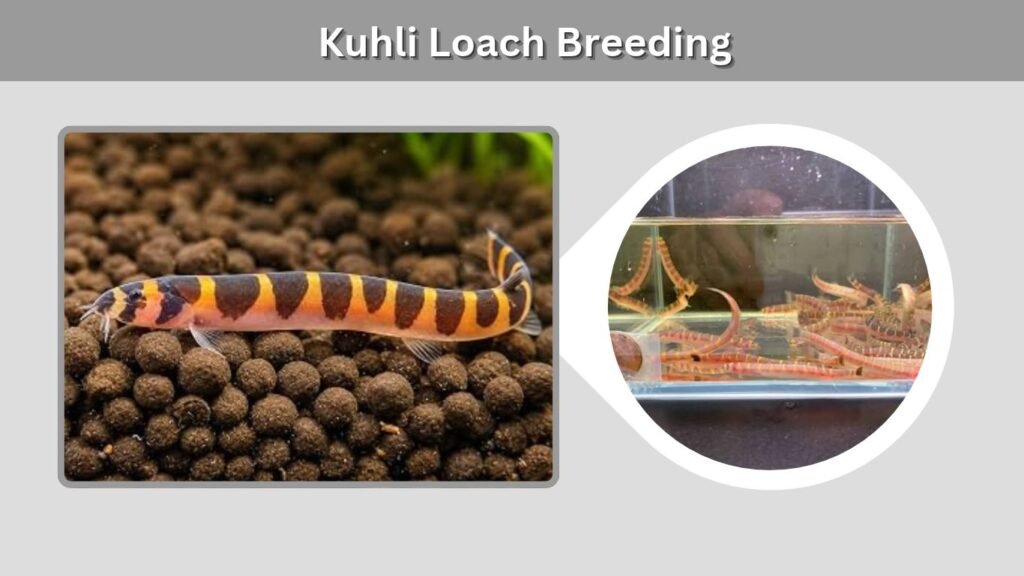
Breeding kuhli loaches in home aquariums is uncommon and often occurs unexpectedly.
Females carrying eggs may appear noticeably fuller around the abdomen.
Reproduction generally involves scattering eggs among plants or other sheltered areas.
Successful breeding requires suitable water conditions, mature fish, and protection for the eggs and newly hatched fry.
The young require very small foods until they become large enough to accept conventional aquarium diets.
FAQs
1. How Many Kuhli Loaches Should Be Kept Together?
Kuhli loaches should generally live in groups of at least five or six. Larger groups can encourage more natural social behavior.
2. Can Kuhli Loaches Live in a 10-Gallon Tank?
A 10-gallon aquarium is generally not recommended for a proper group. A 20-gallon tank offers better floor space and more stable conditions.
3. Are Kuhli Loaches Hardy Fish?
Kuhli loaches can be hardy once established in a mature aquarium. However, they are sensitive to poor water quality, unsuitable substrate, and sudden environmental changes.
4. Do Kuhli Loaches Eat Algae?
No. Kuhli loaches are not specialized algae eaters. They mainly consume small invertebrates and suitable sinking aquarium foods.
5. Can Kuhli Loaches Live With Bettas?
Yes, kuhli loaches may live with peaceful bettas when the aquarium provides enough space, hiding places, and compatible water conditions. Aggressive bettas may not be suitable tank mates.