
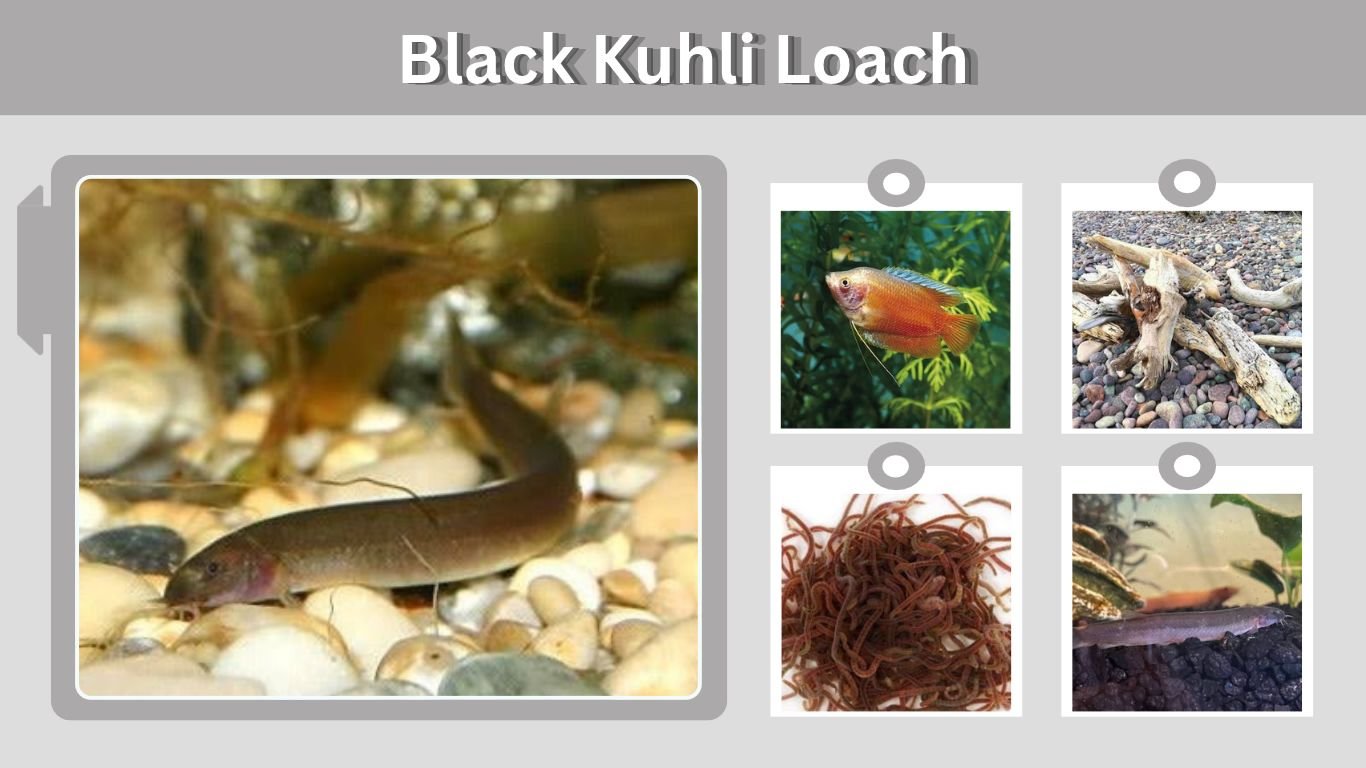
The black kuhli loach (Pangio oblonga) is a peaceful freshwater fish known for its slender, eel-like body, dark coloration, and unusual swimming behavior. Native to Southeast Asia, this fascinating bottom-dwelling fish is a popular choice for tropical community aquariums.
Unlike the familiar striped kuhli loach, the black kuhli loach has a relatively uniform dark brown or nearly black body. It spends much of its time exploring the aquarium bottom, hiding beneath decorations, and searching for food.
Black kuhli loaches are generally easy to care for in a mature aquarium, but they need soft substrate, suitable water conditions, hiding places, and companionship from other loaches.
Black Kuhli Loach Species Overview
The black kuhli loach belongs to the family Cobitidae and the genus Pangio. It is also commonly called the Java loach, chocolate kuhli loach, or cinnamon loach.
Although it resembles an eel, it is a true freshwater fish.
| Feature | Description |
| Common name | Black Kuhli Loach |
| Scientific name | Pangio oblonga |
| Family | Cobitidae |
| Origin | Southeast Asia |
| Habitat | Streams, rivers, and forest waterways |
| Adult size | Approximately 3–4 inches |
| Lifespan | Commonly 5–10 years |
| Diet | Small invertebrates and sinking foods |
| Temperament | Peaceful |
| Activity | Mostly nocturnal |
| Recommended tank | 20 gallons or larger |
| Group size | At least 5–6 |
| Care level | Easy to moderate |
How to Identify a Black Kuhli Loach
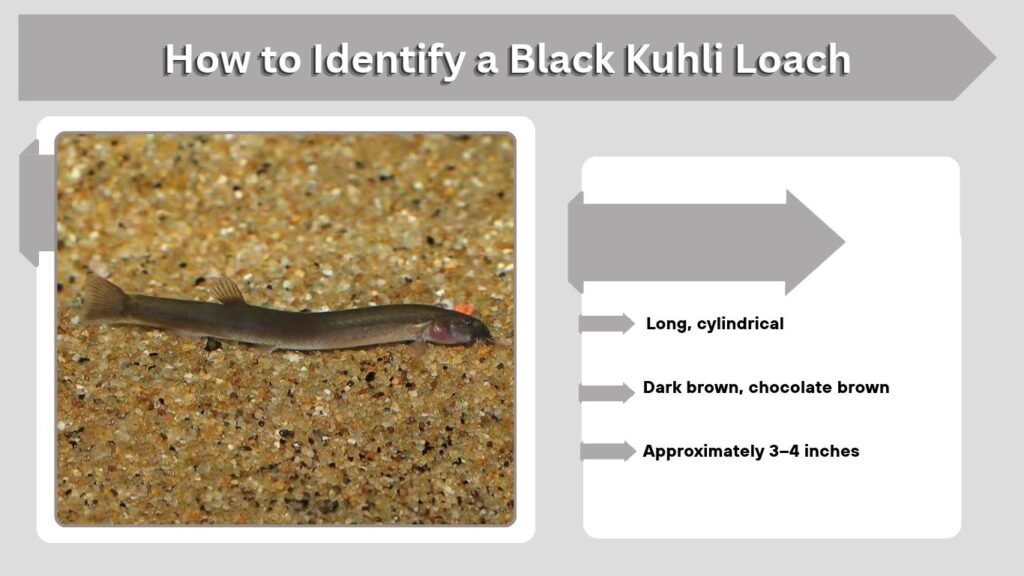
Black kuhli loaches have a distinctive body shape that makes them easy to recognize among aquarium fish.
Their long, flexible bodies allow them to move through narrow spaces between aquarium decorations and plants.
Identification Features
- Body shape: Long, cylindrical, and eel-like.
- Body color: Dark brown, chocolate brown, or nearly black.
- Size: Usually approximately 3–4 inches when fully grown.
- Head: Small and pointed, with a downward-facing mouth.
- Eyes: Small eyes with protective spines beneath them.
- Barbels: Short whisker-like structures surrounding the mouth.
- Fins: Small, rounded fins positioned toward the rear of the body.
- Belly: Sometimes slightly lighter than the upper body.
- Movement: Quick, flexible, snake-like swimming motions.
Unlike striped kuhli loaches, black kuhli loaches generally lack prominent yellow or orange bands.
Their coloration can vary slightly depending on genetics, age, lighting, and environmental conditions.
Where Do Black Kuhli Loaches Live?
Black kuhli loaches naturally inhabit freshwater environments throughout parts of Southeast Asia.
They occur in Indonesia, Malaysia, Thailand, and surrounding regions.
Their natural habitats include slow-moving streams, forest waterways, and areas with submerged vegetation.
These environments often contain sandy or muddy bottoms covered with fallen leaves, branches, and other organic materials.
Black kuhli loaches spend much of their time beneath this natural cover, where they find protection and search for small aquatic organisms.
In aquariums, providing similar hiding places helps encourage natural behavior.
Black Kuhli Loach vs. Striped Kuhli Loach
Black and striped kuhli loaches have similar body shapes and feeding habits, but their appearance differs considerably.
The black kuhli loach is commonly identified as Pangio oblonga, while many striped kuhli loaches sold in aquarium stores belong to Pangio semicincta or related species.
| Feature | Black Kuhli Loach | Striped Kuhli Loach |
| Scientific name | Pangio oblonga | Often Pangio semicincta |
| Body color | Dark brown to black | Yellowish or orange |
| Markings | Usually no bold bands | Dark vertical bands |
| Body shape | Slender, eel-like | Slender, eel-like |
| Adult size | Around 3–4 inches | Around 3–4 inches |
| Temperament | Peaceful | Peaceful |
| Diet | Small invertebrates | Small invertebrates |
Both fish prefer soft substrate, stable water conditions, and groups of their own kind.
How Big Do Black Kuhli Loaches Get?
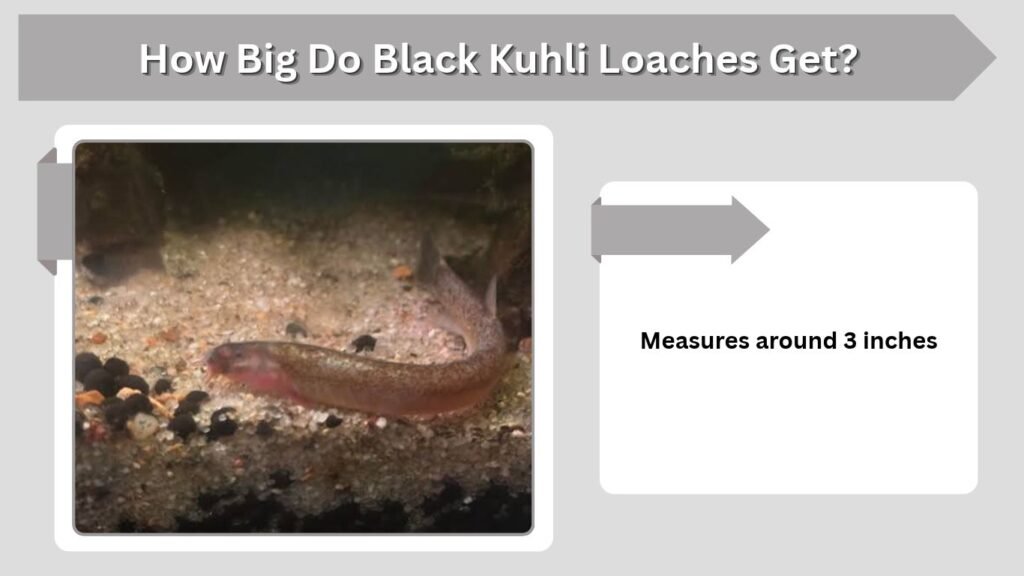
A full-grown black kuhli loach typically measures around 3 inches, with some individuals approaching 4 inches in total length.
Young specimens sold in aquarium stores may measure only 1–2 inches.
Black Kuhli Loach Growth Rate
Growth depends on several factors:
- Food quality and availability
- Water temperature
- Aquarium cleanliness
- Genetics
- Overall health
- Stress levels
Black kuhli loaches gradually develop their adult body length and thickness.
Unlike clown loaches, they remain relatively small throughout their lives, making them suitable for well-maintained medium-sized aquariums.
Black Kuhli Loach Tank Size and Setup
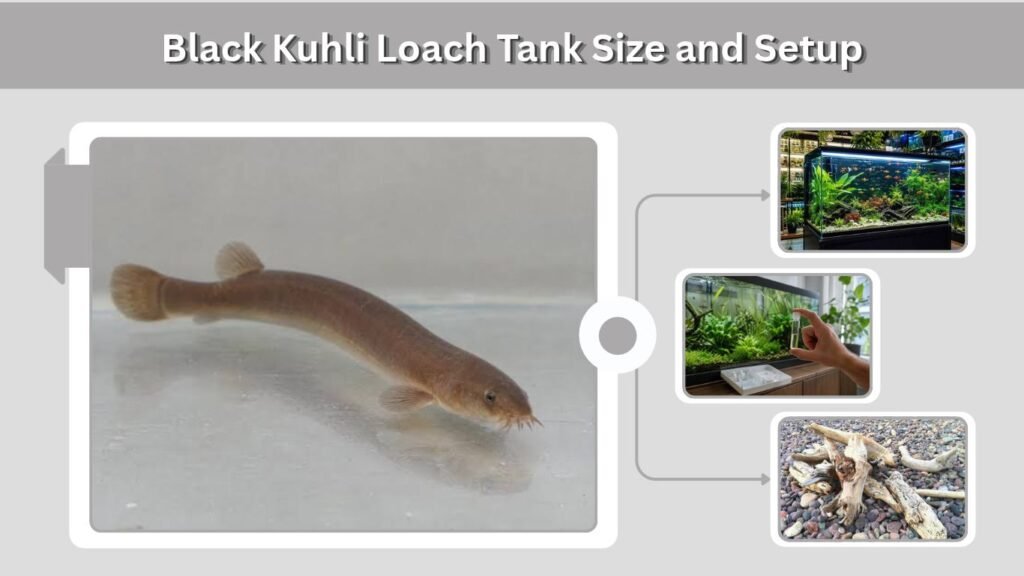
Black kuhli loaches need an aquarium with adequate bottom space, suitable hiding places, and stable water quality.
Although they are small fish, they naturally explore the substrate and should not be kept in cramped conditions.
Recommended Tank Size
A 20-gallon aquarium is a practical starting point for a group of black kuhli loaches.
A longer aquarium is particularly beneficial because it provides additional floor space.
A 10-gallon tank is generally not recommended for maintaining a proper social group.
Aquarium Substrate and Decorations
Fine sand is an excellent substrate for black kuhli loaches.
These fish frequently search through the bottom material for food and may occasionally bury themselves.
Suitable aquarium decorations include:
- Driftwood
- Smooth rocks
- Small caves
- Live aquatic plants
- Leaf litter
- Sheltered hiding areas
Avoid sharp gravel that could injure their delicate bodies and barbels.
A secure aquarium lid is also important because black kuhli loaches can escape through small openings.
Black Kuhli Loach Temperature and Water Parameters
Black kuhli loaches prefer warm, clean freshwater with stable conditions.
| Water parameter | Recommended condition |
| Temperature | 70–79°F (21–26°C) |
| pH | Preferably acidic to neutral |
| Water hardness | Soft water |
| Ammonia | 0 ppm |
| Nitrite | 0 ppm |
| Water flow | Gentle to moderate |
Maintaining stable water chemistry is more important than making frequent adjustments to achieve an exact pH reading.
Regular partial water changes, effective filtration, and routine testing help maintain a healthy aquarium.
What Do Black Kuhli Loaches Eat?
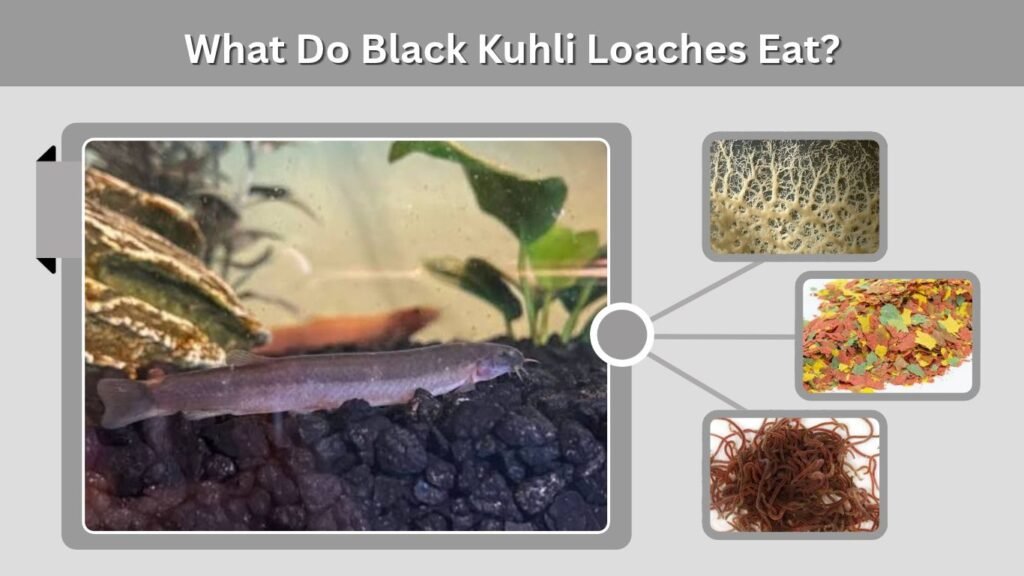
Black kuhli loaches primarily feed on small aquatic invertebrates.
In their natural habitat, they search through the substrate for insect larvae, worms, tiny crustaceans, and other available food.
Best Food for Black Kuhli Loaches
Suitable aquarium foods include:
- Sinking fish pellets
- Frozen bloodworms
- Live blackworms
- Brine shrimp
- Daphnia
- Small sinking granules
Providing a varied diet supports their growth and overall health.
Because black kuhli loaches are often most active after dark, feeding during the evening can help ensure they receive enough food.
They should not depend entirely on leftover food from other aquarium fish.
Do Black Kuhli Loaches Eat Snails?
Black kuhli loaches are not reliable snail-eating fish.
Although they may occasionally consume tiny organisms or vulnerable snail eggs, they generally do not hunt healthy adult snails.
They should not be purchased specifically to control aquarium snail populations.
Black kuhli loaches are also not specialized algae eaters. Their main diet should consist of appropriate sinking foods and small animal-based foods.
Best Black Kuhli Loach Tank Mates
Black kuhli loaches are peaceful fish that usually coexist with other nonaggressive freshwater species.
Suitable tank mates may include:
- Small tetras
- Peaceful rasboras
- Corydoras catfish
- Small gouramis
- Peaceful bettas
- Adult freshwater shrimp
- Nerite snails
Compatibility depends on aquarium size, water conditions, and individual fish behavior.
Large predatory fish, aggressive cichlids, and goldfish are generally unsuitable companions.
Goldfish usually prefer cooler conditions, while larger predators may view kuhli loaches as prey.
Black Kuhli Loach Behavior
Black kuhli loaches are naturally shy fish that spend considerable time beneath decorations or resting among plants.
They are usually more active during the evening and nighttime.
Are Black Kuhli Loaches Aggressive?
No. Black kuhli loaches are generally peaceful toward other aquarium fish.
They may occasionally chase one another during social interactions, but serious aggression is uncommon.
Why Do Black Kuhli Loaches Swim in Circles?
Black kuhli loaches sometimes display rapid swimming movements along aquarium glass.
This behavior may occur after water changes, during periods of increased activity, or when fish are adjusting to new conditions.
However, continuous frantic swimming accompanied by other unusual symptoms may indicate stress or a water-quality problem.
Black Kuhli Loach Lifespan
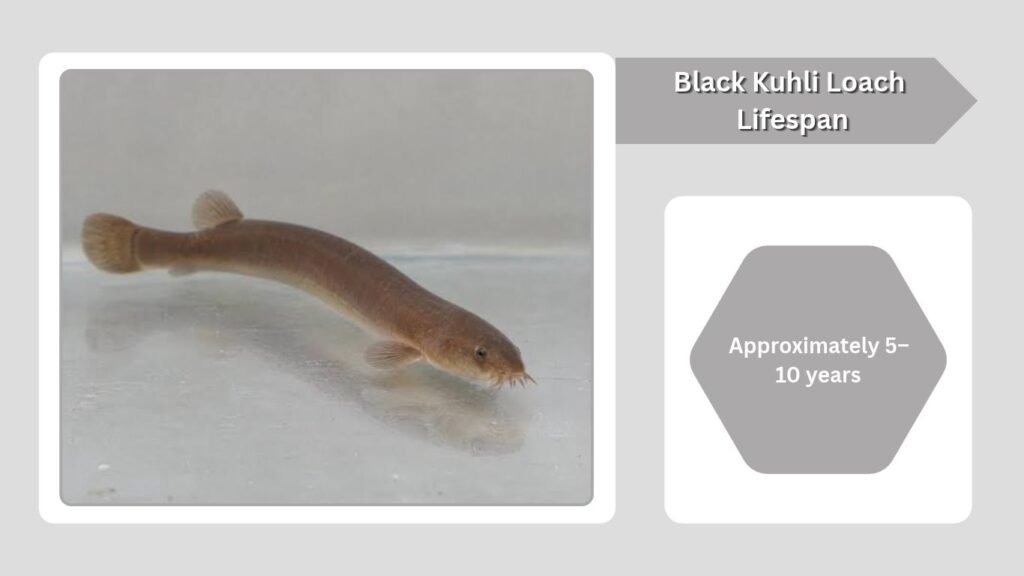
Black kuhli loaches commonly live for approximately 5–10 years in captivity.
Some individuals may live longer when maintained under excellent conditions.
Their lifespan depends on suitable nutrition, clean water, low stress, and an appropriate social environment.
Keeping several black kuhli loaches together and providing sufficient hiding places helps support their natural behavior.
Black Kuhli Loach Breeding
Breeding black kuhli loaches in home aquariums is uncommon.
Successful reproduction usually requires mature, healthy fish and suitable environmental conditions.
Females carrying eggs may develop noticeably rounded abdomens.
Like other kuhli loaches, they are egg-laying fish.
Breeding observations in home aquariums are limited, and reliable methods are not well established.
If spawning occurs, eggs and newly hatched fry may require protection from adult fish and other aquarium inhabitants.
FAQs
1. How Many Black Kuhli Loaches Should Be Kept Together?
Black kuhli loaches should generally be kept in groups of at least five or six. They are social fish that feel more secure when surrounded by others.
2. Can Black Kuhli Loaches Live With Bettas?
Yes. Black kuhli loaches can sometimes live with peaceful bettas in properly maintained aquariums. However, aggressive bettas may disturb them.
3. Do Black Kuhli Loaches Eat Shrimp?
Black kuhli loaches generally coexist peacefully with adult freshwater shrimp. However, very small shrimp babies may occasionally be eaten.
4. Can You Keep One Black Kuhli Loach?
Keeping a single black kuhli loach is not recommended. These fish benefit from living in groups, which helps them feel secure and display natural behaviors.
5. Are Black Kuhli Loaches Good for Beginners?
Black kuhli loaches can be suitable for beginners who have an established aquarium. Their peaceful temperament and manageable size make them attractive community fish, but they still require proper water quality, soft substrate, and companionship.