
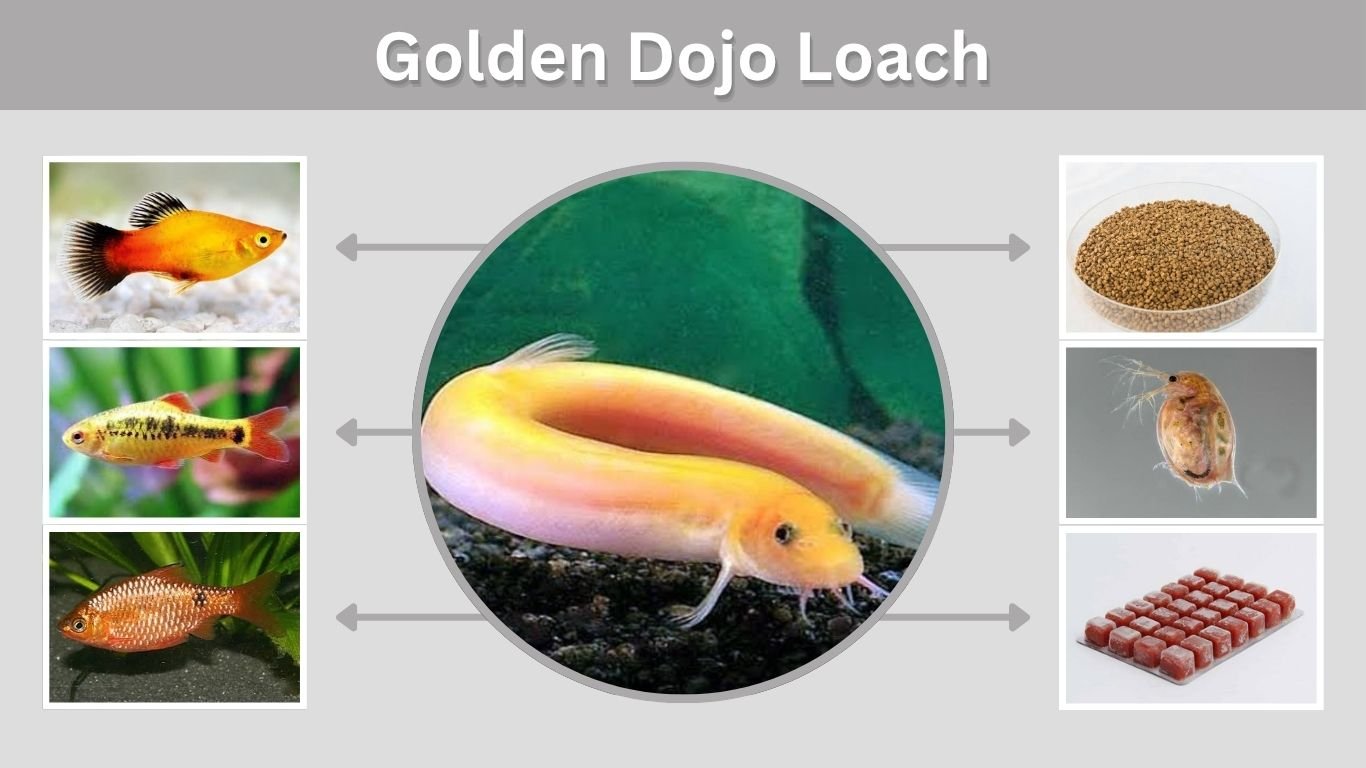
The golden dojo loach is a colorful freshwater fish recognized by its elongated body, golden-yellow appearance, and playful personality. Also known as the gold dojo loach or golden weather loach, this fish is a popular variety of the dojo loach (Misgurnus anguillicaudatus). Unlike many tropical aquarium fish, golden dojo loaches prefer cooler water and spend much of their time exploring the bottom of the tank. They are generally peaceful and can live alongside compatible freshwater species. However, their adult size, feeding habits, and need for a spacious aquarium make proper care essential for long-term health.
What Is a Golden Dojo Loach?
The golden dojo loach is a color variation of the common dojo loach, a freshwater species belonging to the Cobitidae family.
Wild dojo loaches naturally occur in parts of East Asia, including China, Japan, Korea, and surrounding regions. They inhabit rivers, ponds, wetlands, and other freshwater environments with soft bottoms.
Golden varieties are bred for their attractive coloration, which ranges from pale yellow to deep gold.
Golden Dojo Loach Identification
The easiest way to identify a golden dojo loach is by examining its body shape, coloration, and mouth.
- Body color: Golden-yellow, creamy yellow, or light orange.
- Body shape: Long, cylindrical, and eel-like.
- Head: Rounded with a downward-facing mouth.
- Barbels: Several whisker-like sensory structures around the mouth.
- Fins: Small, rounded fins that may appear translucent.
- Eyes: Usually dark, although true albino individuals have reddish eyes.
Some golden dojo loaches have faint spots or darker markings. These variations are generally normal pigmentation differences.
Golden Dojo Loach Size: How Big Do They Get?
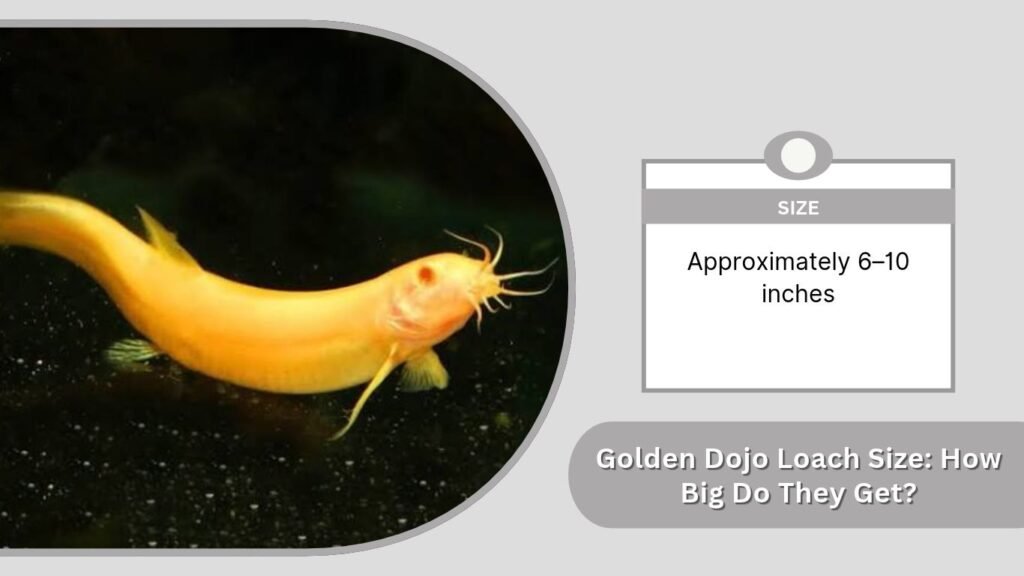
A full-grown golden dojo loach commonly measures approximately 6–10 inches (15–25 cm) in length.
Some individuals can reach around 11 inches or more under favorable conditions.
Golden dojo loaches grow to approximately the same size as naturally colored dojo loaches because they belong to the same species.
| Growth stage | Approximate length |
| Small juvenile | 2–3 inches |
| Growing juvenile | 3–6 inches |
| Typical adult | 6–10 inches |
| Large adult | 10–11+ inches |
These are general size categories, not exact age-based growth stages.
How Fast Do Golden Dojo Loaches Grow?
Growth rates vary depending on feeding, genetics, aquarium conditions, and water quality.
Young golden dojo loaches may grow noticeably during their first year, but growth usually slows as they approach adulthood.
A nutritious diet and stable environment support healthy development. Overfeeding does not guarantee faster or healthier growth.
Golden Dojo Loach Tank Size and Setup
Golden dojo loaches are active bottom dwellers that require enough room to swim, turn, forage, and explore.
A long aquarium is more suitable than a tall tank with limited bottom space.
For long-term care, aim for a tank with a footprint of at least 48 × 18 inches, approximately 65 gallons or larger. A group or a community with other large fish may require additional space.
A 20-gallon aquarium is not appropriate for a full-grown golden dojo loach.
Best Tank Setup for Golden Dojo Loaches
- Substrate: Fine aquarium sand or smooth, small gravel.
- Hiding places: Driftwood, secure caves, and rounded rocks.
- Plants: Java fern, Anubias, or other suitable cool-water plants.
- Filtration: Reliable filtration with gentle to moderate flow.
- Lighting: Moderate or subdued lighting with shaded areas.
- Lid: A tightly fitting aquarium cover.
Golden dojo loaches enjoy digging and occasionally burying themselves beneath the substrate.
Sharp gravel should be avoided because it can injure their skin and sensitive barbels.
Decorations must be stable because these fish can dig beneath objects and accidentally cause unsecured structures to shift.
Golden Dojo Loach Temperature and Water Conditions
Golden dojo loaches prefer cooler freshwater rather than the consistently warm temperatures used for tropical community fish.
Maintaining suitable water conditions supports normal activity, appetite, and long-term health.
| Parameter | Recommended conditions |
| Water temperature | 64–74°F (18–23°C) |
| pH | 6.0–8.0 |
| Hardness | Approximately 1–12 dGH |
| Ammonia | 0 ppm |
| Nitrite | 0 ppm |
| Water movement | Gentle to moderate |
Avoid keeping golden dojo loaches in excessively warm aquariums for extended periods.
In warmer climates, an aquarium cooling system may be necessary.
Regular water testing, adequate filtration, and partial water changes help maintain a stable environment.
Golden Dojo Loach Food and Diet

Golden dojo loaches are omnivorous bottom feeders. In natural environments, dojo loaches primarily forage for worms, insect larvae, small crustaceans, and other aquatic organisms.
In captivity, they readily accept a variety of sinking foods.
Best Foods for Golden Dojo Loaches
Suitable foods include:
- High-quality sinking pellets.
- Frozen bloodworms.
- Live or frozen brine shrimp.
- Daphnia.
- Suitable worm-based foods.
- Balanced commercial bottom-feeder diets.
Offer varied foods rather than relying on a single product.
Adult fish can generally be fed once or twice daily in portions they consume without leaving excessive waste.
Because golden dojo loaches search for food along the aquarium bottom, sinking foods are particularly useful.
Do Golden Dojo Loaches Eat Snails?
Yes, golden dojo loaches may eat small aquarium snails.
They use their sensitive barbels to locate food hidden within the substrate.
However, they are not guaranteed snail-control fish and may ignore larger snails or species with difficult-to-access shells.
Small shrimp and fish fry may also become food, making these loaches unsuitable for some breeding aquariums.
Golden Dojo Loach Tank Mates
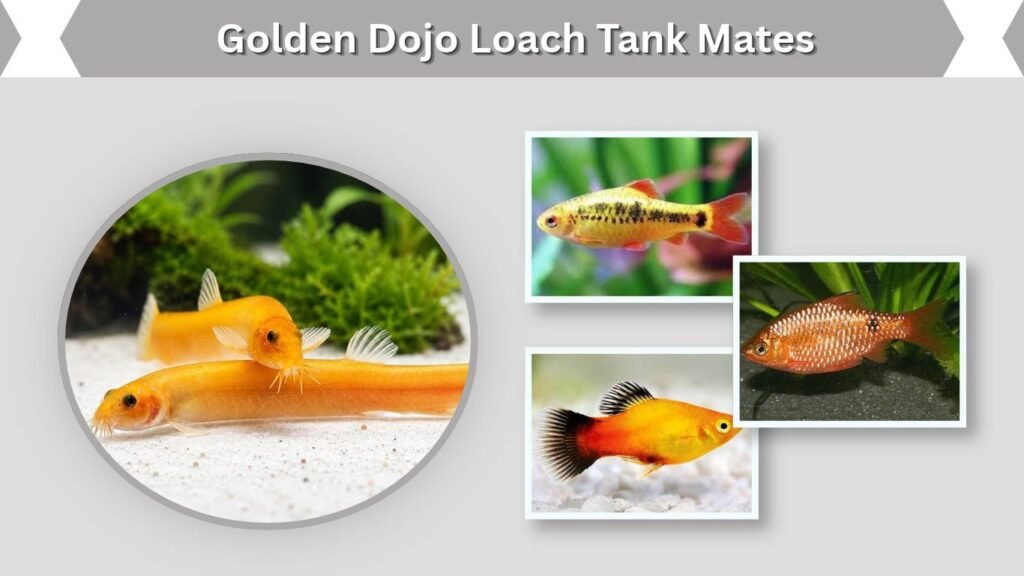
Golden dojo loaches are generally peaceful and can live with other nonaggressive fish that prefer similar water temperatures.
The best companions are species that tolerate cooler freshwater and do not compete aggressively for food.
Suitable Tank Mates
Potential companions include:
- Standard dojo loaches.
- Rosy barbs.
- Golden barbs.
- Variatus platies.
- Appropriate single-tailed goldfish.
- Other peaceful, cool-water fish of suitable size.
Tank compatibility depends on available space, adult fish size, and individual behavior.
Can Golden and Regular Dojo Loaches Live Together?
Yes. Golden dojo loaches and naturally colored dojo loaches belong to the same species and can live together.
Their coloration does not create different temperature, feeding, or social requirements.
Keeping compatible dojo loaches together also provides opportunities for natural social interaction.
Fish to Avoid
Aggressive cichlids, very small fish, and delicate tank inhabitants may be unsuitable companions.
Bettas are generally not recommended because their preferred warmer temperatures differ from those of dojo loaches.
Fancy goldfish can also be problematic because energetic dojo loaches may disturb them during feeding.
Golden Dojo Loach Behavior
Golden dojo loaches are curious fish known for their unusual movements and energetic personalities.
They frequently explore decorations, search through sand, and rest beneath plants or driftwood.
Are Golden Dojo Loaches Aggressive?
No. Golden dojo loaches are normally peaceful toward other fish.
However, their enthusiastic feeding behavior may disturb slow-moving aquarium companions.
They may occasionally chase one another without displaying serious aggression.
Why Do Golden Dojo Loaches Swim Around Suddenly?
Dojo loaches are sometimes called weather loaches because they reportedly become more active when atmospheric pressure changes.
Sudden swimming activity can also occur during feeding or exploration.
Persistent frantic swimming, especially when accompanied by other unusual symptoms, may indicate poor water conditions or stress.
Golden Dojo Loach Lifespan
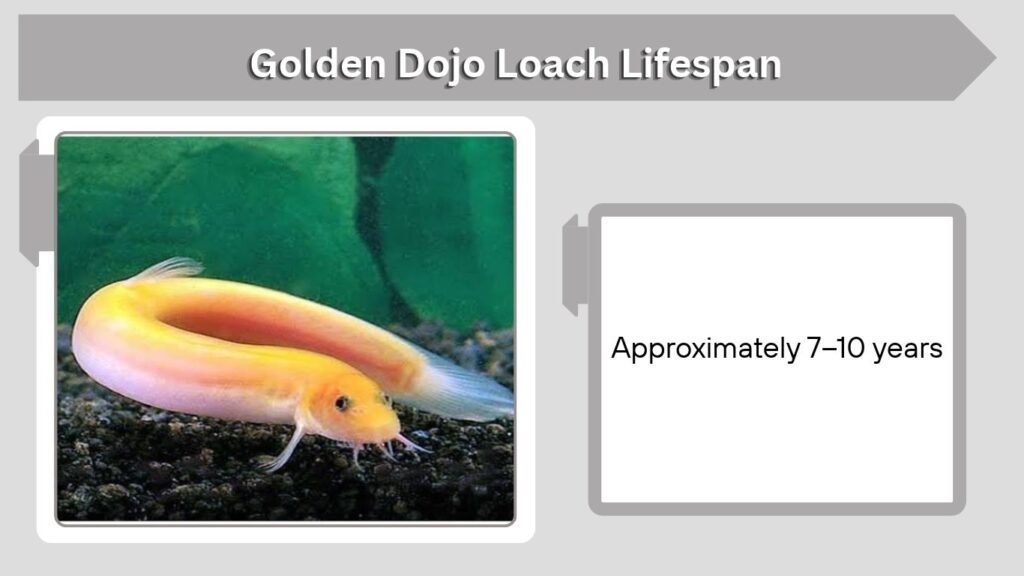
Golden dojo loaches commonly live approximately 7–10 years or longer when provided with appropriate care.
Lifespan varies depending on genetics, health, nutrition, and aquarium conditions.
To support a healthy life:
- Maintain stable, cool water temperatures.
- Provide enough swimming space.
- Feed a nutritious and varied diet.
- Perform regular water changes.
- Avoid sharp substrate and unstable decorations.
- Monitor for illness or unusual behavior.
Because golden dojo loaches can live for many years, purchasing one should be considered a long-term commitment.
Golden Dojo Loach Male vs. Female
Male and female golden dojo loaches look similar, especially when young.
Mature females are often larger and have fuller bodies.
Mature males generally have more developed pectoral fins, including a noticeably thickened fin ray.
These physical differences become easier to observe as the fish mature.
Color alone cannot determine whether a golden dojo loach is male or female.
Golden Dojo Loach vs. Albino Dojo Loach
Golden and albino dojo loaches are sometimes confused because both can have light-colored bodies.
However, they are not necessarily the same color variation.
| Feature | Golden dojo loach | True albino dojo loach |
| Body color | Yellow to golden | Pale yellow, white, or pinkish |
| Eye color | Usually dark | Reddish or pink |
| Pigmentation | Reduced or altered | Lacks normal melanin pigmentation |
| Care requirements | Standard dojo loach care | Standard dojo loach care |
A golden dojo loach with dark eyes should not automatically be described as albino.
Both varieties can generally coexist under appropriate aquarium conditions.
FAQs
1. Can Golden Dojo Loaches Live Alone?
A golden dojo loach can survive alone, but these fish benefit from interactions with others of their species. Keeping a compatible group is preferable when sufficient aquarium space is available.
2. Do Golden Dojo Loaches Need Sand?
Fine sand is strongly recommended because golden dojo loaches naturally dig and forage through the substrate. Smooth, fine gravel may also work, but sharp or coarse gravel should be avoided.
3. Do Golden Dojo Loaches Eat Shrimp?
Yes. Golden dojo loaches may consume small shrimp, particularly juveniles. Adult shrimp are not necessarily safe either, so a separate shrimp aquarium is the more reliable option.
4. Why Does My Golden Dojo Loach Float?
Occasional unusual positioning may be associated with swallowed air, resting, or normal movement. However, persistent floating, upside-down swimming, or loss of balance can indicate a problem requiring water testing and veterinary assessment.
5. What Is the Difference Between a Golden Dojo Loach and a Regular Dojo Loach?
The primary difference is coloration. Golden dojo loaches have yellow or golden bodies, while regular dojo loaches usually display brown or olive coloration with darker markings. Their size, diet, behavior, and care requirements are essentially the same.