
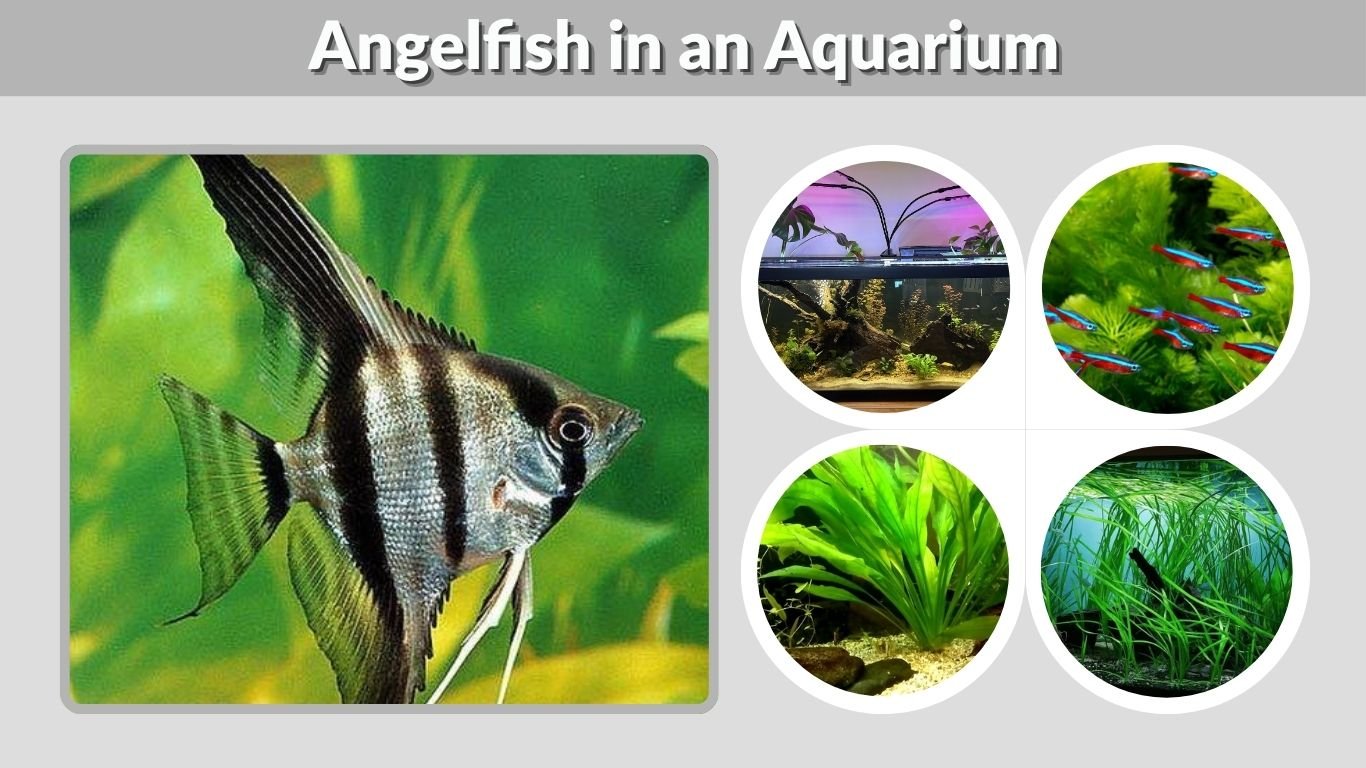
Angelfish are elegant freshwater cichlids known for their tall bodies, triangular fins, and graceful swimming. The species most commonly kept in home aquariums is Pterophyllum scalare, a South American fish adapted to warm, slow-moving waters filled with plants and submerged branches. Although young angelfish look suitable for small tanks, adults need considerable height, stable water conditions, appropriate tank mates, and a varied diet.
Freshwater Angelfish vs. Marine Angelfish
Freshwater and marine angelfish are entirely different groups. This guide focuses on Pterophyllum species, especially the commonly sold freshwater angelfish.
Marine angelfish, including queen, emperor, flame, French, and coral beauty angelfish, require saltwater aquariums and species-specific reef care. They should never be placed in a freshwater angelfish setup.
Freshwater Angelfish Aquarium Requirements
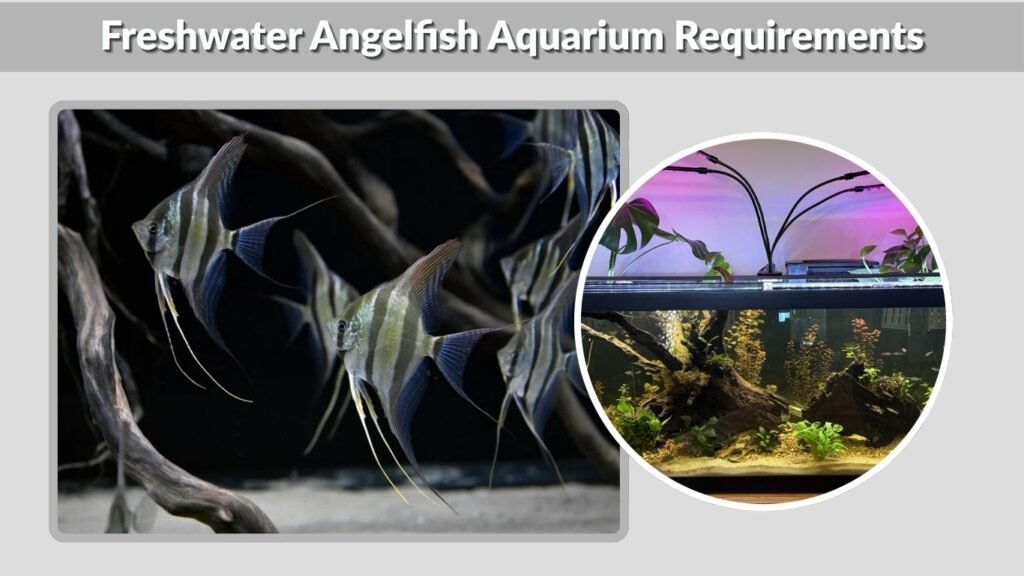
A successful angelfish tank should provide warm, clean water, gentle circulation, sufficient vertical swimming room, and protected areas among plants and driftwood.
| Requirement | Recommended condition |
| Aquarium size | Preferably 55 gallons or larger for full-grown adults |
| Temperature | 78–84°F or 26–29°C |
| pH | Approximately 6.8–7.8 |
| Water flow | Gentle to moderate |
| Substrate | Smooth gravel or sand |
| Décor | Tall plants, broad leaves, and vertical driftwood |
| Diet | Quality pellets or flakes with frozen foods |
| Temperament | Generally peaceful but territorial when breeding |
| Lifespan | Around 8–12 years with good care |
Captive-bred angelfish can adapt to a reasonably broad range of conditions, but stability is more important than constantly adjusting the water toward one exact number.
What Size Aquarium Do Angelfish Need?
Angelfish grow taller than many similarly sized aquarium fish because of their long dorsal, anal, and ventral fins. Adult P. scalare may reach around six inches in body length and approximately eight inches in total height when their fins are included.
Is a 20-Gallon Aquarium Large Enough?
A 20-gallon aquarium is not a good permanent community tank for several adult angelfish. A 20-gallon high tank may be used temporarily for an established breeding pair because it provides vertical space and allows the pair to be managed separately. However, it offers limited room for tank mates and territorial behavior.
For a long-term display aquarium, a 55-gallon or larger tank is a safer general recommendation. Larger tanks dilute waste more effectively, provide additional territories, and reduce the likelihood that weaker fish will remain trapped near an aggressive individual. A tall aquarium is preferable to a shallow design.
How Many Angelfish Can Be Kept Together?
A single angelfish can live as the centerpiece of a community aquarium. Groups of juveniles may initially stay together, but aggression can increase as they mature and form breeding pairs.
Aquarists raising a group should have enough space and a plan for separating fish if persistent fighting develops. Angelfish are cichlids, and even normally calm individuals may defend partners, eggs, or preferred areas.
Ideal Water Conditions
Freshwater angelfish originate from tropical South American waters. FishBase records a natural temperature range of approximately 24–30°C and a pH range of 6.0–8.0. Captive-raised aquarium strains are often more adaptable than wild fish.
Temperature and pH
For a typical home aquarium, maintain:
- Temperature between 78°F and 84°F
- pH between approximately 6.8 and 7.8
- Low ammonia and nitrite
- Stable nitrate levels through regular maintenance
- Consistent hardness rather than sudden fluctuations
Use a reliable heater and thermometer. Rapid temperature or pH changes can be more stressful than a stable reading near the upper or lower end of the acceptable range.
Filtration and Water Changes
Choose a filter that handles the aquarium’s biological load without creating an excessively strong current. Angelfish naturally inhabit quiet or slow-moving water and may struggle when forced to swim continuously against powerful flow.
Aqueon recommends either changing about 10% of the water weekly or approximately 25% every other week. The ideal schedule may vary with stocking level, feeding, plant growth, and filter capacity. Always condition replacement tap water before adding it to the aquarium.
Setting Up a Planted Angelfish Aquarium
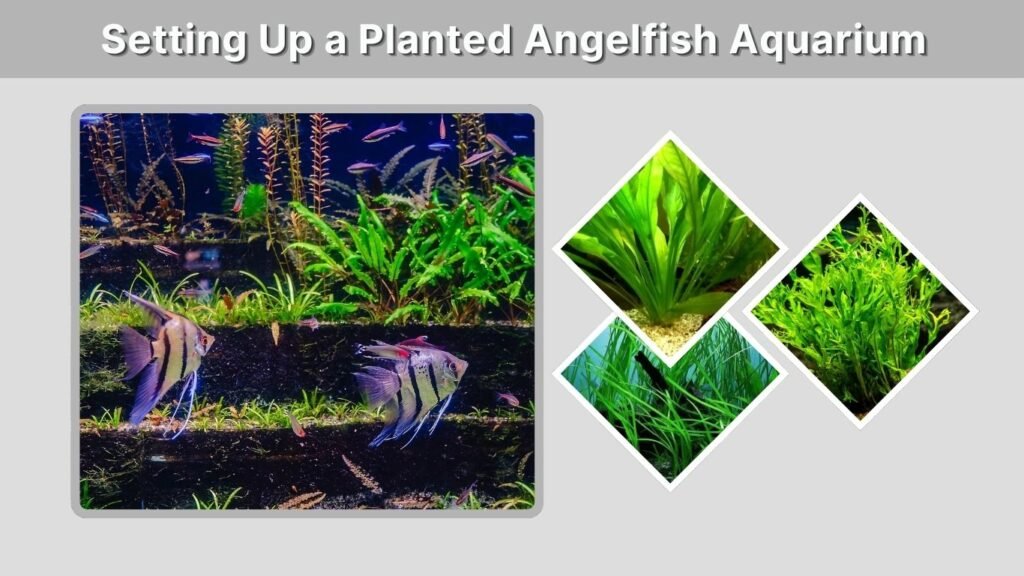
A planted aquarium complements the angelfish’s shape and natural behavior. Wild freshwater angelfish occupy densely vegetated areas and use their compressed bodies to move between plants, roots, and submerged branches.
Best Aquarium Plants for Angelfish
Suitable plants include:
- Amazon sword
- Java fern
- Anubias
- Vallisneria
- Water sprite
- Cryptocoryne
- Floating plants
Tall plants can be placed along the back and sides while leaving an open swimming area in the center. Broad leaves are particularly useful because angelfish may select them as egg-laying surfaces. Java fern is a beginner-friendly choice that creates tall cover without requiring intense light.
Substrate, Driftwood, and Decorations
Smooth gravel or aquarium sand works well. Add vertically positioned driftwood to imitate submerged roots and fallen branches, but ensure every piece is stable and has no sharp projections that could tear long fins.
Floating plants can produce shaded areas, while darker backgrounds and natural wood may help create the subdued appearance of an Amazon-inspired aquarium. Do not fill every area with décor; angelfish still require clear space for turning and swimming.
What Do Angelfish Eat in an Aquarium?
Angelfish are omnivorous and accept floating, slowly sinking, and bottom-reaching foods. In nature, they consume worms, insects, small crustaceans, fish eggs, fry, and some plant material.
Use quality tropical pellets, granules, or flakes as the main diet. Add variety with frozen or appropriately prepared foods such as brine shrimp, bloodworms, mysis shrimp, and daphnia.
Feed adults once or twice daily, providing only an amount they can finish within a few minutes. Overfeeding raises the aquarium’s waste level and can contribute to poor water quality. Rotating foods provides a broader nutritional profile than depending on one product.
Angelfish in a Community Aquarium
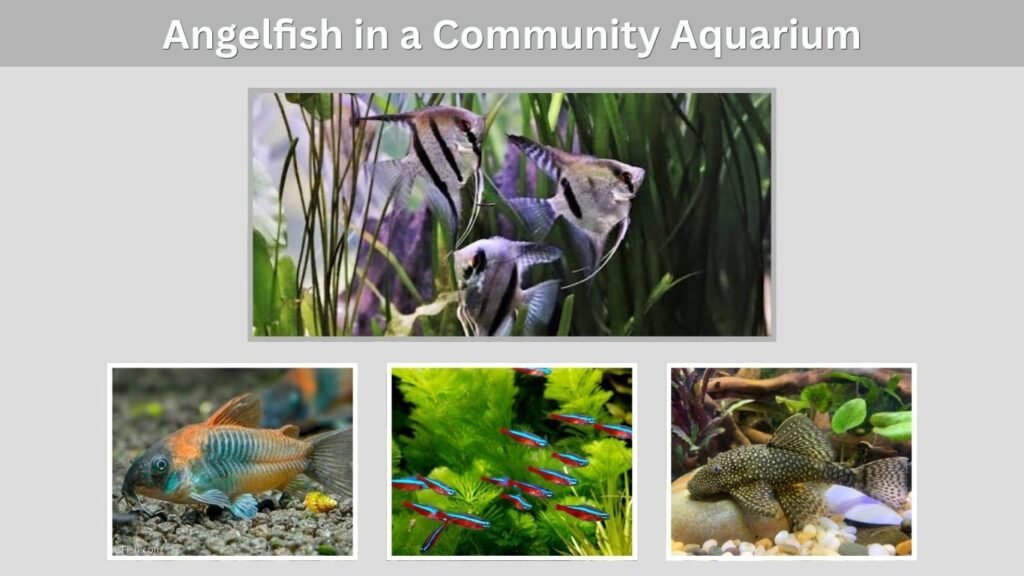
Angelfish can live in a community aquarium, but they should not automatically be treated as completely peaceful fish. They may chase one another, defend breeding sites, consume very small fish, or become targets for fin-nipping species.
Suitable Angelfish Tank Mates
Possible companions include:
- Corydoras catfish
- Bristlenose plecos
- Adult cardinal tetras
- Black skirt tetras
- Larger peaceful rasboras
- Peaceful gouramis
- Rainbowfish
- Medium-sized peaceful barbs
Tank mates should tolerate warm water and be too large to fit inside an adult angelfish’s mouth. They should also be calm enough to allow the slower-moving angelfish to feed properly.
Fish and Animals to Avoid
Avoid very small fish, tiny shrimp, persistent fin nippers, and highly aggressive cichlids. Adult angelfish may eat nano fish, fry, and dwarf shrimp, while fast barbs or similar species may repeatedly damage their trailing fins.
Betta compatibility is unpredictable because either fish may become aggressive. Discus can sometimes live with angelfish in a large, warm aquarium, but disease transmission, feeding competition, and territorial behavior require careful management.
Should You Use Aquarium Salt for Angelfish?
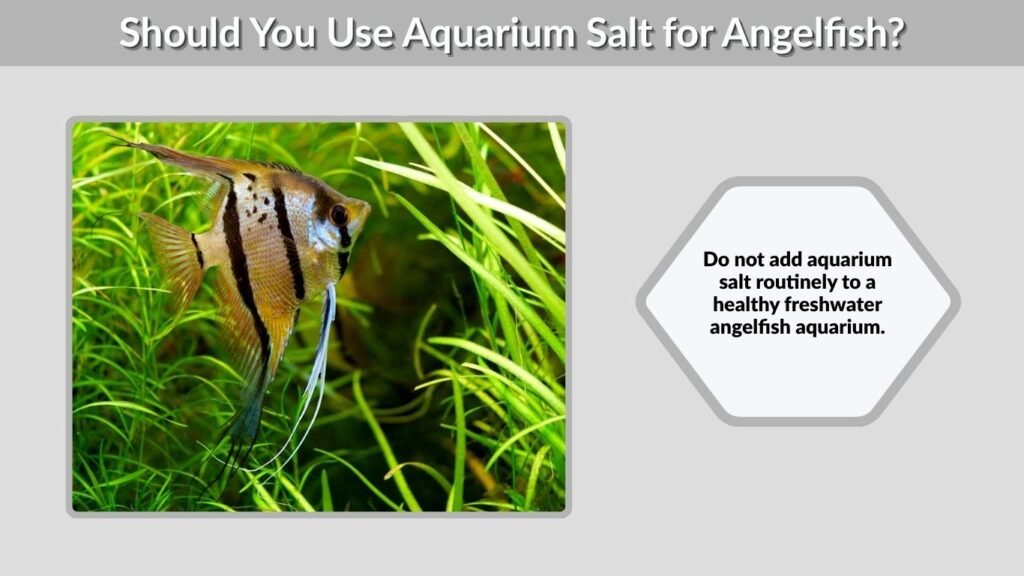
Do not add aquarium salt routinely to a healthy freshwater angelfish aquarium. Angelfish are freshwater fish, not brackish-water animals, and permanent salt use is unnecessary.
Salt can have limited applications in treating certain external parasites, nitrite exposure, or injuries, but the correct dose depends on the condition. Live plants, Corydoras, tetras, and other common community residents may be sensitive to salt. Treating a diagnosed fish in a separate hospital tank is often safer than salting the entire planted aquarium.
Angelfish Lifespan and Breeding
With clean water, low stress, adequate space, and a balanced diet, freshwater angelfish may live approximately 8–12 years. Their longevity makes the aquarium a long-term commitment rather than a temporary display.
Mature angelfish form pairs and clean a vertical surface before spawning. The female lays rows of adhesive eggs, and the male follows to fertilize them. Broad leaves, filter pipes, aquarium glass, and breeding slate may all be used as spawning surfaces. Parents often guard the eggs, although inexperienced captive pairs sometimes eat them.
FAQs
Can angelfish live in a 20-gallon aquarium?
A 20-gallon high aquarium may serve as a separate breeding tank for one established pair, but it is restrictive for a permanent community. Adult angelfish need vertical room and territorial space. A 55-gallon or larger aquarium is generally more suitable for long-term care.
What is the best temperature for an angelfish aquarium?
Maintain the aquarium between approximately 78°F and 84°F. Many keepers aim for around 80°F, which suits captive-raised angelfish and numerous compatible tropical species. Avoid rapid temperature changes, and confirm the water temperature with a dependable aquarium thermometer rather than relying only on the heater setting.
Can angelfish live in a planted aquarium?
Yes. Angelfish are particularly well suited to planted aquariums. Tall and broad-leaved plants provide shelter, visual barriers, and possible spawning surfaces. Leave open swimming room between planted areas and choose gentle filtration so the fish are not constantly fighting a powerful current.
How long do angelfish live in an aquarium?
Freshwater angelfish can live approximately 8–12 years when maintained in a spacious aquarium with stable warm water, effective filtration, regular water changes, and varied nutrition. Poor water quality, overcrowding, aggression, and an unsuitable diet can considerably reduce their lifespan.
Can freshwater angelfish live with marine angelfish?
No. Freshwater angelfish require a tropical freshwater aquarium, while queen, emperor, flame, French, and other marine angelfish require saltwater systems. They have completely different water chemistry, habitats, diets, and care requirements and cannot share the same aquarium.