
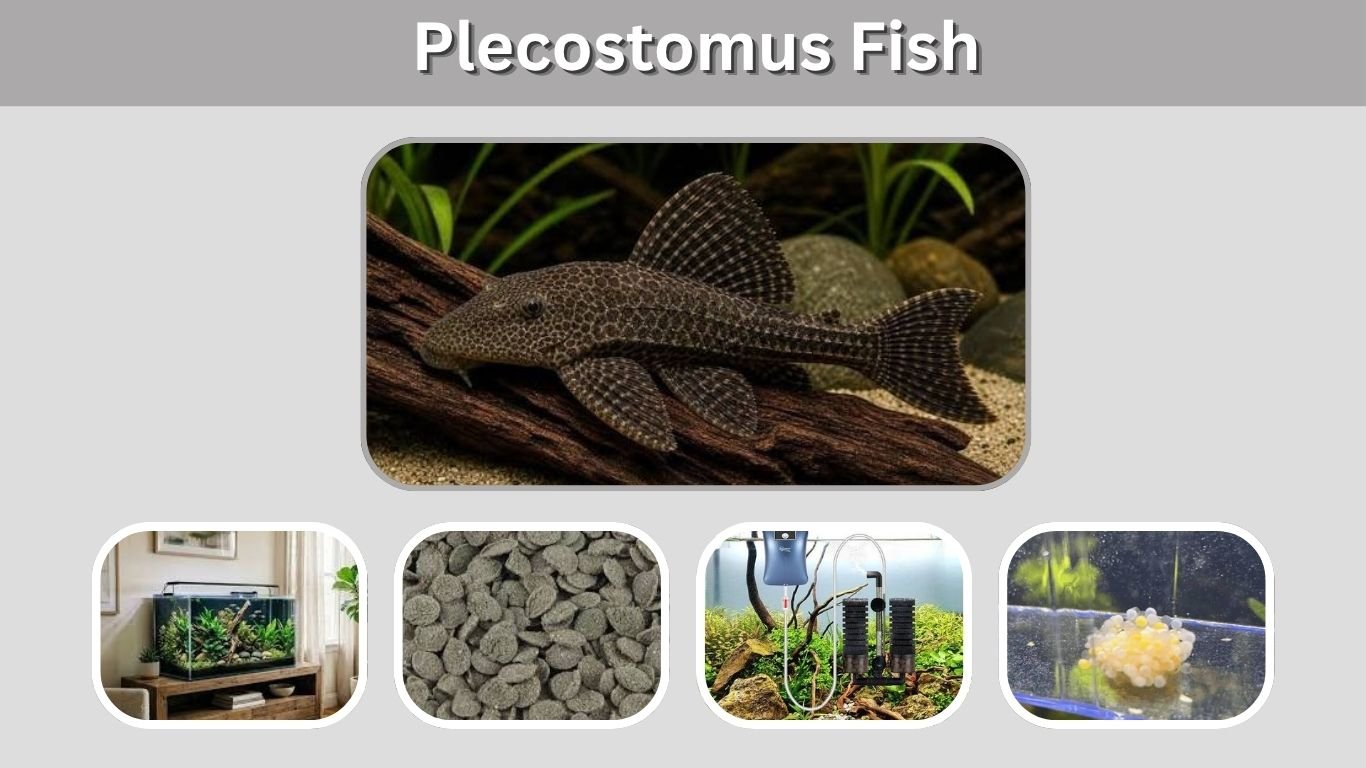
Thinking about adding a plecostomus fish to your aquarium? These armored freshwater catfish are known for their sucker-shaped mouths, striking patterns, and habit of grazing on surfaces. Yet not every pleco stays small, and many common varieties eventually need enormous tanks. Choosing the wrong species can lead to overcrowding, poor water quality, and difficult rehoming decisions. This guide explains plecostomus types, adult size, lifespan, diet, ideal tank conditions, behavior, and breeding so you can choose a suitable fish and care for it responsibly.
What Is a Plecostomus Fish?
Plecostomus, commonly called pleco, refers to various freshwater armored catfish belonging to the Loricariidae family. These fish originate primarily from South American rivers and streams. Their distinctive sucker-shaped mouths, protective body plates, and bottom-dwelling habits make them recognizable aquarium inhabitants. However, the name plecostomus covers many species with different sizes and care requirements.
Plecostomus Identification and Appearance
Plecostomus fish possess several distinctive characteristics that distinguish them from other freshwater catfish.
- Body Shape: Flattened, elongated bodies covered with protective bony plates.
- Mouth: Sucker-shaped mouths adapted for gripping surfaces and grazing.
- Coloration: Brown, black, gray, spotted, or striped patterns depending on species.
- Fins: Broad pectoral fins and often prominent dorsal fins.
- Behavior: Frequently rest on driftwood, rocks, or aquarium glass.
Natural Habitat and Distribution
Plecostomus species inhabit freshwater rivers, streams, and other aquatic environments throughout tropical South America.
Some prefer flowing, oxygen-rich waterways, while others occupy slower habitats with submerged wood and rocky shelters.
Their natural surroundings influence their dietary preferences, temperature requirements, and activity patterns.
Popular Types of Plecostomus Fish
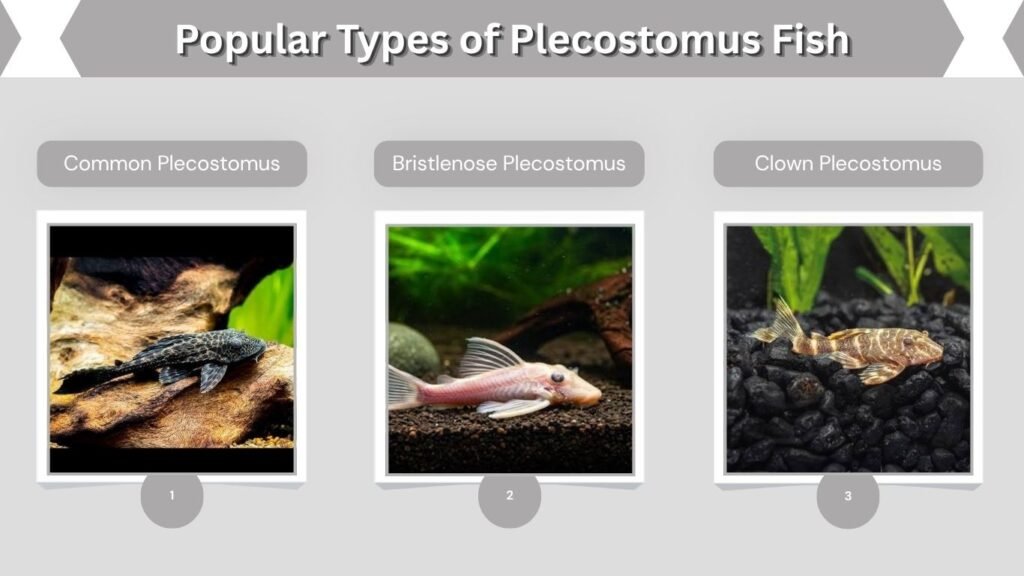
Plecostomus fish occur in numerous species and color varieties. Some are suitable for moderately sized community aquariums, while others become exceptionally large. Understanding these differences is important before purchasing a juvenile fish. Adult size, feeding preferences, and behavior should guide the selection process rather than appearance alone.
Common Plecostomus Varieties
- Common Plecostomus: Large armored catfish often sold under the names Hypostomus or Pterygoplichthys.
- Bristlenose Plecostomus: Compact fish with distinctive facial bristles, usually reaching 4–6 inches.
- Clown Plecostomus: Small, patterned catfish that commonly reach around 3–4 inches.
- Rubber Lip Plecostomus: Recognized by its broad lips and relatively compact body.
- Zebra Plecostomus: Black-and-white striped fish with specialized feeding requirements.
- Royal Plecostomus: Large, patterned fish particularly associated with grazing on submerged wood.
- Albino Plecostomus: Pale color varieties found among several pleco species.
Small vs Large Plecostomus Species
Smaller varieties, particularly bristlenose and clown plecos, are generally easier to accommodate in home aquariums.
Common and sailfin plecos require significantly more space as adults.
Never assume that a young pleco will remain small because of its size at the aquarium store.
Plecostomus Size and Lifespan
Plecostomus size varies considerably depending on the species. Some remain relatively compact, while others grow into substantial freshwater fish requiring specialized accommodations. Their potential longevity also makes them a long-term responsibility. Selecting an appropriately sized species is essential for maintaining suitable living conditions throughout its life.
How Big Do Plecostomus Get?
Common plecostomus varieties frequently reach 12–20 inches, with some growing approximately 24 inches under suitable conditions.
Smaller bristlenose plecos typically reach 4–6 inches, while clown plecos generally remain around 3–4 inches.
Growth rates depend on species, age, nutrition, and environmental conditions.
A small aquarium does not safely prevent growth and may instead cause chronic stress or poor health.
How Long Do Plecostomus Live?
Many large plecostomus varieties can live approximately 10–15 years in captivity, sometimes longer.
Smaller species often live around 5–10 years with appropriate care.
Their lifespan depends on stable water quality, balanced nutrition, sufficient space, and the absence of prolonged stress.
Plecostomus Tank Size and Aquarium Setup
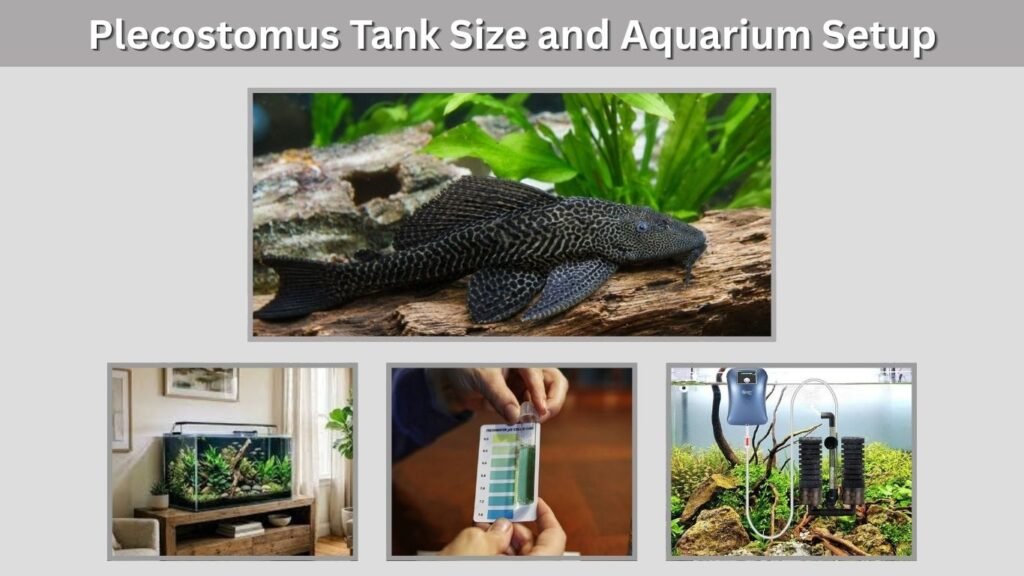
A properly designed aquarium should accommodate the plecostomus’s adult dimensions and natural behavior. These fish require suitable hiding places, substantial bottom space, and efficient filtration. Because larger species produce considerable waste, aquarium size and maintenance demands must be considered together when planning their habitat.
Minimum Plecostomus Tank Size
Common plecostomus generally require very large aquariums, often 125–180 gallons or more as adults, depending on their actual species and dimensions.
Bristlenose plecos can often live in appropriately maintained aquariums of 20–30 gallons or larger.
Tank length, available bottom space, filtration capacity, and compatibility with other fish influence the final requirements.
Plecostomus Water Temperature and Parameters
Suitable water conditions vary across plecostomus species, but many commonly kept tropical varieties prefer similar basic conditions.
- Temperature: Approximately 74–80°F (23–27°C) for many tropical species.
- pH Level: Around 6.5–7.8, depending on species.
- Ammonia: Maintain at 0 ppm.
- Nitrite: Maintain at 0 ppm.
- Filtration: Provide efficient filtration and adequate water circulation.
- Oxygenation: Maintain sufficient dissolved oxygen, especially for river-dwelling species.
Best Substrate and Decorations
Smooth gravel or aquarium sand can provide an appropriate bottom surface.
Driftwood, caves, rocks, and sturdy aquarium plants create sheltered areas that encourage natural behavior.
Driftwood is especially useful for wood-grazing species, although its importance varies.
Choose decorations that leave enough space for adult fish to move comfortably.
Plecostomus Food and Diet

Plecostomus fish are commonly described as algae eaters, but their feeding requirements are more complex. Some species primarily consume plant material and biofilm, while others require significant animal protein or wood-associated foods. Providing a species-appropriate diet supports healthy growth, digestion, and normal activity.
Best Foods for Plecostomus Fish
- Algae Wafers: Provide convenient sinking food for many grazing species.
- Blanched Vegetables: Zucchini and other suitable vegetables add dietary variety.
- Sinking Pellets: Offer balanced nutrition when matched to the species.
- Driftwood: Provides grazing material for wood-associated varieties.
Do Plecostomus Eat Algae?
Many plecos consume algae and biofilm, especially during their juvenile stages.
However, their algae-eating abilities differ by species, and some consume relatively little algae.
They should never depend entirely on aquarium algae for survival.
Provide regular meals, preferably during quieter evening periods when many plecos become more active.
Plecostomus Temperament and Tank Mates
Plecostomus fish often coexist with peaceful community species, but their behavior varies considerably. Larger individuals may become territorial around hiding areas or compete with other bottom-dwellers. Choosing compatible companions requires considering aquarium size, feeding habits, and the temperament of each species.
Best Tank Mates for Plecostomus
Many plecos can coexist with peaceful tetras, rasboras, and other appropriately sized freshwater fish.
Compatibility depends on the particular pleco species and available space.
Avoid overcrowding bottom areas, especially when keeping territorial adult plecos.
Provide separate hiding places to reduce competition.
Can Plecostomus Live With Bettas?
Some smaller plecostomus species may coexist with peaceful bettas in appropriately sized aquariums.
However, individual temperament and tank conditions determine compatibility.
Large plecos are unsuitable for small betta aquariums because of their substantial space requirements.
Plecostomus Breeding and Maintenance
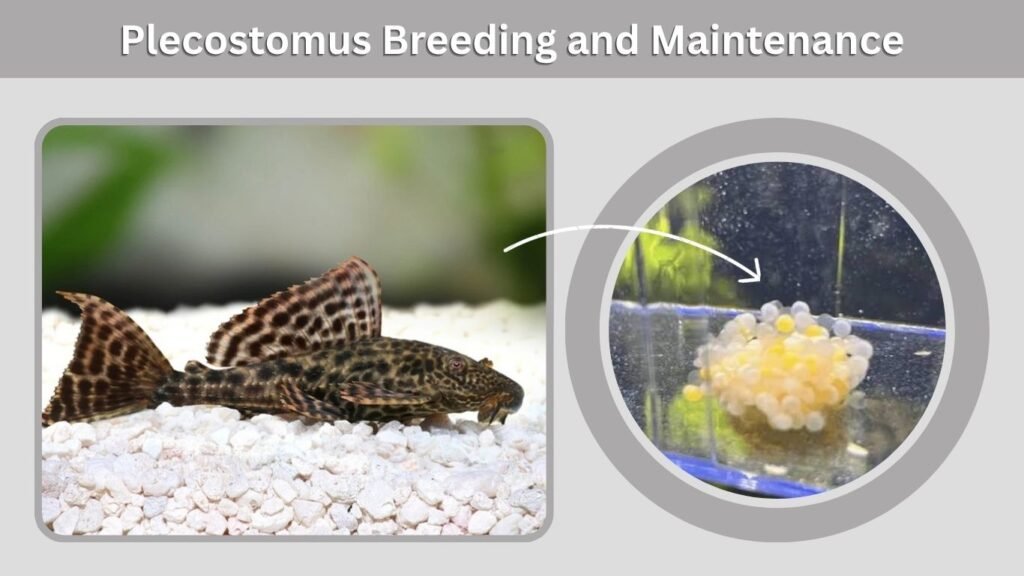
Plecostomus reproduction varies among species, with some breeding readily in captivity and others proving difficult. Maintaining clean water and providing suitable spawning areas improves breeding opportunities. Routine care also helps prevent illness, stress, and environmental problems.
Plecostomus Breeding and Eggs
Bristlenose plecos are among the easier plecostomus varieties to breed in home aquariums.
Males commonly guard eggs inside caves until they hatch.
Common plecos are considerably harder to breed in ordinary home aquariums because many reproduce in burrows under specialized conditions.
Daily Care and Health
Perform regular partial water changes and monitor ammonia, nitrite, and nitrate concentrations.
Remove uneaten food before it decomposes, and inspect fish for unusual behavior or injuries.
Never release unwanted plecostomus into natural waterways because introduced populations can damage native aquatic ecosystems.
FAQs
1. Are Plecostomus Fish Good for Beginners?
Smaller species, especially bristlenose plecos, can suit beginners with properly established aquariums. Large common plecos require more experience and space.
2. Can Plecostomus Live in a 10-Gallon Tank?
A 10-gallon aquarium is unsuitable for most plecostomus species, particularly large common plecos.
3. Do Plecostomus Eat Other Fish?
Most plecos do not actively hunt healthy fish. However, some may rasp at slow-moving fish, and opportunistic scavenging can occur.
4. Do Plecostomus Need Driftwood?
Driftwood is beneficial for many plecos, providing shelter and grazing surfaces. Certain wood-associated species have especially strong dietary connections to submerged wood.
5. Are Plecostomus Nocturnal?
Many plecostomus species are primarily nocturnal or most active during twilight. They often spend daylight hours resting in sheltered areas.