
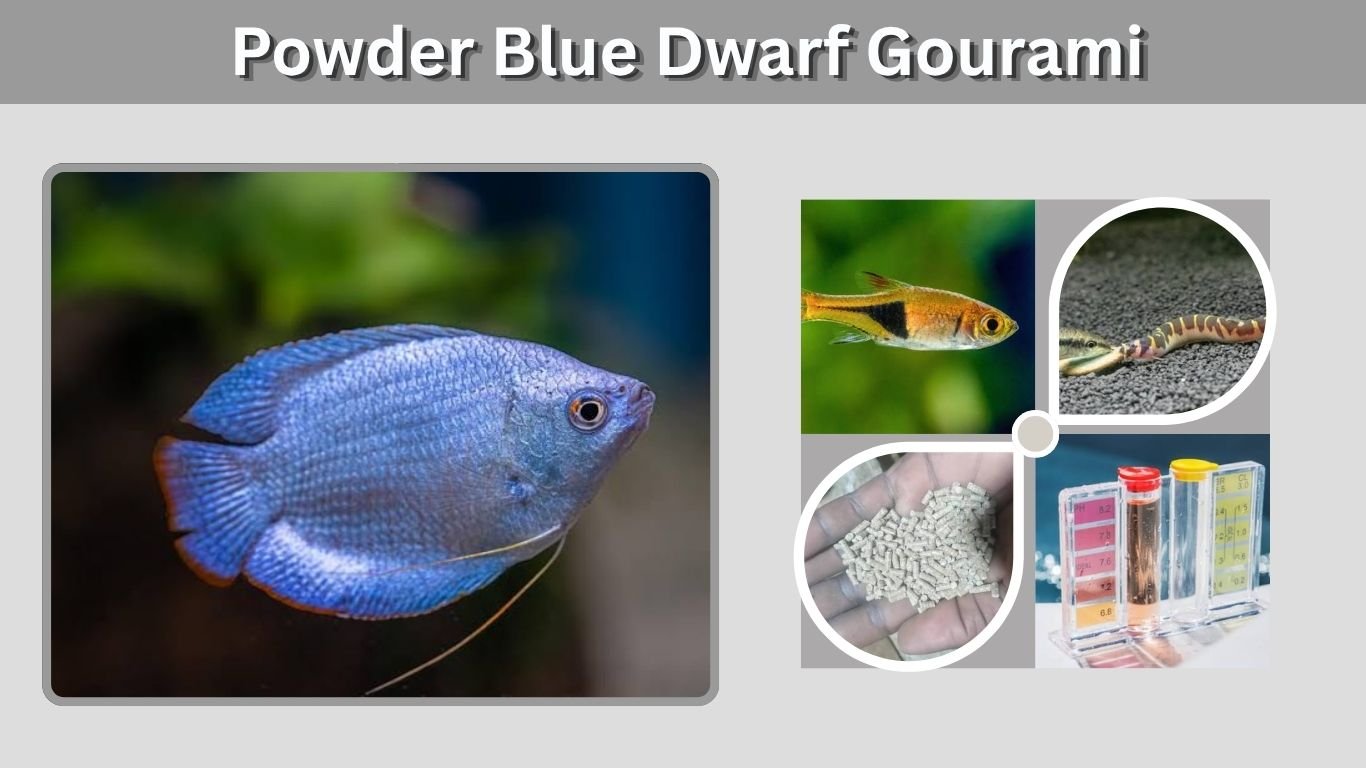
The Powder Blue Dwarf Gourami is a beautiful freshwater aquarium fish known for its shimmering blue body and gentle swimming movements. Its compact size and attractive appearance make it a popular choice for planted community aquariums. However, proper tank conditions, suitable companions, and balanced feeding are essential for keeping this fish healthy. Understanding its temperament, lifespan, and differences between males and females can help aquarium owners provide better care. This guide explains everything you need to know about keeping Powder Blue Dwarf Gouramis successfully.
What Is a Powder Blue Dwarf Gourami?
The Powder Blue Dwarf Gourami (Trichogaster lalius) is a selectively bred color variety of the common dwarf gourami. It belongs to the Osphronemidae family and originates from a species native to South Asia, including India, Bangladesh, and Pakistan. Its peaceful appearance, brilliant coloration, and interesting behavior make it an attractive addition to freshwater aquariums.
Identification and Physical Appearance
The Powder Blue Dwarf Gourami has several distinctive characteristics that make identification relatively easy.
- Scientific name: Trichogaster lalius
- Common name: Powder Blue Dwarf Gourami
- Body color: Light blue to metallic turquoise
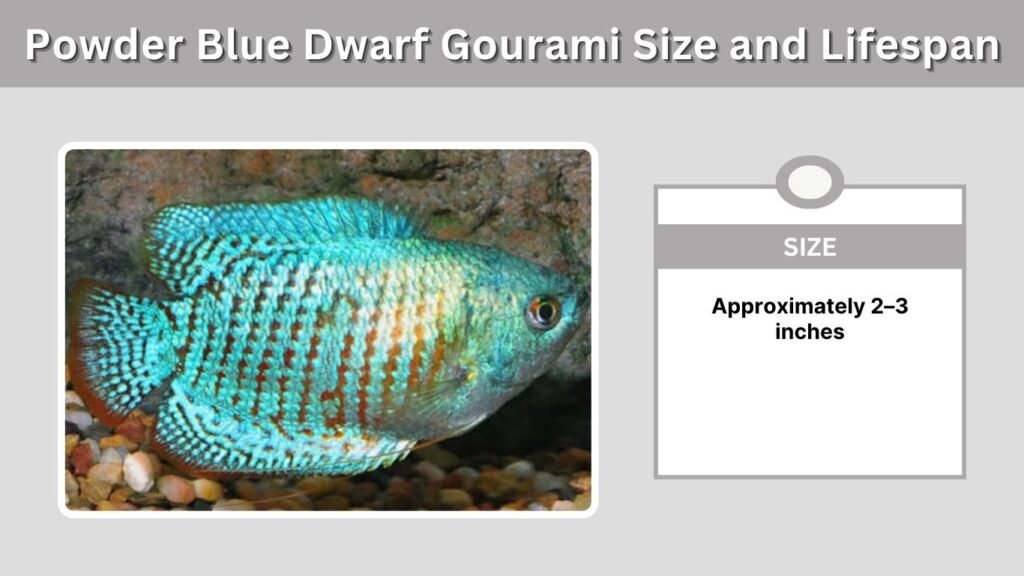
- Adult size: Approximately 2–3 inches
- Body shape: Oval, laterally compressed body
- Fins: Rounded tail and elongated dorsal and anal fins
- Special feature: Thin, threadlike pelvic fins used for sensing surroundings
- Temperament: Generally peaceful but sometimes territorial
Natural Habitat and Origin
Wild dwarf gouramis inhabit slow-moving streams, ponds, wetlands, and heavily vegetated freshwater environments. These habitats contain abundant plants, sheltered swimming areas, and relatively gentle water movement.
The powder blue variety is produced through selective breeding rather than occurring as a distinct wild species. In aquariums, it benefits from conditions resembling the natural environment of its ancestors.
Powder Blue Dwarf Gourami Size and Lifespan
Although this fish has a relatively small body, its space and environmental requirements should not be overlooked. Adult size depends on genetics, nutrition, and overall health. Lifespan also varies, particularly because commercially bred dwarf gouramis may experience inherited weaknesses or infectious diseases. Providing stable aquarium conditions supports healthier development and potentially longer survival.
How Big Do Powder Blue Dwarf Gouramis Get?
Most Powder Blue Dwarf Gouramis grow approximately 2–3 inches (5–7.5 cm) long. Mature males may develop slightly larger bodies and longer fins than females.
Their compact size makes them suitable for moderately sized freshwater aquariums. However, small body size does not automatically mean they thrive in extremely small tanks. They still require swimming space, territorial boundaries, and hiding areas.
Average Lifespan
The typical Powder Blue Dwarf Gourami lifespan is approximately 3–5 years under favorable conditions.
Some individuals live shorter lives because of stress, disease, or poor breeding quality. Consistent water maintenance, nutritious feeding, and carefully selected tank mates can improve their prospects for healthy aging.
Powder Blue Dwarf Gourami Tank Setup and Care
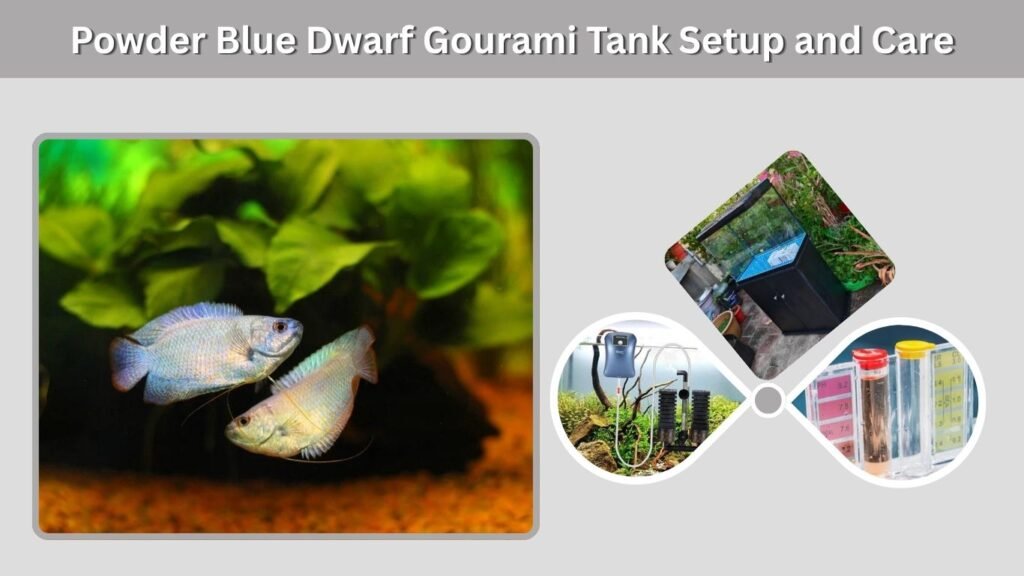
Creating a suitable aquarium environment is essential for Powder Blue Dwarf Gourami care. These fish prefer calm freshwater conditions with plenty of vegetation. They spend much of their time swimming around the middle and upper portions of the aquarium. A combination of stable water parameters, gentle filtration, and sheltered spaces helps reduce stress and encourages natural behavior.
Ideal Water Parameters
Maintain the following aquarium conditions for healthy dwarf gouramis:
- Recommended tank size: 15–20 gallons or larger for a single male
- Water temperature: 72–81°F (22–27°C)
- Water pH: 6.0–7.5
- Water hardness: Approximately 2–18 dGH
- Water movement: Gentle to moderate-low
- Ammonia: 0 ppm
- Nitrite: 0 ppm
- Nitrate: Keep low through regular maintenance
Stable conditions are more important than repeatedly adjusting water chemistry to achieve a particular number.
Can a Powder Blue Dwarf Gourami Live in a 10-Gallon Tank?
A single Powder Blue Dwarf Gourami may be kept in a carefully maintained 10-gallon aquarium, but this provides limited space. A 15–20-gallon setup is preferable because it offers better swimming room, more stable water conditions, and space for vegetation.
Avoid keeping multiple males in a small aquarium because territorial conflicts may develop.
Plants and Aquarium Decorations
Live plants such as Java fern, Anubias, and floating water plants provide shade and security.
Driftwood and dense plant clusters create natural hiding locations. Maintain an open area at the surface because dwarf gouramis possess a labyrinth organ that allows them to breathe atmospheric air.
Powder Blue Dwarf Gourami Male vs. Female
Male and female Powder Blue Dwarf Gouramis share many physical characteristics, but differences become more apparent as they mature. Identifying their sex is particularly important when considering breeding or keeping multiple individuals. Males are generally more colorful and territorial, while females are usually less brightly colored and may require additional hiding places during courtship.
How to Identify Male and Female Gouramis
Several physical characteristics help distinguish the sexes.
- Male coloration: Usually bright powder blue or metallic turquoise.
- Female coloration: Typically pale silver, grayish, or faintly blue.
- Male dorsal fin: Often longer and more pointed.
- Female dorsal fin: Usually shorter and more rounded.
- Male body: Often slightly larger with extended fins.
- Female body: May appear fuller, especially when carrying eggs.
Color alone is not always reliable because selectively bred varieties may display unusual patterns.
Female Powder Blue Dwarf Gourami Behavior
Female dwarf gouramis are generally less territorial than males. They often prefer sheltered areas and dense vegetation.
During breeding, females may approach a male’s bubble nest. However, males sometimes chase females aggressively, making adequate hiding spaces and careful observation essential.
Powder Blue Dwarf Gourami Temperament and Tank Mates

Powder Blue Dwarf Gouramis are generally calm fish, but their behavior can change according to tank size, companions, and breeding activity. Males may defend areas near the water surface or chase similarly shaped fish. Choosing compatible tank mates and providing sufficient space can help create a balanced aquarium without unnecessary competition or aggression.
Best Tank Mates
Suitable companions typically include peaceful fish that occupy different swimming levels.
- Harlequin rasboras: Peaceful schooling fish that usually coexist well.
- Neon tetras: Small community fish suitable for established aquariums.
- Corydoras catfish: Bottom-dwelling fish that rarely compete for territory.
- Kuhli loaches: Shy bottom dwellers that appreciate hiding places.
- Ember tetras: Small fish suited to peaceful planted setups.
- Otocinclus catfish: Gentle algae grazers for mature aquariums.
Avoid aggressive species, persistent fin-nippers, and fish that compete heavily for the same territory.
Can You Keep Two Powder Blue Dwarf Gouramis Together?
Two males may fight, particularly in smaller aquariums. Keeping one male alone is often the simplest arrangement.
A male and female may coexist in a sufficiently planted aquarium, but compatibility is not guaranteed. The male may pursue the female repeatedly, especially during breeding.
Powder Blue Dwarf Gourami and Angelfish
Angelfish and dwarf gouramis can occasionally coexist in spacious aquariums, but the combination requires caution.
Adult angelfish may become territorial, particularly during spawning. Their larger size can intimidate dwarf gouramis. A spacious, planted aquarium with separate territories improves compatibility, although individual temperament remains important.
Powder Blue Dwarf Gourami Diet and Feeding

A nutritious diet supports healthy coloration, growth, and immune function. Powder Blue Dwarf Gouramis are omnivores that consume various small organisms in their natural habitats. Captive fish usually accept commercial aquarium foods without difficulty. However, offering different food types helps maintain balanced nutrition and encourages normal feeding behavior throughout their lives.
Best Foods for Powder Blue Dwarf Gouramis
A balanced diet can include several food varieties.
- Tropical flakes: Suitable for everyday feeding.
- Micro pellets: Provide convenient balanced nutrition.
- Frozen bloodworms: Offer occasional protein-rich meals.
- Brine shrimp: Encourage natural feeding responses.
- Daphnia: Provide variety and support healthy digestion.
- Vegetable-based foods: Supply additional plant-derived nutrients.
How Often Should You Feed Them?
Feed small portions once or twice daily, offering only what the fish can consume within approximately two minutes.
Overfeeding creates excess waste and can reduce water quality. Remove uneaten food when necessary and monitor the fish’s appetite.
Common Health Problems and Breeding
Although Powder Blue Dwarf Gouramis are attractive aquarium fish, their health requires careful attention. Some commercially bred individuals are vulnerable to infectious diseases, including dwarf gourami iridovirus. Regular observation and good aquarium hygiene are therefore especially important. Breeding is also possible in captivity, although successful reproduction requires appropriate conditions and careful management of territorial behavior.
Dwarf Gourami Iridovirus
Dwarf gourami iridovirus is a serious viral disease associated with commercially bred dwarf gouramis.
Affected fish may experience appetite loss, abnormal swimming, body lesions, or progressive weakness. However, these symptoms can also occur with other illnesses, so appearance alone cannot confirm infection.
Purchase fish from reputable suppliers, quarantine new arrivals, and seek qualified aquatic veterinary advice when serious symptoms develop.
Breeding Powder Blue Dwarf Gouramis
Male dwarf gouramis construct bubble nests near the water surface, often beneath floating plants.
During spawning, the male gathers fertilized eggs and places them within the nest. He subsequently guards the developing eggs and may become aggressive toward the female.
A separate breeding aquarium is recommended to protect the adults and delicate fry.
FAQs
Powder Blue Dwarf Gouramis attract many questions concerning their aquarium requirements, social behavior, and physical characteristics. Understanding these details helps owners avoid common stocking mistakes and develop suitable care routines. The following answers address common concerns, particularly for aquarium enthusiasts considering this colorful fish for a freshwater community tank.
1. Are Powder Blue Dwarf Gouramis Aggressive?
They are generally peaceful toward suitable community fish. However, males can become territorial toward other males or similarly shaped species.
2. Can Powder Blue Dwarf Gouramis Live Alone?
Yes. A single male can live comfortably without another dwarf gourami when provided with appropriate aquarium conditions and enrichment.
3. What Is the Difference Between Neon Blue and Powder Blue Dwarf Gouramis?
Both are color varieties of Trichogaster lalius. Powder blue forms usually have more uniform pale-blue coloration, while neon blue varieties often display stronger contrasting markings.
4. Do Powder Blue Dwarf Gouramis Bite?
They may nip or chase competing fish during territorial disputes, but they are not dangerous to humans.
5. Are Powder Blue Dwarf Gouramis Good for Beginners?
They can suit attentive beginners who understand aquarium cycling and routine maintenance. However, disease susceptibility and territorial behavior make careful selection and monitoring particularly important.