
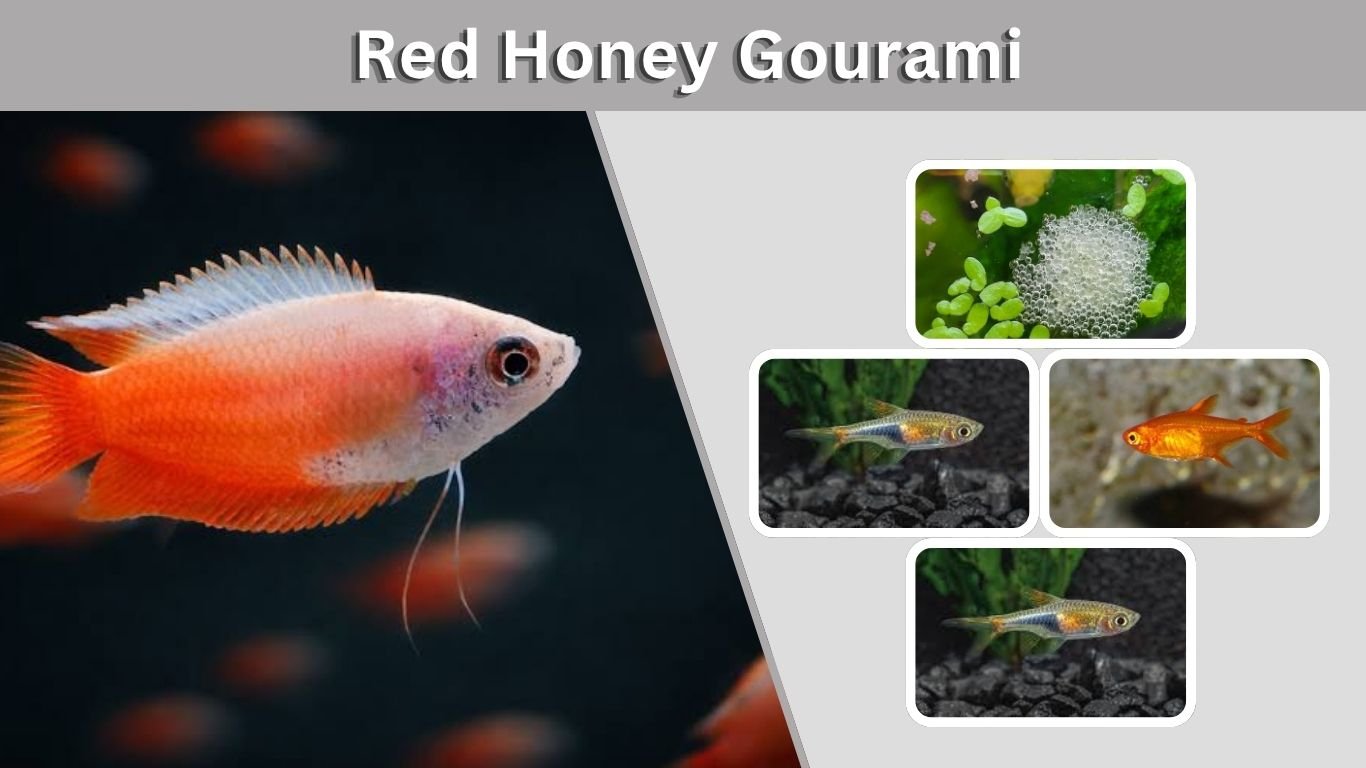
The red honey gourami is a beautiful freshwater aquarium fish known for its vibrant reddish-orange coloration, peaceful personality, and manageable size. Its gentle swimming behavior and attractive appearance make it a popular choice for planted community aquariums. However, not every fish sold under this name belongs to the same species. Understanding red honey gourami care, tank size, diet, lifespan, and compatibility will help you identify the correct fish and provide a healthy aquarium environment.
What Is a Red Honey Gourami?
The red honey gourami is generally a selectively bred color variety of the honey gourami (Trichogaster chuna). This species belongs to the Osphronemidae family and originates from slow-moving freshwater habitats in India and Bangladesh.
Honey gouramis naturally inhabit vegetation-rich ponds, shallow waterways, and flooded fields. Their peaceful temperament and adaptability make them suitable for many freshwater aquariums.
Appearance and Identification
True red honey gouramis have compact, oval-shaped bodies displaying orange, reddish-orange, or golden-red coloration. Their fins may have red, yellow, or translucent areas, depending on the variety.
Key identification features:
- Small, laterally compressed body.
- Reddish-orange or honey-colored scales.
- Long, thread-like pelvic fins.
- Relatively small mouth and delicate body shape.
- Adult length is generally around 2 inches.
Their modified pelvic fins help them investigate objects and navigate their surroundings.
Red Honey Gourami vs. Dwarf Gourami
Red honey gouramis and dwarf gouramis are often confused because of their similar appearance.
However, true honey gouramis belong to Trichogaster chuna, while dwarf gouramis belong to Trichogaster lalius.
Dwarf gouramis usually grow larger and may display stronger territorial behavior. Some red fish marketed as honey gouramis are actually thick-lipped gouramis (Trichogaster labiosa), which can reach approximately 3.5–4 inches.
Always verify the scientific name before purchasing.
Red Honey Gourami Size and Lifespan
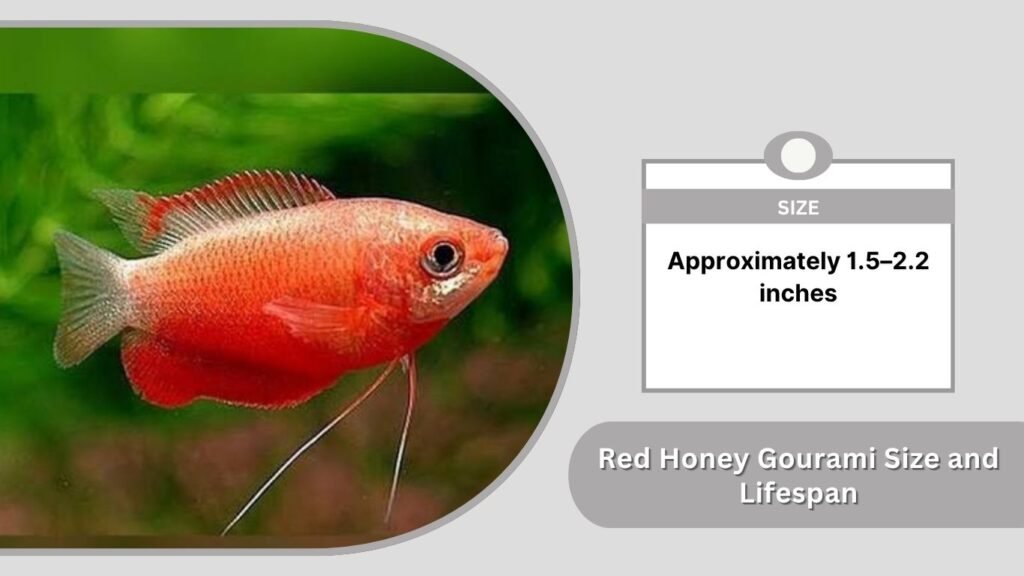
Red honey gouramis remain relatively small throughout adulthood, making them attractive to aquarists who prefer compact freshwater species.
Their eventual size and lifespan depend on proper identification, genetics, water quality, nutrition, and consistent aquarium maintenance.
How Big Do Red Honey Gouramis Get?
A true red honey gourami typically reaches approximately 1.5–2.2 inches (4–5.5 cm) in length.
Females may develop slightly fuller bodies, particularly when carrying eggs.
These fish do not require enormous swimming areas, but adequate horizontal space and planted hiding places are essential.
If your red gourami becomes considerably larger than expected, check whether it is a thick-lipped gourami rather than a true honey gourami.
Red Honey Gourami Lifespan
Under suitable aquarium conditions, honey gouramis commonly live approximately 4–6 years, although individual fish may live longer.
A stable environment supports better long-term health.
Maintaining suitable water parameters, providing balanced nutrition, and preventing aggression can help minimize stress and promote longevity.
Red Honey Gourami Care Guide

Providing proper red honey gourami care starts with recreating the calm, vegetation-rich environment these fish naturally prefer.
Although they are relatively beginner-friendly, they are sensitive to aggressive companions, strong water currents, and poor water quality. A mature, well-maintained aquarium offers the best conditions for healthy behavior and vibrant coloration.
Tank Size and Aquarium Setup
A 15-gallon aquarium is a comfortable starting point for a pair of true honey gouramis, while a 20-gallon or larger planted tank provides more flexibility for groups and community fish.
Recommended tank features:
- Live plants such as Java fern and water sprite.
- Floating vegetation for shade and security.
- Gentle filtration with minimal surface disturbance.
- Driftwood and sheltered resting areas.
- A secure aquarium lid with access to air above the water.
Honey gouramis possess a labyrinth organ, allowing them to breathe atmospheric air. Consequently, they must have unobstructed access to the water surface.
Water Temperature and Parameters
Stable water conditions are more important than chasing exact values.
Recommended conditions for true honey gouramis include:
- Temperature: 72–81°F (22–27°C).
- pH: Approximately 6.0–7.5.
- Water hardness: Approximately 2–15 dGH.
- Ammonia: 0 ppm.
- Nitrite: 0 ppm.
Use a reliable heater where necessary, and conduct regular partial water changes.
Avoid sudden fluctuations in temperature or chemistry, especially when introducing new fish.
Diet and Feeding
Red honey gouramis are omnivorous aquarium fish that accept various small foods.
A balanced diet can include quality tropical flakes, appropriately sized pellets, frozen brine shrimp, daphnia, and occasional bloodworms.
Offer small portions once or twice daily, adjusting feeding according to appetite and water quality.
Varied nutrition supports healthy development, coloration, and breeding condition.
Red Honey Gourami Male vs. Female
Identifying male and female red honey gouramis can be challenging, especially when the fish are young or selectively bred for bright coloration.
Wild-type honey gouramis show more noticeable sexual differences, but ornamental red varieties may not display the same characteristics consistently.
Male Red Honey Gourami
Males frequently develop brighter coloration during breeding periods.
Wild-type breeding males may display a distinctive dark blue-black throat and underside. However, this coloration is not always present in red ornamental varieties.
Males may also appear slimmer and become territorial while guarding breeding areas.
Female Red Honey Gourami
Females often have rounder bodies, particularly when carrying eggs.
Wild-type females usually display subdued brownish or golden coloration and may show a horizontal body stripe.
However, red color varieties can make identification less reliable.
Observing body shape, maturity, and reproductive behavior together provides better clues than relying on color alone.
Red Honey Gourami Tank Mates
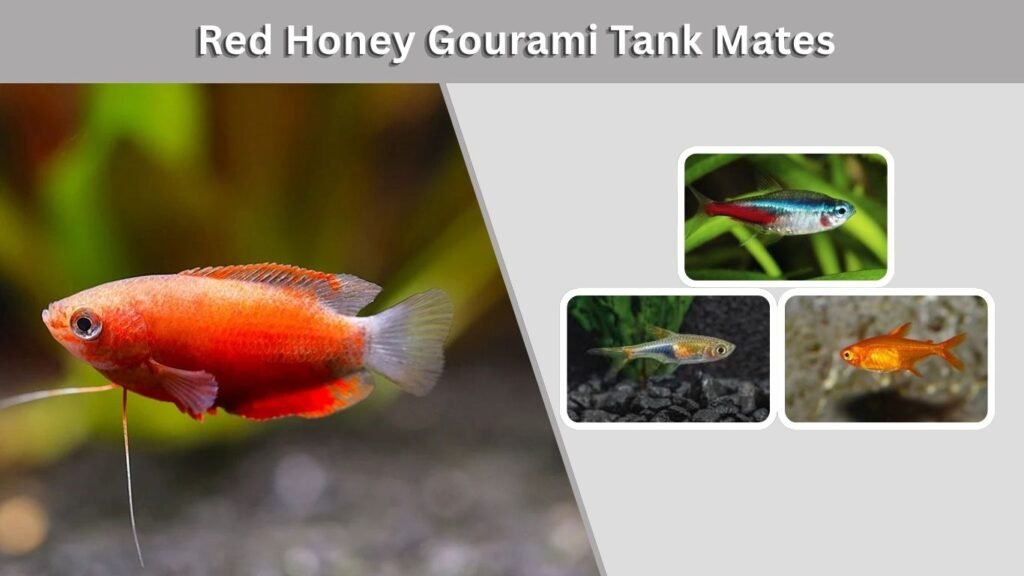
Choosing suitable red honey gourami tank mates is important because these fish generally prefer peaceful community environments.
Aggressive or highly energetic species may intimidate honey gouramis, causing them to hide or miss feeding opportunities.
Compatible companions should have similar water requirements and calm temperaments.
Best Tank Mates
Suitable companions for true red honey gouramis include:
- Neon tetras.
- Ember tetras.
- Harlequin rasboras.
- Corydoras catfish.
- Kuhli loaches.
- Peaceful small rasboras.
- Adult Amano shrimp.
Guppies may also work in appropriately maintained community aquariums when water conditions suit both species.
Cherry shrimp can coexist with honey gouramis, but baby shrimp may be eaten.
Avoid large aggressive fish, persistent fin-nippers, and territorial species that dominate feeding areas.
Are Red Honey Gouramis Aggressive?
True red honey gouramis are generally peaceful, making them suitable for carefully planned community aquariums.
However, males can occasionally chase other gouramis, particularly during breeding.
Minor territorial displays are normal, but continuous chasing, damaged fins, or persistent hiding can indicate a problem.
Aggression can be reduced by offering more vegetation, visual barriers, and adequate swimming space.
If a supposedly red honey gourami behaves unusually aggressively or becomes much larger than expected, double-check its species identification.
Red Honey Gourami Breeding
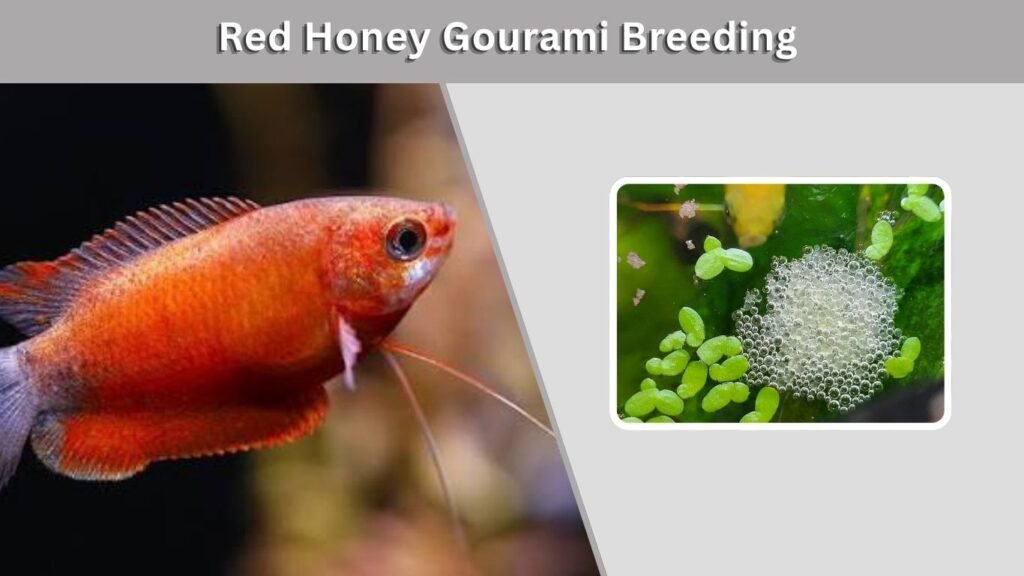
Breeding red honey gouramis is possible in a well-established aquarium with suitable water conditions and healthy adult fish.
Like other honey gouramis, they reproduce by constructing bubble nests near the surface.
The male usually takes responsibility for building and protecting the nest.
Breeding Process
A typical breeding sequence includes:
- The male constructs a bubble nest beneath floating vegetation.
- The female develops eggs and approaches the nesting area.
- The pair embraces beneath the nest during spawning.
- The male collects released eggs and places them into the bubbles.
- The male guards the nest until the eggs hatch.
Eggs commonly hatch within approximately 24–36 hours, depending on temperature.
After spawning, the female may need to be separated if the male becomes aggressive.
Once the fry become free-swimming, the male can also be removed. Newly hatched fry require extremely small foods, such as infusoria, before progressing to larger foods.
Common Red Honey Gourami Health Problems
Healthy red honey gouramis are generally active, curious fish with steady breathing, good appetites, and intact fins.
Nevertheless, poor water conditions, inappropriate companions, and disease can affect their health.
Color Changes and Warning Signs
A red honey gourami losing color may be experiencing stress, illness, or unsuitable environmental conditions.
Color intensity can also vary naturally with maturity, lighting, and breeding condition.
A darkening throat may be normal in breeding males, whereas unusual pale patches, sores, rapid breathing, or persistent inactivity deserve attention.
Bloating may result from overfeeding, digestive problems, egg development, or illness.
Test the water, observe other symptoms, and seek qualified aquatic veterinary advice when necessary.
FAQs
1. Are red honey gouramis good for beginners?
Yes. True red honey gouramis are relatively easy to maintain when kept in mature aquariums with stable water conditions, gentle filtration, and peaceful companions.
2. Can red and gold honey gouramis live together?
Yes. Verified red and gold varieties of Trichogaster chuna can share an appropriately sized aquarium. Provide adequate space and shelter to reduce territorial disputes.
3. Can red honey gouramis live with guppies?
They can coexist with peaceful guppies when both species’ water requirements are met. Monitor feeding competition and avoid overcrowding.
4. Why is my red honey gourami losing color?
Color loss may be associated with stress, poor water conditions, unsuitable lighting, illness, or normal changes in coloration. Check water parameters and look for additional symptoms.
5. Are red honey gouramis aggressive toward shrimp?
True honey gouramis are generally peaceful toward adult shrimp, particularly larger Amano shrimp. However, they may eat small cherry shrimp or newly hatched shrimp when the opportunity arises.