
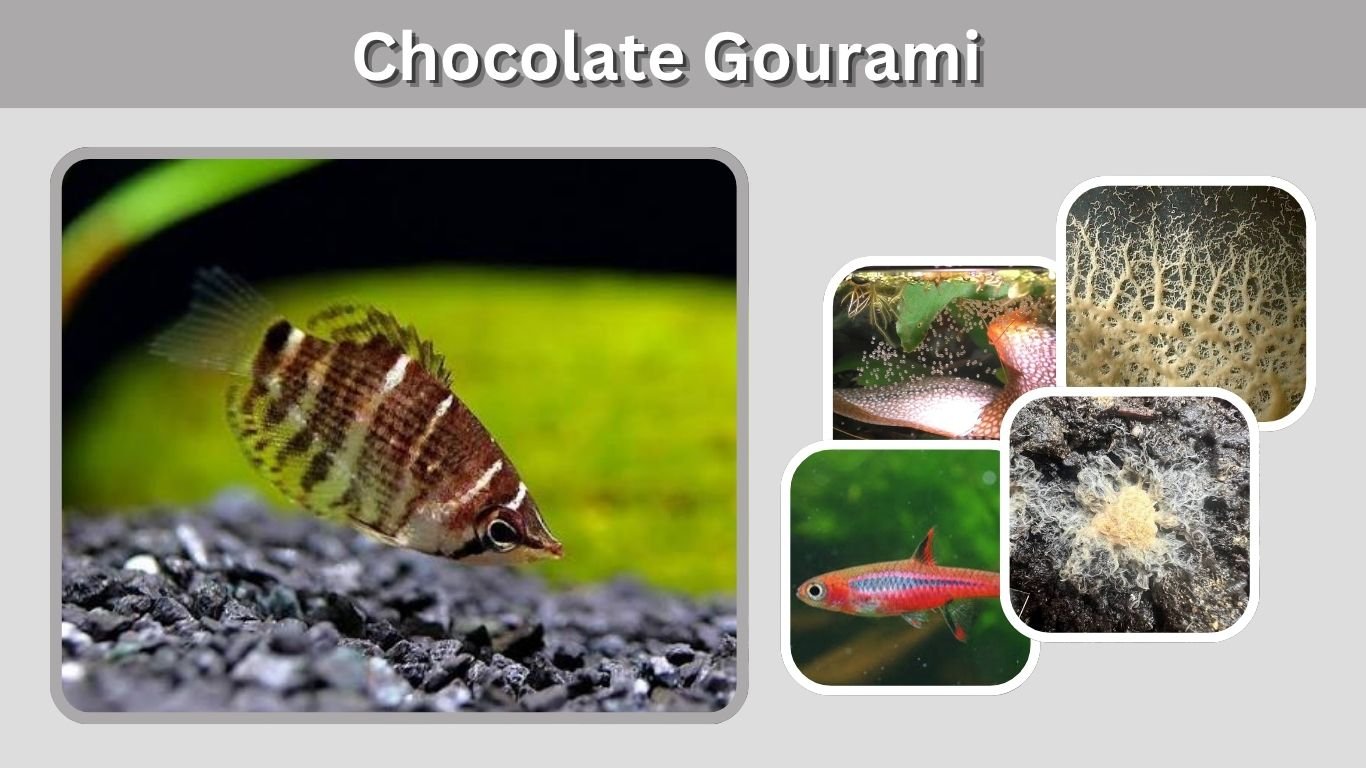
The chocolate gourami is a fascinating freshwater fish recognized for its rich brown coloration, delicate body patterns, and peaceful personality. Unlike many common gourami species, this unique fish requires specialized aquarium conditions to remain healthy. Native to Southeast Asian blackwater habitats, chocolate gouramis thrive in warm, soft, acidic water with plenty of hiding places. Understanding their care requirements, tank size, diet, breeding behavior, and compatible tank mates is essential for successfully keeping these beautiful fish.
What Is a Chocolate Gourami?
The chocolate gourami (Sphaerichthys osphromenoides) is a small freshwater labyrinth fish belonging to the Osphronemidae family. It naturally inhabits peat swamps, forest streams, and slow-moving waterways in Southeast Asia. Despite its peaceful temperament and attractive appearance, this fish is considered challenging because it requires consistently clean, soft, acidic water and a carefully maintained aquarium environment.
Appearance and Identification
Chocolate gouramis have flattened, oval-shaped bodies covered in dark brown or chocolate-colored scales. Their sides feature several pale cream or golden vertical stripes, creating a distinctive appearance.
Key identification features:
- Deep chocolate-brown body coloration.
- Pale vertical stripes across the body.
- Small, pointed mouth and prominent eyes.
- Delicate dorsal and anal fins.
- Adult length of approximately 2 inches.
Their subdued coloration provides natural camouflage among submerged leaves, branches, and dark water.
Natural Habitat and Origin
Chocolate gouramis originate from Peninsular Malaysia, Sumatra, and Borneo.
Their natural habitats contain slow-moving water stained brown by tannins released from decaying leaves and vegetation.
These environments often have extremely low mineral content, acidic water, limited sunlight, and abundant submerged wood.
Replicating these conditions helps reduce stress and encourages natural feeding and social behavior.
Different Types of Chocolate Gourami
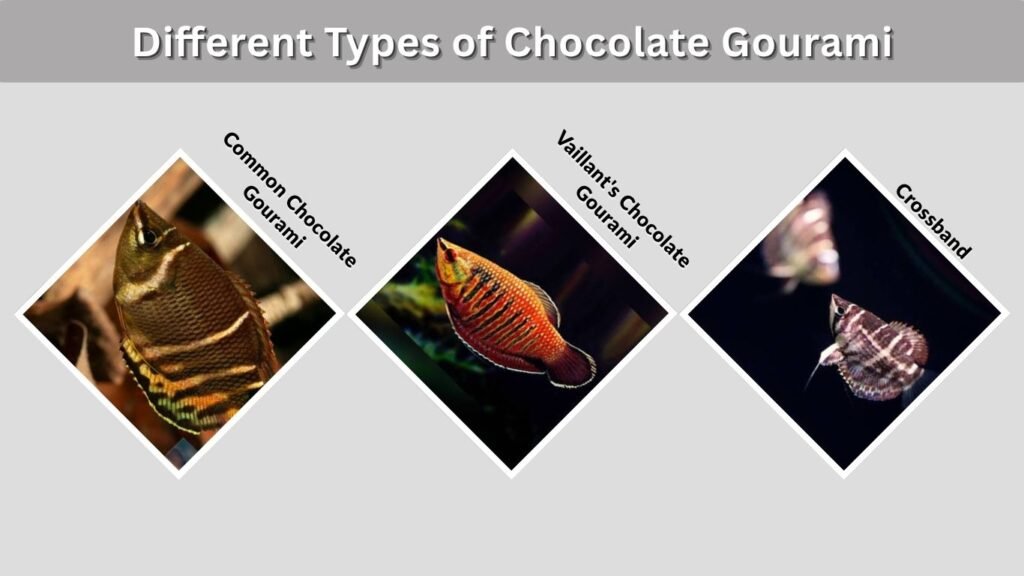
Several closely related gouramis share the chocolate gourami name, although they are distinct species with different appearances and environmental requirements. Some are occasionally available through specialty aquarium retailers. Understanding their scientific names helps aquarists avoid confusion and select suitable care conditions.
Common Chocolate Gourami
The common chocolate gourami (Sphaerichthys osphromenoides) is the best-known species.
It features a compact brown body with pale vertical stripes and reaches approximately 2 inches.
This species prefers warm, highly acidic blackwater environments and gentle water movement.
Vaillant’s Chocolate Gourami
Vaillant’s chocolate gourami (Sphaerichthys vaillanti), also called the samurai chocolate gourami, originates from Indonesian Borneo.
Mature females display striking reddish coloration with greenish vertical markings, while males are comparatively subdued.
Unlike the common chocolate gourami, this species generally prefers cooler aquarium temperatures of approximately 70–77°F (21–25°C).
Crossband and Giant Chocolate Gouramis
The crossband chocolate gourami (Sphaerichthys selatanensis) resembles the common species but differs in its banding and anatomical features.
The giant chocolate gourami (Sphaerichthys acrostoma), also called the sharp-nosed chocolate gourami, has a more elongated body and can reach approximately 2.8 inches in standard length.
Both are relatively uncommon in the aquarium hobby.
Burmese Chocolate Gourami
The name Burmese chocolate gourami is sometimes used for Parasphaerichthys lineatus and Parasphaerichthys ocellatus.
These miniature gouramis originate from Myanmar and belong to a different genus.
They should not automatically receive the same water treatment or temperature settings as Sphaerichthys osphromenoides.
Chocolate Gourami Care Guide
Chocolate gourami care requires more attention than maintaining common beginner-friendly gouramis. These fish are sensitive to sudden temperature changes, unstable water chemistry, and aggressive aquarium companions. A mature, lightly stocked aquarium with soft, acidic water and gentle filtration provides a suitable environment for supporting their long-term health.
Chocolate Gourami Tank Size
A 15-gallon aquarium with adequate floor space can accommodate a small group of chocolate gouramis, although a 20-gallon or larger setup offers more flexibility.
A group of approximately six individuals is generally preferable to keeping a single fish.
Recommended aquarium features:
- Fine sand or smooth substrate.
- Driftwood and natural hiding spaces.
- Floating plants for shade.
- Gentle filtration.
- Low-intensity lighting.
- A secure aquarium lid.
Five-gallon aquariums are unsuitable for a social group, while ten-gallon tanks provide limited room for maintaining stable conditions.
Chocolate Gourami Water Parameters
Maintaining suitable water chemistry is one of the most important aspects of chocolate gourami care.
Recommended parameters for common chocolate gouramis:
- Temperature: 79–86°F (26–30°C).
- pH: Approximately 4.0–6.5.
- Water hardness: Ideally 0–3 dGH for wild-type fish.
- Ammonia: 0 ppm.
- Nitrite: 0 ppm.
Captive-bred individuals may tolerate somewhat broader conditions, but sudden changes should always be avoided.
Reverse osmosis water, properly remineralized or blended where appropriate, can help aquarists maintain suitable mineral levels.
Chocolate gouramis are generally unsuitable for hard, alkaline water.
Creating a Chocolate Gourami Biotope
A blackwater aquarium closely resembles the chocolate gourami’s natural environment.
Driftwood, aquarium-safe dried leaves, and shaded areas provide shelter and create a natural appearance.
Plants such as Java fern, Anubias, and Cryptocoryne can also work under subdued lighting.
Avoid strong filtration currents because these fish naturally inhabit relatively calm waters.
Chocolate Gourami Diet and Feeding

Chocolate gouramis are primarily micropredators that feed on small aquatic invertebrates in their natural habitats. Their diet includes insect larvae, tiny crustaceans, and other small organisms. In aquariums, they may initially reject commercially prepared food, making nutritional variety and careful feeding particularly important.
What Do Chocolate Gouramis Eat?
Suitable foods include:
- Live or frozen daphnia.
- Baby brine shrimp.
- Grindal worms.
- Microworms.
- Small frozen insect larvae.
- Appropriately sized quality pellets, when accepted.
Offer small meals once or twice daily and remove uneaten food to prevent water contamination.
Newly acquired wild-caught specimens may require live foods before they begin accepting frozen or prepared alternatives.
Chocolate Gourami Tank Mates

Chocolate gouramis are peaceful but shy fish that can become stressed when housed with larger, territorial, or extremely active species. Their slow feeding behavior also makes them vulnerable to competition. Choosing compatible companions requires consideration of temperament, aquarium size, feeding habits, and water chemistry.
Best Tank Mates for Chocolate Gouramis
Potentially compatible species include:
- Chili rasboras.
- Other small, peaceful rasboras.
- Kuhli loaches.
- Selected small Microdevario species.
- Other chocolate gouramis of the same species.
A species-only aquarium is often the safest choice, particularly for breeding.
Cherry shrimp may coexist with adults, although small shrimp and young shrimp can be eaten.
Avoid combining chocolate gouramis with aggressive bettas, large angelfish, or other fish that may intimidate them. Discus also require careful consideration because their size and feeding needs make them less straightforward companions.
Are Chocolate Gouramis Aggressive?
Chocolate gouramis are generally peaceful toward other fish.
However, individuals may establish social hierarchies and occasionally chase one another during feeding or breeding.
Providing adequate hiding places and visual barriers helps reduce territorial encounters.
Persistent chasing, damaged fins, and prolonged hiding can indicate excessive aggression or environmental stress.
Chocolate Gourami Male vs. Female
Identifying male and female chocolate gouramis is challenging because their appearance varies among individuals and populations. Unlike some other gouramis, coloration and fin shape alone are not consistently reliable indicators. Recent research has also challenged traditional assumptions about sex differences and parental behavior in this species.
How to Identify Males and Females
Mature chocolate gouramis may show subtle differences in head shape, fin coloration, and body proportions.
However, these characteristics should be treated as clues rather than definitive identification methods.
A 2024 scientific study suggested that some historical sex-identification descriptions were incorrect.
Consequently, observing confirmed spawning behavior provides more reliable information than simply comparing color intensity or fin shape.
Chocolate Gourami Breeding

Breeding chocolate gouramis requires a quiet environment, excellent water quality, suitable nutrition, and mature fish. Unlike bubble-nesting gouramis, chocolate gouramis reproduce through mouthbrooding, where one parent carries fertilized eggs in its mouth until the young develop.
Chocolate Gourami Breeding Process
A typical breeding sequence involves:
- A compatible pair begins courtship.
- The female releases eggs during spawning.
- The eggs are fertilized and collected by the brooding parent.
- The parent holds the developing eggs inside its mouth.
- Fully developed young are eventually released.
Older aquarium literature frequently identifies females as mouthbrooders. However, a peer-reviewed 2024 study documenting 32 spawning events found that males performed mouthbrooding.
In that research, brooding lasted approximately 12–16 days.
Once released, the fry can consume appropriately sized live foods such as newly hatched brine shrimp and microworms.
Maintaining stable water conditions is especially important during early development.
Chocolate Gourami Lifespan and Health Problems
Chocolate gouramis require consistent aquarium maintenance because they are less tolerant of environmental changes than many common tropical fish. Stress, poor water quality, unsuitable feeding, and disease can significantly affect their lifespan. Learning to recognize unhealthy behavior allows aquarists to identify problems before they become severe.
Chocolate Gourami Lifespan
A chocolate gourami’s lifespan is often estimated at approximately 3–5 years in captivity, although dependable long-term lifespan data are limited.
Individual longevity depends on environmental stability, nutrition, disease prevention, and the fish’s condition when acquired.
Wild-caught fish may require particularly careful acclimation.
Common Health Warning Signs
Potential warning signs include:
- Unusual pale coloration.
- Rapid or labored breathing.
- Persistent refusal to eat.
- Clamped or damaged fins.
- Excessive hiding or inactivity.
- Swelling or unusual skin lesions.
A pale chocolate gourami may be stressed, but coloration alone does not diagnose illness.
Test water parameters, observe feeding behavior, and investigate persistent symptoms. Seek professional aquatic veterinary assistance when necessary.
FAQs
1. Are chocolate gouramis good for beginners?
Chocolate gouramis are generally better suited to experienced aquarists because they require stable, soft, acidic water and carefully managed feeding conditions.
2. Can chocolate gouramis live in hard water?
Wild chocolate gouramis generally do poorly in hard, alkaline water. They thrive in very soft, acidic conditions, although some captive-bred individuals are more adaptable.
3. Do chocolate gouramis need to live in groups?
Yes. Chocolate gouramis benefit from social interaction, and a group of approximately six is generally recommended when sufficient space and suitable water conditions are available.
4. Can chocolate gouramis live with shrimp?
Chocolate gouramis may coexist with adult shrimp in peaceful aquariums. However, they may consume baby shrimp or smaller individuals.
5. How large do chocolate gouramis get?
Common chocolate gouramis typically reach approximately 2 inches (5 cm) in standard length. Other species sold under similar names may grow larger or remain smaller.