
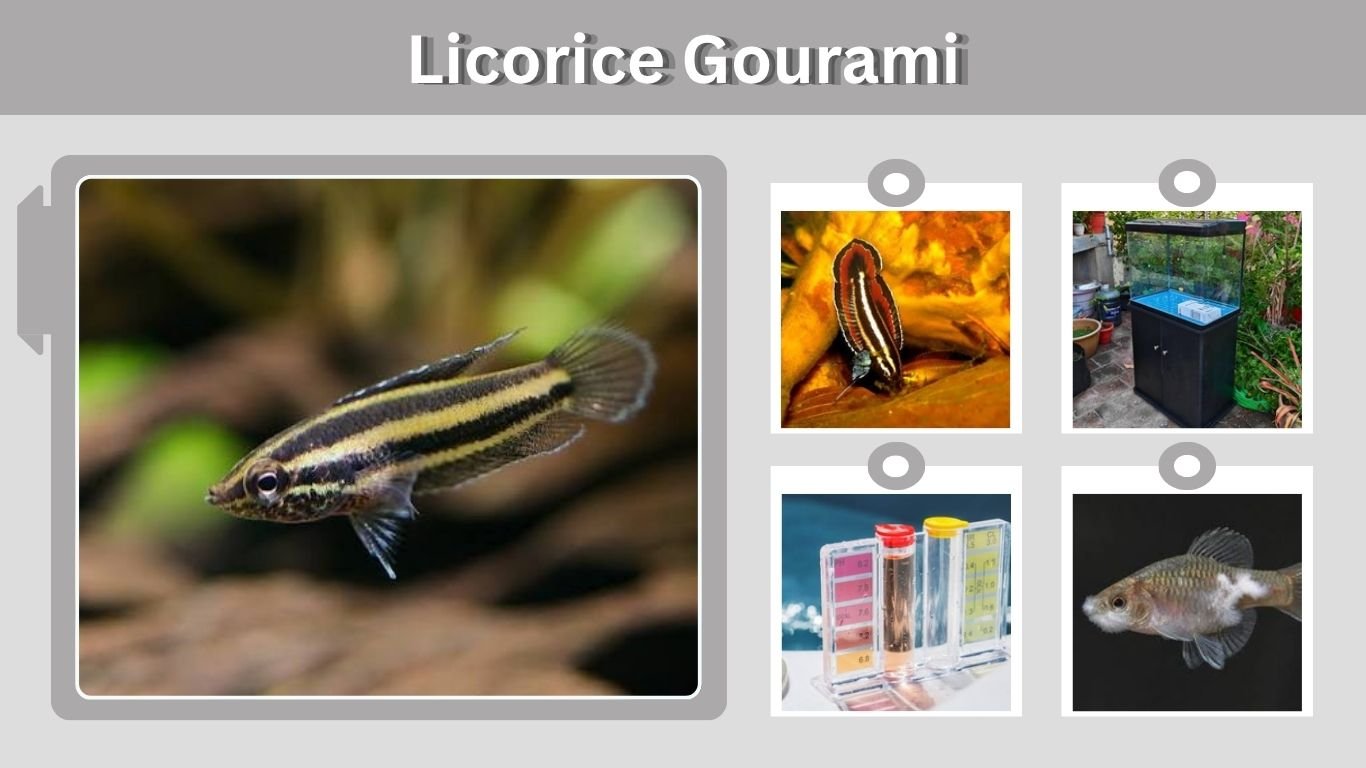
The Licorice Gourami is a fascinating freshwater fish admired for its small size, colorful fins, and peaceful personality. Native to Southeast Asia, these delicate fish naturally inhabit acidic blackwater streams surrounded by dense tropical forests. Unlike many common aquarium gouramis, they require specialized water conditions and a diet rich in live foods. Their beautiful blue, red, and green markings make them particularly attractive to experienced aquarists. This guide explains Licorice Gourami care, size, lifespan, tank setup, feeding habits, breeding, and compatibility with other aquarium species.
What Is a Licorice Gourami?
Licorice Gourami refers to a group of small freshwater fish belonging to the genus Parosphromenus. These fish are members of the Osphronemidae family and are closely associated with tropical peat-swamp habitats. Their slender bodies, attractive fin patterns, and unusual breeding behavior distinguish them from many other gouramis. Different species have their own colors, distributions, and aquarium requirements.
Licorice Gourami Identification
Licorice Gouramis can be recognized by several distinctive physical characteristics.
- Scientific name: Parosphromenus spp.
- Family: Osphronemidae
- Common names: Licorice Gourami, Liquorice Gourami
- Origin: Southeast Asia
- Adult size: Approximately 1–2 inches
- Body shape: Small, elongated, and slender
- Coloration: Brown or black stripes with colorful fins
- Temperament: Shy and generally peaceful
- Care level: Advanced
- Diet: Primarily small live invertebrates
Natural Habitat and Distribution
Licorice Gouramis inhabit freshwater peat swamps and forest streams in Indonesia and Malaysia. Their natural environment contains soft, acidic water stained brown by decomposing leaves.
Overhanging vegetation creates shaded conditions, while submerged roots and leaf litter provide protection from predators. These specialized habitats are increasingly threatened by deforestation, drainage, and agricultural development.
Popular Licorice Gourami Types and Species
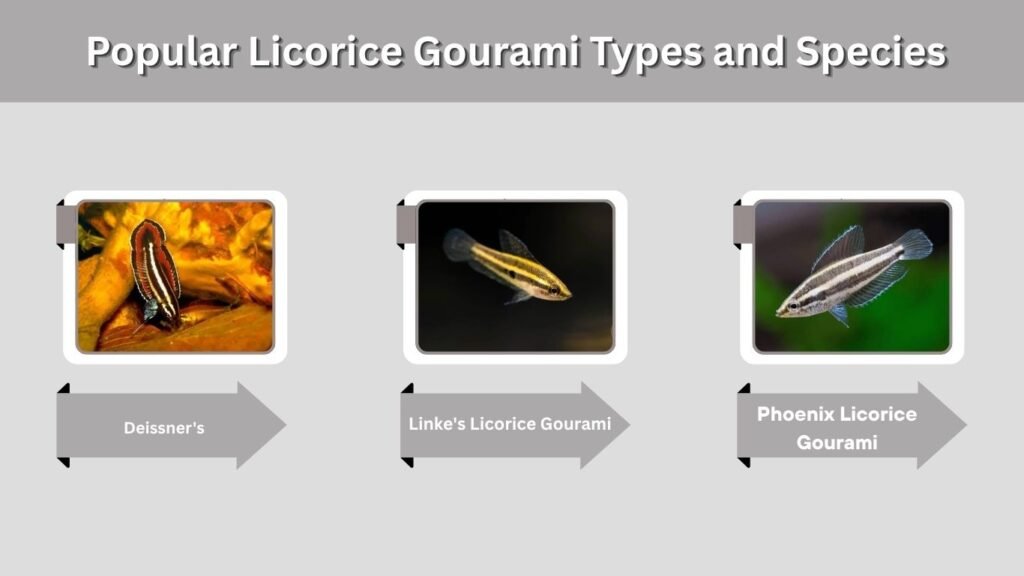
The Parosphromenus genus contains numerous species with remarkable differences in fin coloration and body markings. Some are recognized by their blue iridescence, while others display red, green, or contrasting black patterns. Understanding these variations helps fishkeepers identify suitable species. However, commercial names are not always scientifically reliable, and some aquarium specimens are incorrectly identified.
Common Licorice Gourami Species
Several recognized species are particularly interesting to aquarium enthusiasts.
- Deissner’s Licorice Gourami (P. deissneri): A striped species native to Bangka Island, Indonesia.
- Linke’s Licorice Gourami (P. linkei): Known for attractive spotted fin patterns.
- Nagyi’s Licorice Gourami (P. nagyi): Displays colorful fins during courtship.
- Ornate Licorice Gourami (P. ornaticauda): Recognized for distinctive tail patterns.
- Phoenix Licorice Gourami (P. phoenicurus): Features striking red and blue fin coloration.
- Bintan Licorice Gourami (P. bintan): A blackwater species with beautiful iridescent markings.
Names such as blue line, fire and ice, and fire red may refer to trade forms rather than formally recognized species.
Licorice Gourami vs. Sparkling Gourami
Licorice Gouramis and sparkling gouramis are both small labyrinth fish, but they have different aquarium requirements.
Sparkling gouramis (Trichopsis pumila) generally tolerate a broader range of conditions. Licorice Gouramis require exceptionally soft, acidic water and are usually more demanding to feed successfully.
Licorice Gourami Size and Lifespan
Licorice Gouramis are among the smaller members of the gourami family. Despite their compact size, they require careful attention to environmental stability and nutrition. Growth varies between species and individuals. Their lifespan also depends on genetics, diet, water chemistry, and overall aquarium maintenance. Healthy fish can survive for several years when their specialized needs are consistently met.
How Big Do Licorice Gouramis Get?
Most Licorice Gouramis reach approximately 1–2 inches (2.5–5 cm) in length.
Their small bodies make them suitable for specialized nano aquariums. However, limited size should not be confused with easy care. Even small changes in water quality may affect their health.
Average Licorice Gourami Lifespan
Licorice Gouramis are often reported to live approximately 3–5 years in captivity.
However, lifespan varies, and exceptional captive-bred individuals have survived for more than nine years. Stable water conditions, appropriate feeding, and minimal stress can support longevity.
Licorice Gourami Tank Size and Water Conditions

Creating suitable blackwater conditions is the most important part of Licorice Gourami care. These fish are adapted to environments containing very little dissolved mineral content. Ordinary freshwater community aquariums are often unsuitable because their water chemistry differs significantly from natural peat-swamp habitats. A mature aquarium with gentle filtration, subdued lighting, and stable conditions provides the strongest foundation for successful care.
Ideal Licorice Gourami Water Parameters
The following conditions are useful general guidelines, although individual species may have narrower requirements.
- Tank size: 10 gallons or larger is a practical choice for a pair.
- Temperature: Approximately 72–82°F (22–28°C), depending on species.
- pH level: Generally 4.0–6.5, sometimes lower.
- Water hardness: Very soft, commonly 0–4 dGH.
- Carbonate hardness: Close to zero.
- Filtration: Gentle sponge filtration.
- Lighting: Dim or subdued.
- Ammonia and nitrite: 0 ppm.
Always research the particular species before establishing exact water parameters.
Creating a Natural Blackwater Aquarium
A suitable Licorice Gourami tank includes driftwood, dried aquarium-safe leaves, and small caves.
Botanicals release tannins that produce tea-colored water, but they do not necessarily make hard water sufficiently soft. Reverse-osmosis water may be necessary, with careful preparation and monitoring.
Avoid sudden chemical adjustments because extremely soft water has limited buffering capacity.
Best Plants and Decorations
Java moss, suitable Cryptocoryne species, and floating plants can provide sheltered areas.
Small ceramic caves and submerged branches offer breeding locations. Keep water movement gentle and use a secure aquarium lid to prevent accidental jumping.
Licorice Gourami Diet and Tank Mates
Licorice Gouramis are specialized micropredators that consume tiny aquatic organisms. Their feeding requirements differ from those of many commercially bred gouramis because they often reject dry aquarium foods. They are also shy and easily intimidated by larger fish. Providing suitable live foods and carefully selecting companions helps prevent starvation, competition, and unnecessary stress.
What Do Licorice Gouramis Eat?
A balanced feeding routine should emphasize small live foods.
- Baby brine shrimp: An excellent nutritious food for adults and growing juveniles.
- Moina: Small freshwater crustaceans readily consumed by gouramis.
- Daphnia: Suitable as part of a varied diet.
- Microworms: Useful for smaller individuals.
- Mosquito larvae: Appropriate small larvae can provide dietary variety.
- Grindal worms: Suitable in moderation.
Offer small meals regularly and remove uneaten food. Frozen foods are occasionally accepted, but flakes and pellets are frequently refused.
Best Tank Mates for Licorice Gouramis
A species-only aquarium is generally the safest arrangement.
Some tiny, peaceful blackwater fish, such as certain Boraras rasboras, may coexist in carefully managed larger tanks. However, food competition can create problems.
Avoid aggressive fish, active feeders, and larger gouramis. Keeping different Parosphromenus species together is also discouraged because of identification difficulties and possible hybridization.
Can Licorice Gouramis Live With Shrimp?
Compatibility with shrimp is uncertain.
Adult shrimp may coexist peacefully in some setups, but small shrimp can become prey. Furthermore, many commonly kept shrimp species require harder water than Licorice Gouramis prefer.
A species-only setup is generally more reliable.
Licorice Gourami Male vs. Female and Breeding
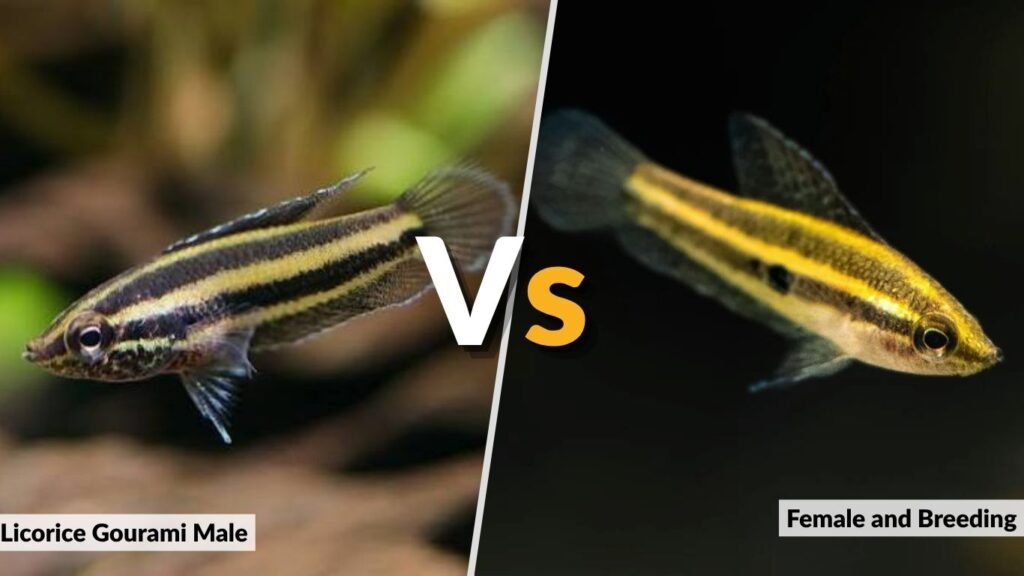
Licorice Gouramis exhibits fascinating courtship and reproductive behavior. Males develop vibrant fin coloration when attracting females and often defend small territories around breeding caves. Unlike many familiar gouramis that construct floating surface nests, Licorice Gouramis typically spawn inside sheltered cavities. Successful breeding requires suitable water chemistry, sufficient food, and minimal disturbance around the nesting area.
Male and Female Identification
Male Licorice Gouramis usually display brighter iridescent blue, green, or red markings along their fins.
Females are generally less colorful, with subdued brownish bodies and simpler fin patterns. However, identification becomes difficult outside breeding periods, especially when comparing different species.
Breeding Licorice Gouramis
During courtship, a male displays his colorful fins and attempts to attract a female into a small cave.
The pair releases eggs during repeated spawning embraces. Eggs are attached near the cave ceiling, sometimes among a small number of bubbles.
The male generally remains responsible for guarding the eggs and newly hatched young.
Caring for Licorice Gourami Fry
Eggs may hatch within approximately 24–36 hours, depending on species and temperature.
The fry remain near the nesting site before becoming free-swimming. Their first foods may include rotifers or other microscopic live organisms, followed by newly hatched brine shrimp when they are large enough.
Licorice Gourami Health, Price, and Conservation
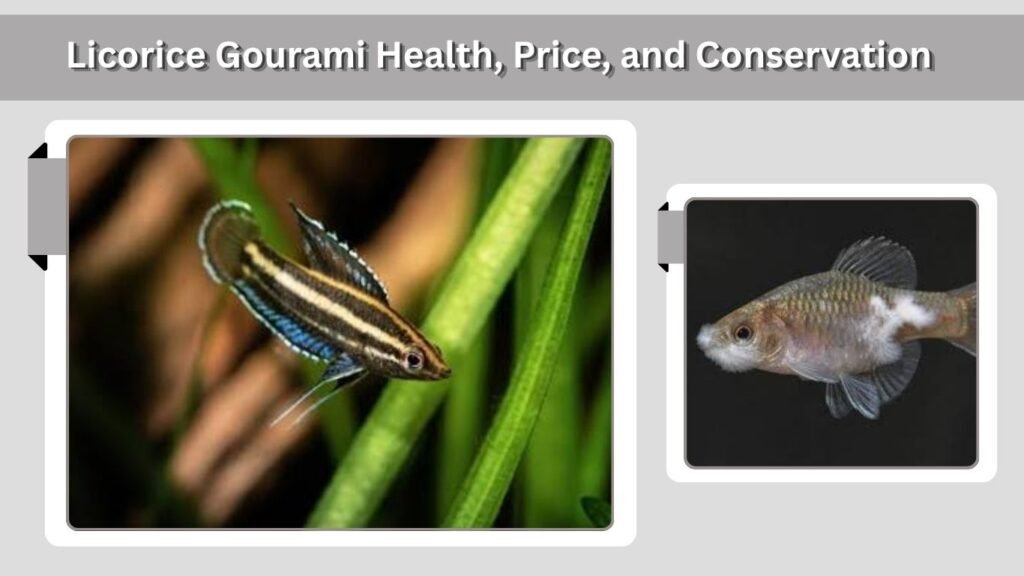
Keeping Licorice Gouramis successfully involves more than meeting their basic aquarium requirements. These delicate fish are sensitive to poor water quality, excessive handling, and unsuitable companions. Their rarity also creates conservation concerns, particularly when specimens are collected from threatened wild populations. Selecting responsibly sourced fish and maintaining accurate species identification support both individual animal welfare and responsible aquarium breeding.
Common Health Problems
Poor water conditions may cause stress, appetite loss, faded coloration, or increased susceptibility to infections.
Quarantine new arrivals and watch for abnormal swimming, clamped fins, or visible lesions. Investigate potential environmental causes before attempting treatment, since some medications may be unsuitable for extremely soft-water aquariums.
Licorice Gourami Price and Availability
Licorice Gouramis are less commonly available than dwarf or three spot gouramis.
Prices depend on species, availability, location, and whether specimens are captive-bred. Specialist aquarium breeders and conservation-oriented hobbyist groups are often preferable sources.
Choose captive-bred individuals whenever possible and confirm the scientific identification before purchasing.
FAQs
Licorice Gouramis raise many questions because their aquarium requirements differ significantly from those of ordinary tropical fish. Understanding their behavior, social preferences, and environmental sensitivity helps aquarists determine whether these fish suit their experience level. The following answers address common concerns about Licorice Gourami care and compatibility.
1. Are Licorice Gouramis Good for Beginners?
Generally, no. Their requirements for extremely soft, acidic water and consistent live feeding make them better suited to experienced aquarists.
2. Can Licorice Gouramis Live in Groups?
Yes, small groups of the same species can coexist in suitable aquariums. However, males may defend territories, and individual pairs are often easier to breed.
3. Are Licorice Gouramis Aggressive?
They are generally shy and peaceful. Males may display territorial aggression around breeding caves, especially toward rival males.
4. Can Licorice Gouramis Live With Chocolate Gouramis?
They share some blackwater preferences, but chocolate gouramis are larger and may compete for food and space. Separate aquariums are generally safer.
5. Do Licorice Gouramis Need Blackwater?
Yes. Most species thrive in very soft, acidic conditions resembling natural peat-swamp blackwater. Brown coloration alone is insufficient; appropriate water chemistry is essential.