
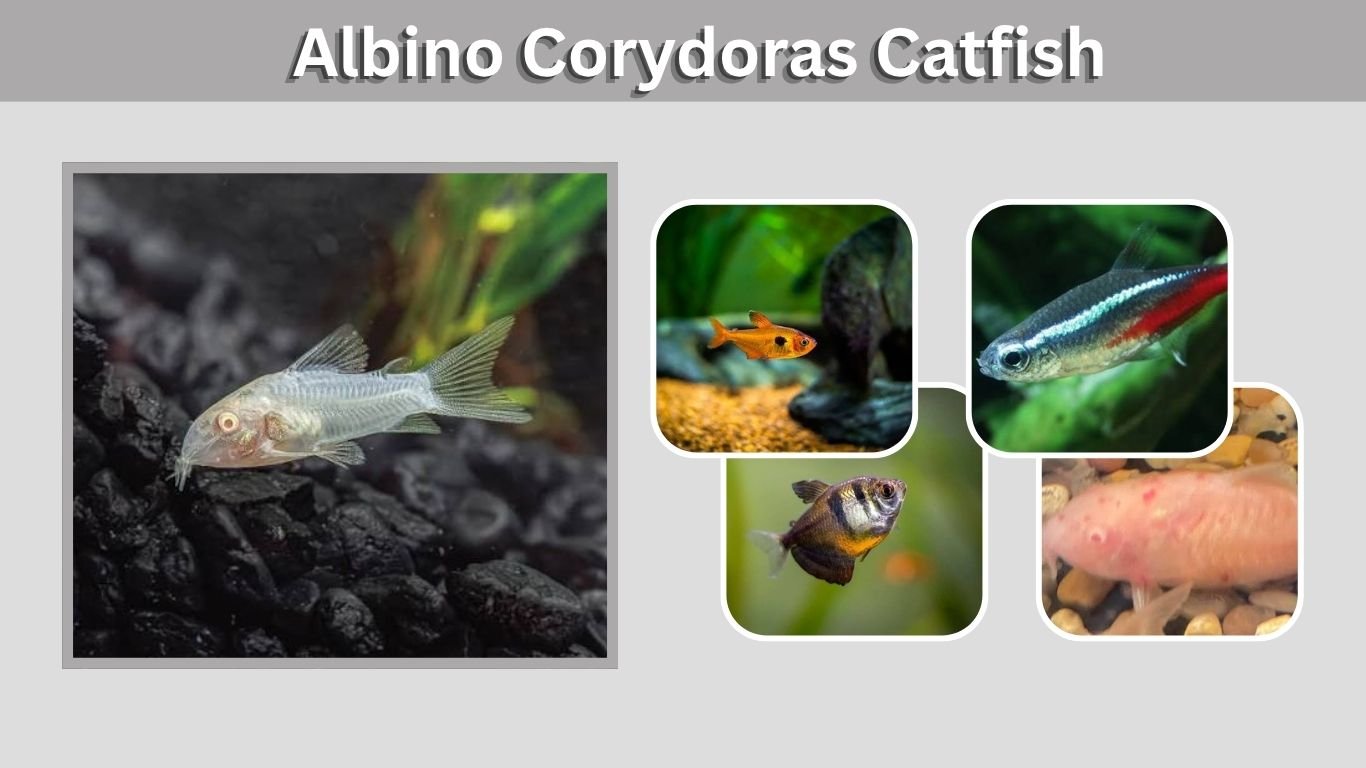
Looking for a peaceful bottom-dwelling fish with a striking white body and pinkish-red eyes? The albino corydoras catfish is a favorite among freshwater aquarium keepers because of its gentle temperament and lively group behavior. Although these fish are relatively hardy, they need more than leftover food and a small tank to thrive. Understanding their ideal aquarium setup, feeding needs, social habits, and breeding behavior can prevent common mistakes. This guide also explains why albino corydoras sometimes appear red and how to recognize possible health problems.
What Is an Albino Corydoras Catfish?
The albino corydoras catfish is a freshwater bottom-dwelling fish belonging to the armored catfish family, Callichthyidae. Most albino corydoras sold in aquarium stores are albino varieties of the bronze corydoras. These fish are recognized for their pale coloration, social behavior, and constant exploration of aquarium substrates.
Albino Corydoras Catfish Identification
Albino corydoras have several distinctive physical characteristics that make them easy to recognize in freshwater aquariums.
- Body Color: Creamy white or pale pink coloration caused by reduced pigmentation.
- Eye Color: Pinkish-red eyes that distinguish them from normally pigmented varieties.
- Body Shape: Rounded, slightly elongated bodies covered with protective bony plates.
- Barbels: Short, sensitive whisker-like structures surrounding the mouth.
- Fins: Mostly transparent or pale fins with a delicate appearance.
Albino Corydoras vs Bronze Corydoras
Most albino corydoras are simply color varieties of bronze corydoras, traditionally known as Corydoras aeneus. The species is also classified as Osteogaster aenea.
Their primary difference is appearance. Bronze corydoras display metallic greenish-brown coloration, whereas albino varieties lack most normal pigmentation.
Both forms share similar behavior, feeding requirements, and aquarium preferences.
Albino Corydoras Catfish Size and Lifespan

Understanding the adult size and expected lifespan of albino corydoras helps aquarists provide adequate living conditions. Although these fish appear small when purchased, they grow steadily under suitable conditions. Their longevity depends on nutrition, water quality, available swimming space, and overall aquarium maintenance.
How Big Do Albino Corydoras Get?
Adult albino bronze corydoras typically reach approximately 2.5–3 inches (6–7.5 cm) in length.
Females generally become larger and broader than males, particularly when carrying eggs.
Their relatively compact bodies make them suitable for medium-sized community aquariums. However, sufficient bottom space remains important because these fish naturally explore their surroundings in groups.
How Long Do Albino Corydoras Live?
Albino corydoras commonly live around five to eight years in well-maintained aquariums. Some individuals survive longer with excellent care.
Stable water conditions, nutritious food, and compatible tank mates contribute to their longevity.
Sudden temperature changes, overcrowding, and poor aquarium hygiene may increase stress and shorten their lifespan.
Albino Corydoras Catfish Tank Size and Setup
Albino corydoras require an aquarium that supports their natural bottom-feeding and social behavior. Their habitat should include a soft substrate, sheltered resting areas, and open spaces for group movement. Proper filtration and consistent water conditions also help maintain healthy fish and reduce environmental stress.
Minimum Tank Size for Albino Corydoras
A 20-gallon aquarium is a recommended starting point for a group of six albino corydoras.
A longer aquarium is preferable to a tall, narrow one because these fish spend considerable time exploring the bottom.
Although they may survive in smaller tanks, limited floor space can restrict movement and complicate water maintenance.
Albino Corydoras Water Parameters
Maintaining suitable water conditions supports normal feeding, activity, and growth.
- Temperature: Approximately 72–79°F (22–26°C).
- pH Level: Around 6.0–7.5.
- Water Hardness: Soft to moderately hard water.
- Ammonia: 0 ppm.
- Nitrite: 0 ppm.
- Filtration: Effective filtration with sufficient oxygenation.
Avoid sudden changes in temperature or water chemistry.
Best Substrate and Aquarium Plants
Fine aquarium sand provides an excellent substrate for albino corydoras because it allows natural searching behavior.
Smooth, rounded gravel can also work when kept clean.
Aquatic plants such as Java fern, Amazon swords, and Cryptocoryne create sheltered areas.
Driftwood and aquarium caves offer additional hiding places, while open sandy sections provide comfortable feeding space.
Albino Corydoras Catfish Food and Diet
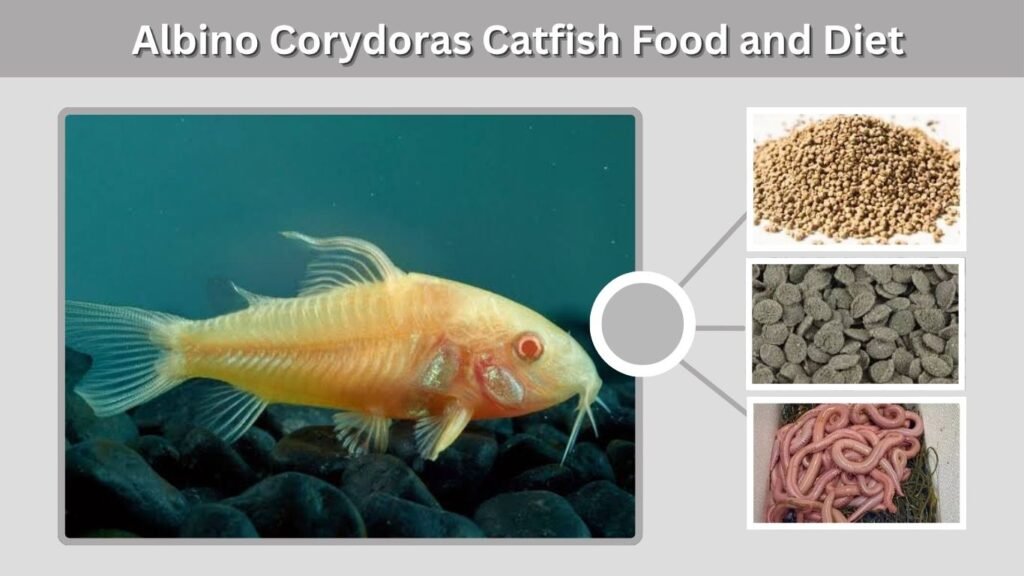
Albino corydoras are omnivorous fish that consume small aquatic organisms and various food particles. Despite their bottom-feeding habits, they should not depend exclusively on leftovers from other aquarium inhabitants. Providing a balanced diet helps maintain healthy development, natural activity, and successful reproduction.
Best Foods for Albino Corydoras
Several nutritious foods are suitable for regular feeding.
- Sinking Pellets: Provide balanced nutrition and reach the aquarium bottom.
- Bottom-Feeder Tablets: Offer convenient daily feeding.
- Bloodworms: Supply protein and encourage natural feeding behavior.
- Brine Shrimp: Provide dietary variety and additional nutrients.
- Daphnia: Offer small, easily consumed animal-based food.
How Often Should Albino Corydoras Eat?
Feed albino corydoras once or twice daily in manageable portions.
Make sure food reaches the substrate before faster tank mates consume everything.
Remove excessive uneaten food to prevent water contamination.
Although corydoras occasionally consume leftover particles, they are not effective algae eaters and require their own meals.
Albino Corydoras Behavior and Tank Mates

Albino corydoras are peaceful freshwater fish that usually coexist well with other nonaggressive species. Their social nature makes group housing important for normal activity. They commonly search the substrate together, rest near decorations, and occasionally swim upward to collect atmospheric air.
Can Albino Cory Catfish Live With Bronze Corydoras?
Yes. Albino and bronze corydoras of the same species can live together and form social groups.
Because their differences are primarily related to pigmentation, they generally display compatible behavior.
Keeping at least six compatible corydoras provides greater opportunities for natural group interactions.
Best Tank Mates for Albino Corydoras
Small tetras, peaceful rasboras, guppies, and appropriately tempered betta fish may coexist with albino corydoras.
Their compatibility depends on tank size, water conditions, and individual behavior.
Avoid aggressive cichlids, large predatory fish, and species that may intimidate or injure bottom-dwellers.
Albino Corydoras Catfish Breeding and Eggs
Albino corydoras can reproduce successfully in captivity when mature fish receive appropriate nutrition and stable living conditions. Breeding involves distinctive courtship movements and the deposition of adhesive eggs. A separate breeding aquarium can improve egg survival and provide better conditions for developing fry.
Male vs Female Albino Corydoras
Female albino corydoras are generally larger and noticeably rounder than males.
Males tend to have slimmer bodies, particularly when viewed from above.
During breeding, females become fuller as eggs develop.
Healthy adult pairs may display increased activity and courtship behavior before spawning.
Albino Corydoras Eggs and Fry Care
During spawning, albino corydoras commonly adopt a characteristic T-shaped breeding position.
Females deposit adhesive eggs on aquarium glass, plants, or other surfaces.
Depending on temperature, the eggs usually hatch within several days.
Adult fish may consume eggs, so carefully transferring them to a separate breeding container can improve survival.
Newly free-swimming fry require tiny foods, such as microworms or newly hatched brine shrimp.
Common Albino Corydoras Health Problems

Although albino corydoras are relatively hardy, they can develop health problems when environmental conditions deteriorate. Their pale bodies sometimes make unusual coloration easier to notice. Recognizing normal pigmentation and possible disease symptoms helps aquarists respond appropriately before serious complications develop.
Why Is My Albino Corydoras Looking Red?
Mild pinkish coloration can be normal because albino fish lack much of the pigmentation that usually hides underlying tissues.
However, sudden red patches, sores, bleeding, or unusual redness around the belly may indicate injury, irritation, or infection.
Check water quality immediately and seek qualified fish-health advice if redness persists or accompanies abnormal behavior.
Albino Corydoras Catfish Dropsy
Dropsy describes abnormal fluid accumulation rather than one specific disease.
Affected fish may develop a swollen abdomen, protruding eyes, reduced appetite, or unusual swimming behavior.
Potential causes include bacterial infections and internal organ dysfunction.
Promptly check aquarium conditions and seek veterinary guidance. Severe swelling requires urgent attention, and treatments should address the underlying cause.
Daily Care and Disease Prevention
Good aquarium maintenance helps prevent common health problems.
- Perform regular partial water changes.
- Remove accumulated waste from the substrate.
- Maintain stable water temperature and filtration.
- Observe feeding behavior and physical appearance.
- Quarantine newly acquired fish before introducing them.
FAQs
1. Are Albino Corydoras Catfish Good for Beginners?
Yes. They are relatively hardy, peaceful fish suitable for beginners who maintain stable aquarium conditions and appropriate group sizes.
2. How Many Albino Corydoras Should Be Kept Together?
Keep at least six compatible individuals. Their social behavior makes group housing important for comfort and natural activity.
3. Can Albino Corydoras Breed With Bronze Corydoras?
Yes. Albino and normally colored bronze corydoras belonging to the same species can interbreed.
4. Do Albino Corydoras Need a Heater?
A heater is recommended when room temperatures cannot consistently maintain their preferred range of approximately 72–79°F.
5. Why Do Albino Corydoras Swim to the Surface?
They occasionally gulp atmospheric air naturally. However, repeated surface visits accompanied by distress may indicate poor water quality or inadequate oxygenation.
