
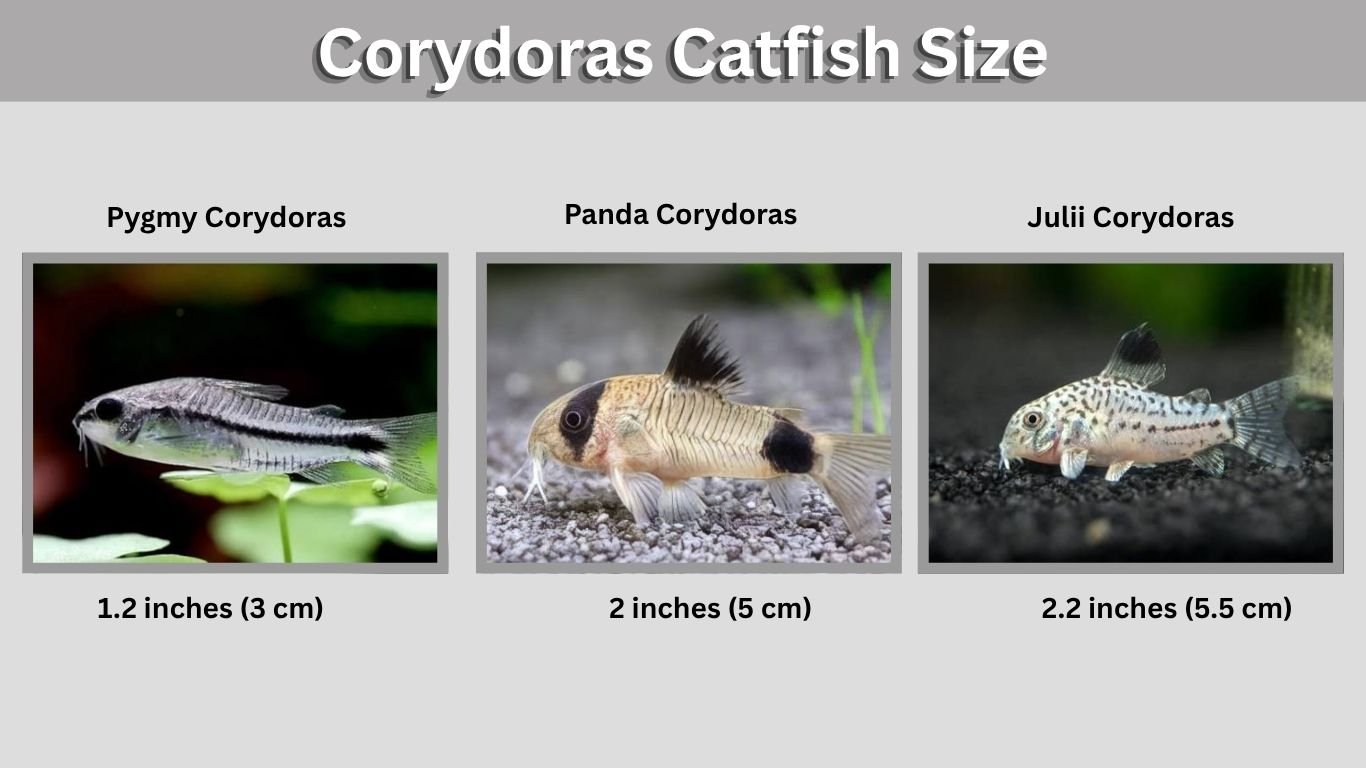
Corydoras catfish are popular freshwater aquarium fish known for their peaceful nature, distinctive patterns, and bottom-dwelling behavior. However, their adult size varies considerably depending on the species. While tiny pygmy corydoras barely reach an inch, larger varieties can grow to nearly four inches or more. Understanding Corydoras catfish size is essential when selecting an aquarium, planning a social group, and choosing compatible tank mates. This guide compares common species, their full-grown sizes, growth patterns, and recommended tank requirements.
How Big Do Corydoras Catfish Get?
Most commonly kept Corydoras catfish reach approximately 1–3 inches (2.5–7.5 cm) in body length, depending on their species. Miniature varieties remain smaller, while larger relatives can approach four inches. Genetics, nutrition, water conditions, and maturity all influence their final dimensions.
Average Adult Corydoras Size
Smaller species, including pygmy and salt-and-pepper corydoras, usually grow between 1 and 1.5 inches.
Medium-sized varieties, such as panda and Julii corydoras, commonly reach around 2 inches.
Larger aquarium favorites, including bronze, peppered, and Sterbai corydoras, generally grow between 2.5 and 3 inches.
Adult females often appear larger and broader than males, particularly when carrying eggs.
Corydoras Catfish Adult Size Chart
The following measurements are approximate published maximum standard lengths, measured from the snout to the base of the tail, excluding the tail fin. An individual fish’s total nose-to-tail length may therefore be slightly greater.
| Corydoras Variety | Adult Body Length |
| Pygmy Corydoras | 1.2 inches (3 cm) |
| Salt and Pepper Corydoras | 1.4 inches (3.5 cm) |
| Panda Corydoras | 2 inches (5 cm) |
| Julii Corydoras | 2.2 inches (5.5 cm) |
| Three-Stripe Corydoras | 2.2 inches (5.5 cm) |
| Sterbai Corydoras | 2.6 inches (6.5 cm) |
| Peppered Corydoras | 2.8 inches (7 cm) |
| Bronze Corydoras | 3 inches (7.5 cm) |
| Albino Bronze Corydoras | 3 inches (7.5 cm) |
| Emerald Corydoras (Brochis) | 3.1 inches (8 cm) |
| Banded Corydoras | 3.9 inches (10 cm) |
These are species reference measurements rather than guaranteed sizes for every individual. Corydoras is also used as a broad aquarium-trade name for related catfish now classified in several different genera.
Corydoras Size Comparison by Popular Species
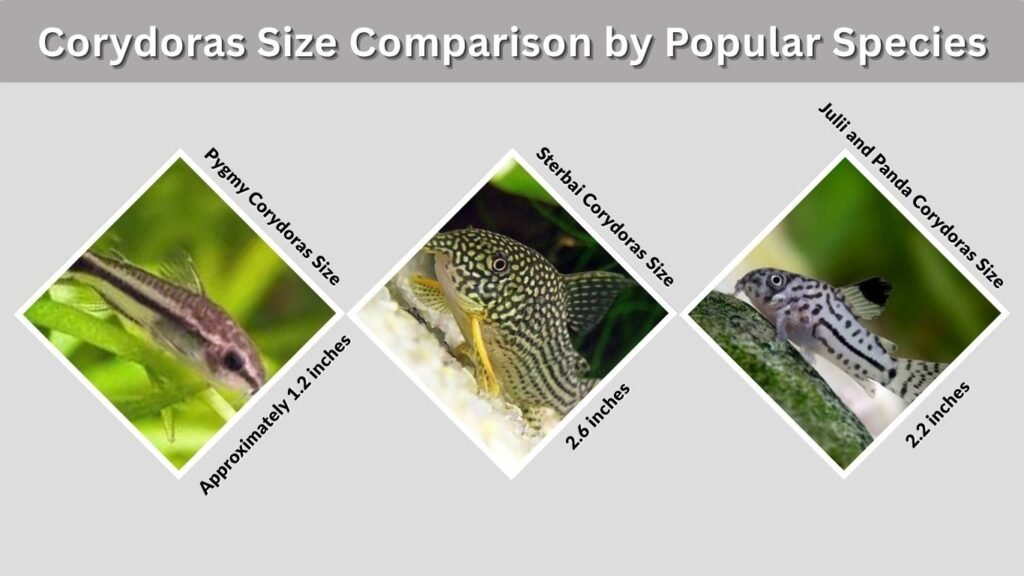
Different Corydoras varieties have distinct adult sizes, body shapes, and growth characteristics. Some remain tiny throughout their lives, making them suitable for smaller aquariums, while others develop broader bodies and require additional swimming space. Understanding these differences helps fishkeepers select the most appropriate species.
Pygmy Corydoras Size
Pygmy corydoras (Gastrodermus pygmaeus, formerly Corydoras pygmaeus) are among the smallest commonly available Corydoras relatives.
Adults reach approximately 1.2 inches (3 cm) in standard length, with females often growing slightly larger than males.
Unlike most larger corydoras, pygmy corydoras frequently swim through the middle of the aquarium. Their miniature size makes them suitable for carefully maintained 10-gallon planted aquariums.
Sterbai Corydoras Size
Sterbai corydoras (Hoplisoma sterbai) reach approximately 2.6 inches (6.5 cm) in standard length.
They are recognized by their spotted patterns, dark markings, and orange pectoral fins.
Adult females tend to develop broader bodies than males. A 20-gallon or larger aquarium is a practical choice for maintaining a comfortable social group.
Julii and Panda Corydoras Size
Julii corydoras grow to approximately 2.2 inches (5.5 cm), while panda corydoras reach around 2 inches (5 cm) in standard length.
Both species are peaceful community fish, although their identifying patterns differ significantly.
True Julii corydoras feature small dark spots, while pandas display distinctive black patches around their eyes, dorsal fins, and tail bases.
Fish marketed as Julii corydoras are frequently the similar three-stripe species.
Bronze, Albino, and Peppered Corydoras Size
Bronze corydoras and commonly sold albino bronze varieties can reach approximately 3 inches (7.5 cm) in standard length.
Peppered corydoras typically reach around 2.8 inches (7 cm), with females frequently appearing noticeably broader.
These relatively large, robust species benefit from spacious aquariums with substantial bottom area for group foraging.
Corydoras Catfish Tank Size Requirements
Choosing the correct tank size depends on adult fish length, group numbers, and available bottom space. Corydoras are social catfish, so an aquarium must accommodate multiple individuals rather than a single fish. Longer tanks usually provide more useful floor space than tall aquariums with the same water volume.
Minimum Tank Size by Corydoras Type
| Corydoras Type | Practical Starting Tank Size |
| Pygmy Corydoras | 10 gallons |
| Salt and Pepper Corydoras | 15 gallons |
| Panda Corydoras | 15–20 gallons |
| Julii Corydoras | 20 gallons |
| Sterbai Corydoras | 20 gallons |
| Peppered Corydoras | 20 gallons |
| Bronze and Albino Corydoras | 20 gallons |
| Emerald Corydoras | 40–55 gallons |
| Banded Corydoras | 55–65 gallons |
These are practical planning recommendations for appropriately sized groups, not universal stocking limits. Tank footprint, filtration, maintenance, and other inhabitants must also be considered.
How Many Corydoras Should Be Kept Together?
Most Corydoras species should be maintained in groups of at least six individuals of the same species.
Groups of eight to ten or more often display more confident, natural behavior when sufficient aquarium space is available.
For example, a 20-gallon long aquarium may accommodate a group of six bronze corydoras, while a similarly sized aquarium could support a larger group of smaller pygmy corydoras.
A group should not be reduced simply to accommodate an undersized aquarium.
How Long Do Corydoras Take to Reach Full Size?
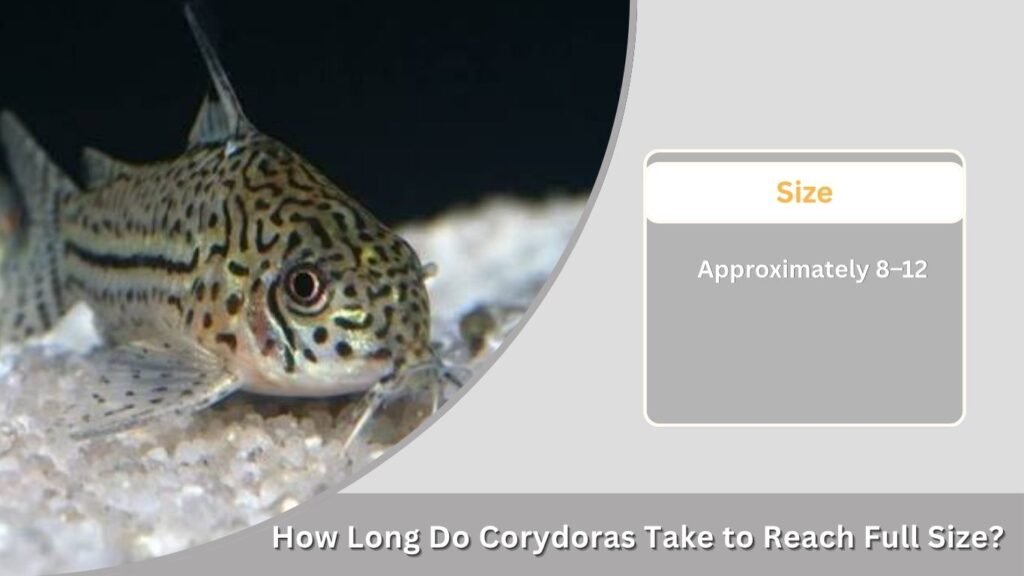
Corydoras growth rates vary depending on species, genetics, food availability, and environmental conditions. Young fish typically grow fastest during their early development before growth gradually slows as they approach adulthood. Maintaining consistent feeding and stable water quality supports healthy growth throughout this period.
Corydoras Growth From Fry to Adult
Newly hatched Corydoras fry are extremely small and initially depend on their yolk sacs for nutrition.
As they develop, they begin accepting appropriately sized live foods and gradually transition to larger sinking foods.
Many common aquarium Corydoras approach adult size within approximately 8–12 months under favorable conditions, although some individuals take longer.
Fish purchased as juveniles may therefore continue growing considerably after introduction to an aquarium.
Factors Affecting Corydoras Growth
Genetics establish much of a Corydoras catfish’s potential adult size. However, nutrition and environmental stability influence whether it develops normally.
A varied diet containing quality sinking pellets and appropriate protein-rich foods supports growth.
Poor water quality, overcrowding, and insufficient feeding can slow development or cause health problems.
Maintaining a suitable aquarium from an early age is more effective than attempting to correct growth problems after they become established.
Smallest and Largest Corydoras Varieties
The Corydoras group includes remarkable differences in body size. Miniature species are popular for planted nano aquariums, while larger armored catfish require substantially more space. Identifying the smallest and largest varieties can help aquarium owners make appropriate stocking decisions.
What Is the Smallest Corydoras?
The pygmy corydoras is one of the smallest widely available species, typically growing to approximately 1.2 inches in standard length.
Salt-and-pepper corydoras and tail-spot corydoras are other miniature relatives commonly kept by aquarium enthusiasts.
These small fish still require social groups, stable water conditions, and adequate swimming space.
What Is the Largest Corydoras?
The banded Corydoras (Scleromystax barbatus) is among the largest fish traditionally included in Corydoras.
It can reach approximately 3.9 inches (10 cm) in standard length, with its total length potentially exceeding four inches.
Unlike typical small community corydoras, this species needs significantly more space. Adult males can also display territorial behavior, making careful aquarium planning essential.
FAQs
1. What Is the Average Size of a Corydoras Catfish?
Most common Corydoras catfish grow approximately 1–3 inches, depending on the species. Pygmy varieties remain smaller, while bronze and peppered corydoras grow considerably larger.
2. How Big Do Albino Corydoras Get?
Common albino bronze corydoras can reach approximately 3 inches (7.5 cm) in standard length, similar to normal bronze corydoras.
3. What Is the Minimum Tank Size for Corydoras?
A 10-gallon aquarium can accommodate some miniature species, while 20 gallons or more is preferable for most commonly kept Corydoras varieties.
4. Do Female Corydoras Grow Bigger Than Males?
Yes. In many species, adult females become larger and broader-bodied than males, especially during reproductive maturity.
5. How Long Does It Take for Corydoras to Reach Full Size?
Many Corydoras approach their adult length within approximately 8–12 months under suitable conditions, but growth varies by species and individual.
