
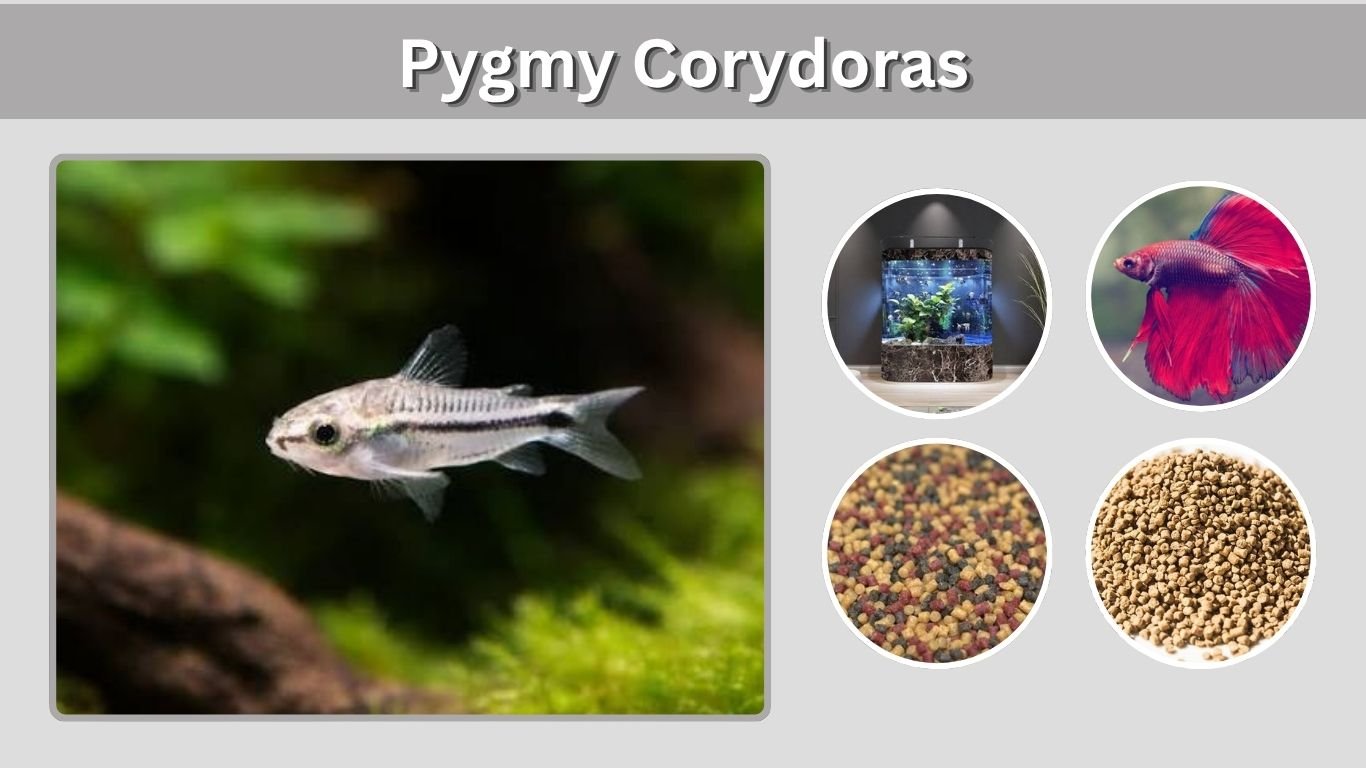
Pygmy corydoras are tiny, peaceful freshwater catfish that bring movement and charm to planted aquariums. Unlike many larger corydoras, these miniature fish frequently swim through the middle of the tank rather than remaining exclusively at the bottom. Their small size makes them popular among nano aquarium enthusiasts, but they still require proper care and social groups. This guide covers pygmy corydoras size, tank requirements, feeding habits, compatible tank mates, lifespan, and breeding.
What Are Pygmy Corydoras?
Pygmy corydoras are among the smallest armored catfish commonly kept in freshwater aquariums. Their peaceful temperament, attractive horizontal markings, and unusual schooling behavior distinguish them from larger bottom-dwelling species. Native to South America, these tiny fish naturally inhabit freshwater environments where vegetation and submerged roots provide shelter.
Scientific Name and Natural Habitat
The pygmy corydoras is traditionally known as Corydoras pygmaeus. Following a 2024 taxonomic revision, its accepted scientific name is Gastrodermus pygmaeus, although the original name remains widely used in the aquarium trade.
These fish originate from Brazil’s Rio Madeira basin, where they inhabit small streams, tributaries, flooded vegetation, and sheltered freshwater areas.
Their natural habitat contains aquatic plants and submerged roots, providing protection from predators and opportunities to forage for small organisms.
Pygmy Corydoras Identification
- Body Shape: Small, slender body with protective bony plates.
- Color: Silvery-gray with a prominent horizontal black stripe.
- Eyes: Small, dark, and positioned near the upper head.
- Fins: Mostly transparent with delicate rays.
- Barbels: Short, sensitive whisker-like structures around the mouth.
- Behavior: Peaceful schooling fish that swim near the bottom and throughout the middle water levels.
How Big Do Pygmy Corydoras Get?
Full-grown pygmy corydoras usually measure approximately 1–1.2 inches (2.5–3 cm).
Adult females are generally slightly larger and rounder than males, especially when carrying eggs. Their miniature size allows them to live comfortably in relatively small aquariums when adequate swimming space and suitable group numbers are provided.
Pygmy Corydoras Tank Size and Water Requirements
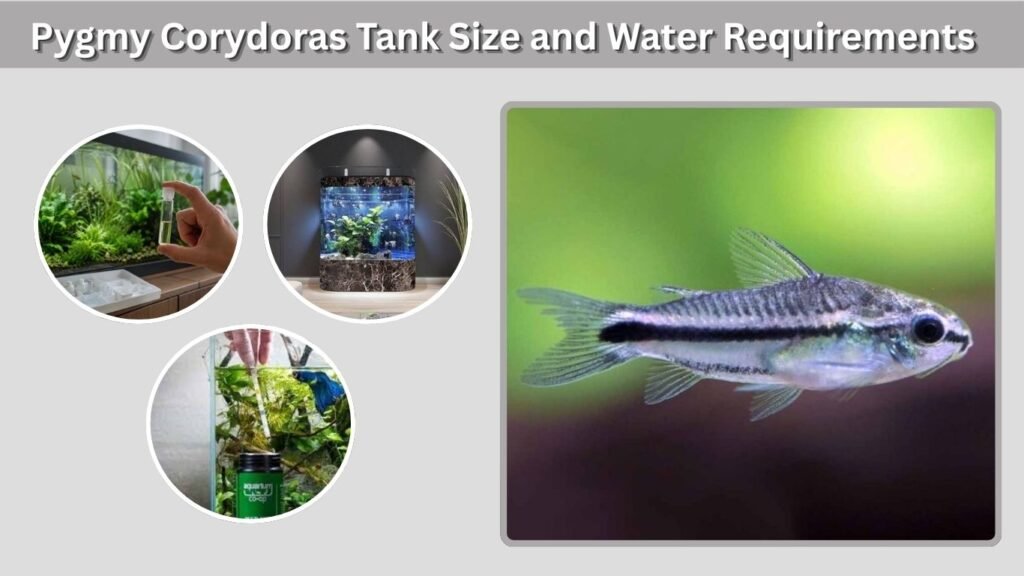
Creating suitable aquarium conditions is essential for keeping pygmy corydoras healthy. Although these fish are small, they need sufficient swimming space, clean water, and stable temperatures. A well-established aquarium with suitable substrate and vegetation provides a comfortable environment for their active, social lifestyle.
Ideal Tank Size
A mature 10-gallon aquarium is a reasonable starting point for a dedicated group of pygmy corydoras.
A longer tank is preferable to a tall aquarium because it provides more horizontal swimming space.
A 15- or 20-gallon aquarium offers greater flexibility for larger groups, additional plants, and compatible tank mates.
How Many Pygmy Corydoras in a 10-Gallon Tank?
A properly maintained 10-gallon aquarium can generally accommodate approximately 8–10 pygmy corydoras when filtration, feeding, and available swimming space are appropriate.
For a 20-gallon aquarium, groups of 12–15 or more may be practical, depending on other fish and the overall setup.
A 5-gallon aquarium is not recommended for a permanent group because it offers limited space and less stable water conditions. Specialist care recommendations generally favor groups of at least six, preferably ten or more.
Pygmy Corydoras Temperature and Water Parameters
| Water Parameter | Recommended Level |
| Temperature | 72–79°F (22–26°C) |
| pH | 6.4–7.5 |
| Water hardness | Preferably soft, around 2–8 dGH |
| Ammonia | 0 ppm |
| Nitrite | 0 ppm |
| Nitrate | Preferably below 20 ppm |
| Group size | At least 6; ideally 8–12+ |
Stable water conditions are particularly important because small catfish can be sensitive to sudden environmental changes.
Substrate, Plants, and Filtration
Fine aquarium sand is an excellent substrate for pygmy corydoras because it supports their natural foraging behavior.
Plants such as Java moss, Anubias, and Java fern provide shelter and resting places.
Gentle filtration, adequate oxygenation, and regular partial water changes help maintain a healthy environment. Avoid strong currents and sharp gravel that could damage their sensitive barbels.
Pygmy Corydoras Group Size and Behavior
Pygmy corydoras are highly social fish that naturally live in groups. Unlike some bottom-dwelling catfish, they often swim together through open water and rest on plant leaves. Their activity and confidence are strongly influenced by group size and the surrounding aquarium environment.
Recommended Group Size
The minimum recommended pygmy corydora group size is six individuals, but keeping eight to twelve or more is preferable.
Larger groups encourage natural schooling, reduce shyness, and help fish feel more secure.
Keeping only two or three individuals may cause them to hide frequently and display less natural behavior.
Are Pygmy Corydoras Bottom Feeders?
Yes, pygmy corydoras forage along the aquarium bottom, but they are not strictly bottom-dwelling fish.
They frequently swim through middle water levels and occasionally rest on leaves, driftwood, or other decorations.
These fish may also dart toward the surface to swallow air. Occasional air gulping is normal because corydoras possess specialized intestinal breathing abilities.
What Do Pygmy Corydoras Eat?

Pygmy corydoras are omnivores that primarily consume tiny aquatic organisms and suitable prepared foods. Their small mouths require appropriately sized meals, and their diet should contain a mixture of protein-rich foods and quality commercial fish food.
Best Food for Pygmy Corydoras
Suitable foods include:
- Crushed sinking catfish pellets
- Micro pellets and finely crushed flakes
- Frozen or live daphnia
- Newly hatched brine shrimp
- Cyclops and microworms
- Small portions of suitable gel-based fish food
Feed small portions once or twice daily and ensure that food reaches the pygmy corydoras without being consumed entirely by faster tank mates.
Do Pygmy Corydoras Eat Algae?
Pygmy corydoras may investigate algae-covered surfaces while searching for microorganisms, but they are not effective algae eaters.
They also consume occasional small worms and organic food particles. However, they should never depend on aquarium waste or leftovers as their primary food source.
A balanced diet is essential for their growth and overall health.
Best Tank Mates for Pygmy Corydoras
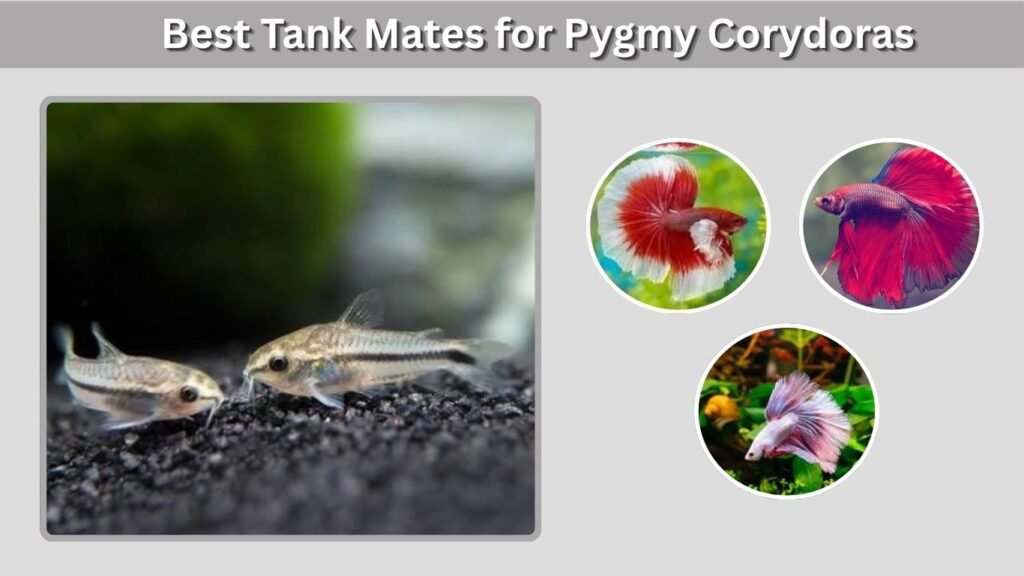
Choosing appropriate tank mates is important because pygmy corydoras are extremely small and peaceful. Larger or aggressive fish can intimidate them, interfere with feeding, or potentially eat them. Small community species with similar environmental requirements are generally the safest companions.
Can Pygmy Corydoras Live With Bettas?
Pygmy corydoras can sometimes coexist with peaceful betta fish, particularly in larger, well-planted aquariums.
However, compatibility depends on the individual betta’s temperament. Some bettas may chase or attack these small catfish.
A larger aquarium with abundant hiding places is preferable to combining a betta and a pygmy cordydoras group in a crowded 10-gallon tank.
Can Pygmy Corydoras Live With Shrimp?
Yes, pygmy corydoras generally coexist peacefully with adult freshwater shrimp, including cherry shrimp and Amano shrimp.
They may occasionally consume extremely small shrimp offspring, although healthy adult shrimp are usually not threatened.
Other possible companions include ember tetras, chili rasboras, and similarly sized peaceful nano fish.
Pygmy Corydoras Breeding and Egg Care
Breeding pygmy corydoras is possible in a mature, stable freshwater aquarium. Healthy adults may reproduce when provided with suitable water conditions, nutritious food, and enough vegetation. Their small eggs and delicate fry require careful observation and appropriate feeding.
How to Breed Pygmy Corydoras
Adult females typically develop noticeably rounded bodies when carrying eggs, while males remain slimmer.
Providing high-quality live or frozen foods can help condition breeding adults.
After spawning, females attach small adhesive eggs to aquarium glass, aquatic plants, or other submerged surfaces.
Java moss and fine-leaved plants provide useful egg-laying locations.
Pygmy Corydoras Eggs and Fry
Pygmy corydoras eggs are tiny, often measuring approximately 1 mm in diameter.
Depending on temperature and water conditions, fertile eggs commonly hatch within two to five days.
Newly hatched fry require extremely small foods, such as infusoria, before progressing to microworms and newly hatched brine shrimp.
Separating eggs or fry into a safe, established rearing environment may improve survival.
Pygmy Corydoras Lifespan and Health

Pygmy corydoras can live for several years when maintained in suitable aquarium conditions. Their lifespan depends on water quality, nutrition, genetics, and stress levels. Regular maintenance and careful observation are important because their miniature size can make subtle health changes difficult to notice.
How Long Do Pygmy Corydoras Live?
A commonly reported aquarium lifespan is approximately three to five years, although individual outcomes vary.
Consistent feeding, appropriate group size, and stable water parameters contribute to their long-term well-being.
Healthy individuals generally demonstrate regular schooling, active feeding, and occasional resting without persistent signs of distress.
Types of Pygmy Corydoras
Several miniature corydoras species are commonly grouped together in aquarium discussions. Although similar in size, they are distinct species with different markings. Understanding these differences helps aquarists identify the correct fish and maintain appropriate species groups.
Pygmy Corydoras vs. Habrosus and Hastatus
True pygmy corydoras (G. pygmaeus) have a narrow black horizontal stripe extending along their body.
Habrosus corydoras, commonly called salt-and-pepper corys, display irregular dark markings and a more spotted appearance.
Hastatus corydoras, known as tail-spot corys, feature a distinctive dark spot near the base of their tail.
Are Albino Pygmy Corydoras Available?
Albino pygmy corydoras are uncommon in the aquarium trade.
Fish advertised under this name should be identified carefully because standard albino bronze corydoras are a different, substantially larger species.
Confirm the scientific identification and adult size before purchasing unusually colored specimens.
FAQs
1. Are Pygmy Corydoras Good for Beginners?
Yes. Pygmy corydoras can suit beginners who maintain a fully cycled aquarium, stable water conditions, and an appropriately sized social group.
2. Can Pygmy Corydoras Live in a 5-Gallon Tank?
A 5-gallon aquarium is not recommended for a permanent group. A 10-gallon or larger aquarium provides more suitable swimming space and water stability.
3. Are Pygmy Corydoras Nocturnal?
Pygmy corydoras are often active during daylight hours, although they may also forage during dim lighting and nighttime periods.
4. Do Pygmy Corydoras Eat Baby Shrimp?
They may occasionally eat newly hatched shrimp small enough to fit into their mouths. Adult shrimp are generally safe.
5. How Many Pygmy Corydoras Should Be Kept Together?
Keep at least six pygmy corydoras, preferably eight to twelve or more, to encourage confident schooling and natural social behavior.
