
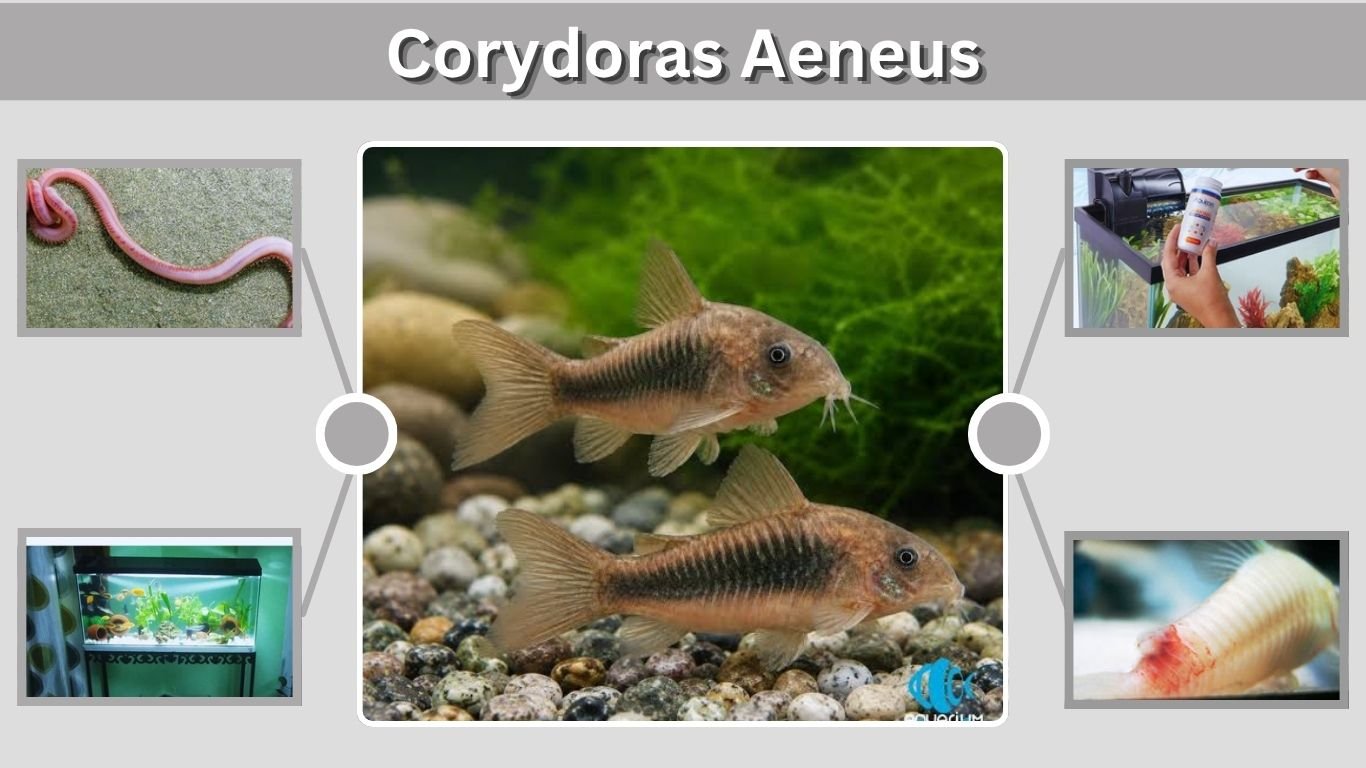
Corydoras aeneus, commonly known as the bronze corydoras, is a peaceful freshwater catfish admired for its metallic coloration and active bottom-dwelling behavior. Popular among beginners and experienced aquarists, this social fish thrives in well-maintained community aquariums. Understanding its ideal tank conditions, recommended group size, diet, and natural behavior is essential for keeping it healthy. This comprehensive guide explores everything you need to know about Corydoras aeneus, including its different color varieties, breeding habits, and everyday care requirements.
What Is Corydoras Aeneus?
Corydoras aeneus is a small armored freshwater catfish belonging to the family Callichthyidae. It has remained popular in the aquarium hobby for decades because of its peaceful temperament, adaptability, and interesting feeding behavior. Although commonly called the bronze cory, it also appears in green, albino, golden, and selectively bred dark-colored forms.
Scientific Classification and Common Names
The species is widely known as Corydoras aeneus, although its updated scientific classification is Osteogaster aenea. The change follows a taxonomic revision of corydoras catfish published in 2024.
Common aquarium names include bronze corydoras, bronze cory, green cory, and golden cory. Albino specimens are often marketed as albino corydoras.
Natural Habitat and Distribution
Bronze corydoras are associated with freshwater streams, rivers, and slow-moving habitats in South America and Trinidad.
Their natural environments often contain sandy or muddy bottoms, aquatic vegetation, and submerged debris. These surroundings provide feeding opportunities and shelter.
The broad reported geographical distribution may actually include several closely related forms whose exact classification remains uncertain.
Corydoras Aeneus Identification and Appearance
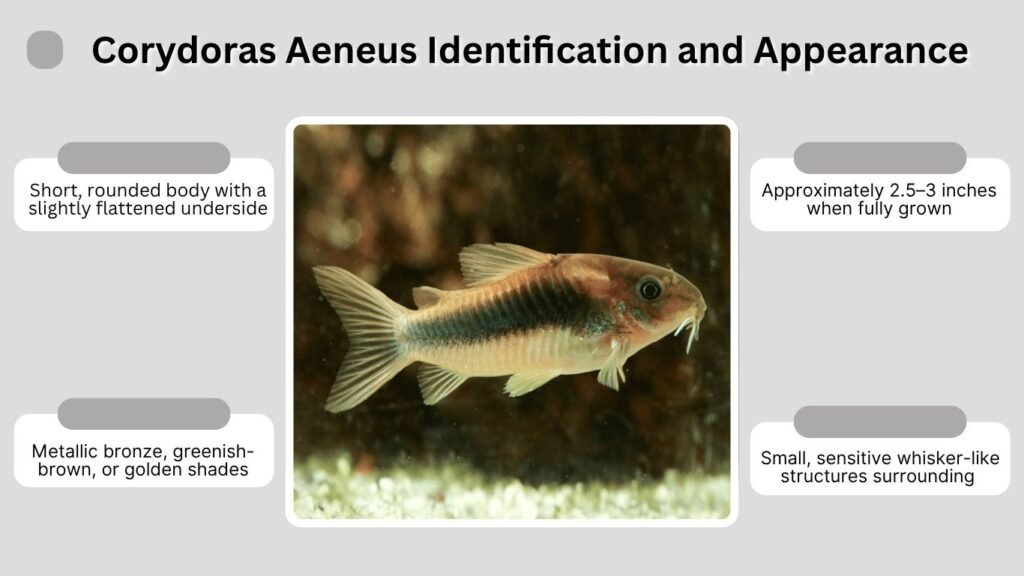
Corydoras aeneus has a compact, slightly rounded body covered with protective bony plates instead of typical fish scales. Its metallic appearance distinguishes it from many other bottom-dwelling catfish. Adults usually reach approximately 2.5–3 inches (6–7.5 cm), with females generally growing larger and broader than males.
Identification Features
- Body Shape: Short, rounded body with a slightly flattened underside.
- Coloration: Metallic bronze, greenish-brown, or golden shades.
- Body Size: Approximately 2.5–3 inches when fully grown.
- Barbels: Small, sensitive whisker-like structures surrounding the mouth.
- Fins: Generally translucent, with a triangular dorsal fin.
- Eyes: Small, prominent eyes positioned toward the upper head.
Common Corydoras Aeneus Color Varieties
The standard bronze corydoras displays metallic green and bronze tones. Green aeneus corydoras often have stronger green reflections, while albino aeneus corydoras feature pale pinkish-white bodies and reddish eyes.
Golden and longfin forms are also available. Black Venezuela corydoras are commonly associated with selectively bred dark forms. However, fish sold as gold-stripe, green laser, or Venezuela varieties may represent different populations or closely related forms rather than simply color variations of the same species.
Corydoras Aeneus Tank Size and Water Requirements
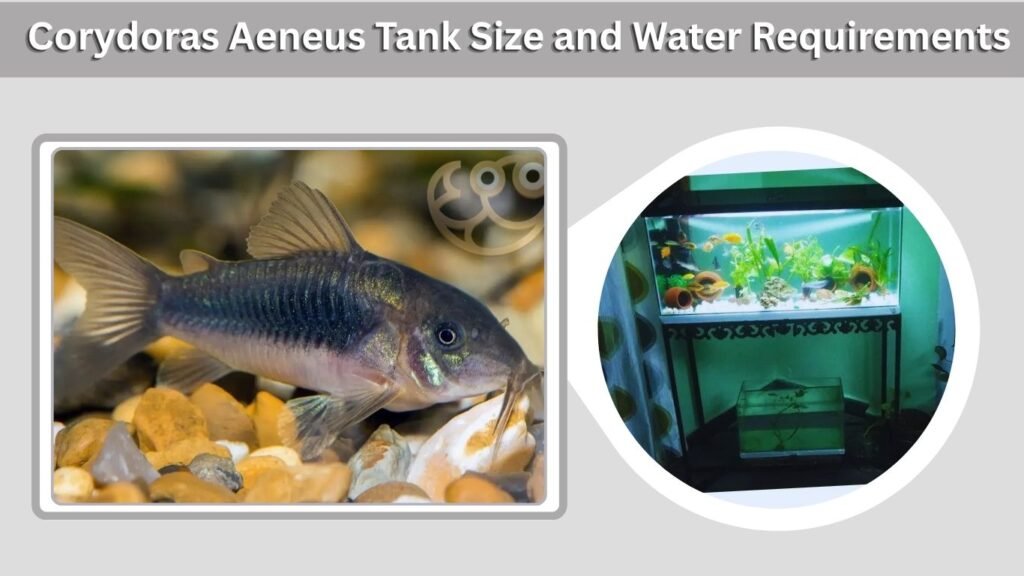
Providing suitable aquarium conditions is essential for maintaining healthy Corydoras aeneus. Although these catfish tolerate a reasonable range of water parameters, they perform best in stable, clean freshwater aquariums. Tank dimensions, substrate quality, filtration, and oxygen availability are particularly important for their long-term health.
Recommended Tank Size
A 20-gallon (approximately 75-liter) aquarium is a practical starting point for six bronze cordydoras, provided it offers sufficient bottom space.
A tank measuring approximately 80 × 30 cm at its base is a useful minimum footprint. Larger aquariums allow more swimming space and accommodate peaceful tankmates more comfortably.
Long aquariums are generally preferable to tall, narrow tanks because Corydoras aeneus spends most of its time exploring the bottom.
Ideal Temperature, pH, and Water Parameters
| Parameter | Recommended Range |
| Temperature | 22–26°C (72–79°F) |
| pH | 6.0–8.0 |
| General hardness | 2–15 dGH |
| Ammonia | 0 ppm |
| Nitrite | 0 ppm |
| Nitrate | Preferably below 20 ppm |
| Minimum group size | 6 or more |
These parameters provide a practical target for most captive-bred bronze corydoras. Consistent water quality is more important than repeatedly adjusting the aquarium to achieve an exact pH value.
Substrate and Aquarium Decorations
Fine aquarium sand is an excellent substrate because it allows bronze corydoras to forage naturally without damaging their sensitive barbels.
Smooth, rounded gravel can also work when kept clean, but sharp or abrasive gravel should be avoided.
Aquatic plants, driftwood, and shaded hiding places help create a comfortable environment. Leave some open substrate where the fish can search for food together.
Corydoras Aeneus Recommended Group Size and Behavior
Corydoras aeneus is naturally social and should not be maintained alone. These peaceful catfish frequently swim, explore, and rest together. Understanding their group dynamics and unusual breathing habits helps aquarists distinguish normal activity from potential health concerns.
Why a Group of Six or More Is Recommended
The recommended Corydoras aeneus group size is at least six individuals, although eight or more can be beneficial when aquarium space permits.
Keeping an appropriate group encourages natural social behavior and may reduce hiding and stress.
Whenever possible, maintain a group of the same species. Albino and standard bronze corydoras can generally form a group because they are commonly the same species.
Is Resting Motionless on the Bottom Normal?
Corydoras aeneus occasionally rests motionless on the aquarium bottom. Short resting periods between feeding and swimming activities are generally normal.
However, prolonged inactivity combined with rapid breathing, loss of appetite, abnormal posture, or unusual coloration may indicate stress or illness.
Observe the entire group and check water parameters if a fish suddenly becomes unusually inactive.
Why Corydoras Aeneus Gulp Air
Bronze corydoras sometimes swim rapidly toward the surface, swallow air, and return to the bottom.
This is normal intestinal breathing, an adaptation that allows them to absorb additional oxygen through specialized intestinal tissue.
Repeated frantic surfacing or persistent gasping, especially with rapid gill movement, can indicate poor oxygen availability or water-quality problems.
Corydoras Aeneus Diet and Feeding
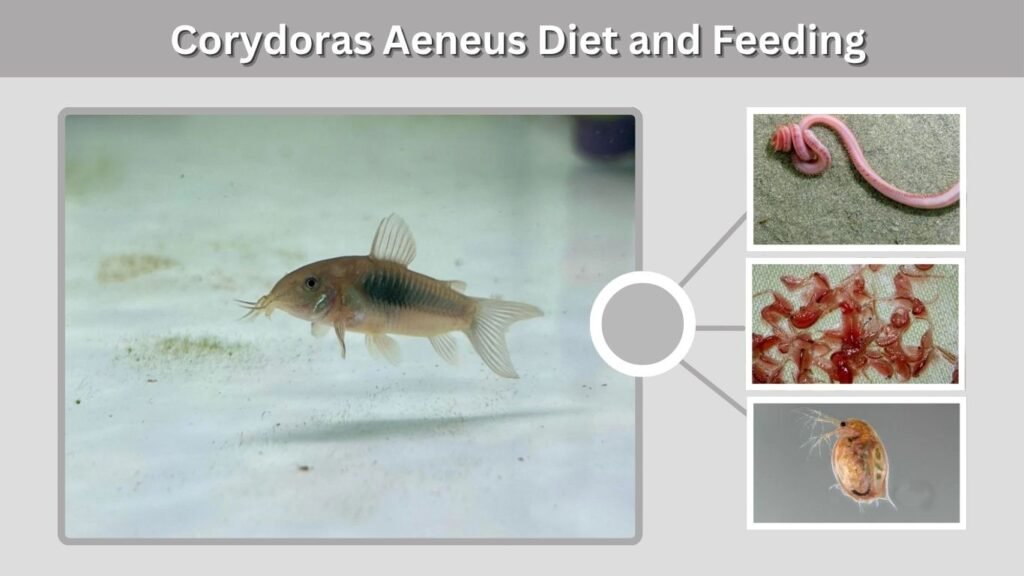
Corydoras aeneus is an omnivorous bottom feeder that consumes various small food particles and aquatic invertebrates. A balanced diet helps maintain healthy growth, coloration, and reproduction. Despite its reputation as a scavenger, this species requires proper feeding rather than depending entirely on leftovers.
Best Foods for Bronze Corydoras
Quality sinking catfish pellets or wafers provide an appropriate dietary foundation. Supplement these foods with frozen or live bloodworms, brine shrimp, and daphnia.
Feed manageable portions once or twice daily, ensuring food reaches the aquarium bottom.
Remove excess uneaten food to prevent waste accumulation. Corydoras aeneus should never be treated as a substitute for regular aquarium cleaning.
Corydoras Aeneus Breeding Guide
Breeding Corydoras aeneus is achievable in a well-maintained aquarium. Healthy adult fish, suitable water conditions, and appropriate feeding can encourage spawning. Recognizing male and female differences and protecting newly deposited eggs are important steps toward successfully raising young bronze corydoras.
Identifying Male and Female Corydoras
Adult female bronze corydoras are usually larger and noticeably rounder, especially when carrying eggs.
Males generally have slimmer bodies and may appear smaller when viewed from above. These differences become easier to identify once the fish reach maturity.
Encouraging Spawning
Condition breeding adults with varied, nutritious food before attempting reproduction.
A partial water change using slightly cooler, conditioned water may stimulate spawning by resembling seasonal rainfall. Avoid sudden or extreme temperature changes.
During spawning, females deposit adhesive eggs on aquarium glass, plant leaves, or other suitable surfaces.
Caring for Eggs and Fry
Separate eggs from adult fish when necessary to reduce the risk of egg predation.
Maintain clean, well-oxygenated water in the incubation container. Healthy fertilized eggs typically hatch within three to four days.
Once the fry absorb their yolk sacs, offer appropriately sized foods such as microworms or newly hatched brine shrimp.
Common Health Problems and Prevention

Although bronze corydoras are relatively hardy, poor aquarium maintenance can cause health problems. Damaged barbels, bacterial infections, and respiratory stress are among the concerns associated with unsuitable substrate or deteriorating water quality.
Maintaining Healthy Corydoras Aeneus
Regularly test ammonia, nitrite, and nitrate levels, and perform partial water changes according to aquarium conditions.
Use gentle filtration with adequate surface movement and avoid overcrowding.
Examine fish for damaged barbels, unusual spots, loss of appetite, or abnormal swimming behavior. Early identification of changes makes it easier to correct environmental problems before they become severe.
FAQs
1. What Is the Common Name of Corydoras Aeneus?
Corydoras aeneus is commonly called the bronze corydoras or bronze cory. Green cory and golden cory are also used in the aquarium trade.
2. Can Corydoras Aeneus Live in a Group of Six?
Yes. Six individuals are a commonly recommended minimum group size. Larger groups can be maintained when sufficient aquarium space is available.
3. What Temperature Is Best for Corydoras Aeneus?
A temperature between 22°C and 26°C (72–79°F) is a suitable target for most home aquariums.
4. How Big Do Corydoras Aeneus Get?
Adult bronze corydoras usually grow to approximately 2.5–3 inches (6–7.5 cm), with mature females often becoming larger than males.
5. Is It Normal for Corydoras Aeneus to Rest Motionless?
Yes. Brief periods of resting on the aquarium bottom are normal. However, persistent inactivity accompanied by rapid breathing or other unusual symptoms requires attention.
