
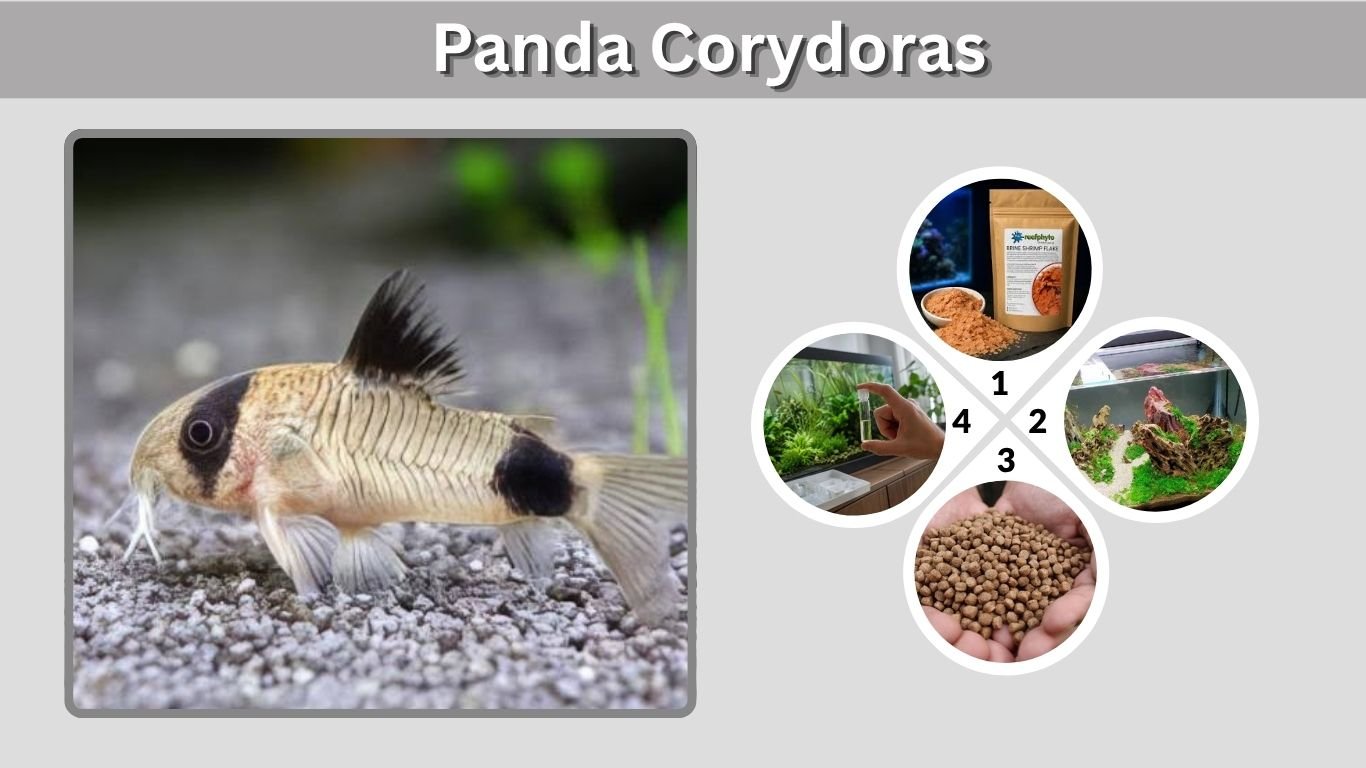
Panda Corydoras are peaceful freshwater catfish recognized for their distinctive black-and-white markings, which resemble those of a giant panda. These small, social fish are popular among aquarium enthusiasts because of their gentle behavior, active personalities, and compatibility with many community fish. However, keeping them healthy requires suitable water temperatures, a soft substrate, proper nutrition, and enough companions of their own species. This complete Panda Corydoras care guide explains their adult size, lifespan, ideal tank setup, feeding requirements, compatible tank mates, breeding habits, and essential maintenance tips.
What Are Panda Corydoras?
Panda Corydoras are small, bottom-dwelling freshwater catfish belonging to the family Callichthyidae. Originally found in the upper Amazon basin of South America, these fish inhabit streams and tributaries with sandy bottoms and flowing water. Their attractive markings and peaceful temperament make them popular aquarium inhabitants, particularly in planted community tanks with other small, nonaggressive freshwater fish.
Panda Corydoras Identification
- Scientific name: Hoplisoma panda, formerly Corydoras panda.
- Common name: Panda Corydoras or Panda Cory.
- Family: Callichthyidae.
- Origin: Upper Amazon basin of South America.
- Body color: Cream, pale beige, or light pinkish-white.
- Markings: Black patches around the eyes, dorsal fin, and base of the tail.
- Temperament: Peaceful and social.
- Diet: Omnivorous.
The scientific name changed following a taxonomic revision, but Corydoras panda remains widely used in the aquarium trade.
Panda Corydoras Size and Growth
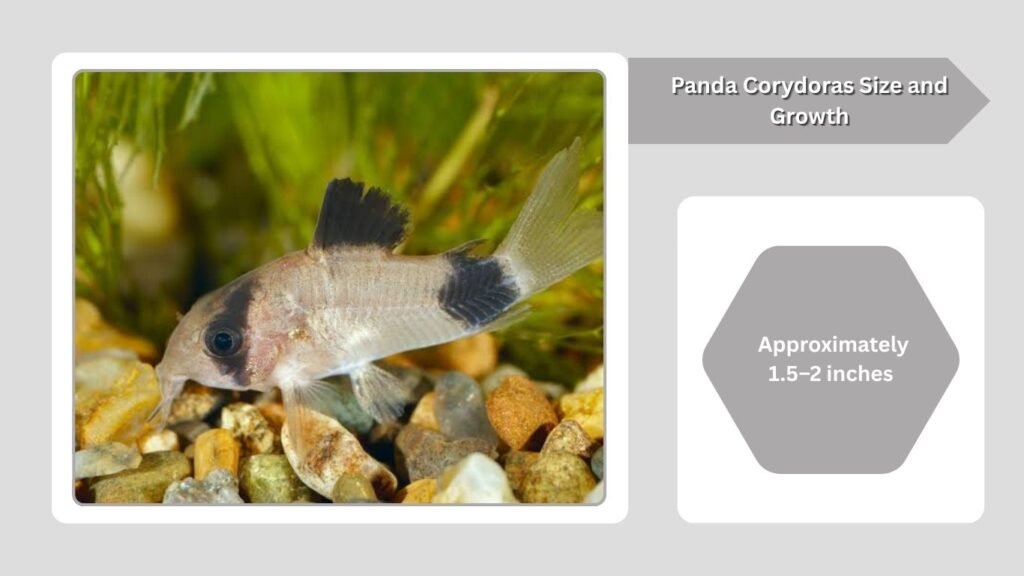
Panda Corydoras are relatively small compared with many other freshwater catfish. Their compact bodies allow them to explore narrow spaces between plants, driftwood, and aquarium decorations. Despite their small size, these fish are active and require sufficient horizontal swimming space. Their final adult length depends partly on genetics, nutrition, and environmental conditions.
How Big Do Panda Corydoras Get?
Adult Panda Corydoras generally reach approximately 1.5–2 inches (4–5 cm) in length.
Females are usually slightly larger and broader than males, particularly when carrying eggs.
Juveniles are much smaller when purchased and gradually develop their adult proportions under suitable conditions.
Panda Corydoras typically reach their characteristic size and body shape as they mature, although growth rates vary depending on diet, water quality, and individual development.
Ideal Panda Corydoras Tank Size
Although Panda Corydoras are small, they are social fish that require adequate space to swim, forage, and interact. A larger aquarium also provides more stable water conditions, which is particularly beneficial for young or newly introduced fish. Horizontal floor space matters more than tank height because Panda Corydoras spend most of their time near the substrate.
Minimum Tank Size and Group Recommendations
A 15-gallon aquarium with a suitable footprint can accommodate a small group under carefully maintained conditions. However, a 20-gallon long aquarium is a better recommendation for most beginners.
| Tank size | Recommendation |
| 5 gallons | Not recommended |
| 10 gallons | Limited; not ideal for beginners |
| 15 gallons | Possible for a small group |
| 20 gallons long | Recommended starting size |
| 30 gallons | Excellent for larger groups |
| 40 gallons | Suitable for spacious communities |
How Many Panda Corydoras Should Be Kept Together?
Panda Corydoras should be kept in groups of at least six individuals of the same species.
Groups of eight or more often display more confident behavior, particularly in spacious planted aquariums.
Keeping only one or two Panda Corydoras may increase stress and reduce their natural social activity.
A 20-gallon long aquarium can comfortably house a group of six to eight Panda Corydoras when filtration, water quality, and overall stocking are appropriate.
Panda Corydoras Temperature and Water Parameters
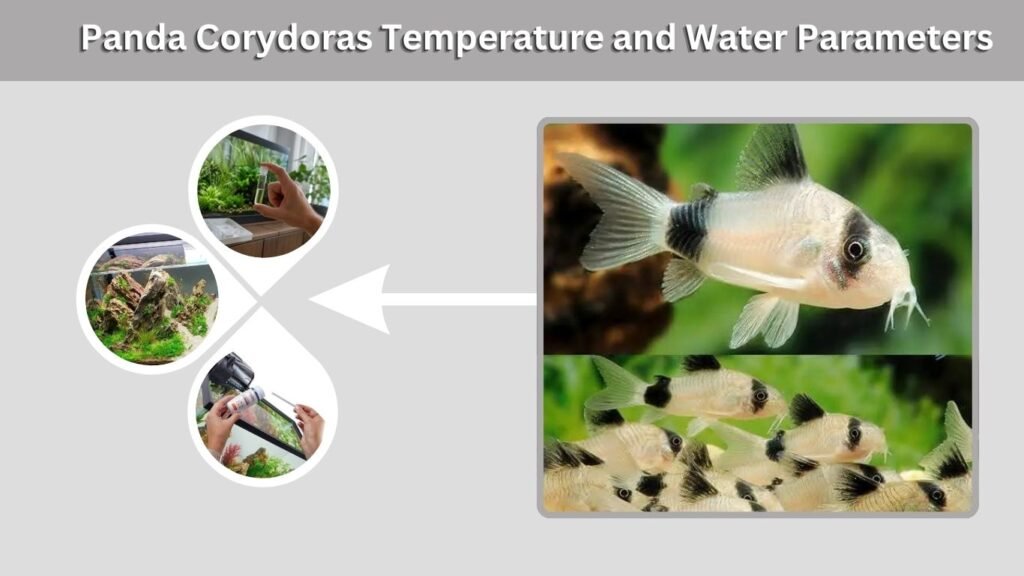
Panda Corydoras originate from freshwater habitats influenced by cooler Andean streams. Unlike some tropical aquarium fish, they do not require consistently high water temperatures. Maintaining clean, well-oxygenated water within their preferred temperature range is essential for long-term health. Sudden temperature changes, deteriorating water quality, and excessive organic waste can create unnecessary stress.
Recommended Water Conditions
| Parameter | Recommended range |
| Temperature | 72–77°F (22–25°C) |
| pH | 6.0–7.4 |
| General hardness | 1–12 dGH |
| Ammonia | 0 ppm |
| Nitrite | 0 ppm |
| Nitrate | Keep low |
| Water movement | Gentle to moderate |
Panda Corydoras generally prefer cooler aquarium conditions than some commonly kept Corydoras species.
Long-term exposure to excessively warm water can negatively affect their health, making appropriate temperature control important.
Best Tank Setup for Panda Corydoras
A comfortable Panda Corydoras aquarium should combine soft substrate, gentle filtration, shaded resting areas, and open spaces for feeding. These catfish naturally search through the bottom of streams for small food organisms. Recreating similar conditions encourages healthy activity and helps protect their delicate sensory barbels from injury and poor substrate conditions.
Essential Aquarium Equipment
- Fine aquarium sand: Provides a comfortable surface for natural foraging behavior.
- Reliable aquarium filter: Maintains biological filtration and adequate oxygen circulation.
- Adjustable aquarium heater: Keeps temperatures stable when room temperatures fluctuate.
- Live plants: Java fern, Anubias, and Java moss provide shelter.
- Driftwood: Creates shaded resting areas and natural decorations.
- Smooth stones: Add hiding places without sharp surfaces.
- Aquarium lid: Prevents accidental escapes while allowing safe access to the water surface.
Best Substrate for Panda Corydoras
Fine aquarium sand is one of the best substrate choices because Panda Corydoras regularly sift through the bottom while searching for food.
Sharp gravel should be avoided because it may cause injuries to their delicate barbels.
Clean, smooth gravel can also work, but maintaining excellent substrate hygiene is essential.
Panda Corydoras Diet and Feeding
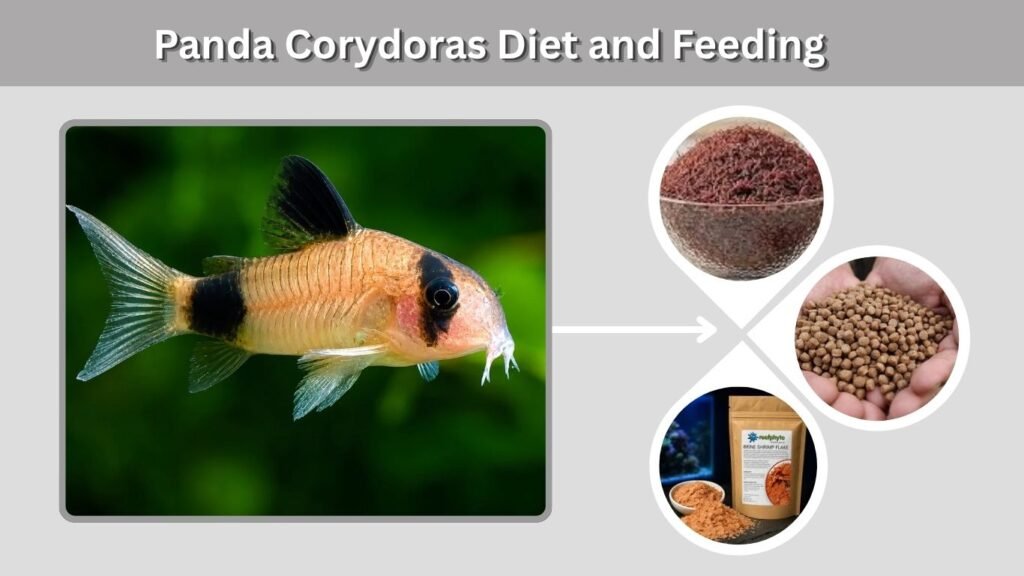
Panda Corydoras are omnivorous fish that consume various small organisms and organic food sources. In captivity, they require a balanced diet containing suitable protein, vitamins, and other nutrients. Although they often consume food that reaches the aquarium floor, they should never depend entirely on leftovers from other fish.
What Do Panda Corydoras Eat?
- Sinking catfish pellets: Suitable as a regular staple food.
- Frozen bloodworms: Provide additional protein and dietary variety.
- Brine shrimp: A nutritious supplementary food.
- Daphnia: Small food organisms that encourage natural feeding.
- Sinking wafers: Help deliver food to the bottom of the aquarium.
- Quality frozen foods: Provide variety alongside complete commercial foods.
Feed Panda Corydoras small portions once or twice daily, ensuring food reaches the substrate.
These fish are not dedicated algae eaters and cannot survive on algae or aquarium waste alone.
Best Tank Mates for Panda Corydoras
Panda Corydoras are peaceful fish that rarely display aggression toward other aquarium inhabitants. Their bottom-dwelling lifestyle makes them suitable companions for many small community species occupying the middle and upper swimming areas. However, tank mates must share compatible water temperature requirements and should not intimidate or compete aggressively with these relatively small catfish.
Compatible Community Fish
Suitable companions include neon tetras, ember tetras, harlequin rasboras, and other peaceful schooling fish with overlapping water requirements.
Calm honey gouramis may also work in appropriately sized aquariums.
Small freshwater shrimp and snails are often compatible, although tiny shrimp offspring may occasionally be eaten.
Avoid large predatory fish, aggressive cichlids, and species requiring significantly warmer water.
Betta fish may coexist with Panda Corydoras in some aquariums, but compatibility depends on the individual betta’s temperament, available space, and suitable temperature overlap.
Panda Corydoras Lifespan and Health
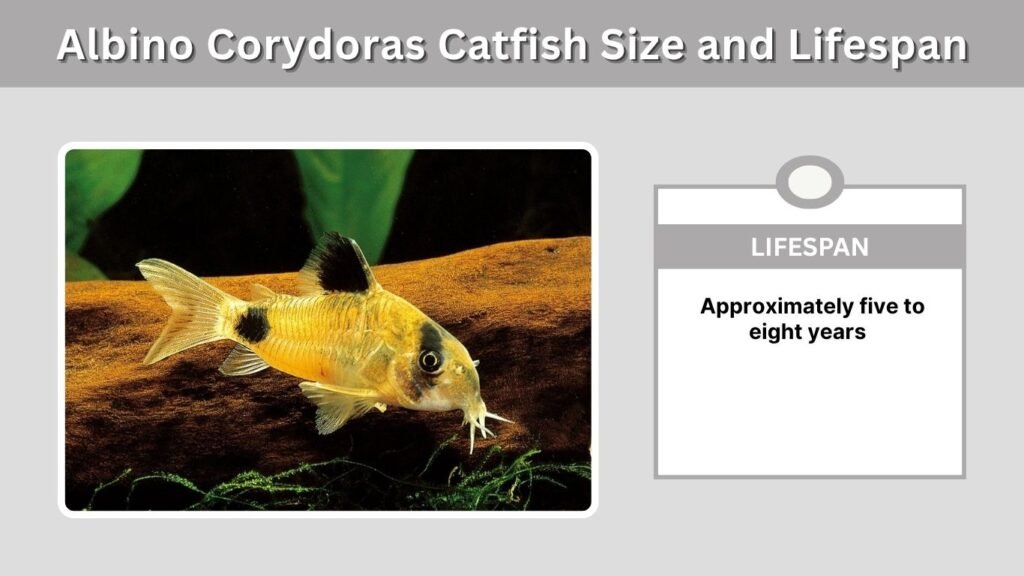
Panda Corydoras can live for several years when provided with suitable aquarium conditions. Their lifespan depends on genetics, diet, water quality, temperature stability, and disease prevention. Consistent maintenance is especially important because these catfish spend considerable time near the substrate, where decaying food and accumulated waste can affect their health.
How Long Do Panda Corydoras Live?
Panda Corydoras commonly live approximately five to eight years in captivity, with some individuals potentially reaching ten years under excellent conditions.
Regular water changes, proper feeding, and adequate group sizes contribute to long-term well-being.
Unusual swimming behavior, damaged barbels, rapid breathing, and prolonged appetite loss may indicate environmental stress or illness.
Clean substrate and stable water conditions are essential for preventing avoidable health problems.
Panda Corydoras Breeding and Egg Care
Breeding Panda Corydoras is possible in well-maintained home aquariums. Mature fish may reproduce naturally when provided with proper nutrition, suitable spawning surfaces, and favorable water conditions. Their breeding behavior resembles that of other Corydoras, with females depositing small adhesive eggs on aquarium glass, plants, or decorations.
How to Breed Panda Corydoras
Breeding adults should be conditioned with nutritious sinking foods and varied frozen or live foods.
A modest cooler water change may help encourage spawning by imitating seasonal rainfall.
During reproduction, males pursue females before forming the characteristic T-shaped spawning position.
Females attach adhesive eggs to aquarium surfaces, often in areas with gentle water movement.
Eggs usually hatch within several days, depending on temperature and development.
A separate hatching container with gentle aeration can protect eggs from being eaten by adult fish.
Newly hatched fry should receive appropriately sized food after absorbing their yolk sacs.
Panda Corydoras Varieties and Color Forms
Panda Corydoras are best known for their traditional pale bodies and distinctive black markings. However, aquarium enthusiasts may encounter varieties advertised with longer fins or unusual coloration. Understanding these differences helps prevent confusion between true Panda Corydoras and other catfish species carrying similar markings or commercial names.
Longfin Panda Corydoras
Longfin Panda Corydoras are ornamental forms with noticeably extended fins.
Their general care requirements are similar to those of standard Panda Corydoras, although delicate fins may require extra protection from aggressive or fin-nipping tank mates.
Fish advertised as snow-white, golden, or albino Panda Corydoras should be identified carefully because commercial names do not always establish a distinct, verified variety.
FAQs
Are Panda Corydoras Hardy Fish?
Panda Corydoras can be hardy in established, well-maintained aquariums. However, juveniles and newly transported fish may be sensitive to deteriorating water conditions and sudden environmental changes.
Can Panda Corydoras Live in a 10-Gallon Tank?
A 10-gallon aquarium is relatively restrictive for a social group. A 20-gallon long tank provides more practical swimming space and greater water stability.
Do Panda Corydoras Eat Algae?
Panda Corydoras may investigate surfaces containing algae, but they are not effective algae-control fish. They require sinking foods and a varied omnivorous diet.
How Can You Tell Male and Female Panda Corydoras Apart?
Mature females are generally larger and rounder, especially when viewed from above. Males tend to be slimmer and slightly smaller.
Are Panda Corydoras Good for Planted Tanks?
Yes. Panda Corydoras are well suited to planted aquariums. They usually leave healthy plants undisturbed and benefit from the shelter provided by aquatic vegetation.
