
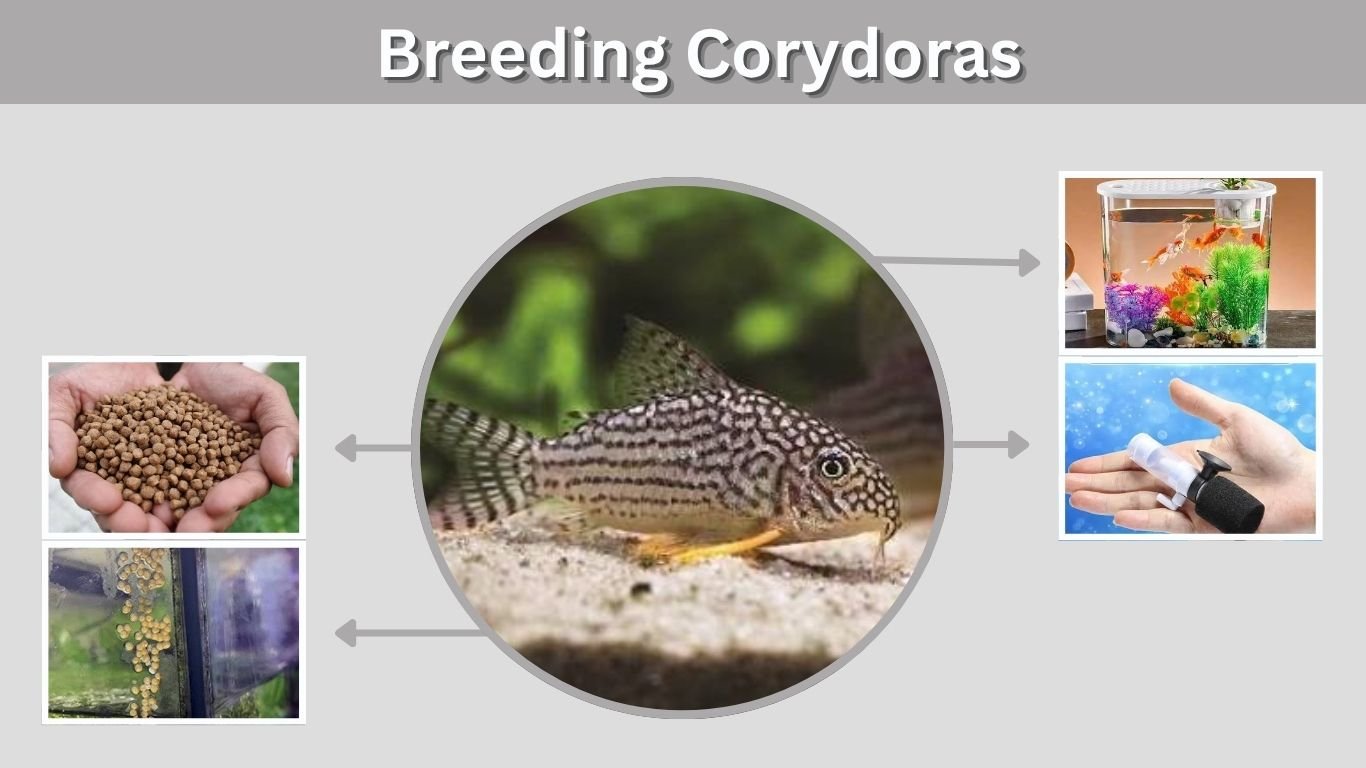
Breeding Corydoras catfish can be an exciting experience for freshwater aquarium enthusiasts. These peaceful bottom-dwelling fish reproduce successfully in home aquariums when provided with suitable water conditions, nutritious food, and a comfortable breeding environment. However, understanding their spawning behavior, egg development, and fry care is essential for raising healthy young fish. Whether you plan to breed bronze, panda, albino, or pygmy Corydoras, this guide explains how to prepare a breeding tank, encourage spawning, protect fertilized eggs, and care for newly hatched Corydoras fry.
How Do Corydoras Breed?
Corydoras are egg-laying freshwater catfish that reproduce through a fascinating courtship process. Unlike livebearing aquarium fish, females deposit adhesive eggs on aquarium glass, plants, or decorations. Successful reproduction depends on mature breeding fish, suitable water conditions, and proper nutrition. Understanding their natural reproductive behavior helps aquarists recognize spawning activity and protect the eggs before other fish consume them.
Corydoras Breeding Behavior
During breeding, male Corydoras often become more active and begin following or chasing females around the aquarium.
When a female is ready to spawn, the fish may form a distinctive T-shaped position. The male positions his body across the female’s head while the female holds a small number of eggs between her pelvic fins.
Following the spawning embrace, the female swims toward a suitable surface and attaches the adhesive eggs. This process may repeat several times during a single breeding session.
Corydoras provide no parental care after spawning, and adult fish may eat their own eggs.
Best Corydoras Species for Breeding
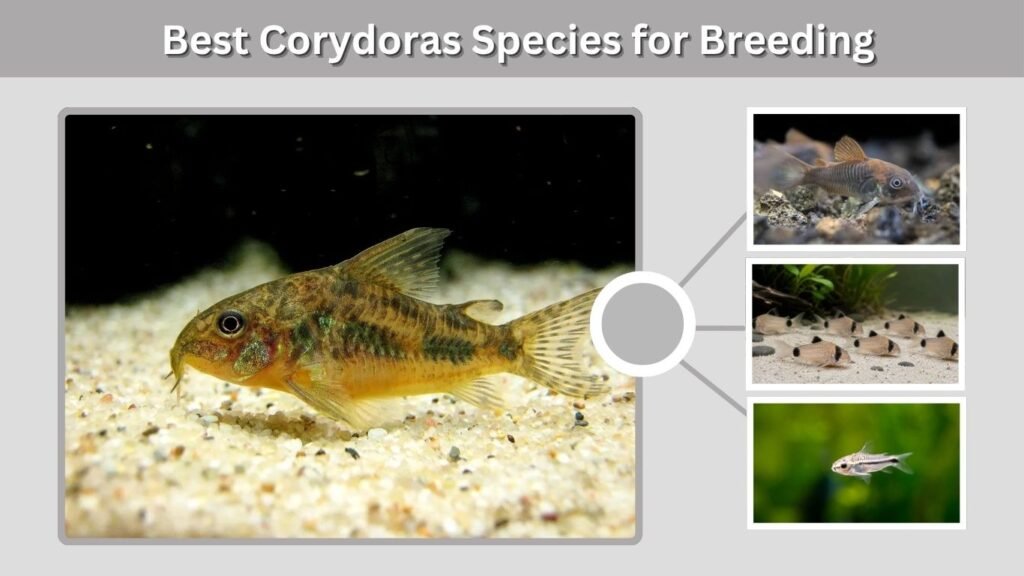
Several Corydoras species reproduce successfully in captivity, although some are easier to breed than others. Beginners generally have greater success with hardy varieties that adapt readily to established aquarium conditions. More specialized species may require careful adjustments to water chemistry, temperature, and food availability. Choosing a suitable species is an important step toward successful breeding.
Easy and Challenging Corydoras Breeds
| Corydoras species | Breeding difficulty |
| Bronze Corydoras | Easy |
| Albino Corydoras | Easy |
| Peppered Corydoras | Easy |
| Panda Corydoras | Moderate |
| Sterbai Corydoras | Moderate |
| Pygmy Corydoras | Moderate |
| Julii/False Julii Corydoras | Moderate |
| Adolfo’s Corydoras | Challenging |
Bronze and albino Corydoras are excellent choices for beginners. These fish frequently spawn in established aquariums and generally adapt well to appropriate breeding conditions.
Pygmy Corydoras can also breed in home aquariums, but their extremely small fry require more careful feeding and protection.
Corydoras Breeding Tank Setup
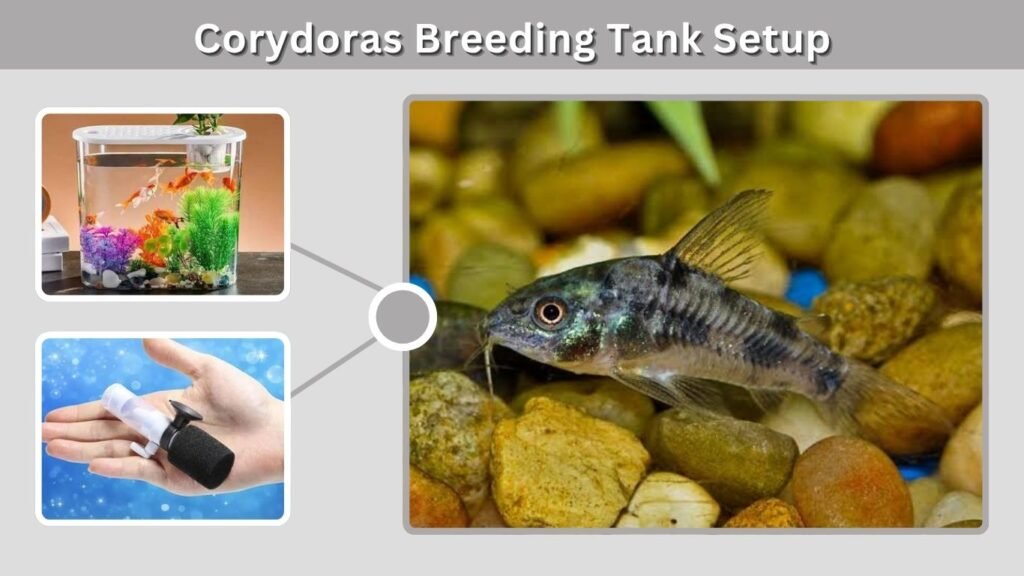
A dedicated Corydoras breeding tank makes it easier to observe spawning activity, protect eggs, and maintain suitable conditions for young fish. Although breeding sometimes occurs in community aquariums, separating breeding adults from other species can increase egg survival. The aquarium should provide stable water quality, gentle filtration, appropriate temperature, and enough space for natural movement.
Essential Breeding Tank Equipment
- Breeding aquarium: An established 10–20 gallon tank can work for many smaller breeding groups, depending on species and number of fish.
- Sponge filter: Provides biological filtration with gentle, fry-safe water movement.
- Soft substrate: Fine aquarium sand protects the sensitive barbels of adult Corydoras.
- Aquarium heater: Maintains temperatures appropriate for the chosen species.
- Java moss: Offers sheltered areas and surfaces that may collect eggs.
- Spawning surfaces: Aquarium glass, smooth decorations, and broad plant leaves allow females to deposit eggs.
Corydoras Breeding Temperature
Many commonly bred Corydoras reproduce successfully at temperatures around 72–78°F (22–26°C), although their ideal conditions vary by species.
Panda Corydoras generally prefer cooler conditions, while Sterbai Corydoras tolerate warmer temperatures.
Keep the aquarium fully cycled, with ammonia and nitrite at zero. Stable water quality is essential for healthy breeding adults and developing eggs.
A separate, established breeding aquarium is preferable to introducing fish into a newly filled, uncycled tank.
How to Encourage Corydoras to Breed
Corydoras often respond to environmental changes that imitate the beginning of the rainy season in their natural habitats. Increased food availability, cooler freshwater, and appropriate oxygen levels can encourage reproductive activity. However, spawning is not guaranteed by any single technique. Healthy, mature fish and consistently good water quality are the foundation of successful breeding.
Step-by-Step Breeding Process
- Select healthy adults: Choose mature Corydoras from the same species. Females are typically larger and rounder than males.
- Create a breeding group: A group containing two males for each female can improve breeding opportunities, provided the tank has enough room.
- Condition the fish: Offer nutritious sinking foods, frozen bloodworms, daphnia, and other appropriate protein-rich foods.
- Perform a cooler water change: Replace approximately 25–40% of the aquarium water with properly treated water a few degrees cooler, while keeping temperatures within the species’ safe range.
- Observe spawning activity: Watch for increased swimming, chasing, the T-position, and females attaching eggs to surfaces.
Avoid sudden extreme temperature changes or repeated large water changes that could stress the fish.
A modest cool-water change may stimulate spawning in well-conditioned adults by imitating natural rainfall.
Corydoras Eggs: Appearance, Hatching, and Care

Corydora’s eggs are small, round, and adhesive. Females frequently deposit them individually or in small groups on aquarium glass, plant leaves, and decorations. Their appearance changes as development progresses, making it possible to observe embryo growth. Proper oxygenation, cleanliness, and protection from egg-eating fish can significantly improve the chances of successful hatching.
How Long Do Corydoras Eggs Take to Hatch?
Most commonly bred Corydoras eggs hatch within approximately three to five days, depending on species and water temperature.
Healthy, fertilized eggs often appear translucent, cream-colored, or slightly amber. Developing embryos may eventually become visible inside the eggs.
Eggs that turn opaque white and develop fuzzy fungal growth are generally not viable.
Carefully remove visibly fungused eggs to prevent fungal growth from spreading to nearby healthy eggs.
Should You Remove Corydoras Eggs?
Removing eggs can improve survival rates because adult Corydoras and other aquarium inhabitants may eat them.
Eggs can be transferred carefully into a separate hatching container with matching water conditions and gentle aeration.
Alternatively, move the breeding adults out of the spawning aquarium after egg laying finishes.
Avoid unnecessary handling because Corydoras eggs can be damaged easily.
Raising Corydoras Fry Successfully
Newly hatched Corydoras fry are extremely small and vulnerable to poor water conditions, inadequate nutrition, and accidental predation. During their first few days, they depend on nutrients stored in their yolk sacs. Once these reserves are absorbed, they begin searching for microscopic food. A clean, stable environment is essential throughout their early development.
What Do Corydoras Fry Eat?
Young Corydoras should receive foods that match their mouth size and developmental stage.
Initially, newly hatched fry survive on their remaining yolk sacs. Once they begin feeding independently, suitable foods include microworms, finely powdered fry food, and appropriately sized live organisms.
Newly hatched baby brine shrimp are an excellent food for many Corydoras fry once they are large enough to consume them.
Pygmy Corydoras fry may initially need smaller foods, including infusoria or other microscopic live foods.
Feed small amounts regularly and remove uneaten food to maintain water quality.
How Fast Do Corydoras Fry Grow?
Growth varies with species, diet, temperature, and water quality.
Many common Corydoras fry begin resembling miniature adults after several weeks. However, reaching juvenile size can take months.
Provide frequent small water changes, maintain gentle filtration, and avoid overcrowding.
Do not introduce young fish into a community aquarium until they are large enough to avoid predation and compete successfully for food.
Breeding Pygmy, Panda, and Albino Corydoras
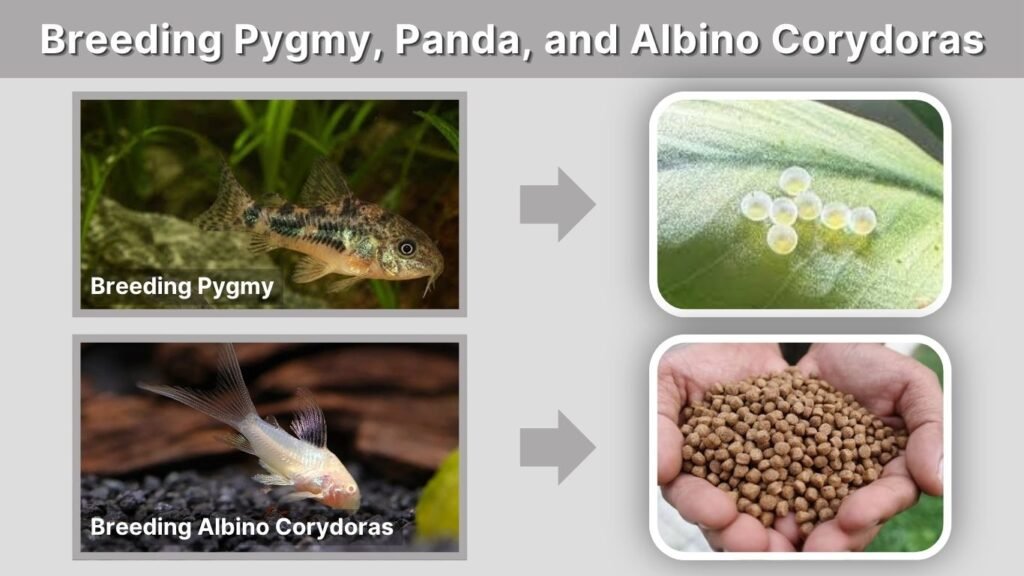
Although most Corydoras share similar reproductive behavior, their breeding requirements are not identical. Differences in adult size, preferred temperature, egg production, and fry development can influence breeding success. Understanding these variations helps aquarists create more suitable conditions instead of applying exactly the same techniques to every Corydoras species.
Breeding Pygmy Corydoras
Pygmy Corydoras (Corydoras pygmaeus) are small, peaceful fish that may spawn in mature planted aquariums.
They often deposit tiny eggs on leaves, glass, and other surfaces.
Their small fry benefit from gentle filtration, protected growing areas, and microscopic first foods. Dense aquatic vegetation can provide additional shelter.
Panda Corydoras Breeding
Panda Corydoras (Corydoras panda) generally reproduce best in well-oxygenated water with stable, relatively cool temperatures.
Well-conditioned adults may respond to modestly cooler water changes.
Their eggs can be moved into a separate hatching container, where stable conditions and gentle water movement help support development.
Breeding Albino Corydoras
Most albino Corydoras sold in aquarium stores are color varieties of bronze Corydoras.
They are relatively straightforward to breed when provided with mature companions, nutritious food, and suitable water conditions.
Females may deposit numerous eggs across aquarium glass and decorations during spawning.
Common Corydoras Breeding Problems
Even experienced aquarists occasionally encounter breeding difficulties. Adults may fail to spawn, eggs may develop fungus, or newly hatched fry may struggle to survive. These problems often relate to water quality, nutrition, incompatible breeding fish, or inadequate protection. Identifying the underlying cause is more effective than repeatedly changing aquarium conditions without understanding the problem.
Why Are Corydoras Not Breeding?
Corydoras may not reproduce if they are immature, poorly conditioned, stressed, or kept in unsuitable conditions.
Insufficient nutrition and a lack of mature males or females can also prevent successful spawning.
Provide a varied diet, maintain excellent water quality, and allow fish time to mature.
Why Are Corydoras Eggs Turning White?
White eggs may be unfertilized, dead, or affected by fungal growth.
Poor water circulation and accumulated organic waste can contribute to fungal problems.
Remove visibly affected eggs, maintain gentle aeration, and avoid overcrowding the hatching container.
FAQs
At What Age Do Corydoras Start Breeding?
Many common Corydoras become sexually mature around 8–12 months, although the timing varies by species, feeding, growth conditions, and individual development.
Can Corydoras Breed in a Community Tank?
Yes. Corydoras frequently lay eggs in established community aquariums. However, adult fish and tank mates may consume eggs and fry, reducing survival rates.
How Many Eggs Do Corydoras Lay?
The number varies considerably by species and female size. Larger varieties may produce dozens or even hundreds of eggs during a spawning event, while smaller species often produce fewer.
How Often Do Corydoras Breed?
Healthy, mature Corydoras may spawn repeatedly when environmental conditions are favorable. Frequency depends on species, conditioning, water conditions, and recovery between spawning events.
Can Different Corydoras Species Crossbreed?
Some closely related Corydoras can hybridize under certain conditions. However, deliberate crossbreeding is generally discouraged because it can complicate species identification and preservation of established breeding lines.