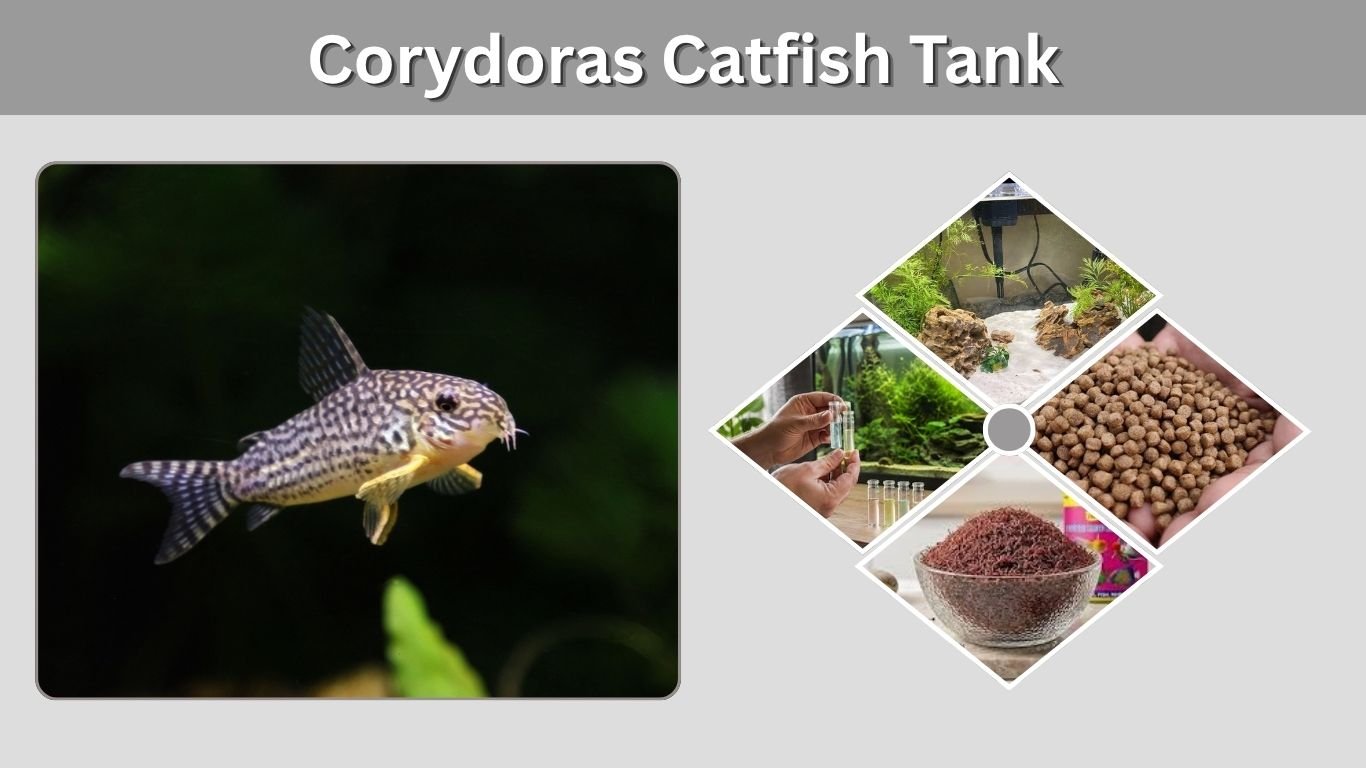
Creating a comfortable Corydoras catfish tank requires more than adding a few bottom-dwelling fish to an aquarium. These peaceful freshwater catfish need suitable water conditions, a soft substrate, sufficient swimming space, and companions of their own species. Whether you want to keep pygmy, panda, bronze, or albino Corydoras, choosing the right tank setup makes a significant difference to their health. This guide explains Corydoras tank size, water temperature, feeding, compatible tank mates, breeding conditions, and essential maintenance tips for a thriving aquarium.
Ideal Corydoras Catfish Tank Size
Choosing the correct aquarium size is one of the most important decisions when keeping Corydoras. Although these catfish are relatively small, they are active, social fish that need room to explore the aquarium floor. Their ideal tank size depends on the species, adult length, group size, and available bottom space.
Minimum Tank Size for Different Corydoras
The following recommendations provide comfortable starting points for small groups in established aquariums.
| Corydoras species | Recommended tank size |
| Pygmy Corydoras | 10–15 gallons |
| Panda Corydoras | 20 gallons |
| Bronze Corydoras | 20 gallons |
| Albino Corydoras (bronze variety) | 20 gallons |
| Peppered Corydoras | 20 gallons |
| Sterbai Corydoras | 20–30 gallons |
These are practical recommendations rather than universal biological minimums. A long aquarium with generous floor space is preferable to a tall tank of equal volume. Larger tanks also provide more stable water conditions.
Can Corydoras Live in a 10-Gallon Tank?
A 10-gallon aquarium can accommodate a small group of pygmy Corydoras when it has sufficient horizontal space, reliable filtration, and careful maintenance.
However, most standard Corydoras species should be housed in larger aquariums. A 20-gallon long tank is a better starting choice for panda, bronze, and albino Corydoras.
Five-gallon tanks are generally unsuitable for permanent Corydoras groups because they provide limited swimming space and less stable water conditions.
How to Set Up a Corydoras Catfish Tank
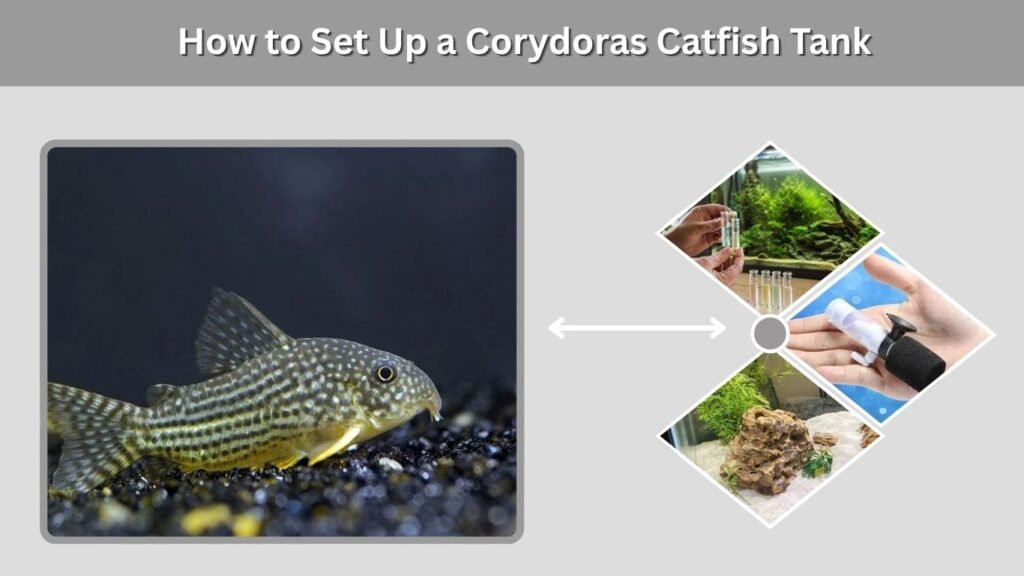
A properly designed Corydoras tank should resemble a peaceful freshwater habitat with open sandy areas, aquatic plants, and gentle water movement. These catfish naturally search the bottom for food, so the aquarium layout must protect their delicate barbels while providing enough shelter and space for swimming.
Essential Equipment and Decorations
- Soft sand substrate: Fine aquarium sand allows Corydoras to search for food without scraping their sensitive barbels. Smooth, rounded gravel is another option.
- Aquarium filter: Choose a reliable sponge filter or appropriately sized power filter that maintains clean, oxygenated water.
- Adjustable heater: Maintain a temperature suitable for the particular Corydoras species.
- Live aquarium plants: Java fern, Anubias, and Amazon swords provide shelter and create a natural environment.
- Driftwood and caves: Add hiding places where fish can rest without feeling exposed.
- Aquarium lid: A secure lid helps prevent fish from accidentally jumping out during sudden movements.
Best Substrate for a Corydoras Tank
Fine sand is particularly suitable because Corydoras naturally sift through the substrate while searching for food. This activity allows them to display their normal feeding behavior.
Avoid sharp or jagged gravel, which may injure their barbels. However, poor water quality and dirty substrate can also contribute to barbel damage.
A combination of open sandy areas, plants, and smooth decorations creates a comfortable environment for these peaceful bottom dwellers.
Corydoras Tank Temperature and Water Parameters
Maintaining suitable water conditions is essential for keeping Corydoras healthy. Many popular varieties tolerate moderately warm freshwater, but their exact temperature preferences differ. Panda Corydoras generally prefer cooler conditions than Sterbai Corydoras. Consistency, proper filtration, and regular testing are more important than constantly adjusting water chemistry to reach one perfect number.
Recommended Water Conditions
- Temperature: Approximately 72–78°F (22–26°C) for many commonly kept species.
- pH level: Approximately 6.5–7.5 for many captive-bred varieties.
- Ammonia: 0 ppm.
- Nitrite: 0 ppm.
- Nitrate: Keep low through regular water changes.
- Water movement: Gentle to moderate circulation with adequate oxygenation.
- Water hardness: Species-dependent, generally soft to moderately hard water.
Pygmy Corydoras typically prefer temperatures around 72–79°F, while panda Corydoras generally do best around 72–77°F. Always match the conditions to the species being kept.
Do Corydoras Need a Cycled Tank?
Yes. Corydoras should only be introduced into a fully cycled aquarium with an established biological filter.
An uncycled aquarium may develop dangerous ammonia and nitrite concentrations, causing stress, damaged gills, and potentially death.
Complete a fishless nitrogen cycle before adding Corydoras, and confirm that the biological filter can process the expected waste.
How Many Corydoras Should You Keep Together?
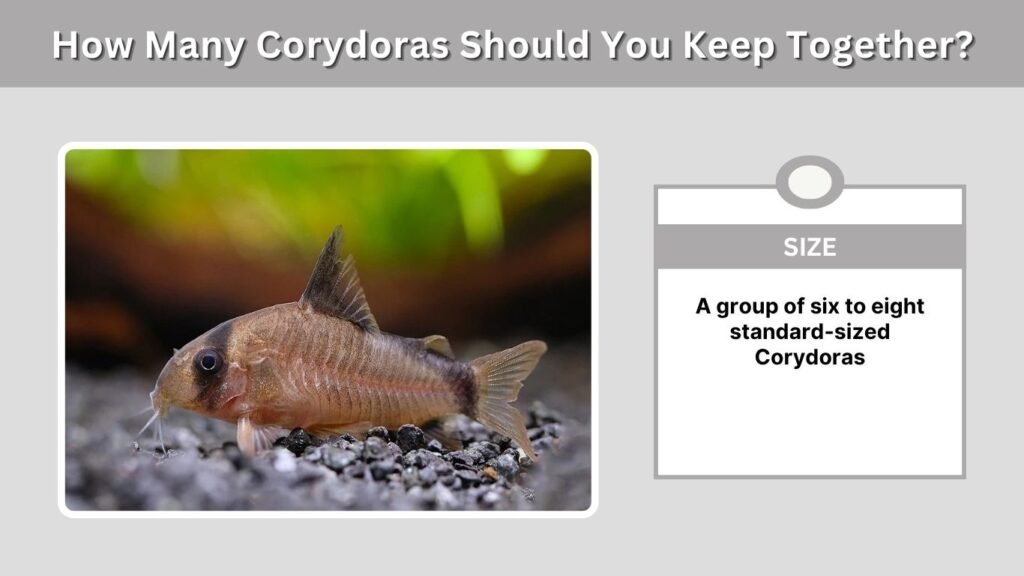
Corydoras are social fish that naturally gather in groups. Keeping them alone can increase stress and reduce their confidence. A suitable group encourages natural movement, feeding, resting, and exploration throughout the aquarium.
Ideal Corydoras Group Size
For most species, six Corydoras of the same species is a practical minimum. Groups of eight to ten or more are often even better when sufficient space is available.
In a 20-gallon long aquarium, a group of six to eight standard-sized Corydoras can make a suitable starting point, depending on other inhabitants and filtration.
For pygmy Corydoras, groups of eight to ten are particularly appealing because these small fish often swim together through the middle of the aquarium.
Different Corydoras species may associate with one another, but mixed groups should not replace having an adequate number of their own species.
Best Tank Mates for Corydoras Catfish

Corydoras are excellent community aquarium fish because of their peaceful nature. They rarely bother other healthy fish and generally spend much of their time exploring the lower areas of the tank. The best companions are small, nonaggressive fish that share similar temperature requirements and do not compete excessively for bottom-level space.
Compatible Corydoras Tank Mates
- Neon tetras: Peaceful schooling fish that usually occupy the middle aquarium levels.
- Harlequin rasboras: Calm swimmers suitable for many planted community tanks.
- Guppies: Generally peaceful companions when water parameters are compatible.
- Honey gouramis: Gentle centerpiece fish for appropriately sized community aquariums.
- Small peaceful tetras: Suitable when their adult size and water requirements match.
- Peaceful freshwater shrimp: Often compatible, although Corydoras may occasionally eat very small shrimp.
Fish to Avoid Keeping With Corydoras
Large predatory cichlids, aggressive territorial fish, and fish capable of swallowing Corydoras should be avoided.
Goldfish and koi are also unsuitable companions because of their size, feeding behavior, and different aquarium requirements.
When choosing companions for pygmy Corydoras, be especially careful with larger fish. Their tiny bodies make them more vulnerable to intimidation and predation.
Feeding Corydoras in a Community Tank
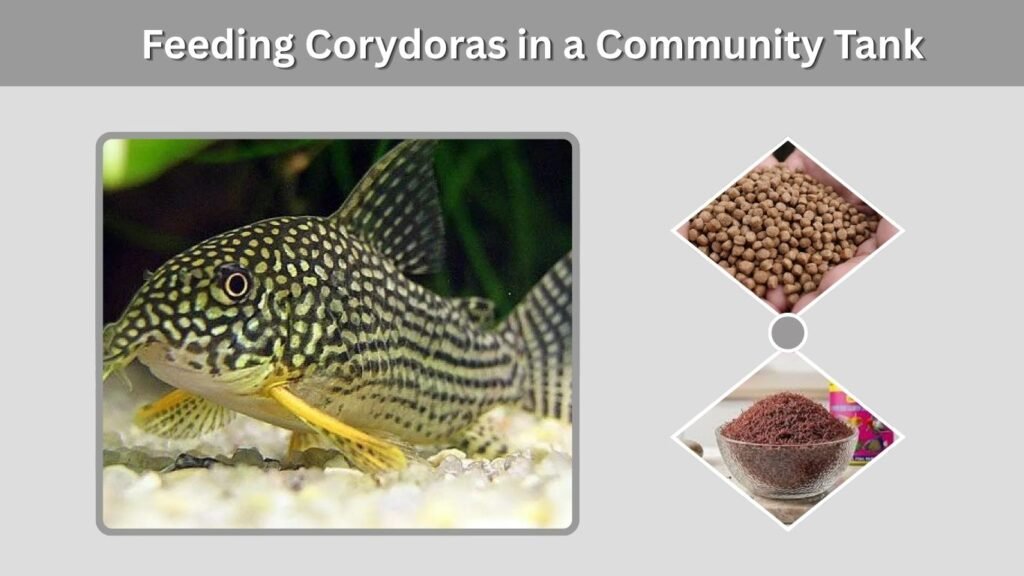
Although Corydoras frequently search the aquarium floor for leftover food, they should not be treated as a substitute for proper aquarium cleaning. These catfish are omnivores that need a balanced, reliable diet to maintain healthy growth, energy, and coloration.
Best Foods for Corydoras
- Sinking catfish pellets: Provide a convenient staple food designed for bottom feeders.
- Frozen bloodworms: Offer additional protein as part of a varied diet.
- Brine shrimp: Provide a nutritious supplemental food.
- Daphnia: Small food organisms suitable for many Corydoras species.
- Quality sinking wafers: Help ensure bottom-dwelling fish receive their own food.
Feed Corydoras appropriate portions once or twice daily and remove uneaten food before it pollutes the water.
In community tanks, ensure faster swimming fish do not consume everything before food reaches the bottom. Corydoras are not primarily algae eaters and require direct feeding.
Corydoras Breeding Tank Setup
Breeding Corydoras can be rewarding for aquarium enthusiasts. Several commonly kept species reproduce in home aquariums when provided with excellent water quality, nutritious food, and suitable breeding conditions.
Creating the Right Breeding Environment
A separate breeding aquarium with gentle sponge filtration, stable water conditions, and suitable spawning surfaces makes it easier to protect eggs and raise young fish.
Condition mature adults with varied, protein-rich foods. For some species, a modestly cooler water change may encourage spawning by imitating seasonal rainfall.
Females often attach adhesive eggs to aquarium glass, plants, or decorations. Eggs may be eaten by adults and other fish, so transferring them to a suitable hatching container can improve survival.
Newly hatched fry require clean water and appropriately sized foods, such as powdered fry food or newly hatched brine shrimp once they begin feeding.
Breeding in a community tank is possible, but fewer eggs and fry typically survive without protection.
Common Corydoras Tank Problems and Solutions
Even well-maintained aquariums can occasionally develop problems. Corydoras behavior often provides useful clues about their condition. Unusual swimming, loss of appetite, damaged barbels, or prolonged inactivity should prompt closer examination of the aquarium environment.
Why Are Corydoras Swimming at the Top?
Corydoras occasionally swim rapidly to the surface to gulp air. This is normal behavior because they can absorb oxygen through a specialized part of their intestine.
However, repeated frantic surface activity involving several fish may indicate low oxygen levels, poor water quality, or another problem.
Test the water and inspect filtration and aeration when their behavior changes noticeably.
Why Are Corydoras Sitting at the Bottom?
Resting on the substrate is normal for Corydoras. They frequently pause between feeding and exploring.
However, fish that remain motionless for unusually long periods, breathe rapidly, or refuse food may be experiencing stress or illness.
Check water quality, temperature, social group size, and possible aggression from tank mates.
FAQs
Can Corydoras Live in a 5-Gallon Tank?
A five-gallon aquarium is not recommended for a permanent Corydoras group. Even smaller species need social companions, adequate swimming space, and stable water conditions.
What Is the Best Corydoras for a 10-Gallon Tank?
Pygmy Corydoras are among the best choices because of their small adult size. A group needs an established, adequately long aquarium with suitable filtration.
Do Corydoras Clean the Tank?
Corydoras consume some food that reaches the bottom, but they do not remove fish waste or replace aquarium maintenance. They also require regular feeding.
Can Corydoras Live in a Planted Tank?
Yes. Corydoras thrive in well-maintained planted aquariums. Live plants provide shelter, while open sandy areas allow them to search for food.
Will Corydoras Breed in a Community Tank?
Yes. Mature Corydoras sometimes reproduce in community aquariums. However, eggs and fry may be eaten by other fish, making a separate breeding setup preferable for higher survival rates.