
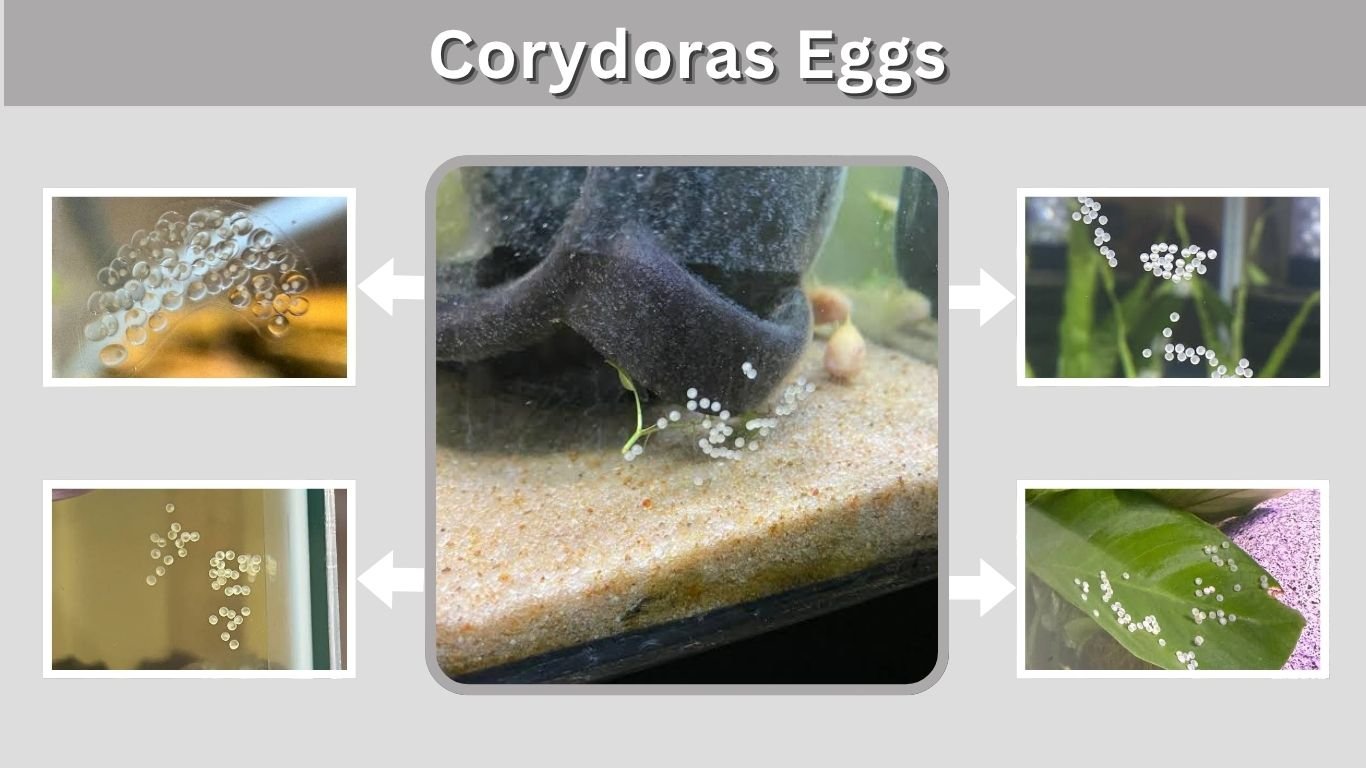
Corydoras eggs are small, round, sticky eggs commonly found attached to aquarium glass, aquatic plants, and decorations. These peaceful bottom-dwelling catfish reproduce by laying eggs rather than giving birth to live young. Under suitable conditions, fertilized Corydoras eggs typically hatch within 3–5 days. However, successful hatching requires clean water, proper oxygenation, and protection from hungry tankmates. This guide explains what Corydora eggs look like, how to identify fertilized eggs, their development stages, and the best ways to care for them until healthy baby catfish emerge.
What Do Corydoras Eggs Look Like?
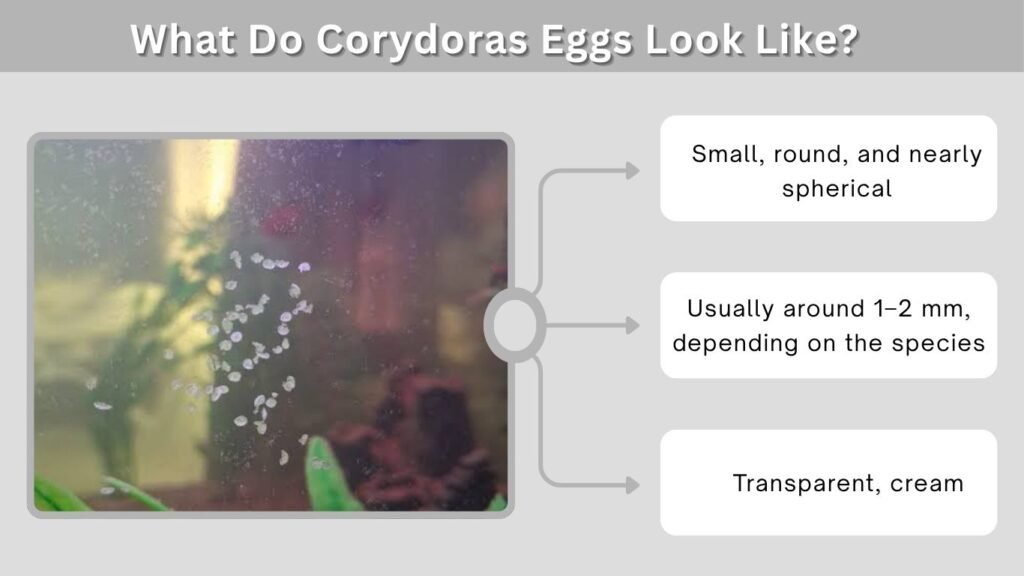
Corydoras eggs appear as tiny, round, jelly-like spheres attached to aquarium surfaces. Freshly laid eggs are usually transparent, pale white, or slightly yellowish. Their sticky outer coating helps them remain attached to glass, plant leaves, and decorations.
Corydoras Egg Identification
- Shape: Small, round, and nearly spherical.
- Size: Usually around 1–2 mm, depending on the species.
- Color: Transparent, cream, pale yellow, or light amber.
- Texture: Smooth, gelatinous, and slightly sticky.
- Location: Aquarium glass, broad plant leaves, and decorations.
- Arrangement: Individual eggs or scattered clusters.
Healthy eggs often become darker as embryos develop. However, egg color alone cannot always confirm successful fertilization, particularly during the first few hours after spawning.
How to Tell if Corydoras Eggs Are Fertilized
Fertilized Corydoras eggs usually remain translucent and may gradually develop a beige, amber, or grayish appearance. As the embryo grows, a small dark spot or developing fish may become visible.
Unfertilized eggs commonly turn opaque, milky white within approximately 24 hours. They may eventually develop a cotton-like fungal coating.
Fertilized vs. Unfertilized Corydoras Eggs
| Feature | Fertilized Eggs | Unfertilized Eggs |
| Appearance | Translucent | Often opaque |
| Color | Cream, amber, or grayish | Milky white |
| Development | Embryo becomes visible | No embryo development |
| Fungal growth | Usually absent | More likely |
| Hatching | Can hatch successfully | Will not hatch |
Avoid discarding freshly laid eggs simply because they appear pale. Observe their development before deciding whether they are infertile.
Where and How Do Corydoras Lay Eggs?
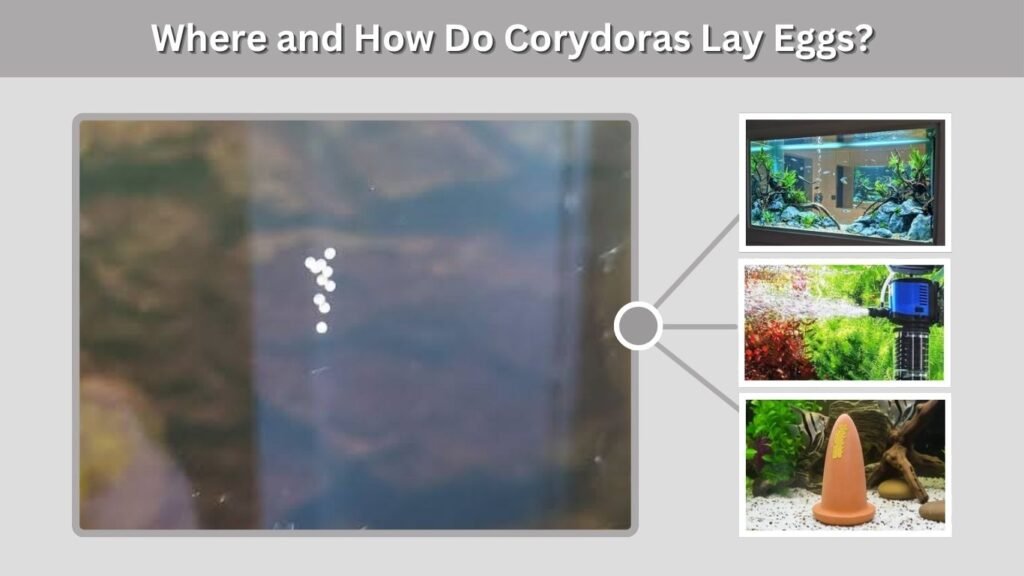
Corydoras usually lay eggs on aquarium glass, aquatic plants, filter equipment, and other smooth surfaces. Some females prefer areas with moderate water movement because circulating water helps supply oxygen to developing eggs.
During spawning, males actively pursue females around the aquarium. A receptive pair often forms the characteristic T-position, with the male positioned across the female’s head.
The female then holds a few eggs between her pelvic fins while fertilization occurs. Afterward, she attaches the sticky eggs to a selected surface and repeats the process.
A female may deposit dozens of eggs during a spawning event, although the total varies considerably between species.
Female Corydoras can also produce and lay eggs without a male. However, these eggs cannot develop into baby fish unless fertilization occurs.
Corydoras Egg Development and Hatching Time

Corydoras egg development begins shortly after fertilization. The developing embryo gradually becomes visible as it forms inside the protective egg membrane.
Most commonly bred Corydoras species hatch within approximately 3–5 days, although temperature and species differences can change this period.
Corydoras Egg Development Stages
| Stage | Approximate Time | Development |
| Freshly laid | Day 0 | Clear or pale eggs attach to surfaces |
| Early development | Day 1 | Fertile eggs may darken |
| Embryo formation | Days 2–3 | Developing embryo becomes more visible |
| Hatching | Days 3–5 | Tiny fry emerge from the eggs |
These are approximate stages rather than a fixed schedule. Some eggs take longer to hatch.
Best Temperature for Corydoras Eggs
For many commonly bred species, temperatures around 23–26°C (73–79°F) are suitable, provided they fall within the species’ normal breeding range.
Warmer water generally accelerates development, while cooler conditions slow it down. However, overheating eggs can reduce survival.
Maintaining stable temperatures, clean water, and sufficient oxygen is more important than trying to force faster hatching.
How to Care for Corydoras Eggs
Proper Corydoras egg care improves the chances of successful hatching. Eggs are vulnerable to fungal growth, poor water quality, and predation from adult fish.
1. Separate the Eggs From Adult Fish
Adult Corydoras and other aquarium fish may eat newly laid eggs. Moving the eggs into a separate hatching container can improve survival.
Alternatively, remove the adults from a dedicated breeding aquarium after spawning.
2. Carefully Collect Eggs From Glass
Corydora’s eggs are sticky but can often be removed gently.
Use a clean, wet fingertip to roll the eggs away from the glass. Transfer them directly into a prepared container containing aquarium water.
Avoid squeezing, crushing, or repeatedly handling the eggs.
3. Maintain Clean, Oxygenated Water
Use a small aquarium or suitable hatching container with gentle aeration. An air stone can provide water circulation without exposing eggs to powerful currents.
Keep ammonia and nitrite at zero and avoid sudden temperature changes.
4. Check Eggs Daily
Inspect the eggs for white discoloration, fungal growth, or damaged membranes.
Remove clearly infertile or fungused eggs carefully to reduce the possibility of fungal growth spreading to healthy eggs.
5. Protect Newly Hatched Fry
Once the eggs hatch, keep the young fish in a safe environment with gentle filtration.
A sponge filter is particularly useful because it provides biological filtration without exposing tiny fry to dangerous filter intakes.
Why Are Corydoras Eggs Turning White or Fuzzy?
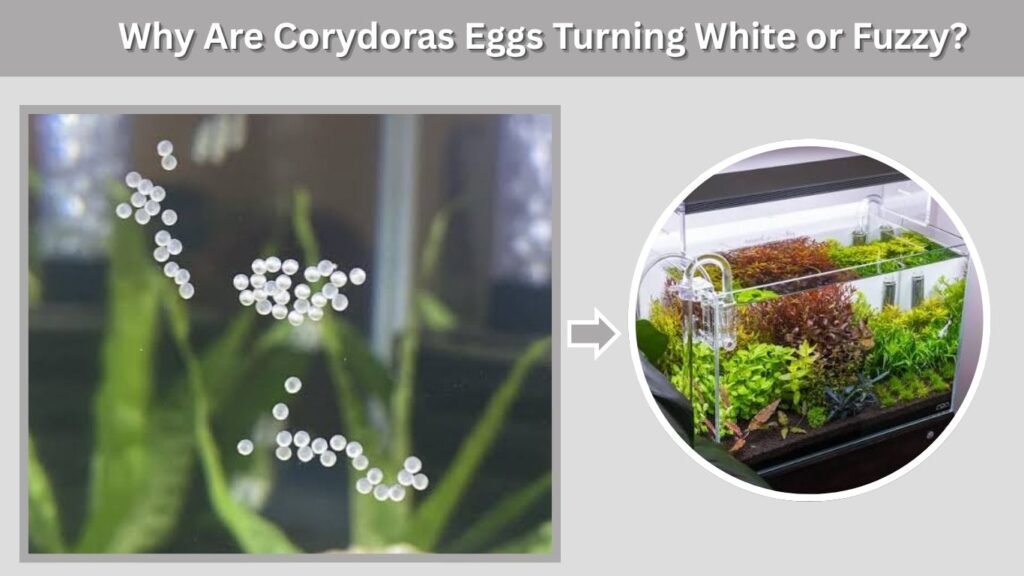
Corydoras eggs may turn white when they are unfertilized or have stopped developing. A fuzzy, cotton-like coating usually indicates fungal growth.
Fungus can spread rapidly when dead eggs remain in contact with healthy eggs, especially when circulation and water quality are poor.
Remove obviously affected eggs promptly and improve gentle water circulation.
Some breeders use methylene blue in a separate hatching container to help control fungal growth. If used, follow the aquarium product’s instructions carefully, because incorrect treatment can harm aquatic organisms.
Not every pale egg is infertile. Fresh eggs may naturally appear whitish before normal development becomes visible.
How to Hatch Corydoras Eggs and Raise Fry
Successful hatching requires stable water conditions, consistent oxygenation, and protection from predators.
After approximately 3–5 days, tiny fry begin emerging from their eggs. Newly hatched Corydoras usually remain near the bottom and initially depend on their attached yolk sacs for nutrition.
Feeding Baby Corydoras
During the first day or two after hatching, the fry generally consume their remaining yolk reserves.
Once those reserves are absorbed, they require appropriately sized food. Newly hatched baby brine shrimp, microworms, and suitable fine fry foods can support healthy development.
Feed small portions several times daily while preventing uneaten food from accumulating.
Gentle water changes and careful cleaning help maintain suitable growing conditions.
Corydoras Eggs by Species
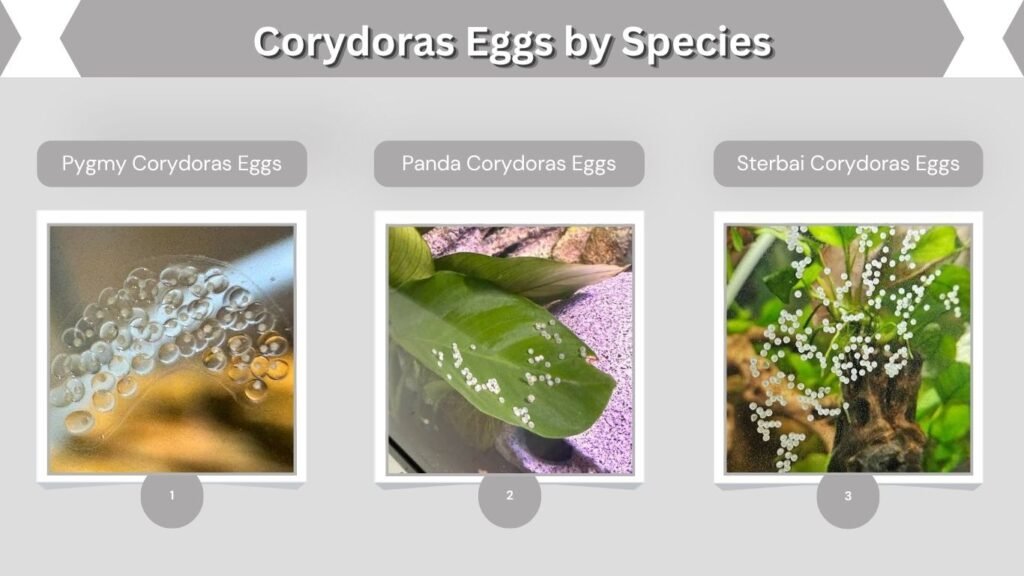
Different Corydoras species produce similar-looking eggs, although egg size, number, and spawning habits vary.
Pygmy Corydoras Eggs
Pygmy Corydoras produce particularly small eggs, frequently attached individually to plants or aquarium glass. Their tiny fry require especially fine food and careful protection.
Panda Corydoras Eggs
Panda Corydoras eggs are sticky and usually deposited on glass or plants. They commonly hatch within several days under suitable conditions.
Albino and Bronze Corydoras Eggs
Albino and bronze Corydoras are commonly bred forms of Corydoras aeneus. Their eggs are typically rounded, adhesive, and deposited in small groups on aquarium surfaces.
Peppered and Sterbai Corydoras Eggs
Peppered Corydoras generally reproduce using the familiar T-position and adhesive egg-laying behavior. Sterbai Corydoras follow a similar pattern but usually prefer warmer aquarium conditions.
FAQs
1. How many eggs do Corydoras lay?
The number varies by species, female size, and breeding conditions. Larger Corydoras may produce dozens or more than 100 eggs during a spawning event, while smaller species often produce fewer.
2. Do Corydoras eat their own eggs?
Yes. Adult Corydoras may consume their own eggs, although the tendency varies between species. Separating eggs from adults generally improves hatching success.
3. How often do Corydoras lay eggs?
Healthy, mature Corydoras may spawn repeatedly when conditions are favorable. However, frequency depends on species, nutrition, water conditions, and breeding readiness.
4. Can Corydoras eggs hatch in a community tank?
Yes, fertilized eggs can hatch in community aquariums. However, other fish may eat the eggs or newly hatched fry, reducing survival rates.
5. What should I do if Corydoras eggs are not hatching?
Check water temperature, oxygenation, and egg condition. Eggs that become completely opaque or develop fuzzy fungal growth are unlikely to hatch. Also remember that some species require more than five days for incubation.
