
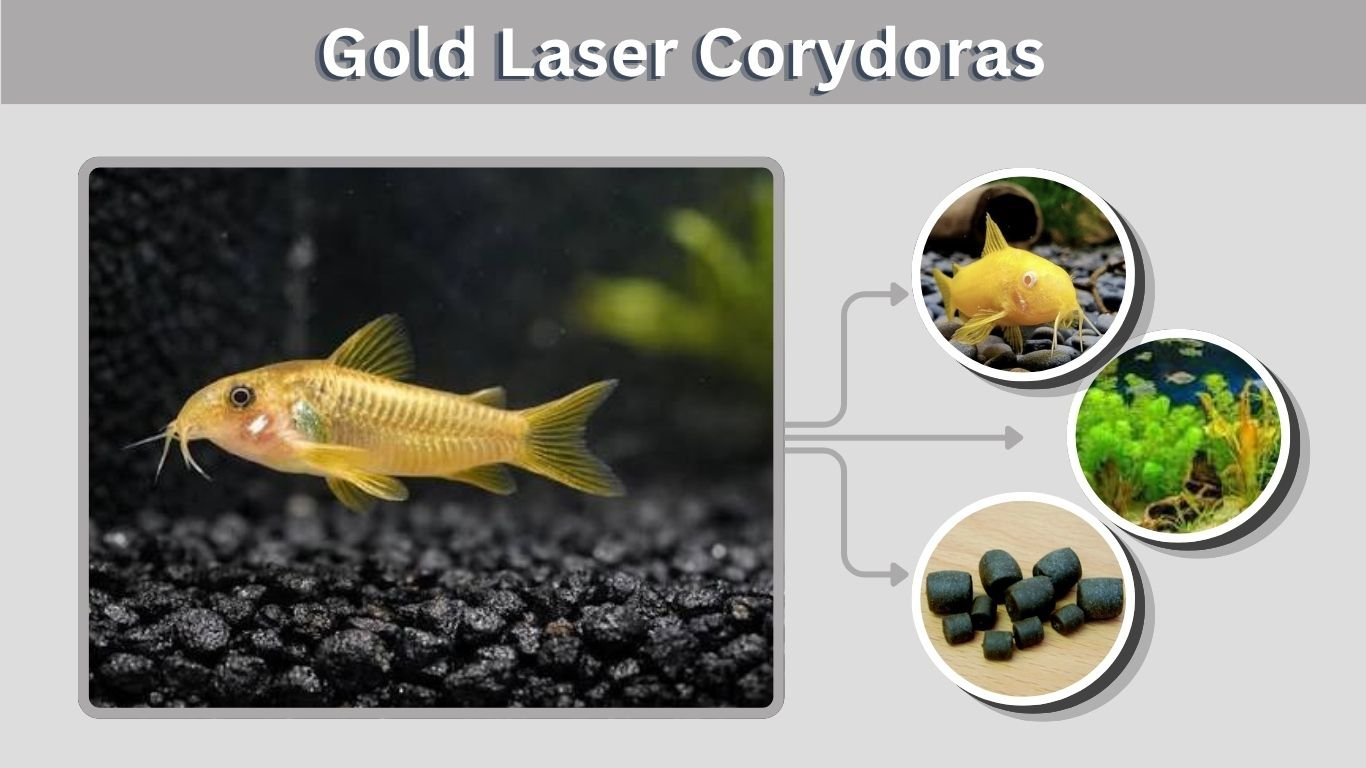
Gold Laser Corydoras are beautiful freshwater catfish recognized for their bright metallic golden stripes, peaceful temperament, and active bottom-dwelling behavior. These small South American fish are popular among aquarium enthusiasts because they thrive in groups and coexist with many community fish. However, maintaining healthy Gold Laser Corydoras requires suitable water conditions, a soft substrate, and nutritious food. This complete guide covers their appearance, adult size, lifespan, tank requirements, feeding habits, compatible tankmates, and breeding methods.
What Is a Gold Laser Corydoras?
The Gold Laser Corydoras, commonly identified as Corydoras sp. CW010, is a small armored catfish belonging to the family Callichthyidae. Following a taxonomic revision, it is also classified provisionally as Osteogaster sp. CW010.
The fish is associated with freshwater habitats in Peru, South America. It is especially admired for its brilliant gold shoulder stripe extending along its body.
Gold Laser Corydoras are related to the bronze Corydoras group, although their exact species identity remains unresolved. They are peaceful, social fish that spend much of their time searching the aquarium floor for food.
Unlike aggressive bottom-dwelling species, they generally live comfortably in groups and rarely disturb other fish.
Gold Laser Corydoras Appearance and Identification
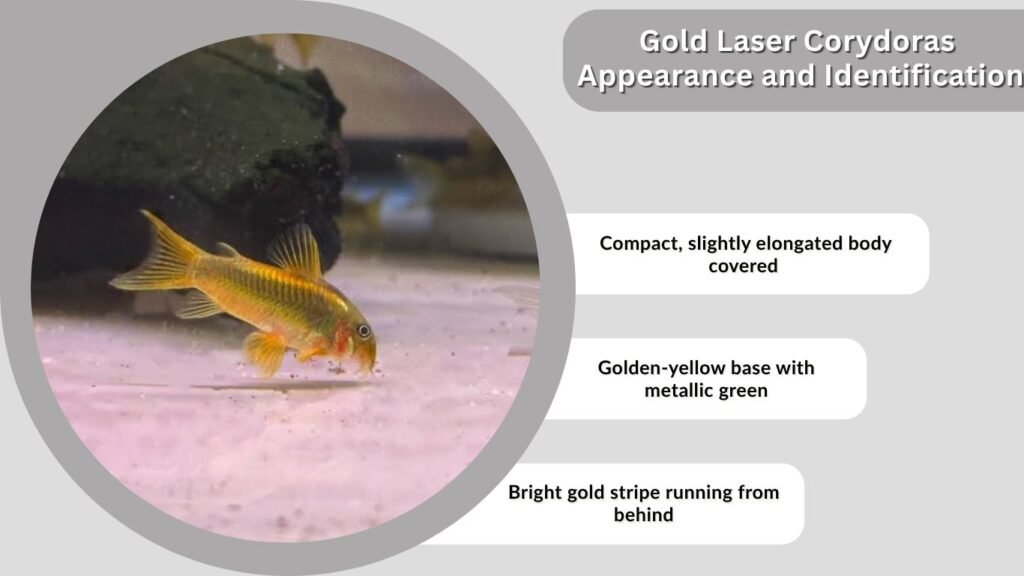
Gold Laser Corydoras have a distinctive combination of golden, greenish, and bronze coloration. Their reflective body markings become particularly attractive under suitable aquarium lighting.
Identification Features
- Body Shape: Compact, slightly elongated body covered with protective bony plates.
- Color: Golden-yellow base with metallic green or bronze markings.
- Golden Stripe: Bright gold stripe running from behind the head toward the tail.
- Fins: Mostly translucent or yellowish fins.
- Head: Rounded snout with sensitive barbels surrounding the mouth.
- Eyes: Small, rounded, and usually dark.
- Temperament: Peaceful and active, particularly in groups.
The golden stripe is the easiest way to recognize this fish. Its brightness may vary depending on lighting, health, stress, and individual coloration.
Gold Laser Corydoras Size and Lifespan
Gold Laser Corydoras remain relatively small throughout their lives. Adult males generally reach approximately 5.5 cm, while females may grow to around 6 cm.
Females often develop a noticeably broader and rounder body, particularly when carrying eggs.
With proper aquarium care, these catfish may live approximately 5–10 years, although their lifespan varies with water quality, nutrition, and overall health.
Young specimens may initially appear pale, but their metallic coloration usually becomes more noticeable as they mature.
Gold Laser Corydoras Tank Size and Setup
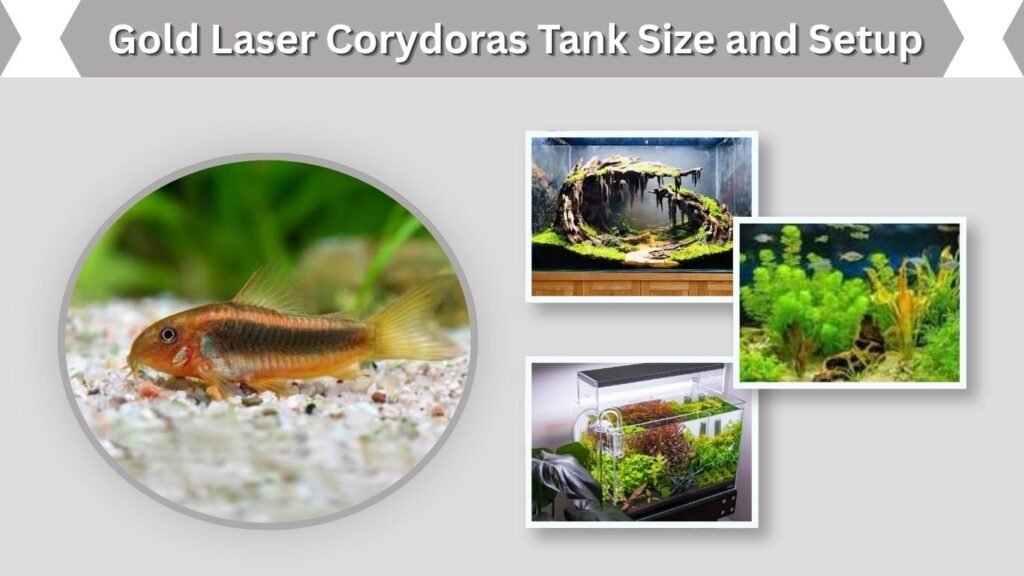
A well-planned aquarium is essential for maintaining healthy Gold Laser Corydoras. These fish require sufficient bottom space to forage, swim together, and rest comfortably.
For a group of six adults, a long aquarium of approximately 20–25 gallons or larger is a practical starting point.
Substrate and Decorations
Fine, smooth sand is an excellent substrate because Gold Laser Corydoras naturally search for food by moving their barbels through the bottom material.
Sharp gravel should be avoided because it can damage their sensitive barbels.
Aquatic plants, driftwood, and smooth stones provide hiding places and create a more natural environment. Java fern, Anubias, and Amazon sword plants are suitable choices.
Leave some open sandy areas where the fish can forage comfortably.
Filtration and Lighting
Use a reliable aquarium filter that maintains clean, oxygen-rich water without producing excessively strong currents.
Moderate lighting is suitable, especially when plants and shaded areas are available.
A mature, fully cycled aquarium is preferable to a newly established tank.
Ideal Water Parameters for Gold Laser Corydoras
Gold Laser Corydoras thrive in stable freshwater conditions. Sudden changes in temperature or water chemistry can cause stress and make these fish vulnerable to illness.
| Water Parameter | Recommended Range |
| Temperature | 22–26°C (72–79°F) |
| pH Level | 6.5–7.2 |
| General Hardness | Approximately 2–12 dGH |
| Ammonia | 0 ppm |
| Nitrite | 0 ppm |
| Water Movement | Gentle to moderate |
Perform regular partial water changes and monitor water conditions with a reliable aquarium testing kit.
Consistent water quality is more important than constantly adjusting the pH or hardness.
What Do Gold Laser Corydoras Eat?
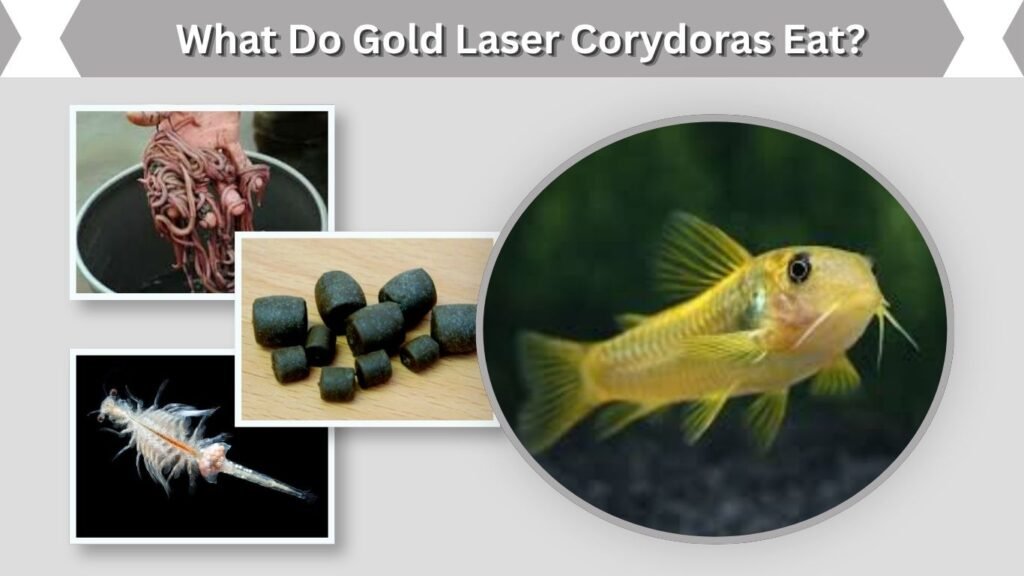
Gold Laser Corydoras are omnivorous fish that consume small aquatic invertebrates and various food particles found along the substrate.
In aquariums, they should receive a varied, balanced diet rather than relying entirely on leftovers from other fish.
Best Foods for Gold Laser Corydoras
- Sinking Pellets: High-quality bottom-feeder pellets provide essential daily nutrition.
- Bloodworms: Frozen or appropriately sourced live bloodworms offer extra protein.
- Brine Shrimp: Nutritious supplemental food that encourages natural feeding behavior.
- Daphnia: Small aquatic crustaceans suitable for dietary variety.
- Sinking Tablets: Complete foods formulated for omnivorous catfish.
Feed manageable portions once or twice daily, ensuring every fish receives enough food.
Remove uneaten food before it decomposes and affects water quality.
Although Corydoras consume leftover food, they are not substitutes for aquarium cleaning.
Gold Laser Corydoras Tank Mates
Gold Laser Corydoras are highly social fish that should be kept in groups of at least six individuals of the same form.
Keeping them together encourages natural group behavior and helps reduce stress.
Suitable tankmates include peaceful tetras, rasboras, small danios, and other gentle community fish with compatible water requirements.
Small peaceful bottom-dwellers may also coexist with them when the aquarium has enough floor space.
Avoid aggressive cichlids, large predatory fish, and species that constantly harass bottom feeders.
Very competitive bottom-dwelling fish can also prevent Corydoras from receiving adequate food.
How to Breed Gold Laser Corydoras
Breeding Gold Laser Corydoras is possible in home aquariums, although successful reproduction requires healthy adults and carefully maintained conditions.
Females are usually broader than males, especially when filled with developing eggs.
Preparing for Breeding
Place a mature group of males and females in a peaceful breeding aquarium with soft substrate, suitable water conditions, and gentle filtration.
Condition them with nutritious live or frozen foods, including bloodworms and daphnia.
Regular partial water changes can encourage spawning. Some breeders use a modest temperature reduction to imitate seasonal rainfall, but sudden or extreme changes should be avoided.
Eggs and Hatching
During spawning, Gold Laser Corydoras typically deposit sticky eggs on aquarium glass, plant leaves, or other suitable surfaces.
Adults may eat their eggs, so separating the eggs or removing the parents improves survival.
Under suitable conditions, eggs generally hatch within several days, often around 3–5 days.
Newly hatched fry initially rely on their yolk sacs. Once these are absorbed, provide appropriately sized foods such as microworms or newly hatched baby brine shrimp.
Gold Laser Corydoras vs. Golden and Albino Corydoras

Gold Laser Corydoras are sometimes confused with golden bronze Corydoras and albino varieties of Corydoras aeneus, now commonly classified as Osteogaster aenea.
However, these names do not necessarily identify the same fish.
| Variety | Main Difference |
| Gold Laser Corydoras | Distinctive bright gold stripe over a darker body |
| Golden Bronze Corydoras | Generally golden-bronze coloration without the same prominent laser stripe |
| Albino Corydoras | Pale cream or pinkish body with reddish eyes |
| Green Laser Corydoras | Distinctive greenish reflective stripe, commonly identified as CW009 |
Gold Laser CW010 has sometimes been treated as part of the bronze Corydoras species complex, but its precise taxonomic status remains uncertain.
When purchasing, confirm the CW010 identification rather than relying entirely on a broad name such as “gold cory.”
Common Gold Laser Corydoras Health Problems
Gold Laser Corydoras may experience health problems when water conditions deteriorate or when their environment is unsuitable.
Barbel damage is a common concern, particularly when fish are kept on sharp or dirty substrates.
Poor water quality may contribute to bacterial infections, while newly introduced fish can carry external parasites.
Maintain clean water, provide nutritious food, and observe fish regularly for unusual behavior, damaged fins, reduced appetite, or abnormal breathing.
Quarantine new fish when possible to reduce the risk of introducing diseases into an established aquarium.
FAQs
1. Are Gold Laser Corydoras rare?
Gold Laser Corydoras are less commonly available than standard bronze or albino Corydoras. Their distinctive coloration and specialized breeding availability can make them more expensive.
2. How many Gold Laser Corydoras should be kept together?
Keep at least six Gold Laser Corydoras together. Larger groups are beneficial when aquarium size and filtration capacity allow.
3. Are Gold Laser Corydoras good for beginners?
They can be suitable for attentive beginners who maintain a fully cycled aquarium, stable water conditions, a smooth substrate, and a proper feeding routine.
4. Can Gold Laser Corydoras live with shrimp?
Yes, they generally coexist with adult dwarf shrimp. However, they may opportunistically consume very small shrimp juveniles.
5. Are Gold Laser Corydoras the same as Bronze Corydoras?
Not necessarily. Gold Laser Corydoras are identified as CW010 and belong to the broader bronze Corydoras lineage, but their exact species identity remains unresolved.