
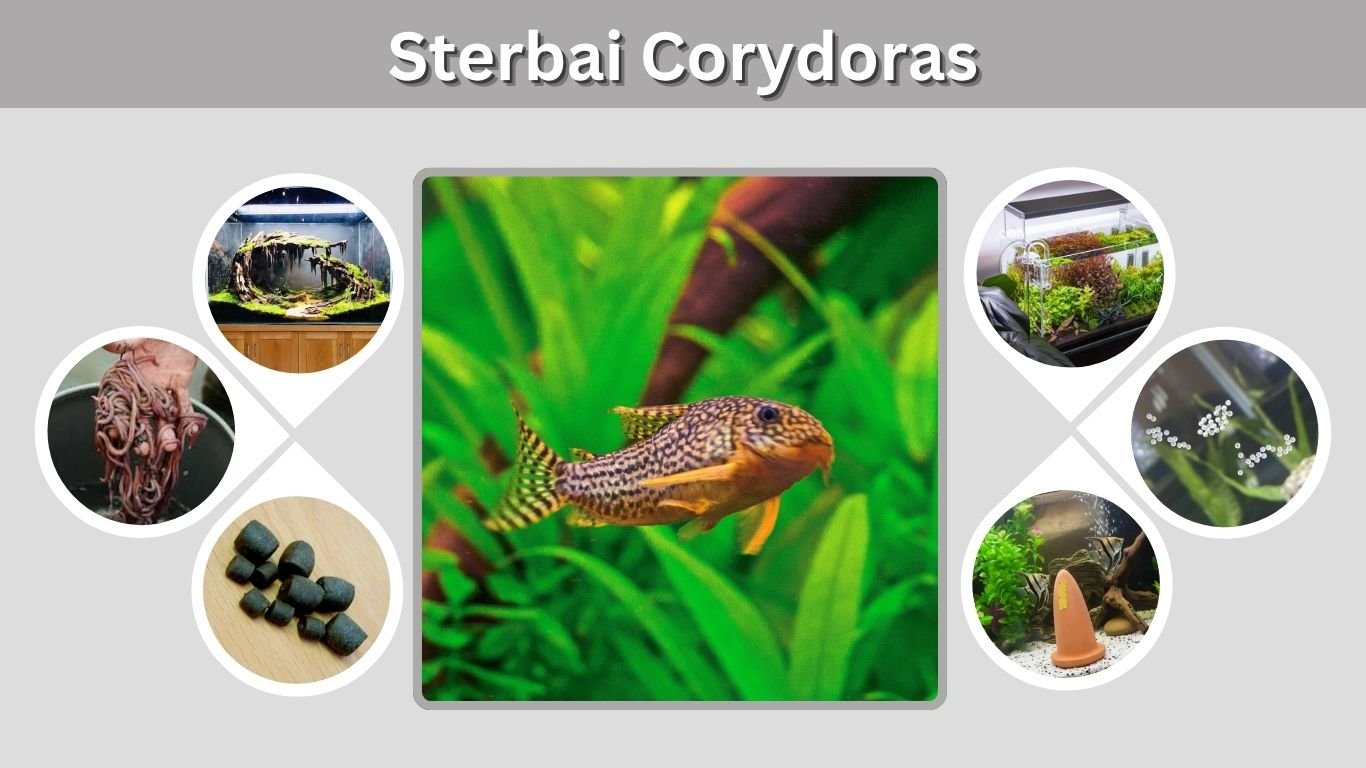
Sterbai Corydoras are peaceful freshwater catfish known for their distinctive white-spotted bodies, bright orange fins, and active bottom-dwelling behavior. Native to South America, these attractive aquarium fish are popular because of their social nature and compatibility with many tropical species. Unlike some other Corydoras, Sterbai can thrive in relatively warm aquarium conditions, making them suitable for certain discus communities. This guide covers Sterbai Corydoras size, lifespan, water temperature, tank setup, feeding, breeding, and essential care requirements.
What Are Sterbai Corydoras?
Sterbai Corydoras, also known as Sterba’s Cory, are small armored catfish belonging to the family Callichthyidae. Their current scientific name is Hoplisoma sterbai, although they remain widely recognized by their former name, Corydoras sterbai.
These fish originate from the Guaporé River drainage in Brazil and Bolivia, where they inhabit freshwater creeks, tributaries, and flooded areas.
Sterbai Corydoras are peaceful, social fish that naturally forage along the bottom. In aquariums, they are most comfortable living in groups of their own species.
Sterbai Corydoras Identification
- Body Color: Dark brown or gray with cream-colored spots and patterns.
- Head: Dark background covered with numerous pale spots.
- Pectoral Fins: Distinctive orange or yellow-orange coloration.
- Body Shape: Compact, slightly rounded, with protective bony plates.
- Barbels: Sensitive whisker-like structures surrounding the mouth.
- Behavior: Peaceful, social, and frequently active along the substrate.
The orange pectoral fins and light spots on a dark head are especially useful identification features.
Sterbai Corydoras Size and Lifespan
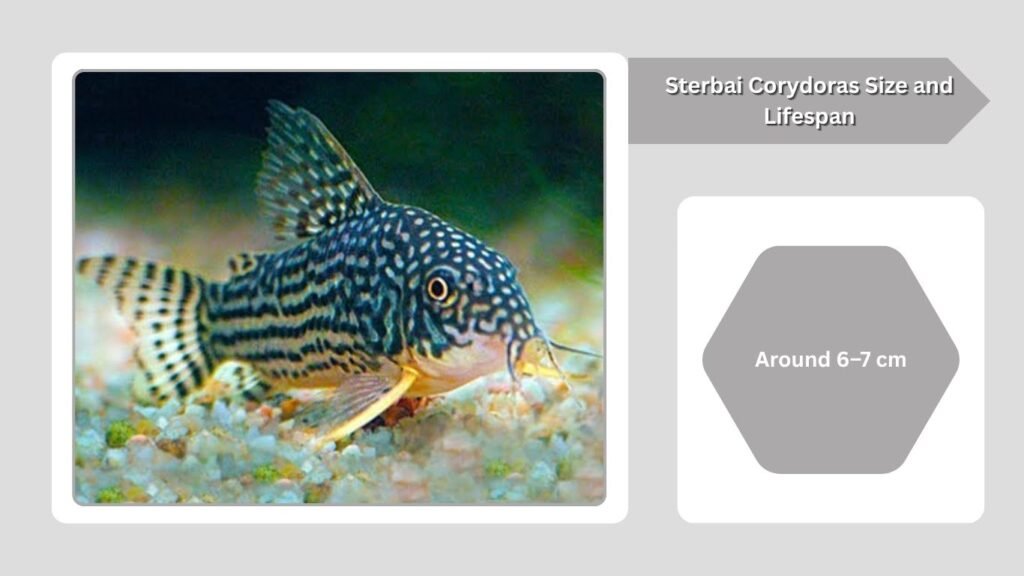
Adult Sterbai Corydoras generally reach around 6–7 cm (2.4–2.8 inches) in length. Females often grow slightly larger and develop broader bodies than males.
Their relatively small size makes them suitable for medium-sized freshwater community aquariums.
With proper care, Sterbai Corydoras commonly live around 5–10 years, although individual lifespans vary.
Stable water conditions, nutritious food, and a stress-free environment all contribute to their long-term health.
Young Sterbai may initially display less vibrant coloration, but their characteristic spotting and orange fin markings become more noticeable as they mature.
Ideal Sterbai Corydoras Water Temperature
Sterbai Corydoras prefer relatively warm tropical water. Their recommended temperature range is approximately 24–28°C (75–82°F).
This warmer range is one reason aquarists frequently choose them for compatible discus aquariums.
Recommended Water Parameters
| Parameter | Recommended Range |
| Temperature | 24–28°C (75–82°F) |
| pH | 6.0–7.6 |
| Hardness | 1–15 dGH |
| Ammonia | 0 ppm |
| Nitrite | 0 ppm |
| Water Movement | Gentle to moderate |
Although Sterbai tolerate warmer temperatures than many Corydoras, continuously maintaining excessively hot water can increase their oxygen requirements.
Provide adequate aeration, reliable filtration, and stable water chemistry.
Temperatures around 22°C (72°F) are below the recommended long-term range, while 29°C (84°F) or higher should not be treated as routine conditions.
Sterbai Corydoras Tank Size and Setup
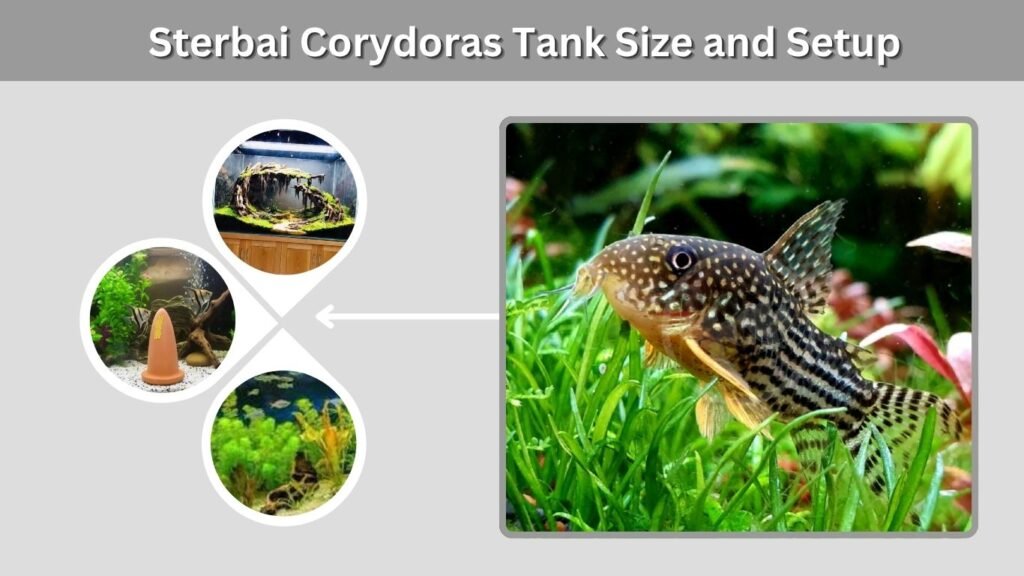
A comfortable aquarium should offer sufficient bottom space for swimming, resting, and searching for food.
A 20-gallon long aquarium or larger is a practical recommendation for a group of six Sterbai Corydoras.
Larger aquariums provide additional floor space and more stable water conditions, particularly when other community fish are present.
Substrate and Decorations
Fine aquarium sand is an excellent substrate for Sterbai Corydoras. These fish naturally use their sensitive barbels to search for food particles within the bottom material.
Smooth, rounded gravel can also work when kept clean, but sharp or abrasive substrates should be avoided.
Driftwood, smooth stones, and aquatic plants provide shelter and create a natural environment.
Anubias, Java fern, and Amazon sword plants are suitable aquarium additions. Leave open areas of sand where the fish can forage freely.
Filtration and Lighting
Use a reliable biological filter that maintains clean, oxygen-rich water. Sponge filters or appropriately sized aquarium filters are suitable choices.
Gentle to moderate lighting works well, particularly when shaded hiding areas are available.
Perform regular partial water changes and remove accumulated waste from the substrate.
What Do Sterbai Corydoras Eat?

Sterbai Corydoras are omnivorous bottom feeders that consume small aquatic invertebrates and other available food in their natural habitat.
In captivity, they require a balanced diet containing protein-rich foods and complete sinking preparations.
Best Foods for Sterbai Corydoras
- Sinking Pellets: Provide essential nutrients for daily feeding.
- Bloodworms: Offer additional protein as an occasional supplement.
- Brine Shrimp: Encourage natural feeding behavior.
- Daphnia: Provide variety and useful animal nutrition.
- Bottom-Feeder Tablets: Supply balanced nutrients in a sinking form.
Feed small amounts once or twice daily, ensuring food reaches every Corydoras in the aquarium.
Although these fish consume leftover food, they should never depend entirely on scraps from other tankmates.
Overfeeding can damage water quality, so remove uneaten food promptly.
Sterbai Corydoras Behavior and Tank Mates
Sterbai Corydoras are peaceful, social catfish that rarely display aggression toward other aquarium inhabitants.
They are best maintained in groups of at least six individuals, although larger groups often display more confident and natural behavior.
Suitable tankmates include peaceful tetras, rasboras, small rainbowfish, and other compatible community species.
Sterbai are also frequently kept with discus because their temperature requirements overlap. However, excellent water quality and sufficient oxygenation are especially important in warmer discus aquariums.
Avoid large predatory fish, aggressive cichlids, and territorial bottom-dwellers that may disturb or injure them.
How to Breed Sterbai Corydoras
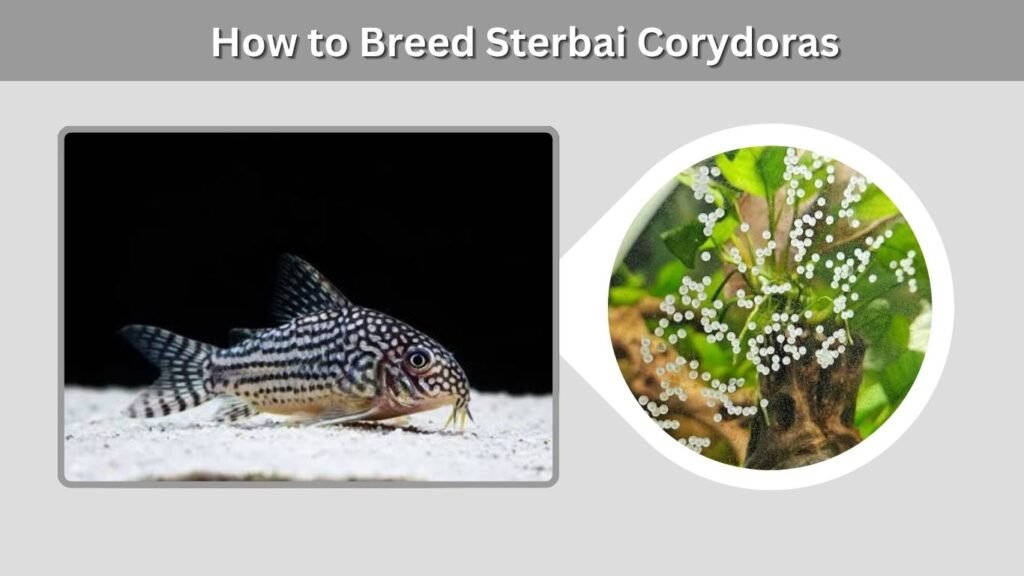
Breeding Sterbai Corydoras is possible in home aquariums when mature adults receive nutritious food and suitable spawning conditions.
Healthy females become noticeably rounded when carrying eggs, while males generally remain slimmer.
Male vs. Female Sterbai Corydoras
Females are typically larger, wider, and more rounded when viewed from above.
Males generally have slimmer bodies, although differences can be difficult to recognize in immature specimens.
A breeding group containing more males than females may improve spawning opportunities.
Encouraging Breeding
Prepare a mature breeding aquarium with a sponge filter, clean water, and suitable surfaces for egg deposition.
Condition adults using nutritious live or frozen foods.
Carefully performed water changes using slightly cooler, compatible water can help simulate seasonal rainfall and encourage spawning.
Avoid sudden, extreme temperature changes that could stress the fish.
Sterbai Corydoras Eggs and Hatching
During spawning, Sterbai Corydoras usually perform the characteristic T-position mating behavior.
Females then deposit sticky eggs on aquarium glass, plant leaves, or other surfaces.
Adults may consume their eggs, so moving the eggs into a suitable hatching container or removing the parents can improve survival.
Under appropriate conditions, fertilized eggs generally hatch in approximately 3–5 days.
Newly hatched fry initially absorb their remaining yolk reserves before accepting tiny live foods such as microworms and newly hatched brine shrimp.
Albino Sterbai Corydoras
Albino Sterbai Corydoras are a less common color form characterized by pale bodies and reddish or pink eyes.
Unlike normal Sterbai, their dark body pigmentation is greatly reduced, making their typical spotted appearance much less noticeable.
However, they retain the same general body structure and social behavior.
Albino Sterbai require similar aquarium temperatures, feeding routines, and group arrangements to normally colored individuals.
They should not be confused with ordinary albino bronze Corydoras, which belong to a different species.
Sterbai Corydoras vs. Julii Corydoras
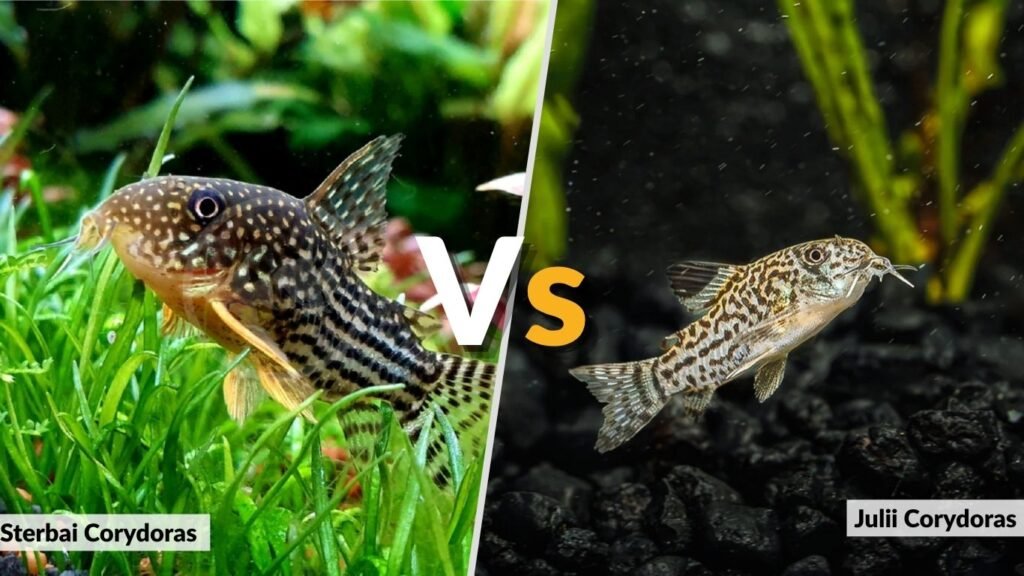
Sterbai and Julii Corydoras have spotted appearances, but several physical differences help distinguish them.
| Feature | Sterbai Corydoras | Julii Corydoras |
| Head pattern | Light spots on dark background | Dark spots on pale background |
| Pectoral fins | Usually bright orange | Usually pale or translucent |
| Body pattern | Spots and irregular stripes | Dark spots and markings |
| Temperature preference | Generally warmer | Generally cooler |
Many aquarium fish sold as Julii Corydoras are actually three-line Corydoras (Hoplisoma trilineatum), making careful identification important.
FAQs
1. Are Sterbai Corydoras good for beginners?
Yes. Sterbai Corydoras are suitable for beginners who provide a fully cycled aquarium, clean water, stable temperatures, appropriate food, and a group of at least six fish.
2. Can Sterbai Corydoras live with shrimp?
Yes, Sterbai generally coexist peacefully with adult dwarf shrimp. However, they may opportunistically consume very small shrimp juveniles.
3. How many Sterbai Corydoras should be kept together?
Keep at least six Sterbai Corydoras together. Groups of eight or more can be beneficial when aquarium space and filtration capacity allow.
4. Can Sterbai Corydoras live in cold water?
Sterbai Corydoras are tropical fish and should not be maintained in unheated cold-water aquariums. Their recommended long-term temperature range is 24–28°C (75–82°F).
5. Do Sterbai Corydoras clean the aquarium?
Sterbai Corydoras eat suitable food particles along the substrate, but they do not remove fish waste or replace normal aquarium maintenance. They need their own balanced diet.
