
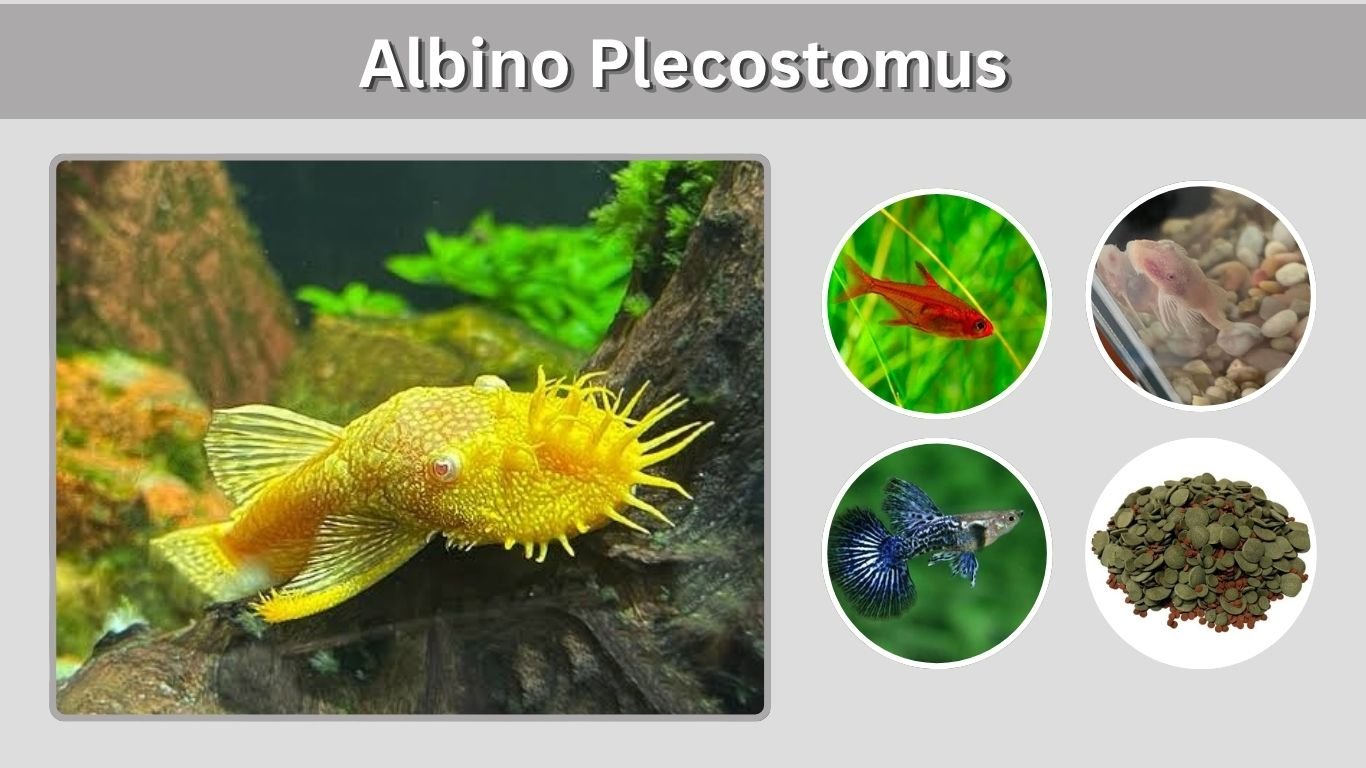
The albino plecostomus is a fascinating freshwater fish known for its pale yellow body, reddish eyes, and impressive algae-eating abilities. Popular among aquarium enthusiasts, this unusual catfish adds a distinctive appearance to tropical fish tanks. However, albino plecos come in several varieties, each with different adult sizes and care requirements. Some remain relatively small, while others grow surprisingly large. Understanding their diet, tank size, water conditions, behavior, and lifespan is essential for keeping them healthy. This guide covers everything you need to know about albino plecostomus care.
What Is an Albino Plecostomus?
An albino plecostomus is a freshwater, bottom-dwelling catfish belonging to the Loricariidae family. Unlike naturally dark-colored plecos, albino varieties have reduced or absent melanin pigmentation, creating their distinctive pale appearance. These fish originate from aquarium strains of South American pleco species and are commonly kept for their appearance and algae-grazing behavior.
Appearance and Identification
Albino plecos have flattened bodies, armored skin, and downward-facing sucker mouths. Their specialized mouths allow them to attach to aquarium glass, driftwood, and rocks while grazing.
Common identifying characteristics include:
- Body color: Cream, pale yellow, golden, or pinkish-white.
- Eye color: Typically red or pink in true albino varieties.
- Body shape: Flattened underside with protective armored plates.
- Mouth: Suction-style mouth adapted for grazing surfaces.
- Fins: Broad pectoral fins and a prominent dorsal fin.
Their appearance varies depending on the species. Bristlenose varieties develop distinctive facial tentacles, while sailfin plecos have significantly larger dorsal fins.
Popular Types of Albino Plecostomus
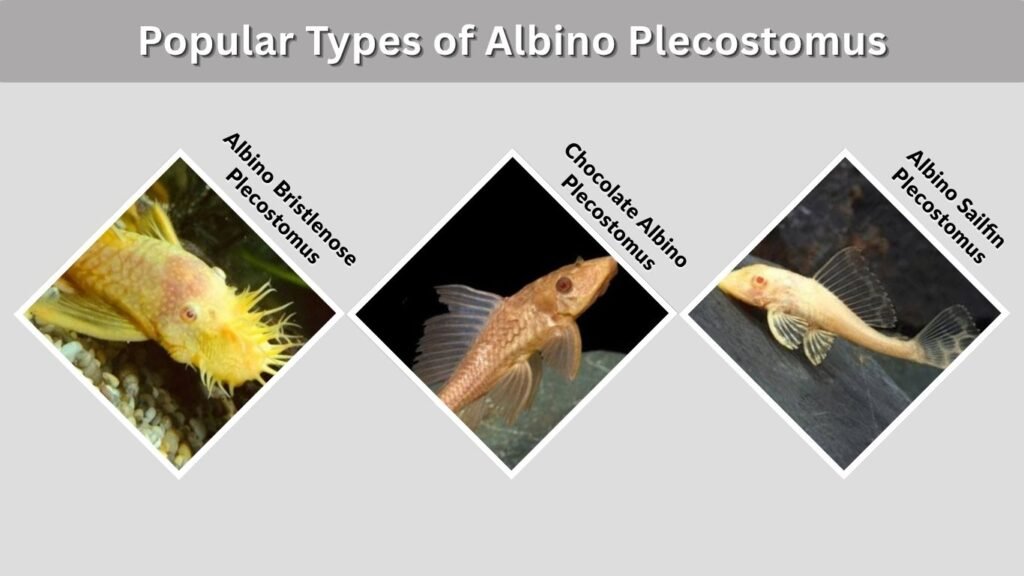
Several albino plecostomus varieties are available in the aquarium trade. Although they may share similar coloration, their body shapes, sizes, and aquarium requirements differ considerably. Identifying the correct variety is particularly important because a small juvenile pleco may eventually grow too large for a standard home aquarium.
Albino Bristlenose Plecostomus
The albino bristlenose plecostomus (Ancistrus sp.) is among the most popular varieties for home aquariums.
It usually grows approximately 4–5 inches long and has a pale yellow body with red eyes. Adult males develop noticeable bristles around their snouts. This relatively small, peaceful fish is suitable for many community aquariums.
Chocolate Albino Plecostomus
The chocolate albino plecostomus is sometimes sold under names such as albino chocolate pleco or chocolate pleco.
However, these names are not consistently applied to a single species. Some refer to larger Pterygoplichthys varieties, while chocolate bristlenose plecos are usually brown-colored fish rather than true albinos.
Always confirm the scientific name before purchasing because adult size can vary substantially.
Albino Sailfin Plecostomus
The albino sailfin plecostomus is a large variety, commonly associated with Pterygoplichthys gibbiceps.
It has a magnificent, sail-shaped dorsal fin and a pale body with reddish eyes. Adults can reach approximately 18–20 inches, requiring a very large aquarium with powerful filtration.
Longfin Albino Bristlenose Plecostomus
The longfin albino bristlenose plecostomus is a selectively bred variety recognized by its long, flowing fins.
It generally reaches the same body length as a standard bristlenose pleco. Its delicate fins require peaceful tank mates, smooth decorations, and excellent water conditions.
How Big Do Albino Plecostomus Get?
Albino plecostomus size depends primarily on the species rather than the fish’s coloration. Some varieties stay small enough for moderately sized freshwater aquariums, while others need exceptionally large tanks. Understanding the expected adult size helps prevent overcrowding, poor water quality, and expensive aquarium upgrades.
Average Adult Size
| Albino pleco variety | Typical adult size |
| Albino Bristlenose Pleco | 4–5 inches |
| Longfin Albino Bristlenose | 4–5 inches |
| Albino Sailfin Pleco | 18–20 inches |
| Albino Common Pleco | Often 12–20 inches |
| Chocolate Albino Pleco | Depends on species |
Growth Rate
Juvenile albino plecos generally grow fastest when young. Their growth rate depends on genetics, diet, water temperature, available space, and overall aquarium conditions.
Proper nutrition and regular maintenance support normal development. However, keeping a large-growing species in a small aquarium will not safely prevent it from reaching its natural adult size.
Albino Plecostomus Tank Size and Water Requirements
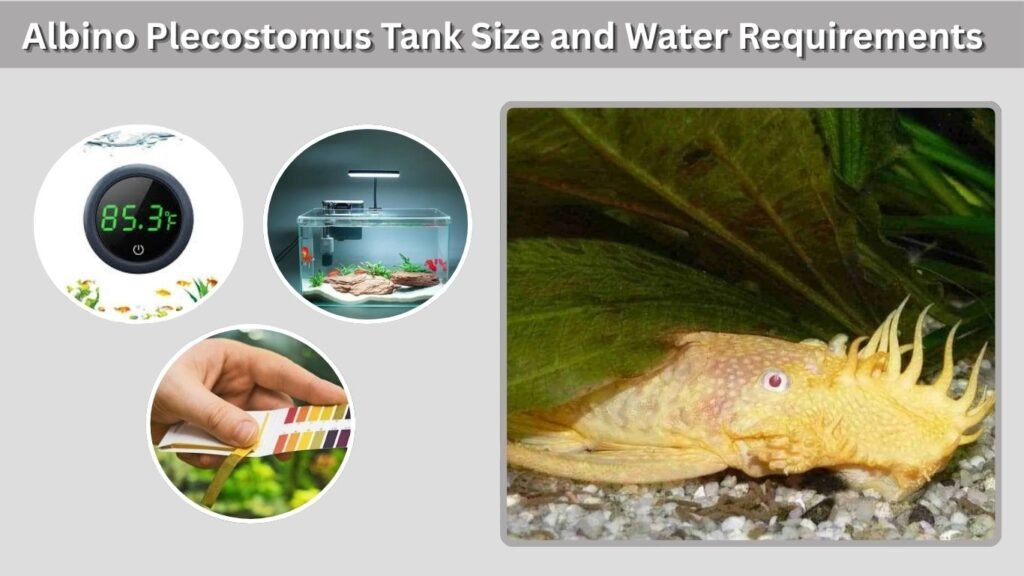
Providing the correct aquarium environment is essential for healthy albino plecostomus care. These fish spend much of their time resting, grazing, and exploring the lower areas of their habitat. Therefore, sufficient bottom space, stable water parameters, effective filtration, and suitable hiding places are more important than decorative aquarium features.
Recommended Tank Size
A single adult albino bristlenose pleco is best kept in an aquarium of approximately 25–30 gallons or larger.
Albino sailfin and other large plecostomus varieties may require 125 gallons or considerably more, depending on their adult size.
A 10-gallon aquarium is unsuitable as a permanent home for an adult albino bristlenose or larger pleco.
Water Temperature and Parameters
For most albino bristlenose plecos, suitable aquarium conditions include:
- Temperature: Approximately 72–80°F (22–27°C).
- pH level: Around 6.5–7.5.
- Ammonia: 0 ppm.
- Nitrite: 0 ppm.
- Nitrate: Ideally below 20–40 ppm.
- Water movement: Moderate, with good oxygenation.
These are general bristlenose guidelines; larger pleco species may have different requirements.
Aquarium Decorations
Albino plecos appreciate driftwood, smooth rocks, caves, and shaded resting areas. Driftwood provides grazing surfaces where natural biofilm develops.
Live plants can also create a comfortable environment. Avoid sharp decorations that might injure delicate fins or skin.
What Do Albino Plecostomus Eat?
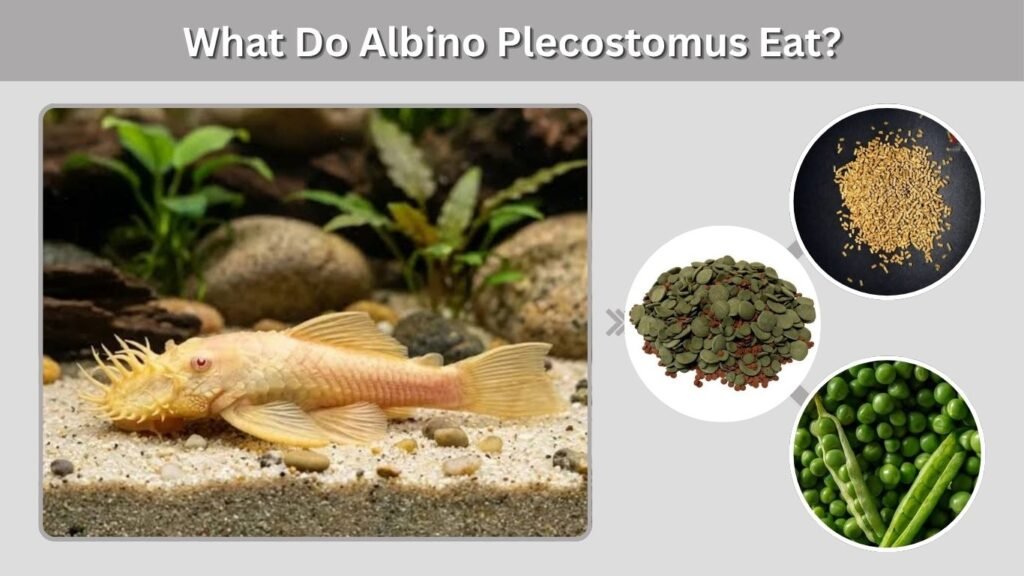
Albino plecostomus fish are commonly described as algae eaters, but their dietary needs extend beyond aquarium algae. Most bristlenose varieties consume significant amounts of plant material, while other pleco species may require more varied diets. Offering appropriate supplementary foods helps maintain healthy growth, digestion, and overall condition.
Best Foods for Albino Plecos
Recommended foods include:
- High-quality sinking algae wafers.
- Spirulina-based pellets.
- Blanched zucchini and cucumber.
- Small portions of spinach or shelled peas.
- Occasional protein-rich food suitable for the species.
- Naturally occurring algae and biofilm.
Feeding Frequency
Most albino bristlenose plecos benefit from daily supplementary feeding, adjusted according to their age and available natural food.
Since these fish are often most active after dark, evening feeding can be effective. Remove uneaten fresh vegetables before they spoil.
Never assume that aquarium algae alone will provide a complete diet.
Albino Plecostomus Behavior and Tank Mates
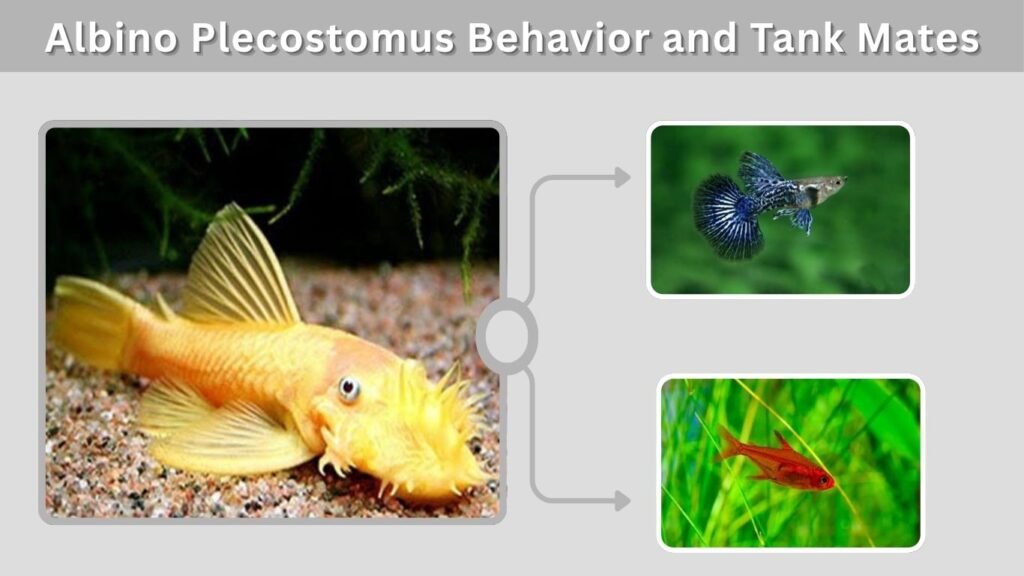
Albino plecostomus fish are generally peaceful, although temperament varies among species and individuals. They spend considerable time attached to aquarium surfaces or resting beneath decorations. Many become more active during the evening and nighttime hours, particularly when searching for food or exploring their surroundings.
Compatible Tank Mates
Albino bristlenose plecos can usually coexist with peaceful community fish such as tetras, guppies, rasboras, and corydoras.
However, aggressive fish may harass them. Multiple male plecos can also compete over caves and territories, particularly in smaller aquariums.
Male vs. Female Albino Plecostomus
In mature albino bristlenose plecos, males generally develop large, branching facial bristles.
Females usually have fewer, shorter bristles concentrated near the edges of their snouts.
Sex identification in juvenile fish can be difficult, and larger plecostomus species may require different identification methods.
Albino Plecostomus Breeding and Eggs
Breeding albino plecostomus fish is possible in captivity, particularly with bristlenose varieties. Successful reproduction requires mature, healthy fish, suitable water conditions, and secure spawning caves. However, larger sailfin or common plecos are considerably more difficult to breed in typical home aquariums.
Breeding Process
Albino bristlenose plecos commonly spawn inside narrow caves.
The female deposits a cluster of yellowish-orange eggs, which the male guards and fans to circulate oxygen-rich water.
Depending on temperature and conditions, eggs generally hatch within approximately 5–10 days. The developing fry initially rely on their yolk sacs before beginning to consume suitable soft foods and biofilm.
Albino Plecostomus Lifespan and Health

Albino plecostomus lifespan varies according to species, genetics, and aquarium maintenance. Bristlenose plecos commonly live around 5–10 years with appropriate care, while some larger pleco species may survive 10–15 years or longer. Poor nutrition, overcrowding, unstable temperatures, and excessive waste accumulation can shorten their lives.
Common Health Problems
Poor water quality and improper feeding can cause several problems, including:
- Fin damage: Injuries from aggressive tank mates or sharp decorations.
- Poor body condition: Insufficient food or inappropriate nutrition.
- Stress: Overcrowding, bright lighting, or inadequate hiding spaces.
- Infections: Skin or fin problems associated with injury or poor water quality.
How to Keep Albino Plecos Healthy
Maintain a fully cycled aquarium, test water regularly, and perform appropriate partial water changes.
Provide a balanced diet, sufficient hiding places, and suitable tank mates. Observe changes in appetite, breathing, body condition, and behavior so potential health problems can be addressed early.
FAQs
1. Are Albino Plecostomus Rare?
Albino plecos are unusual in the wild, but several varieties are regularly bred for the aquarium trade. Albino bristlenose plecos are relatively common, while certain selectively bred longfin varieties may be less widely available.
2. Can an Albino Plecostomus Live in a 10-Gallon Tank?
A 10-gallon tank is not recommended as a permanent aquarium for an adult albino plecostomus. Most bristlenose plecos need approximately 25–30 gallons or more, while larger varieties require substantially greater space.
3. Do Albino Plecostomus Clean Fish Tanks?
Albino plecos graze on certain types of algae growing on aquarium surfaces. However, they also produce waste and require supplementary feeding. They cannot replace regular aquarium cleaning, filtration, or water changes.
4. Can Albino Plecostomus Live With Betta Fish?
Albino bristlenose plecos may coexist with peaceful bettas in adequately sized aquariums. However, compatibility depends on individual temperament, available hiding places, and water conditions. Some bettas may chase or attack other fish.
5. How Long Do Albino Plecostomus Live?
Albino bristlenose plecos commonly live approximately 5–10 years under good aquarium conditions. Larger varieties, including some sailfin plecos, may live 10–15 years or longer when provided with suitable housing, nutrition, and maintenance.