
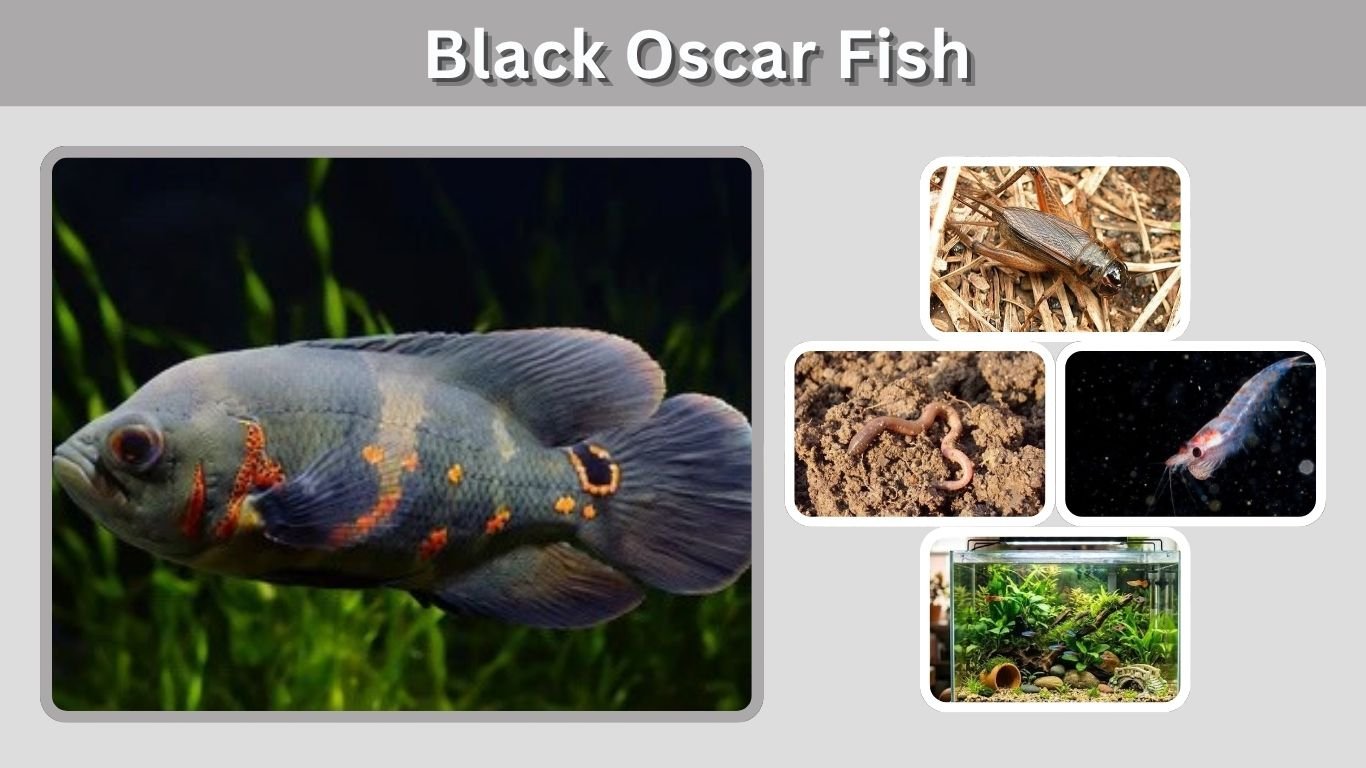
The black Oscar fish is a striking color form of the Oscar cichlid (Astronotus ocellatus), known for its dark body, large eyes, strong personality, and intelligent behavior. Some black Oscars are nearly solid-colored, while black tiger Oscars display bright orange or red markings over a dark background. These South American freshwater fish grow quickly and require a large, well-filtered aquarium. With proper water quality, nutrition, space, and compatible tank mates, a black Oscar can become an interactive aquarium fish that lives for many years.
What Is a Black Oscar Fish?
The term black Oscar fish generally describes dark-colored varieties of Astronotus ocellatus rather than a separate species. Wild-type Oscars naturally have dark greenish-brown or blackish bodies with orange, red, or yellow markings. Selective breeding has produced several aquarium varieties, including tiger, red, albino, black-and-white, and long-fin forms.
Black Oscar Appearance
Common characteristics include:
- Deep black, charcoal, or dark brown body
- Large rounded head and thick lips
- Broad dorsal and anal fins
- Orange or red markings in many varieties
- Large, expressive eyes
- Rounded tail fin
- Dark fins with lighter edging
- Possible eye-like spot near the tail
FishBase describes the natural species as dark-bodied with orange markings and often a black, orange-rimmed spot near the base of the tail.
Black Tiger Oscar Fish
The black tiger Oscar fish is one of the most familiar forms. It typically has a black background covered by irregular red-orange bands or patches.
Juveniles can look dramatically different from adults because Oscar coloration and patterns change with development and behavior. Tiger Oscars often develop richer contrast as they mature.
Are Solid Black Oscars Real?
Very dark Oscars do occur in the aquarium trade, but names such as “full black,” “solid black,” or “black velvet Oscar” are often breeder or seller descriptions rather than scientifically recognized varieties.
Color can also vary with age, lighting, stress, genetics, dominance, and water conditions.
Black Oscar Fish Size and Growth
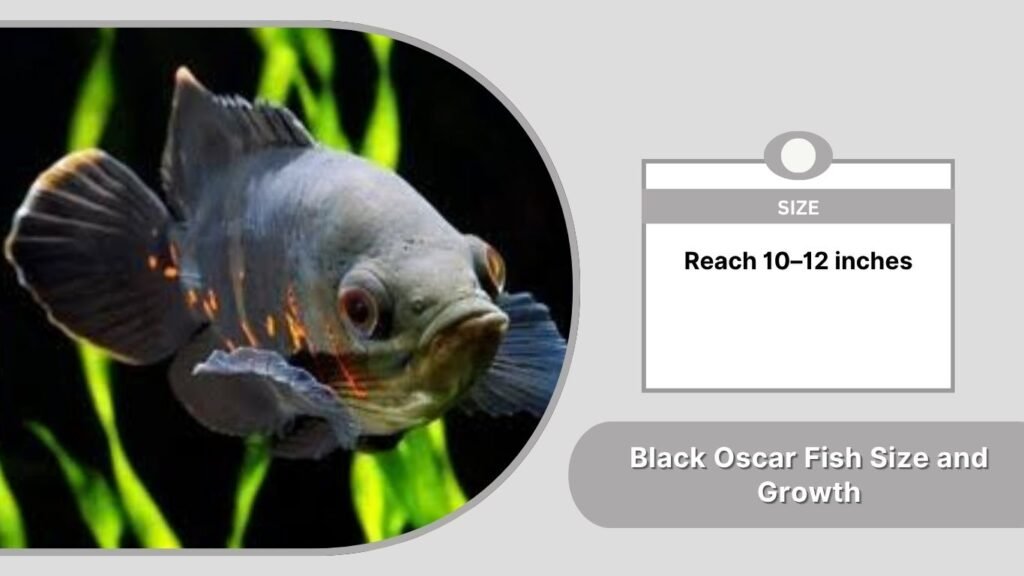
Oscar cichlids become much larger than the small juveniles commonly sold in aquarium stores. Captive adults frequently reach 10–12 inches, while wild or exceptionally large specimens can exceed that. FishBase records a maximum total length of 45.7 cm, approximately 18 inches, although typical aquarium Oscars are usually smaller.
Black Oscar Size at a Glance
Typical growth characteristics include:
- Store juveniles: Often 2–3 inches
- Common adult aquarium size: Around 10–12 inches
- Possible larger size: 12 inches or more
- Published maximum: About 45.7 cm
- Adult body: Deep, heavy, and muscular
- Growth: Especially rapid during the first year
Aquarium Co-Op notes that Oscars may reach roughly two-thirds of their adult size during their first 6–12 months.
Full-Grown Black Oscar Fish
A full-grown black Oscar is a substantial cichlid with a broad body and powerful fins. Owners who purchase a tiny juvenile should therefore plan for adult housing from the beginning.
Keeping a growing Oscar in an undersized aquarium can make water quality difficult to maintain and restrict normal movement.
Black Oscar Fish Tank Setup

A black Oscar produces considerable waste and needs significantly more aquarium space than small community fish. Strong biological filtration, stable warm water, regular maintenance, and open swimming room are more important than elaborate decoration. Oscars also like rearranging their surroundings, so delicate plants and unstable decorations frequently do not remain where the aquarist originally placed them.
Recommended Aquarium Conditions
A practical setup includes:
- Tank size: About 75 gallons or larger for one adult
- Two Oscars: Around 90–100 gallons or larger
- Temperature: Approximately 74–80°F (23–27°C)
- pH: Around 6.0–8.0
- Filtration: Strong enough for a heavy bioload
- Current: Moderate rather than excessively strong
- Decor: Large, smooth, stable pieces
- Swimming space: Plenty of open water
Aquarium Co-Op recommends around 75 gallons for one Oscar and at least 90–100 gallons for two.
Substrate and Decorations
Oscars frequently dig, push objects, and uproot plants. Sand or smooth gravel can work well if it is kept clean.
Avoid unstable rock piles or sharp decorations because a large Oscar can move them or injure itself while rearranging the aquarium. Large driftwood and firmly secured decorations are generally more practical.
Water Quality
Because Oscars eat heavily and produce substantial waste, poor water quality can develop quickly in an inadequately filtered tank.
Consistent maintenance is essential. Monitor ammonia, nitrite, and nitrate, clean mechanical filtration as necessary, and perform regular partial water changes rather than waiting until the aquarium visibly looks dirty.
What Does a Black Oscar Fish Eat?
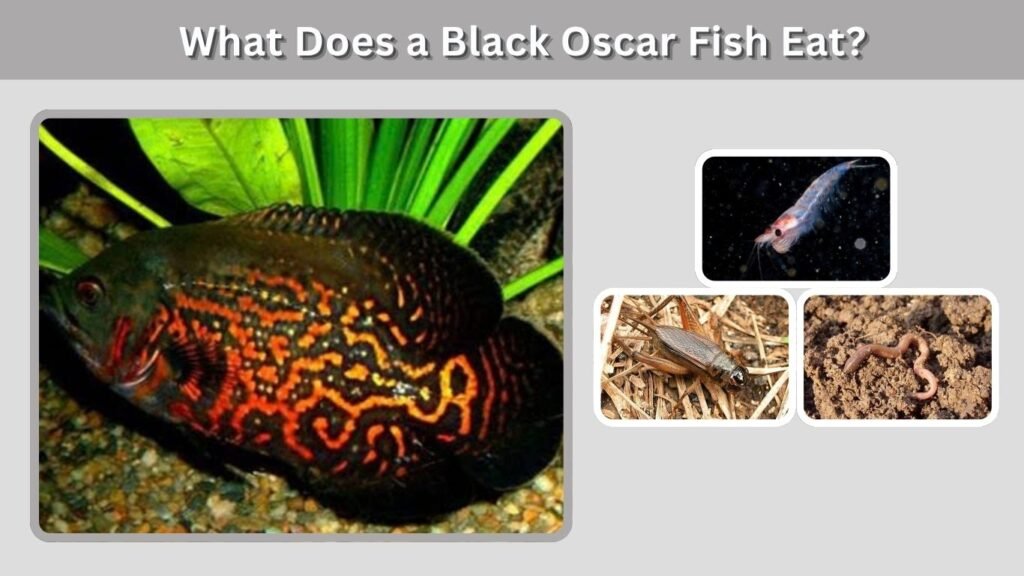
Oscars are omnivorous but show a strong preference for animal-based foods. In nature, their diet can include small fish, crustaceans, worms, insects, mollusks, plant material, and other available foods. A captive Oscar should receive a balanced staple diet rather than relying entirely on feeder fish or a single type of treat.
Best Foods for Black Oscars
Suitable foods include:
- Quality large-cichlid pellets
- Krill
- Earthworms
- Crickets
- Mealworms as occasional treats
- Appropriate shrimp
- Snails
- Other nutritionally suitable prepared foods
A varied diet helps provide a broader range of nutrients than feeding one food exclusively.
Avoid Overfeeding
Oscars are enthusiastic eaters and often continue begging after they have eaten enough.
Overfeeding increases waste, can contribute to obesity, and places additional pressure on filtration. Feed an amount appropriate for the fish’s age and body condition rather than responding every time it approaches the glass.
Black Oscar Fish Behavior and Tank Mates
Black Oscars are intelligent, interactive cichlids. Many learn to recognize the person who feeds them and approach the front of the aquarium. However, they are also territorial, especially when breeding. Individual temperament varies, so a combination that works in one aquarium may fail in another even when tank size appears adequate.
Possible Tank Mates
Depending on tank size and temperament, possibilities may include:
- Silver dollars
- Certain larger plecos
- Some medium or large South American cichlids
- Other similarly sized peaceful fish too large to swallow
Very small fish and invertebrates are poor choices because an Oscar’s large mouth allows it to consume animals that fit inside.
Can Two Black Oscars Live Together?
Two Oscars may live successfully together in a sufficiently large aquarium, especially if they form a compatible pair.
However, compatibility is never guaranteed. One fish may become dominant and continuously bully the other. Aquarists keeping multiple Oscars should be prepared to separate individuals if persistent aggression develops.
Why Is My Black Oscar Fish Changing Color?
Oscar color can change naturally. A black Oscar may become darker, lighter, grayish, or temporarily display different patterns depending on its surroundings and behavior. Color variation does not automatically indicate disease. Research summarized by Animal Diversity Web notes that Oscars can change color patterns in association with behavioral responses.
Black Oscar Turning Gray or White
Temporary fading can occur after stress, transport, environmental changes, territorial conflicts, or changes in lighting.
A fish that remains active, eats normally, and shows no physical lesions may simply be displaying a temporary color response. Persistent fading combined with lethargy, abnormal breathing, appetite loss, sores, or unusual swimming warrants closer examination of water conditions and health.
Black Spots and Darkening
Darkening may also be normal for naturally dark Oscars.
However, sudden color changes should prompt you to test the aquarium water first. Ammonia or nitrite should not be detectable in a properly functioning established aquarium, and unstable conditions can stress fish even before obvious disease appears.
Black Oscar Fish Lifespan and Health
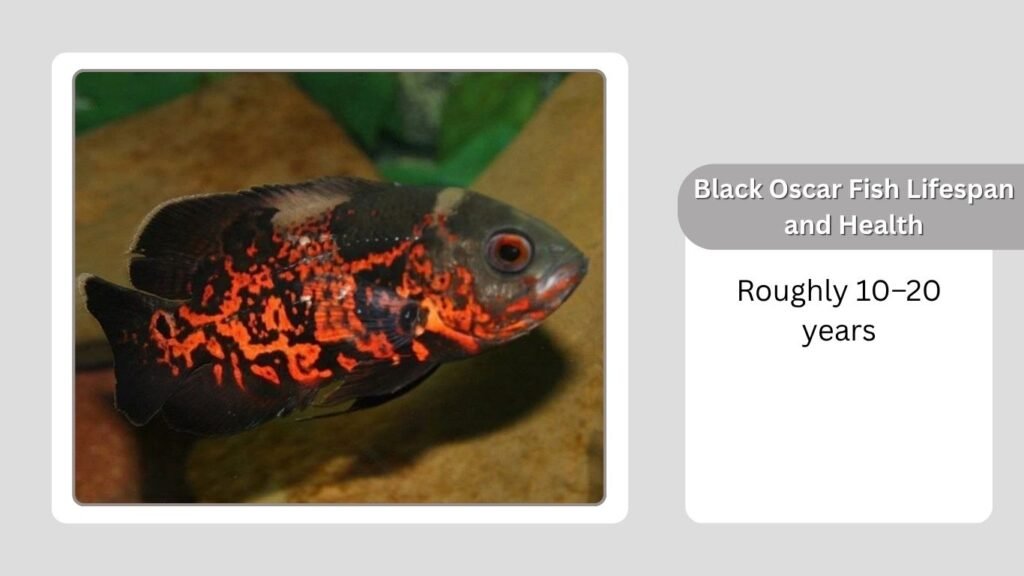
Keeping an Oscar is a long-term commitment. Aquarium sources commonly estimate a captive lifespan of roughly 10–20 years with appropriate husbandry, although scientific data on typical captive longevity are limited. Their long potential lifespan makes proper adult tank size and sustainable maintenance important from the beginning.
Common Health Concerns
One well-known issue in large cichlids is hole-in-the-head disease, also called head and lateral line erosion. Poor nutrition and environmental conditions may contribute to health problems, so maintaining clean water and a varied diet is important.
Regular observation is equally useful. Changes in appetite, breathing, swimming, skin, fins, or feces can provide early warning that something is wrong.
FAQs
Black Oscars are popular because their dark coloration and interactive behavior make them visually impressive aquarium fish. However, their rapid growth and heavy bioload mean they require substantially more space and filtration than their juvenile size suggests.
1. How big does a black Oscar fish get?
Most captive Oscars reach around 10–12 inches, although larger individuals are possible. FishBase records a published maximum total length of 45.7 cm.
2. Is a black Oscar a different species?
No. Black Oscars are color varieties of Astronotus ocellatus, the same species as tiger, red, albino, and other common Oscar forms.
3. What size tank does a black Oscar need?
A 75-gallon aquarium is a more comfortable target for one adult Oscar, while two usually require approximately 90–100 gallons or more depending on dimensions and temperament.
4. Why is my Oscar fish turning black?
Oscars can naturally change their coloration with mood, behavioral state, environment, age, and stress. Sudden darkening accompanied by abnormal behavior should prompt a water-quality check.
5. How long does a black Oscar fish live?
Captive Oscars are commonly reported to live around 10–20 years when provided with appropriate space, water quality, diet, and long-term care.