
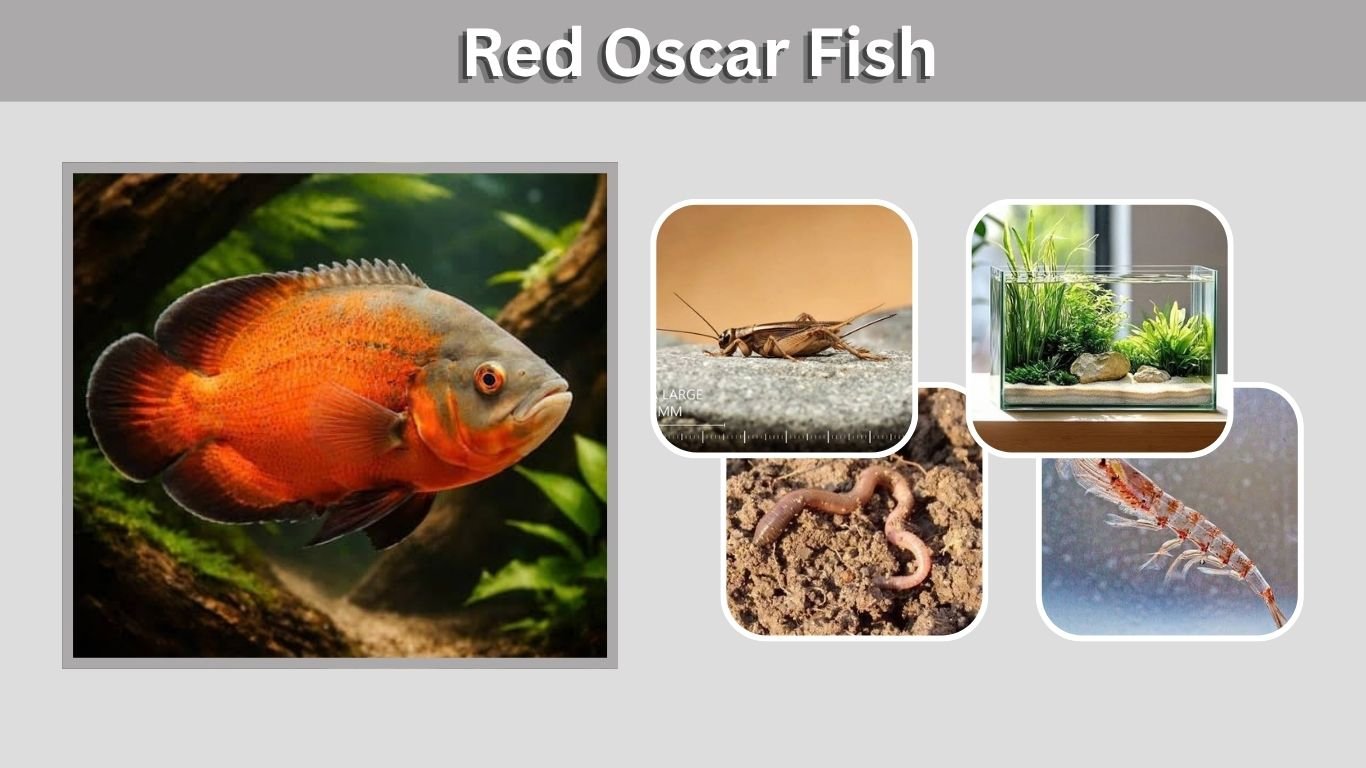
The red Oscar fish is a striking freshwater cichlid known for its deep red-orange coloration, large adult size, intelligence, and bold personality. Popular varieties include red tiger, super red, fire red, chili red, and albino red Oscars. Although their colors differ, these fish share similar care requirements and need a spacious, well-filtered aquarium. Understanding their size, diet, tank conditions, temperament, lifespan, and color varieties can help aquarists provide a healthier environment for these impressive South American cichlids.
What Is a Red Oscar Fish?
Red Oscars are color varieties of Astronotus ocellatus, the same species commonly called the Oscar fish. Selective breeding has produced individuals with larger areas of red, orange, or reddish coloration than wild-type Oscars. Their appearance can vary greatly, from black bodies covered with fiery red patches to almost solid reddish-orange fish.
Red Oscar Fish Identification
Typical red Oscar characteristics include:
- Deep red, orange, or reddish markings
- Dark brown or black background coloration
- Large oval-shaped body
- Thick lips and broad head
- Rounded fins
- Powerful jaw structure
- Large eyes
- Strong, muscular body
Juveniles may look different from mature adults because patterns and color intensity often change as they grow.
Are Red Oscars a Separate Species?
No. Red Oscars are not a separate species from tiger Oscars, albino Oscars, or other commonly sold Oscar varieties.
They are all forms of Astronotus ocellatus. Terms such as super red, fire red, ruby red, and chili red are commonly used to describe appearance and breeding lines rather than separate scientifically recognized species.
Red Oscar Fish Types and Colors
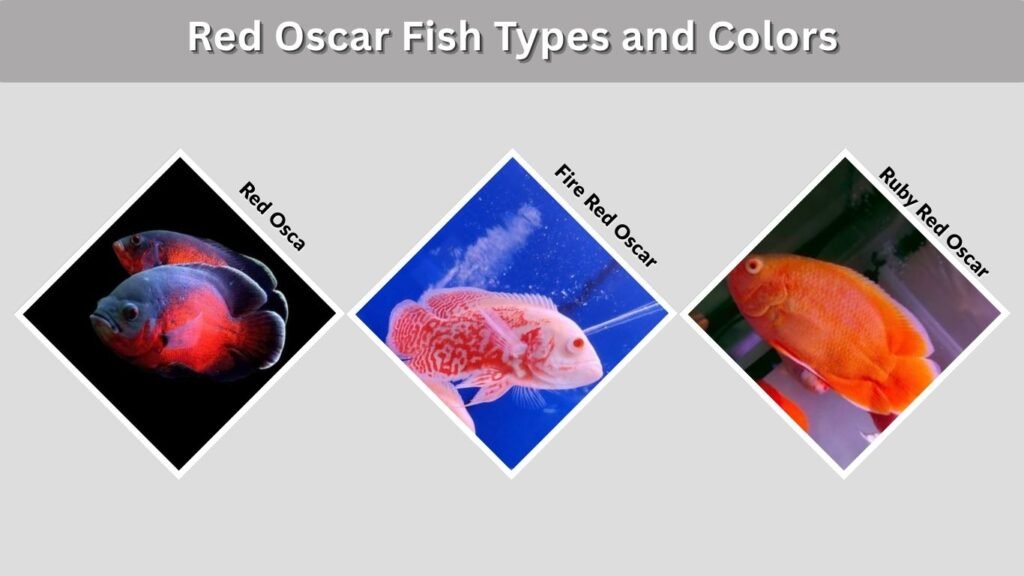
Selective breeding has produced many colorful Oscar varieties. Names are not always standardized between breeders and aquarium stores, so two fish sold under different color names may look quite similar. The quality and intensity of red coloration also depend on genetics, age, health, lighting, stress, and nutrition.
Popular Red Oscar Varieties
Commonly marketed types include:
- Red Oscar: Dark-bodied fish with extensive red-orange coloration
- Red Tiger Oscar: Black body with irregular red or orange tiger-like markings
- Super Red Oscar: Selected for especially extensive bright red coloration
- Fire Red Oscar: Bright orange-red variety
- Chili Red Oscar: Intensely red selectively bred form
- Ruby Red Oscar: Deep reddish variety
- Red Lutino Oscar: Pale-bodied fish with orange or red markings
- Albino Red Oscar: Very light body with strong reddish-orange patterns
- Copper Red Oscar: Red coloration with copper or bronze tones
Red Tiger Oscar Fish
The red tiger Oscar is one of the most recognizable varieties. Its body is typically black or very dark brown with bright red-orange markings that form irregular bands, patches, or tiger-like patterns.
Color placement varies between individual fish. Some have extensive red across their flanks, while others retain much more dark coloration.
Super Red Oscar Fish
Super red Oscars are bred for extensive red coloration. High-quality individuals may display large areas of red-orange across their sides, sometimes with relatively little dark patterning.
Their coloration may become more noticeable as they mature, although genetics largely determines the maximum intensity they can achieve.
How Big Do Red Oscar Fish Get?
Red Oscars grow into large, heavy-bodied aquarium fish. Their attractive juvenile appearance sometimes causes inexperienced owners to place them in small aquariums, but they grow rapidly under good conditions. Adult size requires significantly more swimming space, filtration, and maintenance than a young Oscar initially appears to need.
Full-Grown Red Oscar Size
A mature red Oscar commonly reaches:
- Around 10–12 inches in captivity
- Occasionally larger under excellent conditions
- A thick, muscular adult body
- Considerable weight compared with small aquarium fish
Genetics, nutrition, water quality, and aquarium size all influence growth.
How Quickly Do Red Oscars Grow?
Juvenile Oscars can grow rapidly during their first year when provided with good food and clean water.
Growth may slow as they approach maturity. An undersized aquarium should not be used intentionally to limit growth because cramped conditions and poor water quality can harm the fish rather than safely keeping it small.
Red Oscar Fish Tank Size and Setup
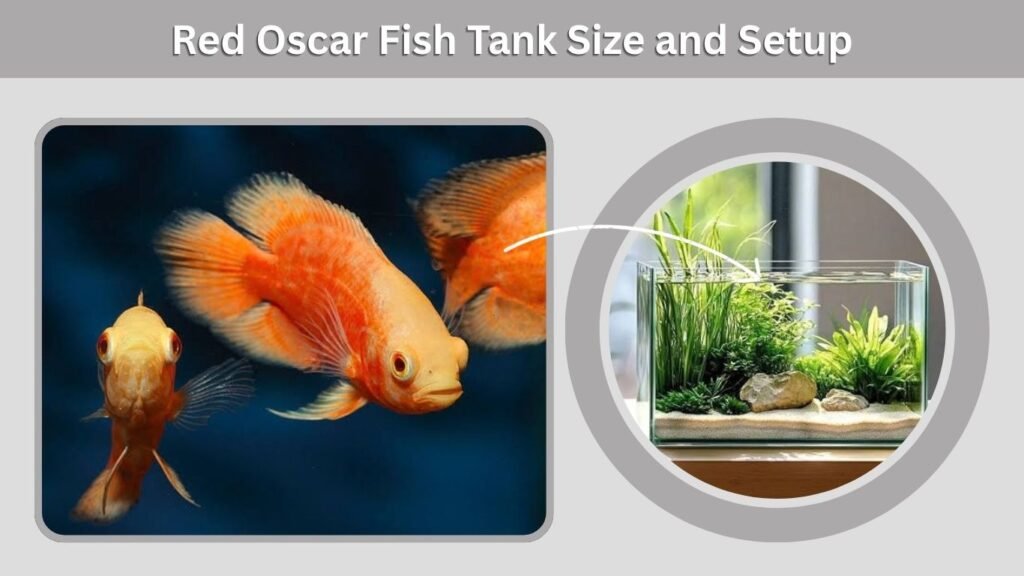
A properly sized aquarium is one of the most important parts of red Oscar care. These fish need room to swim, turn comfortably, establish territory, and grow naturally. They are also messy feeders and produce substantial waste, meaning filtration capacity and water volume become especially important.
Recommended Tank Setup
A good red Oscar aquarium should include:
- Around 75 gallons or more for one adult Oscar
- Larger tanks for multiple large fish
- Strong biological and mechanical filtration
- Secure aquarium lid
- Heater
- Open swimming space
- Smooth rocks or sturdy decorations
- Regular partial water changes
- Reliable water-testing equipment
A pair of Oscars generally needs considerably more room than a single adult.
Substrate and Decorations
Red Oscars are known for rearranging their environment. They may move gravel, push decorations, uproot plants, or dig in the substrate.
Heavy decorations should be positioned securely so the fish cannot cause them to fall.
Sand, fine gravel, or a bare-bottom setup can all work depending on maintenance preference. Sharp decorations should be avoided because large Oscars can injure themselves during sudden movements.
Live Plants With Red Oscars
Keeping live plants with Oscars can be challenging.
The fish may dig around roots, move plants, or damage delicate leaves. Hardy plants attached to rocks or wood may have a better chance of surviving than rooted species, but even these can be disturbed.
Artificial plants or durable aquascaping are often easier in an Oscar aquarium.
Red Oscar Fish Water Conditions
Stable water quality is essential for maintaining healthy coloration, appetite, and long-term health. Oscars produce substantial amounts of waste, so inadequate filtration can quickly lead to deteriorating water conditions. Regular testing and water changes are especially important in tanks containing multiple large cichlids.
Important Water Conditions
Aim for:
- Warm tropical water
- Stable temperature around 74–81°F
- Zero ammonia
- Zero nitrite
- Controlled nitrate levels
- Stable pH appropriate for the fish
- Good surface movement
- Strong filtration
Avoid sudden temperature or chemistry changes.
Why Filtration Matters
Oscar fish eat heavily and produce substantial solid and dissolved waste.
A filter designed only for a lightly stocked aquarium may struggle with an adult Oscar. Strong biological filtration helps process toxic ammonia and nitrite, while mechanical filtration captures suspended debris.
Even excellent filtration does not replace regular partial water changes.
What Do Red Oscar Fish Eat?
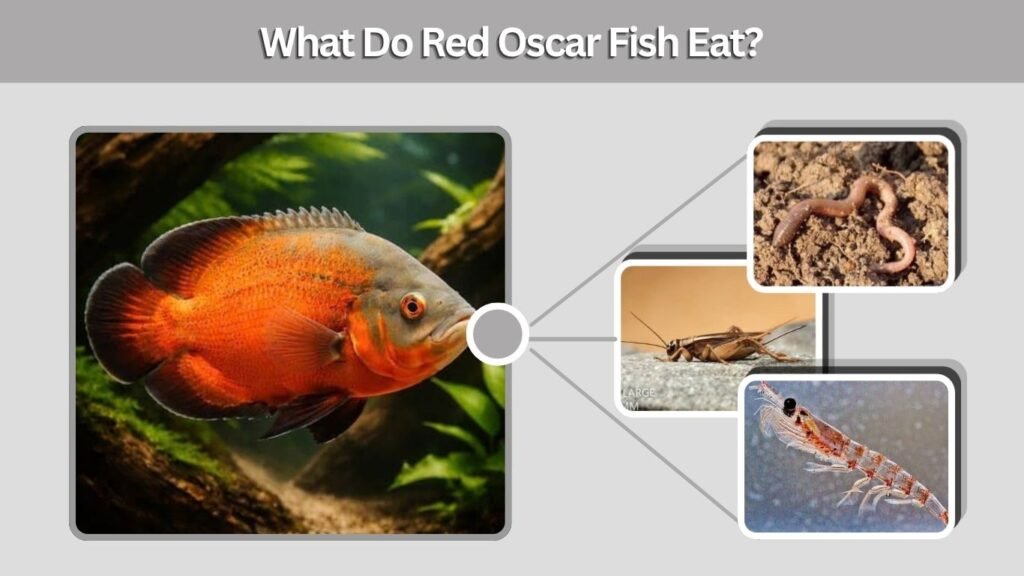
Red Oscars are omnivorous predators with strong appetites. A varied diet supports healthy growth and coloration better than relying exclusively on one food type. Overfeeding should be avoided because uneaten food quickly pollutes the water and obesity can create long-term health problems.
Good Foods for Red Oscars
Suitable foods include:
- High-quality Oscar or cichlid pellets
- Krill
- Shrimp
- Earthworms
- Crickets and suitable insects
- Appropriate frozen foods
- Occasional plant-containing prepared foods
- Nutritionally balanced specialty cichlid foods
A high-quality pellet can form the nutritional foundation of the diet.
Food and Red Coloration
Nutrition can influence how vivid an Oscar appears, but food cannot completely transform genetically weak coloration into an intense red.
Foods containing appropriate carotenoids may support natural red and orange pigmentation. Healthy coloration also depends on clean water, low stress, proper lighting, and good overall nutrition.
Should You Feed Live Fish?
Regularly feeding feeder fish is generally unnecessary.
Feeder fish may introduce parasites or infectious disease into the aquarium, and some commonly sold feeders are nutritionally poor. Safer alternatives include quality prepared foods, insects, shrimp, worms, and properly handled frozen foods.
Red Oscar Fish Temperament
Red Oscars are intelligent, territorial cichlids with individual personalities. Some tolerate other large fish reasonably well, while others aggressively defend their space. Their behavior may also change as they mature or form breeding pairs.
Are Red Oscar Fish Aggressive?
They can be aggressive, particularly toward:
smaller fish, competing Oscars, or similarly territorial cichlids.
An Oscar may chase, nip, or intimidate tank mates. Small fish may simply be swallowed.
A large aquarium reduces competition, but space alone cannot guarantee compatibility.
Can Two Red Oscars Live Together?
Two Oscars can sometimes live together successfully, especially when raised together in a sufficiently large aquarium.
However, they may also fight as they mature. Owners should monitor for persistent chasing, torn fins, inability to feed, or one fish constantly hiding.
Separation may be necessary when aggression becomes severe.
Red Oscar Fish Lifespan

Red Oscars can live for many years, making them a long-term aquarium commitment. Their lifespan depends far more on husbandry than on whether they are red, tiger, or another color variety. Stable water quality, proper tank size, good nutrition, and early attention to health problems all influence longevity.
How Long Do Red Oscars Live?
A well-maintained red Oscar commonly lives about 10–15 years, with some individuals potentially living longer.
Long-term health depends on:
- Adequate aquarium space
- Clean water
- Stable temperature
- Balanced nutrition
- Low chronic stress
- Appropriate tank mates
- Consistent maintenance
Red Oscar Fish Male vs Female
Male and female red Oscars look extremely similar, especially outside breeding periods. Color intensity, body size, or head shape alone cannot reliably determine sex. This makes sexing Oscars more difficult than many aquarium fish.
Can You Tell Male and Female Oscars Apart?
Visual identification is unreliable.
The most dependable differences are associated with reproductive anatomy when mature fish are preparing to breed. Females have an egg-laying tube, while males have a different-shaped reproductive papilla.
Behavior alone should not be treated as definite proof of sex.
Keeping Red Oscars Healthy
A healthy Oscar is generally alert, responsive, interested in food, and actively aware of activity outside its aquarium. Because these fish can be expressive, changes in behavior may provide an early warning that something is wrong.
Signs to Watch For
Monitor for:
- Loss of appetite
- Rapid breathing
- Clamped fins
- White spots
- Open wounds
- Cloudy eyes
- Unusual hiding
- Abnormal swimming
- Fading coloration
- Holes or lesions around the head
Check water quality first whenever an Oscar suddenly behaves differently.
FAQs
1. How big do red Oscar fish get?
Red Oscars commonly grow about 10–12 inches long in captivity, although some individuals can become larger when provided with excellent conditions.
2. What is a red tiger Oscar fish?
A red tiger Oscar is a color variety of Astronotus ocellatus characterized by a dark body covered with irregular red or orange markings.
3. What size tank does a red Oscar need?
A single adult Oscar generally needs around a 75-gallon aquarium or larger. Multiple Oscars or large tank mates require substantially more space.
4. How long do red Oscar fish live?
With good aquarium care, red Oscars commonly live around 10–15 years and may occasionally live longer.
5. What is the difference between a red Oscar and a super red Oscar?
Both are color forms of the same species. “Super red” usually describes selectively bred Oscars displaying more extensive or intense red coloration, while ordinary red Oscars may retain more black or dark markings.