
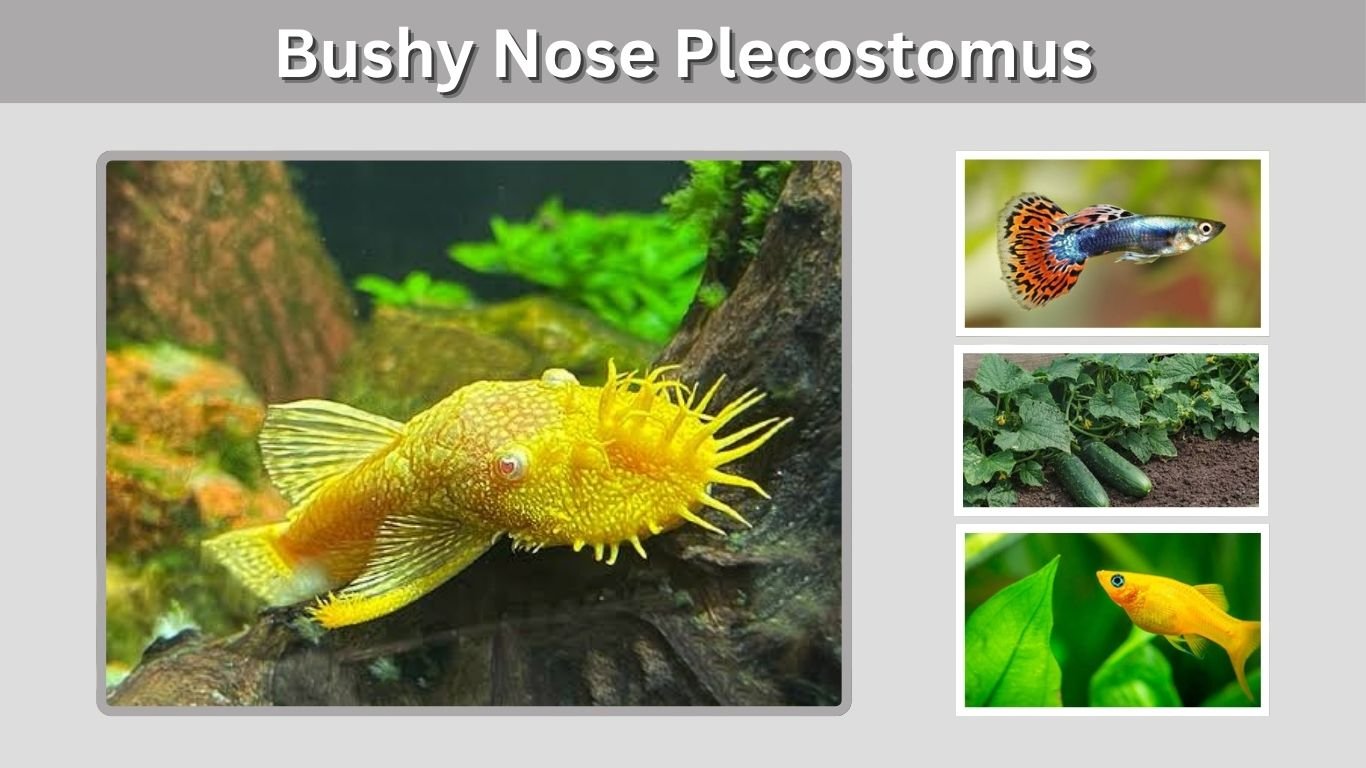
The bushy nose plecostomus is a popular freshwater aquarium fish known for its unusual facial bristles, peaceful personality, and algae-eating habits. Also called the bristlenose pleco, this small catfish is an excellent choice for many community aquariums. Unlike larger plecostomus species, it remains relatively compact and is easier to accommodate in home tanks. Available in several attractive varieties, including albino, super red, and longfin, the bushy nose plecostomus is particularly appealing to fishkeepers looking for a hardy, interesting bottom-dwelling fish.
What Is a Bushy Nose Plecostomus?
The bushy nose plecostomus belongs to the genus Ancistrus in the family Loricariidae. It is a type of armored suckermouth catfish associated with freshwater habitats in South America. Common aquarium strains are extensively captive-bred, and their precise species identification is sometimes uncertain.
These fish are appreciated for their algae-grazing behavior, distinctive appearance, and adaptability to established freshwater aquariums.
Appearance and Size
Bushy nose plecostomus fish have flattened bodies, broad heads, armored skin, and sucker-shaped mouths. Mature males develop prominent fleshy bristles around their snouts, while females usually have fewer, smaller bristles or none at all.
Most adults grow approximately 4–6 inches long. Their relatively small size makes them more manageable than common plecos, which can exceed 18 inches.
Popular Types of Bushy Nose Plecostomus
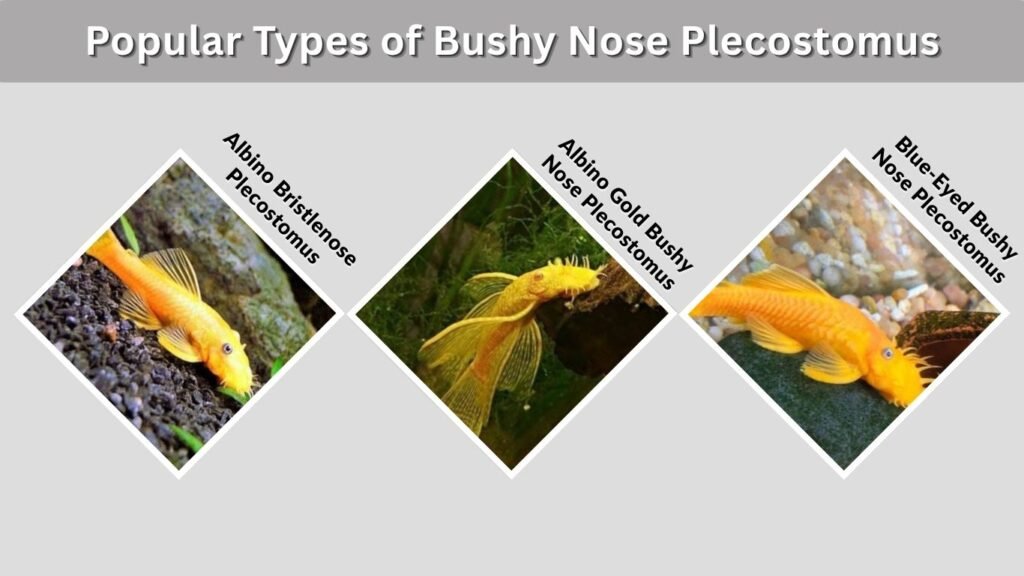
Several attractive bushy nose plecostomus varieties are available through selective breeding. Although they share similar care requirements, their colors, eye pigmentation, and fin shapes can differ considerably.
Understanding these variations helps aquarists select fish that complement their aquarium while avoiding confusion between similarly named varieties.
1. Albino Bushy Nose Plecostomus
The albino bushy nose plecostomus features a pale yellow, cream, or golden body with pinkish-red eyes.
Its lack of normal dark pigmentation makes it particularly noticeable against darker aquarium decorations. Albino varieties generally require the same water conditions and diet as standard bristlenose plecos.
2. Albino Gold Bushy Nose Plecostomus
The albino gold bushy nose plecostomus displays a rich golden-yellow coloration.
Its bright appearance makes it popular in planted aquariums. The term gold is sometimes used loosely by sellers, so checking the eye color helps distinguish true albino fish from other yellow varieties.
3. Blue-Eyed Bushy Nose Plecostomus
The blue-eyed bushy nose plecostomus is especially attractive because of its unusual eye pigmentation.
Blue-eyed lemon bristlenose plecos typically have yellow bodies and blue eyes. They are not true albinos, which have reddish or pink eyes. These fish are often more expensive than common varieties.
4. Super Red Bushy Nose Plecostomus
The super red bushy nose plecostomus has a vibrant orange-red body that stands out in freshwater aquariums.
Its coloration results from selective breeding. Like other bristlenose varieties, it needs clean water, hiding places, and a balanced diet to remain healthy.
5. Albino Longfin Bushy Nose Plecostomus
The albino longfin bushy nose plecostomus combines pale coloration with elongated, flowing fins.
Sometimes sold as an albino longfin bristlenose, this variety requires additional care around sharp decorations. Smooth rocks and driftwood help reduce the possibility of fin damage.
Bushy Nose Plecostomus Tank Size and Setup
A suitable aquarium environment is essential for maintaining healthy bushy nose plecostomus fish. Although they are relatively hardy, they produce considerable waste and require adequate filtration.
A well-maintained aquarium should provide swimming space, sheltered resting areas, and surfaces for natural grazing. Stable water quality is more important than elaborate decorations.
Minimum Tank Size
A 20-gallon aquarium is a practical minimum recommendation for one adult bushy nose plecostomus.
A larger tank is preferable when keeping multiple fish or several community species. Male bristlenose plecos can become territorial, particularly around caves and feeding areas.
Water Parameters
Maintain the following conditions for a typical captive-bred bristlenose pleco:
- Temperature: 70–79°F (21–26°C)
- pH: Approximately 6.0–7.5
- Water hardness: 2–15 dGH
- Ammonia: 0 ppm
- Nitrite: 0 ppm
- Filtration: Efficient biological and mechanical filtration
- Water changes: Approximately 20–30% weekly, adjusted to water test results
Provide driftwood, smooth stones, and appropriately sized caves. These decorations create hiding places and help reduce stress.
What Do Bushy Nose Plecostomus Eat?
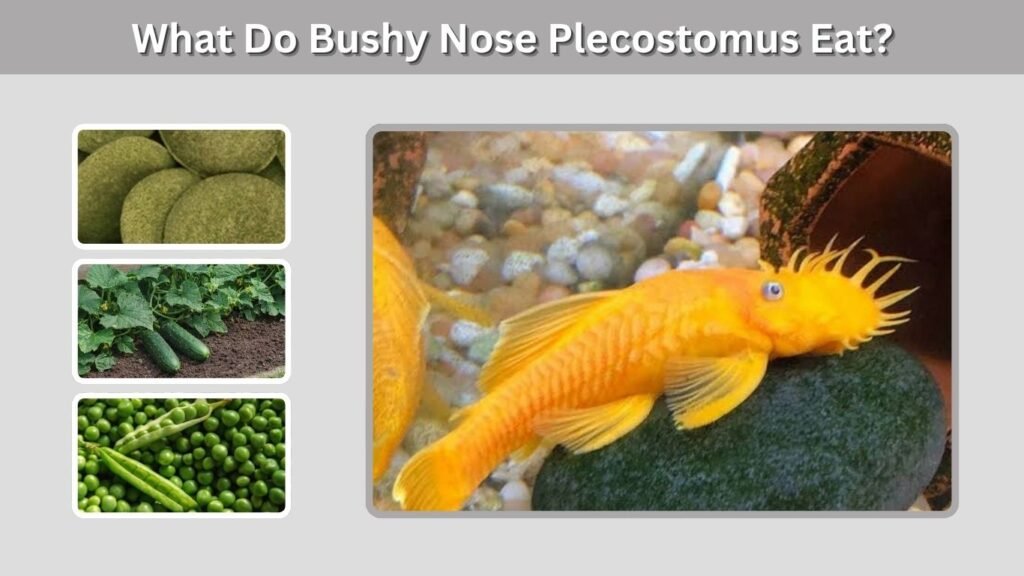
Bushy nose plecostomus fish are omnivorous grazers with a strong preference for plant-based foods and biofilm.
Although they consume aquarium algae, algae alone cannot provide complete nutrition. A varied feeding routine supports healthy growth, normal digestion, and successful reproduction.
Best Foods for Bushy Nose Plecostomus
Offer a combination of the following foods:
- Algae wafers: Provide convenient sinking nutrition.
- Zucchini: A nutritious vegetable that can be lightly blanched.
- Cucumber: Offers variety and additional moisture.
- Spinach: Can be offered occasionally in small portions.
- Shelled peas: Provide a useful vegetable supplement.
- Sinking pellets: Help provide balanced nutrients.
- Frozen bloodworms: Suitable as occasional protein-rich treats.
Feeding Schedule
Feed adult bushy nose plecos daily, using portions they can consume without leaving excessive waste.
Because they are often most active after sunset, evening feeding can work particularly well. Remove uneaten vegetables within several hours to prevent water deterioration.
Bushy Nose Plecostomus Temperament and Tank Mates
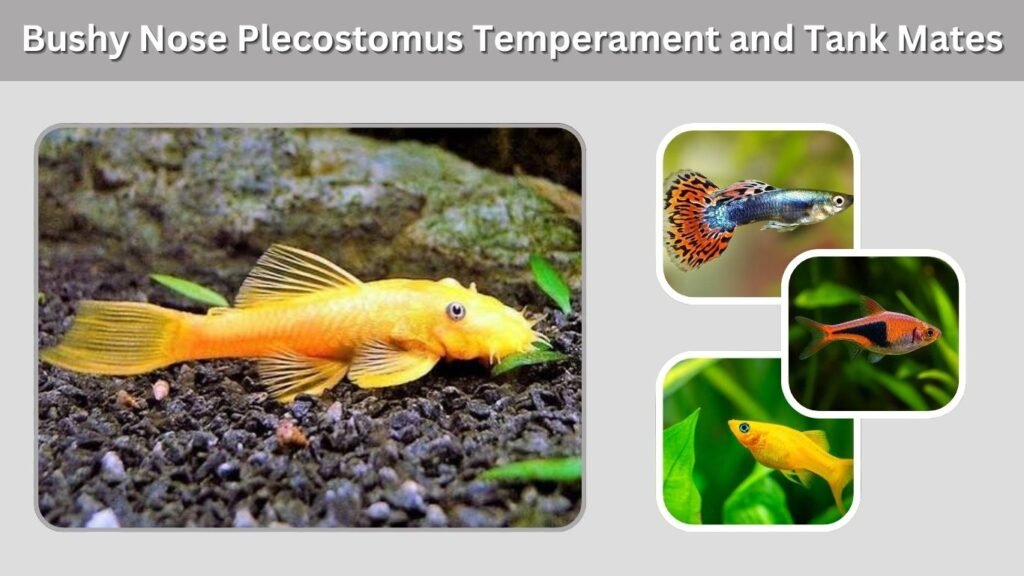
Bushy nose plecostomus fish are generally peaceful and coexist successfully with many community aquarium species.
They usually spend their time resting beneath decorations, exploring the bottom, or grazing on algae-covered surfaces. However, mature males may defend their preferred hiding places against other plecos.
Suitable Tank Mates
Compatible species may include:
- Neon tetras
- Harlequin rasboras
- Guppies
- Mollies
- Peaceful gouramis
- Corydoras catfish
Choose companions with compatible water requirements and avoid overcrowding the aquarium.
Provide additional caves when keeping more than one bottom-dwelling species. Avoid aggressive fish that may injure plecos or compete intensely for territory.
Bushy Nose Plecostomus Breeding and Eggs
Bushy nose plecostomus breeding is relatively straightforward compared with breeding many other pleco species.
Healthy adults may reproduce naturally in established aquariums when appropriate hiding places and stable water conditions are available. These fish are cave spawners, meaning females deposit their eggs inside protected spaces.
How Do Bushy Nose Plecostomus Breed?
During breeding, the male selects and guards a suitable cave. A receptive female enters and deposits a cluster of adhesive eggs, which the male fertilizes.
After spawning, the male remains inside the cave and protects the eggs. He fans them with his fins to maintain water circulation.
What Do Bushy Nose Plecostomus Eggs Look Like?
Bushy nose plecostomus eggs are typically round, relatively large, and yellow to orange.
Depending on temperature and other conditions, the eggs often hatch within approximately 4–10 days.
The newly hatched fry initially absorb nutrients from their yolk sacs before becoming free-swimming.
Caring for Bushy Nose Plecostomus Fry
Once the fry begin swimming independently, provide finely prepared vegetable foods and suitable sinking fry food.
Keep water conditions stable and protect young fish from strong filter intakes. A sponge filter can be particularly useful in a breeding aquarium.
Bushy Nose Plecostomus Lifespan and Health
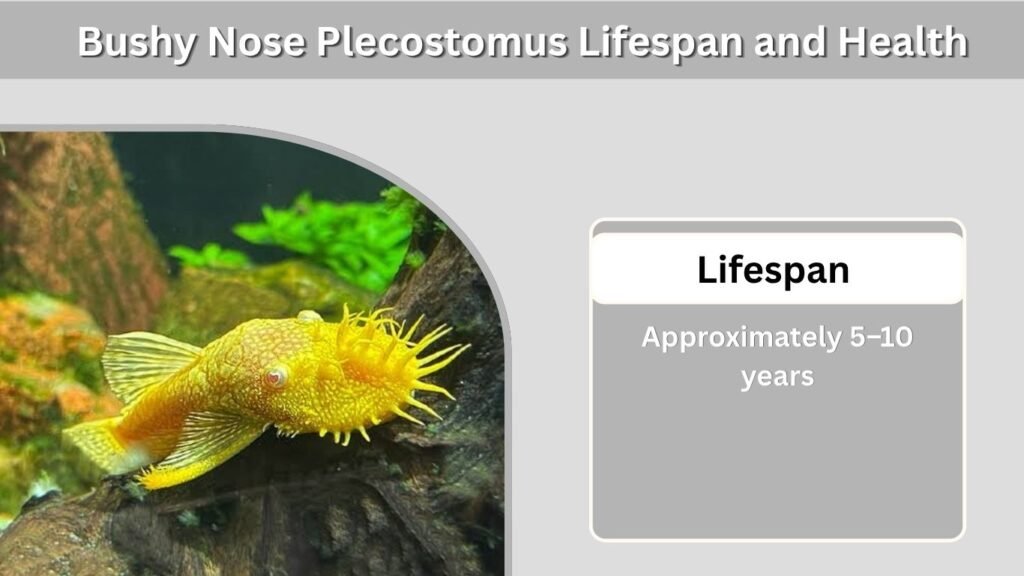
The typical bushy nose plecostomus lifespan is approximately 5–10 years, although some individuals survive longer under excellent conditions.
Longevity depends on nutrition, water quality, genetics, and the overall aquarium environment.
Poor filtration, inadequate feeding, and sudden changes in water conditions can shorten their lifespan.
Common Health Problems
Watch for the following warning signs:
- Loss of appetite: May indicate stress, illness, or unsuitable water conditions.
- White spots: Can suggest external parasitic infections.
- Damaged fins: May result from injuries or bacterial infections.
- Unusual inactivity: Can indicate poor water quality or illness.
- Rapid breathing: May signal oxygen deficiency or water-quality problems.
Regular water testing, proper feeding, and observing normal behavior are important preventive measures.
Bushy Nose Plecostomus for Sale: What to Check
Bushy nose plecostomus fish are available through aquarium stores, specialist breeders, and ornamental fish retailers.
Prices vary depending on color, age, fin type, and availability. Standard and albino varieties are usually easier to find than selectively bred blue-eyed or super red specimens.
Before purchasing, choose active fish with intact fins, healthy body condition, and no visible injuries. Captive-bred specimens are generally preferable, and newly purchased fish should be quarantined before introduction into an established aquarium.
FAQs
1. How Big Does a Bushy Nose Plecostomus Get?
A bushy nose plecostomus usually reaches approximately 4–6 inches in adulthood. Its final size depends on genetics, nutrition, and aquarium conditions. Unlike common plecostomus fish, bristlenose plecos remain relatively compact, making them suitable for appropriately maintained medium-sized freshwater aquariums.
2. Are Bushy Nose Plecostomus Good Algae Eaters?
Yes, bushy nose plecostomus fish are effective grazers of many soft algae and biofilm. However, they cannot control every type of aquarium algae. They also require algae wafers, vegetables, and other suitable foods to maintain balanced nutrition and healthy growth.
3. How Can You Tell Male and Female Bushy Nose Plecos Apart?
Mature males generally develop prominent, branching bristles across the top of their snouts. Females typically have fewer, smaller bristles concentrated around the mouth or none at all. These differences become easier to recognize as the fish approach sexual maturity.
4. Can Two Bushy Nose Plecostomus Live Together?
Two bushy nose plecostomus fish can live together when sufficient aquarium space, food, and hiding places are available. However, mature males may become territorial. A larger aquarium with multiple caves can reduce aggression and competition between individuals.
5. How Long Do Bushy Nose Plecostomus Live?
Bushy nose plecostomus fish commonly live around 5–10 years in captivity. Some may survive longer with excellent care. Maintaining clean water, providing nutritious food, preventing overcrowding, and minimizing stress all contribute to a longer and healthier aquarium lifespan.
