
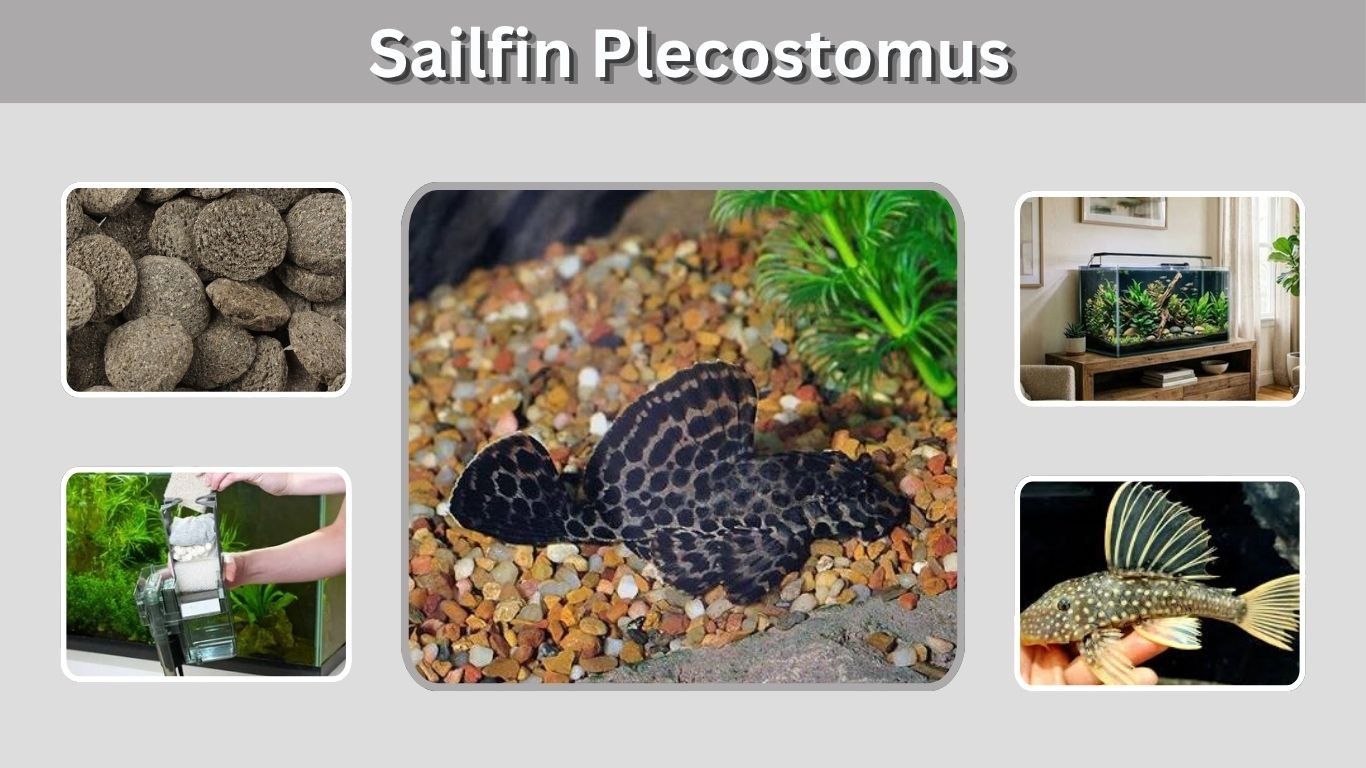
The sailfin plecostomus (Pterygoplichthys gibbiceps) is a popular freshwater aquarium fish known for its impressive dorsal fin, spotted body, and algae-grazing behavior. Native to South America, this large catfish is admired for its distinctive appearance and relatively peaceful temperament. However, sailfin plecostomus care requires careful planning because these fish grow much larger than many beginners expect. Whether you are interested in an albino sailfin plecostomus, leopard sailfin plecostomus, or marbled variety, understanding their adult size, lifespan, diet, tank requirements, and behavior is essential for successful aquarium keeping.
What Is a Sailfin Plecostomus?
The sailfin plecostomus belongs to the Loricariidae family of armored catfish. Its scientific name is Pterygoplichthys gibbiceps, and it is also commonly known as the leopard sailfin pleco or gibbiceps pleco.
This fish naturally inhabits rivers and freshwater systems throughout the Amazon and Orinoco basins of South America.
Appearance and Identification
Sailfin plecos have broad, flattened bodies covered with protective bony plates. Their most recognizable feature is a tall, sail-shaped dorsal fin that becomes especially impressive when fully extended.
Their body typically displays brown, gray, or golden coloration with dark leopard-like spots. A sucker-shaped mouth helps them attach to submerged surfaces while grazing.
Sailfin Plecostomus L83 and L165
The sailfin plecostomus is commonly associated with the aquarium trade numbers L083 and L165.
Both designations have been used for Pterygoplichthys gibbiceps. However, similar-looking species can be mislabeled, so checking the scientific name is important when purchasing fish.
Sailfin Plecostomus Size and Lifespan
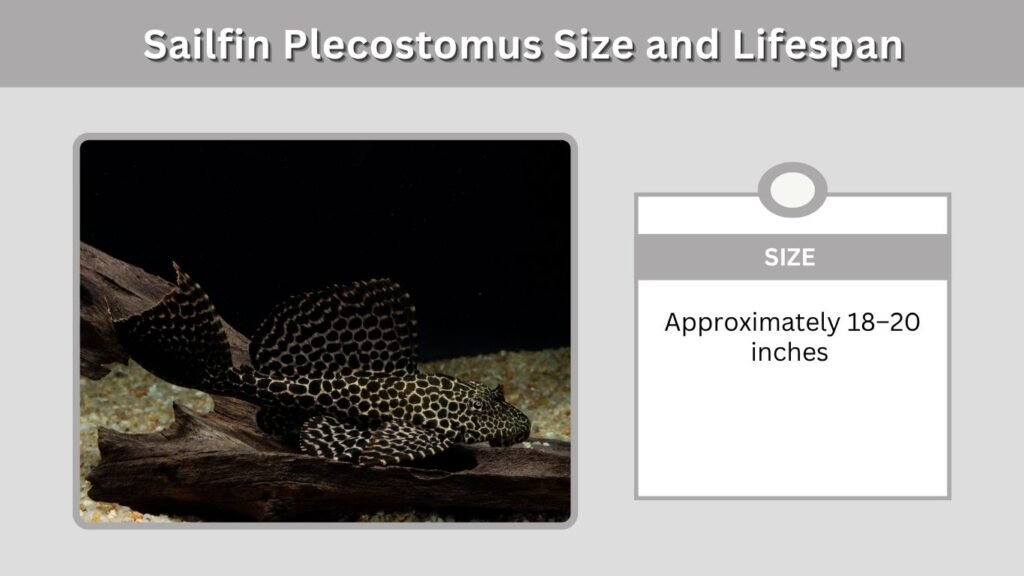
Sailfin plecostomus are often sold as small juveniles, but their eventual adult size can surprise inexperienced aquarium owners.
Understanding their growth potential and lifespan is important before introducing one into a home aquarium.
How Big Do Sailfin Plecostomus Get?
A fully grown sailfin plecostomus can reach approximately 18–20 inches (45–50 cm) in length.
Juvenile sailfin plecos may measure only 2–4 inches when purchased, but they can grow substantially during their early years.
Their large adult size makes them unsuitable for small community aquariums.
Sailfin Plecostomus Lifespan
The sailfin plecostomus lifespan is commonly estimated at 10–20 years under suitable aquarium conditions.
Longevity depends on water quality, nutrition, sufficient tank space, and regular maintenance.
These fish represent a long-term responsibility, especially because older individuals require significantly more aquarium space than juveniles.
Sailfin Plecostomus Care and Tank Requirements
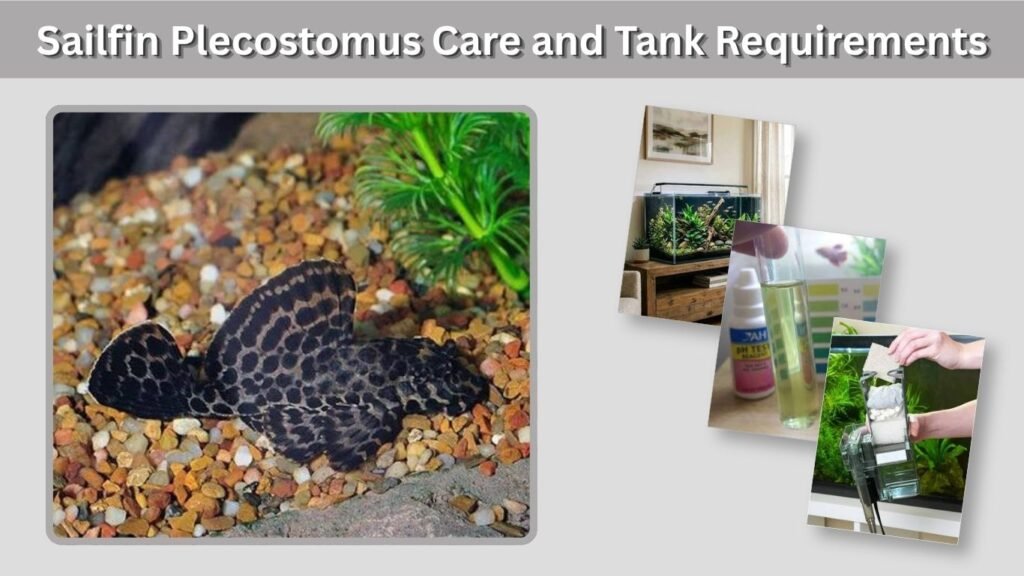
Providing appropriate aquarium conditions is essential for sailfin plecostomus health. Although these fish are generally hardy, their large size and considerable waste production demand a spacious, well-maintained environment.
Ideal Tank Size
A minimum aquarium capacity of approximately 125 gallons is commonly recommended for an adult sailfin plecostomus.
However, larger aquariums of 150 gallons or more, with generous bottom space, are preferable for fully grown specimens.
A tank around six feet long offers more suitable swimming and turning space than a shorter aquarium with the same water volume.
Water Temperature and Parameters
Sailfin plecos adapt to a reasonable range of tropical freshwater conditions, but stability remains essential.
- Temperature: Approximately 73–81°F (23–27°C)
- pH level: 6.5–7.5 preferred
- Water hardness: Approximately 5–19 dGH
- Ammonia: 0 ppm
- Nitrite: 0 ppm
- Water movement: Moderate circulation with good oxygenation
Aquarium Decorations
A natural aquarium setup should include driftwood, smooth rocks, and spacious hiding places.
Choose sand or smooth gravel for the substrate. Large caves and shaded areas allow sailfin plecos to rest comfortably during daylight hours.
Strong filtration is particularly important because these fish produce substantial waste.
What Do Sailfin Plecostomus Eat?
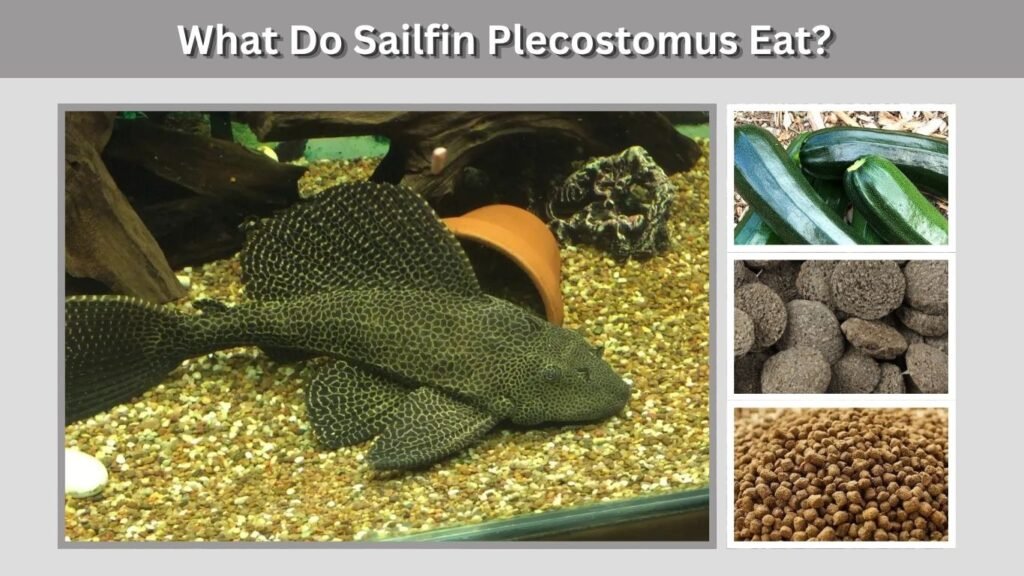
Sailfin plecostomus are primarily algae-grazing omnivores that consume plant material, biofilm, and organic debris.
Although they help control certain types of aquarium algae, algae alone cannot provide enough nutrition for a large adult fish.
Best Foods for Sailfin Plecos
A varied diet helps maintain healthy growth, digestive function, and overall body condition.
- Algae wafers: Provide convenient plant-based nutrition.
- Blanched zucchini: Offers fiber and useful nutrients.
- Cucumber: Provides dietary variety.
- Shelled peas: Supply plant-based nutrients.
- Spirulina pellets: Support balanced feeding.
- Sinking omnivore pellets: Provide additional nutrients.
- Occasional protein-rich foods: Offer nutritional variety in moderation.
Feeding Schedule
Feed adult sailfin plecos once daily or according to their appetite and body condition.
Evening feeding is often effective because these fish become more active when aquarium lighting decreases.
Remove leftover vegetables promptly to prevent water contamination. Monitor the belly to ensure the fish receives adequate nutrition.
Popular Sailfin Plecostomus Types and Varieties
Several attractive color forms are sold under sailfin plecostomus trade names.
Some represent color variations of Pterygoplichthys gibbiceps, while others may be different but closely related species. Accurate identification is important because appearance and trade names can overlap.
Albino Sailfin Plecostomus
The albino sailfin plecostomus is recognized by its pale cream, yellowish, or golden body and reddish eyes.
An 8 cm albino sailfin plecostomus is still a juvenile and may eventually reach the substantial size associated with its species.
Albino fish require the same spacious aquarium and balanced diet as normally colored individuals.
Leopard Sailfin Plecostomus
The leopard sailfin plecostomus is the familiar spotted form of Pterygoplichthys gibbiceps.
It features dark spots arranged across its body and large dorsal fin, creating a distinctive leopard-like pattern.
This variety is popular because of its impressive appearance and natural algae-grazing behavior.
Marbled Sailfin Plecostomus
The marbled sailfin plecostomus has an attractive mixture of dark and light markings that create a mottled appearance.
The term marbled is sometimes used broadly in aquarium stores, so it does not always identify a separate species.
Its care requirements depend on the fish’s actual scientific identification.
Gold Marbled Sailfin Plecostomus
Gold marbled sailfin plecostomus is a descriptive trade name for pale or golden fish with marbled patterns.
Some specimens are albino or other pale color forms, while others may belong to related pleco species.
Buyers should verify the exact species rather than relying on coloration alone.
Red Sailfin Plecostomus
The term red sailfin plecostomus is not a consistently standardized species name.
It may describe a reddish color variation or a different pleco sold under a similar commercial name.
Before purchasing, confirm the fish’s scientific name, adult size, and specific aquarium requirements.
Sailfin Plecostomus Tank Mates and Behavior

Sailfin plecostomus are generally peaceful toward many midwater fish, but mature individuals may become territorial around hiding places.
They are usually most active during the evening and nighttime hours, spending much of the day resting beneath decorations.
Suitable Tank Mates
Compatible species must tolerate similar water conditions and have enough aquarium space.
Potential companions include peaceful larger tetras, suitable rainbowfish, silver dollars, and some peaceful cichlids.
Avoid overcrowding and keeping multiple large plecos in limited bottom space. Territorial disputes may occur when fish compete for caves or feeding areas.
Sailfin Plecostomus With Live Plants
Leopard sailfin plecostomus can live in planted aquariums, but their large bodies may uproot delicate plants.
Use sturdy species such as Java fern and Anubias attached to driftwood or rocks.
Provide adequate supplemental feeding because hungry plecos may rasp soft plant leaves.
Sailfin Plecostomus Male vs. Female
Distinguishing male and female sailfin plecostomus is difficult, particularly when they are young.
Mature males may display subtle differences in genital papilla shape, while females may have rounder bodies during reproductive periods.
However, external body shape alone is not a reliable method of determining sex.
Sailfin Plecostomus Breeding
Breeding sailfin plecostomus in ordinary home aquariums is extremely difficult.
In natural habitats, these fish reproduce in burrows excavated into soft riverbanks. Males guard the eggs inside the nesting tunnels.
Commercial breeding has been accomplished in large outdoor ponds where suitable environmental conditions can be established.
Sailfin Plecostomus for Sale: Buying Tips
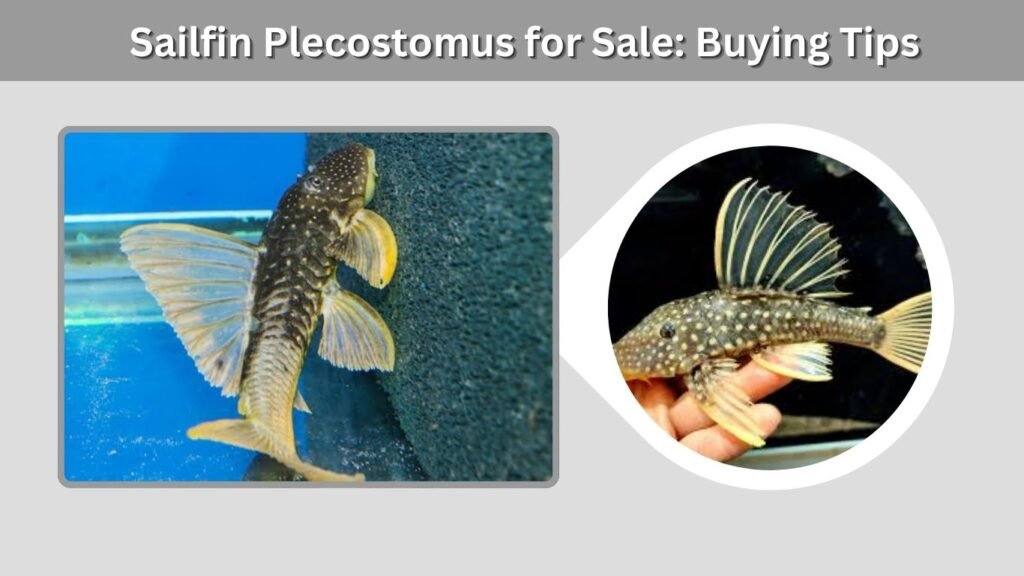
Sailfin plecostomus are commonly available through aquarium retailers and specialized fish suppliers.
Before purchasing a baby sailfin plecostomus, remember that its future adult size may require a considerably larger aquarium.
Look for the following signs when selecting a healthy fish:
- Clear eyes: Avoid cloudy or visibly damaged eyes.
- Healthy belly: Choose fish without severely sunken abdomens.
- Normal swimming: Watch for coordinated movement and strong surface attachment.
- Undamaged fins: Avoid fish with significant fin deterioration.
- Correct identification: Confirm the species and expected adult size.
Never release an unwanted sailfin pleco into natural waterways because introduced plecos can threaten native aquatic ecosystems.
FAQs
1. How Big Does a Sailfin Plecostomus Get?
A sailfin plecostomus can reach approximately 18–20 inches in length when fully grown. These fish require large aquariums with sufficient bottom space. Juveniles may appear small, but their adult size makes them unsuitable for most standard community tanks.
2. How Long Do Sailfin Plecostomus Live?
Sailfin plecostomus can live approximately 10–20 years with proper aquarium care. Their lifespan depends on consistent water quality, balanced nutrition, adequate swimming space, and regular maintenance. Maintaining stable conditions helps support their long-term health.
3. Are Albino Sailfin Plecostomus Rare?
Albino sailfin plecostomus are less commonly encountered than normally colored varieties, although availability depends on local breeding and aquarium suppliers. Their pale coloration and reddish eyes make them distinctive, but their large adult size and care requirements remain similar.
4. Can Sailfin Plecostomus Live With Other Fish?
Yes, sailfin plecostomus can live with many peaceful freshwater fish in sufficiently large aquariums. However, they may become territorial toward other bottom-dwelling plecos. Providing enough hiding places and separate feeding areas helps reduce aggression and competition.
5. Do Sailfin Plecostomus Eat Aquarium Plants?
Sailfin plecostomus primarily graze algae and organic material, but they may damage delicate aquarium plants. Larger individuals can also uproot plants while moving around. Hardy plants, secure anchoring, and adequate feeding help reduce potential problems.