
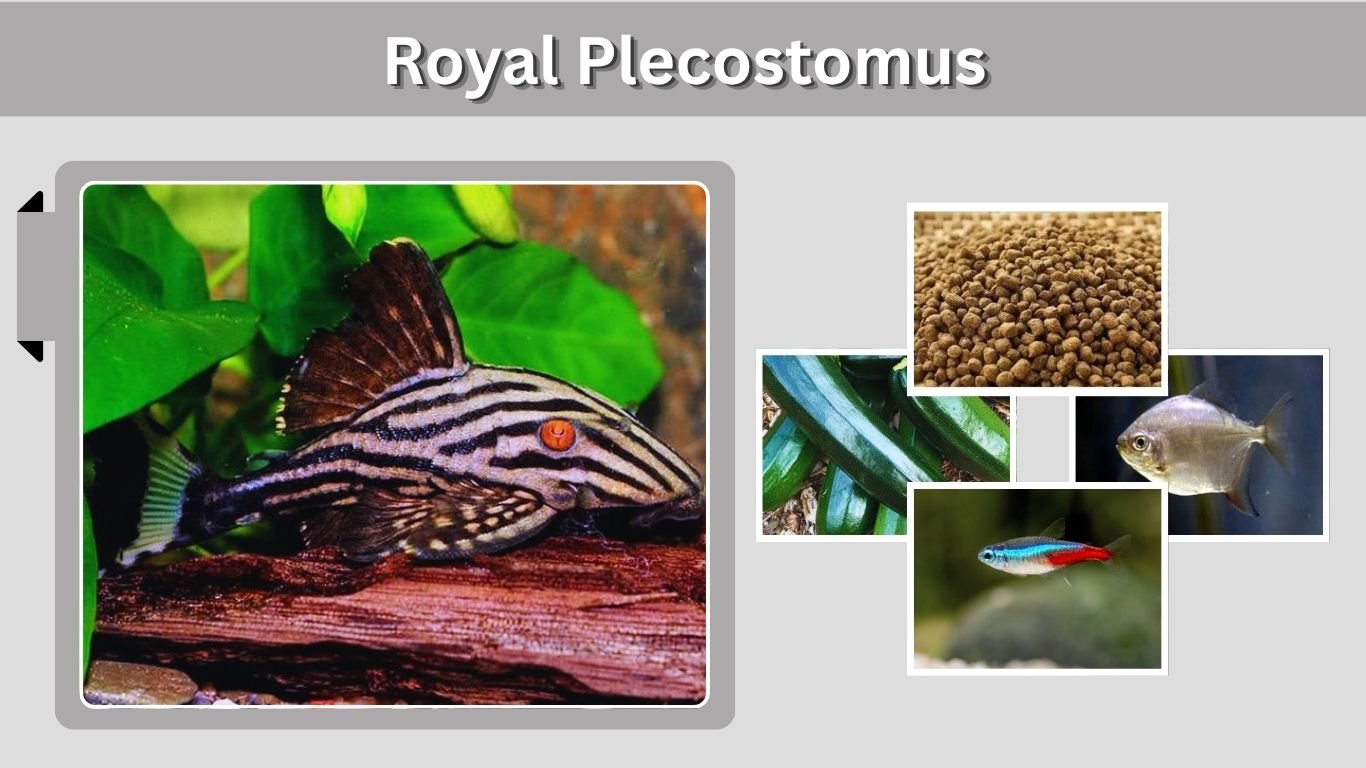
The royal plecostomus (Panaque nigrolineatus) is a fascinating freshwater catfish known for its striking striped body, broad head, and unusual wood-rasping behavior. Native to South American rivers, this large pleco attracts aquarium enthusiasts because of its distinctive appearance and peaceful nature toward many other fish. However, royal plecostomus care requires a spacious aquarium, excellent filtration, and a carefully balanced diet. Understanding its adult size, lifespan, feeding habits, tank requirements, and different varieties will help you decide whether this impressive fish is suitable for your aquarium.
What Is a Royal Plecostomus?
The royal plecostomus, commonly called the royal pleco or royal panaque, belongs to the Loricariidae family. Its scientific name is Panaque nigrolineatus, and the familiar aquarium variety is identified by the L-number L190.
Royal plecos are bottom-dwelling freshwater fish with specialized teeth that allow them to scrape wood surfaces. Unlike smaller plecostomus species, they can become quite large and require substantial aquarium space.
Appearance and Identification
The royal plecostomus has a broad, flattened head, armored body, and distinctive dark horizontal stripes running along its sides.
Its body typically displays gray, olive, or brownish coloration, while its eyes are often reddish-orange. The large dorsal fin and powerful sucker-shaped mouth make it easy to distinguish from many other aquarium catfish.
Natural Habitat
Royal plecos naturally inhabit the Orinoco River basin of Colombia and Venezuela. They prefer flowing freshwater environments containing submerged wood, rocks, and natural hiding places.
Their specialized mouths allow them to attach to submerged surfaces while searching for food.
Royal Plecostomus Size and Lifespan

Royal plecostomus fish can grow considerably larger than their appearance in aquarium stores suggests. Their eventual size and long lifespan make them a significant commitment for aquarium owners.
Royal Plecostomus Full Size
An adult royal plecostomus can reach approximately 14–17 inches (35–43 cm), although individual growth varies.
Juveniles are often sold at just 2–4 inches, which can create the mistaken impression that they remain small.
Royal plecos grow gradually, but their long-term space requirements should be considered before purchasing.
Lifespan of Royal Plecostomus
The lifespan of royal plecostomus is generally estimated at 10–20 years under suitable aquarium conditions.
Longevity depends on consistent water quality, proper nutrition, sufficient swimming space, and reduced stress.
Because these fish can live for many years, keeping one requires long-term planning and regular aquarium maintenance.
Royal Plecostomus Care and Tank Requirements
Royal plecostomus care focuses on recreating a clean, oxygen-rich river environment. Although these fish are relatively hardy once established, they are sensitive to overcrowding and deteriorating water conditions.
Minimum Tank Size
A fully grown royal plecostomus should have an aquarium of at least 125 gallons, with a tank measuring approximately six feet long or more being preferable.
Larger specimens benefit from additional floor space because they spend much of their time near the bottom.
A spacious aquarium also helps reduce territorial conflicts.
Water Temperature and Parameters
Royal plecos thrive in warm, stable freshwater conditions. A practical temperature range is 75–84°F (24–29°C), with a pH around 6.5–7.5.
Water should remain well oxygenated, and ammonia and nitrite must stay at zero.
Regular water changes are essential because royal plecos produce substantial waste, particularly when rasping driftwood.
Ideal Aquarium Setup
A properly arranged royal plecostomus aquarium should provide both open bottom space and secure hiding areas.
- Driftwood: Include several large pieces for natural rasping behavior.
- Strong filtration: Use a high-capacity filter to manage heavy waste production.
- Smooth rocks: Create natural shelter without sharp edges.
- Caves: Provide secure hiding places during daylight hours.
- Water circulation: Maintain moderate to strong movement and adequate oxygen.
- Soft substrate: Use sand or smooth gravel to protect the fish.
What Do Royal Plecostomus Eat?

Royal plecostomus are famous for rasping and consuming wood. However, wood alone does not provide a complete diet.
These fish naturally consume organic material associated with submerged surfaces, including biofilms and detritus. A balanced aquarium diet should include appropriate plant-based foods and prepared supplements.
Importance of Driftwood
Driftwood is an important component of royal pleco aquariums. Their specialized teeth allow them to scrape and ingest wood particles.
Although royal plecos are often described as wood-eating fish, scientific research indicates that they digest wood cellulose inefficiently. Therefore, they need additional nutritious foods rather than relying entirely on driftwood.
Best Foods for Royal Plecos
Provide a varied diet that supports growth and digestive health.
- Algae wafers: Supply convenient plant-based nutrition.
- Blanched zucchini: Provides a nutritious vegetable supplement.
- Cucumber: Offers additional variety and moisture.
- Shelled peas: Provide fiber and plant nutrients.
- Vegetable-based sinking pellets: Support regular feeding.
- Prepared pleco gel foods: Offer balanced supplemental nutrition.
Feeding Schedule
Feed royal plecos primarily during the evening when they become more active.
Offer manageable portions and remove uneaten vegetables before they begin decomposing.
Monitor newly purchased fish carefully, as some may initially refuse prepared foods while adjusting to their new environment.
Popular Royal Plecostomus Types and Varieties
Several closely related Panaque species are sold under royal plecostomus names. They often display different colors, stripe patterns, and body shapes.
Understanding their L-numbers helps aquarium enthusiasts identify the correct fish.
Royal Plecostomus L190
The L190 royal plecostomus is the classic Panaque nigrolineatus.
It features dark horizontal stripes across a grayish or olive body, with reddish-orange eyes. This variety is among the most recognizable royal plecos in the aquarium trade.
Broken Line Royal Plecostomus L191
The broken line royal plecostomus L191, often identified as Panaque sp. L191, is commonly called the dull-eyed royal pleco.
Its markings are frequently more irregular or fragmented than those of L190. It originates from Colombian river systems and requires similar spacious aquarium conditions.
Gold Royal Plecostomus L027
Gold royal plecostomus is a trade name associated with certain L027 royal plecos.
Some L027 forms, including the Xingu royal pleco Panaque armbrusteri, display attractive golden or light-colored stripes.
Because L027 has been applied to multiple geographic forms, identifying the exact fish is important.
Royal Blue and Green Plecostomus
The green royal plecostomus name may refer to different Panaque forms, including L191 and other greenish varieties.
Blue-eyed royal plecos are distinct from standard L190 fish, with Panaque suttonorum being a notable example.
Color-based trade names are inconsistent, so scientific identification is more reliable.
Royal Plecostomus Tank Mates and Behavior
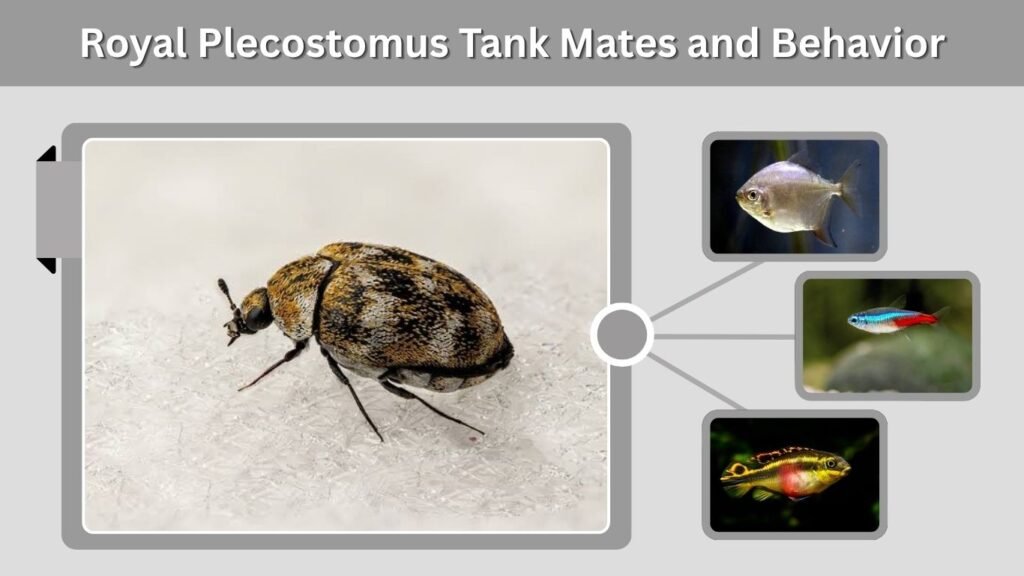
Royal plecos are generally peaceful toward unrelated fish but can become territorial around driftwood, caves, and feeding areas.
Their large adult size and considerable waste production make careful tank mate selection essential.
Suitable Tank Mates
Potential companions include peaceful fish that tolerate similar water conditions and have sufficient room to swim.
- Larger peaceful tetras
- Silver dollars
- Peaceful medium-sized cichlids
- Suitable rainbowfish
- Other compatible midwater community fish
Avoid aggressive bottom-dwelling species and overcrowding. Keeping multiple large plecos together requires considerably more aquarium space.
Are Royal Plecos Aggressive?
Royal plecos rarely chase peaceful midwater fish, but they can defend their feeding territories against other plecos.
Providing separate hiding areas and adequate driftwood reduces competition.
Royal Plecostomus Male vs. Female
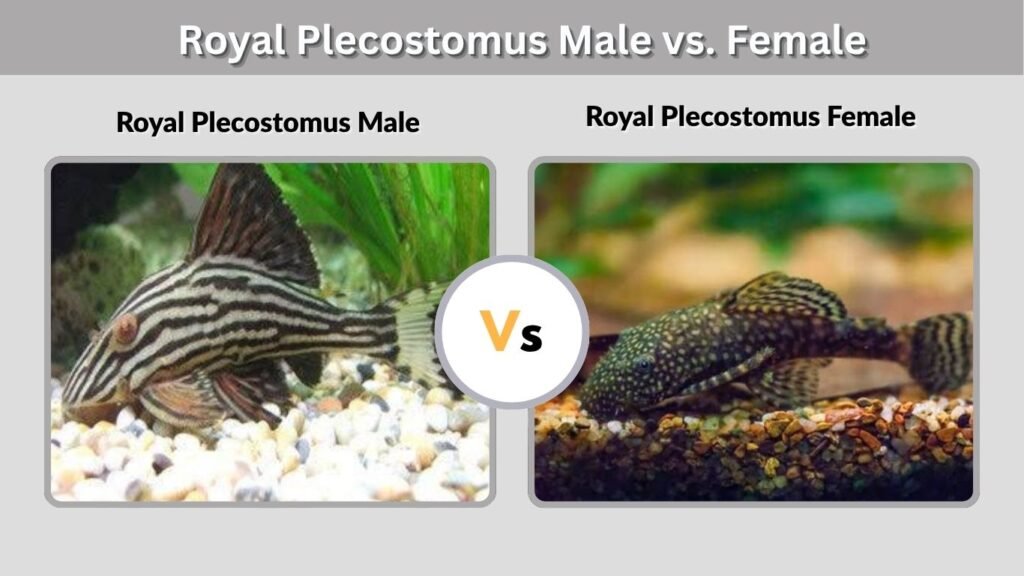
Determining whether a royal plecostomus is male or female can be difficult, particularly when the fish is young.
Male Royal Plecostomus
Mature males may develop broader heads and more prominent odontodes, which are small tooth-like structures found on certain parts of the body.
However, these characteristics are not always reliable for identifying individuals.
Female Royal Plecostomus
Adult females may appear slightly rounder through the abdomen, particularly when carrying eggs.
Body shape alone cannot reliably determine sex because feeding condition, age, and individual variation also influence appearance.
Royal Plecostomus Breeding
Reliable captive breeding of L190 royal plecos is extremely uncommon and is not considered a routine aquarium breeding project.
Successful reproduction would require mature fish, considerable space, excellent water quality, and suitable spawning shelters.
Royal Plecostomus Price and Where to Buy
Royal plecostomus prices vary according to size, variety, and availability.
In the United States, smaller L190 juveniles are commonly advertised for approximately 25–75. Larger specimens may cost 100–200 or more, while unusual royal pleco varieties can command higher prices.
Buying a Healthy Royal Plecostomus
When searching for royal plecostomus for sale, carefully evaluate the fish before purchasing.
- Check body condition: Avoid specimens with visibly sunken bellies.
- Inspect coloration: Look for normal patterns without suspicious lesions.
- Observe behavior: Healthy fish should attach firmly to surfaces.
- Confirm identification: Ask whether the fish is L190, L191, or another variety.
- Check feeding history: Choose fish that are already accepting food.
Purchase from reputable aquarium suppliers that can explain their fish’s care requirements.
FAQs
1. How Big Does a Royal Plecostomus Get?
A fully grown royal plecostomus typically reaches approximately 14–17 inches, depending on the species and individual. Because of its substantial adult size, a large aquarium with strong filtration and sufficient bottom space is essential for long-term health.
2. How Long Does a Royal Plecostomus Live?
Royal plecostomus can potentially live 10–20 years in well-maintained aquariums. Their lifespan depends on suitable water conditions, balanced nutrition, sufficient aquarium space, and proper disease prevention. Regular maintenance helps support their long-term health.
3. Are Royal Plecostomus Good for Beginners?
Royal plecostomus are generally better suited to experienced aquarium owners. Their large adult size, heavy waste production, and specialized feeding requirements make them more demanding than many smaller freshwater fish commonly recommended for beginners.
4. Do Royal Plecostomus Eat Wood?
Yes, royal plecostomus regularly rasp and ingest submerged wood. However, research indicates they cannot obtain sufficient nutrition from wood alone. They also require supplementary foods, including vegetables, sinking plant-based pellets, and other suitable nutritional sources.
5. Can Two Royal Plecostomus Live Together?
Two royal plecostomus can sometimes share an aquarium if it is exceptionally spacious and contains multiple feeding areas and hiding places. However, territorial disputes are possible, especially between mature fish. Keeping one individual is often easier.