
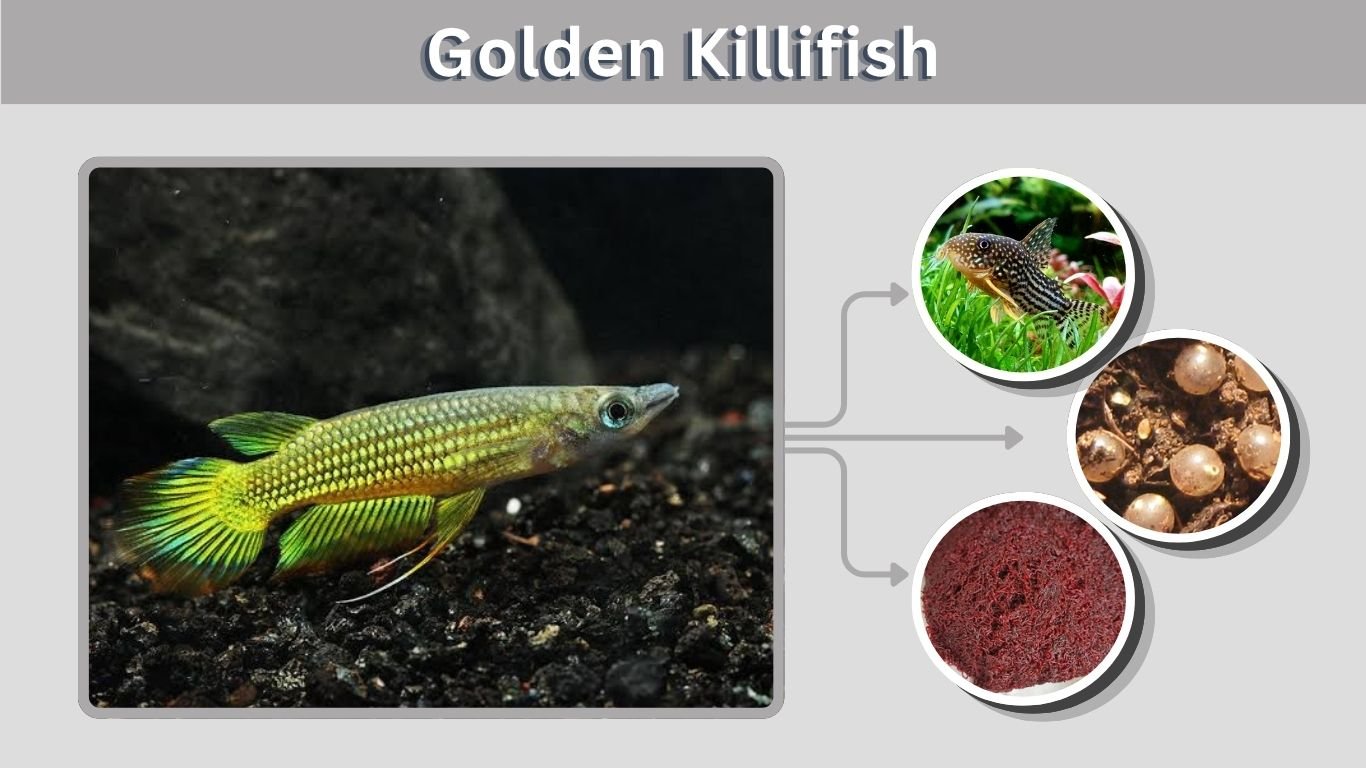
The golden killifish, commonly known as the Golden Wonder Killifish or Golden Panchax, is a colorful freshwater fish popular among aquarium enthusiasts. Its shimmering golden body, active swimming behavior, and fascinating hunting instincts make it an attractive addition to suitable aquariums. Native to South Asia, this fish is relatively hardy but requires proper tank conditions, nutritious food, and carefully selected companions. Understanding golden killifish care, including tank size, temperament, feeding habits, and breeding requirements, helps aquarists maintain healthy fish and create a comfortable environment for long-term growth.
What Is a Golden Killifish?
The golden killifish is a selectively bred golden variety of Aplocheilus lineatus, a freshwater species belonging to the family Aplocheilidae. It is also known as the Golden Wonder Panchax or striped panchax. The species naturally inhabits waterways in India and Sri Lanka. Unlike annual killifish, golden wonders live in permanent aquatic habitats and do not require seasonal drying to reproduce.
Appearance and Physical Characteristics
Golden killifish have elongated bodies covered with shimmering yellow-gold scales. Their fins may display orange or reddish markings, while their upward-facing mouths are adapted for catching prey near the water’s surface.
Their slender bodies allow quick movements when hunting insects or smaller fish. Healthy individuals usually display bright coloration, active swimming behavior, and alert responses to movement around the aquarium.
Natural Habitat and Behavior
Wild Aplocheilus lineatus inhabit streams, ponds, marshes, and other freshwater environments. They frequently occupy shallow areas with vegetation and relatively gentle water movement.
Golden wonders spend much of their time swimming near the surface. They are skilled jumpers and opportunistic predators, making secure aquarium covers and suitable tank mates especially important.
Golden Killifish Size and Lifespan

Understanding golden killifish size and lifespan is important when planning an aquarium. Although juveniles appear relatively small in pet stores, adults grow considerably larger than many popular killifish species. Their size also influences feeding requirements and compatibility with other aquarium inhabitants. With suitable care, golden wonders can remain active and attractive for several years.
How Big Do Golden Killifish Get?
Adult golden killifish generally reach 3–4 inches (7.5–10 cm) in length. Males may grow slightly larger than females, although individual size depends on genetics, nutrition, and aquarium conditions.
Juveniles require adequate swimming space as they develop. Keeping growing fish in undersized aquariums can increase stress and interfere with normal behavior.
Golden Killifish Lifespan
Golden killifish commonly live approximately three to five years in captivity. Their longevity depends on water quality, feeding habits, temperature stability, and overall aquarium maintenance.
Providing varied nutrition, avoiding overcrowding, and maintaining a low-stress environment can support their health throughout adulthood.
Golden Killifish Tank Requirements and Care
Proper golden killifish care begins with creating a spacious aquarium that resembles their natural habitat. These fish prefer stable temperatures, gentle water movement, and vegetation near the surface. They also require sufficient horizontal swimming space. Although relatively adaptable, sudden environmental changes can cause stress, particularly in newly introduced fish.
Ideal Tank Size and Setup
A 20-gallon aquarium is a practical minimum for a single adult or carefully managed pair, while larger tanks are preferable for groups and community setups.
Recommended aquarium features include:
- Tank size: At least 20 gallons, preferably larger.
- Substrate: Fine sand or smooth aquarium gravel.
- Plants: Java fern, water sprite, and floating vegetation.
- Filtration: Gentle to moderate water flow.
- Decorations: Driftwood, plants, and natural hiding places.
- Cover: A tightly fitted lid to prevent jumping.
Water Temperature and Parameters
Golden killifish tolerate a reasonable range of freshwater conditions, but consistent water quality is essential for long-term health.
Recommended water conditions include:
- Temperature: 72–79°F (22–26°C).
- pH level: Approximately 6.0–7.5.
- Water hardness: Around 5–20 dGH.
- Ammonia: 0 ppm.
- Nitrite: 0 ppm.
- Water changes: Approximately 20–25% weekly.
What Do Golden Killifish Eat?
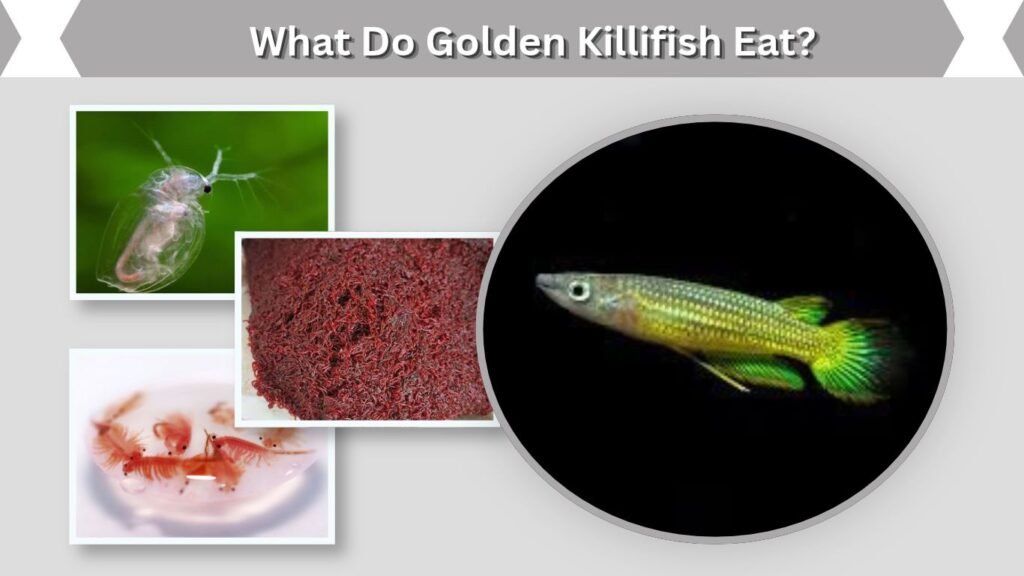
Golden killifish are primarily carnivorous fish that naturally hunt insects, larvae, small crustaceans, and occasionally tiny fish. Their upward-facing mouths help them capture prey near the water’s surface. In captivity, they accept various commercial and frozen foods. A balanced, protein-rich diet supports healthy development, vibrant coloration, and successful breeding.
Best Food for Golden Killifish
Providing different foods helps meet nutritional requirements while encouraging natural feeding behavior.
Recommended foods include:
- Live or frozen brine shrimp.
- Bloodworms in suitable portions.
- Daphnia and small crustaceans.
- Mosquito larvae from safe sources.
- High-quality floating carnivore pellets.
- Protein-rich tropical fish flakes.
Feeding Frequency and Tips
Adult golden killifish generally require one or two small meals daily. Offer only enough food for them to consume within a short period.
Avoid excessive feeding because leftover food can contaminate aquarium water. Rotating live, frozen, and prepared foods helps provide nutritional variety.
Golden Killifish Tank Mates and Compatibility
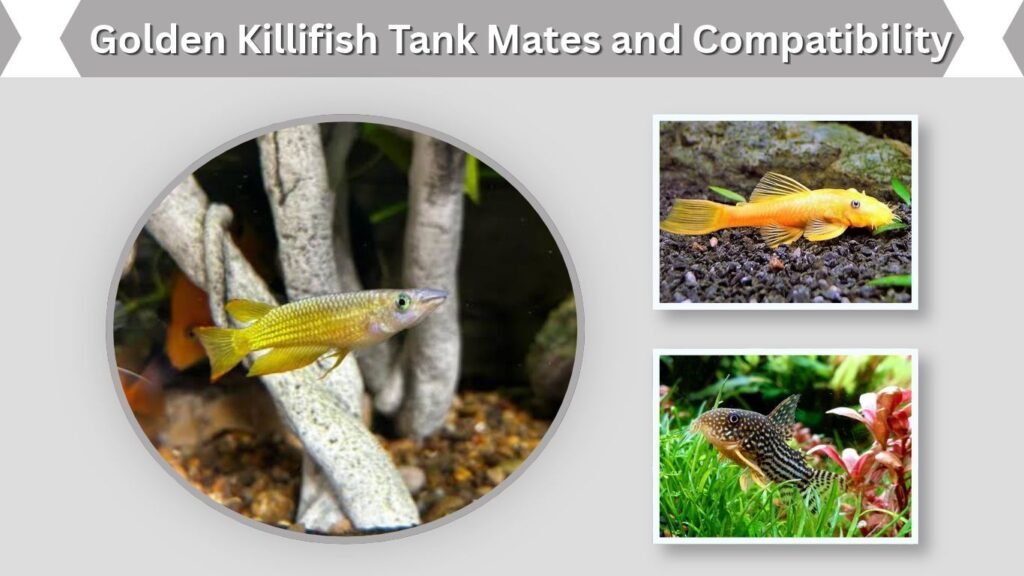
Choosing suitable golden killifish tank mates requires understanding their predatory behavior. Although golden wonders can coexist with larger peaceful fish, they may eat smaller tank inhabitants. Their surface-oriented lifestyle also makes them territorial around feeding areas. A carefully planned community aquarium should provide adequate space and companions that cannot easily fit inside their mouths.
Best Golden Killifish Tank Mates
Potential companions include appropriately sized peaceful species with compatible water requirements.
Examples include:
- Adult Corydoras catfish.
- Bristlenose plecos.
- Larger peaceful rainbowfish.
- Appropriately sized peaceful barbs.
- Medium-sized peaceful community fish.
Avoid tiny tetras, small rasboras, fish fry, and ornamental dwarf shrimp because they may become prey.
Are Golden Killifish Aggressive?
Golden killifish are considered semi-aggressive, particularly toward smaller fish and competing males. Their predatory nature is often mistaken for ordinary community fish behavior.
Males may chase or fight one another when territorial disputes occur. Providing additional space, floating vegetation, and visual barriers can help reduce aggression.
Male and Female Golden Killifish Differences
Identifying male and female golden killifish is useful for breeding and maintaining balanced groups. Both sexes display attractive coloration, but males generally have brighter bodies and more prominent fins. Females are often slightly less colorful and develop fuller bodies when carrying eggs. These differences become easier to recognize as fish mature.
How to Identify Male Golden Killifish
Males usually display brighter golden coloration and more elongated fins. Their bodies are often slimmer, particularly when compared with mature females carrying eggs.
During breeding, males may actively pursue females and defend preferred areas near floating plants.
How to Identify Female Golden Killifish
Female golden killifish typically have paler coloration and shorter, rounder fins. Mature females may develop noticeably fuller abdomens before spawning.
A breeding group containing one male and two or three females can help distribute courtship attention, provided the aquarium offers sufficient space and hiding places.
Golden Killifish Breeding and Egg Hatching

Golden killifish breeding is achievable in home aquariums when adults receive nutritious food and suitable spawning conditions. They reproduce by depositing adhesive eggs among fine-leaved plants or spawning materials. Unlike annual killifish, their eggs do not require prolonged dry incubation. Separating eggs from adults generally improves survival because parents may consume eggs and newly hatched fry.
How to Breed Golden Killifish
A dedicated breeding aquarium allows better control over spawning conditions and developing eggs.
Follow these basic steps:
- Prepare an established aquarium with gentle filtration.
- Introduce one healthy male and one or two females.
- Add floating plants or synthetic spawning mops.
- Feed adults nutritious live or frozen foods.
- Collect deposited eggs regularly.
- Move eggs into a suitable incubation container.
Golden Killifish Egg Hatching
Golden killifish eggs commonly hatch in approximately 10–14 days under favorable conditions, although temperature affects development.
Newly hatched fry can usually consume baby brine shrimp or appropriately sized microworms. Provide frequent small meals and maintain clean water to support healthy growth.
Can Golden Killifish Live in a 5-Gallon Tank?
A 5-gallon aquarium is unsuitable for keeping adult golden killifish permanently. These fish grow relatively large, swim actively near the surface, and require adequate horizontal space. Limited room can increase aggression and make water quality more difficult to maintain.
A larger, securely covered aquarium provides better swimming space and more stable conditions.
FAQs
1. Are golden killifish good for beginners?
Yes, golden killifish are relatively hardy and manageable for beginners. However, owners must understand their predatory behavior, jumping ability, and space requirements. Proper tank maintenance and compatible companions are essential.
2. Can golden killifish live with guppies?
Golden killifish are generally unsuitable companions for small guppies, especially juveniles. Their large mouths allow them to swallow smaller fish. Larger adult guppies may also experience stress from chasing or territorial behavior.
3. How many golden killifish should be kept together?
A single adult, compatible pair, or group containing one male and multiple females may work depending on aquarium size. Avoid crowding males because territorial disputes can result in chasing or fighting.
4. Do golden killifish need a heater?
A heater may be necessary when room temperatures fall below their preferred range. Maintaining consistent temperatures around 72–79°F helps support normal activity, feeding, and overall health.
5. Do golden killifish eat other fish?
Yes. Golden killifish are opportunistic predators capable of eating smaller fish that fit inside their mouths. Avoid housing them with tiny community fish, newly hatched fry, or vulnerable ornamental shrimp.
