

Adding houseplants to an aquarium is becoming increasingly popular among plant lovers and fish keepers alike. This simple idea blends indoor greenery with aquatic life, creating a more natural and visually appealing setup. Beyond aesthetics, certain houseplants can actually improve water quality by absorbing excess nutrients. However, it’s important to understand that most houseplants cannot live fully submerged. Instead, they thrive when their roots are placed in water while their leaves remain above the surface.
Can You Really Put Houseplants in an Aquarium?
Yes, you can place many houseplants in an aquarium, but only under specific conditions. The key concept here is emersed growth, where the roots stay submerged in water while the foliage grows above it. This setup mimics natural environments like riverbanks and wetlands, where plants benefit from both water and air.
Houseplants differ from true aquatic plants because they are not adapted to live entirely underwater. If submerged completely, most will rot due to lack of oxygen. However, when used correctly, they can thrive and even contribute to a healthier aquarium ecosystem.
There are a few important distinctions to keep in mind. Aquatic plants are designed to live fully underwater, while semi-aquatic or terrestrial plants (like common houseplants) need access to air. When placed properly, these plants can help reduce nitrate levels in the water, which is beneficial for fish. At the same time, poor placement or improper care can lead to decaying roots or unhealthy tank conditions.
Best Houseplants You Can Put in an Aquarium
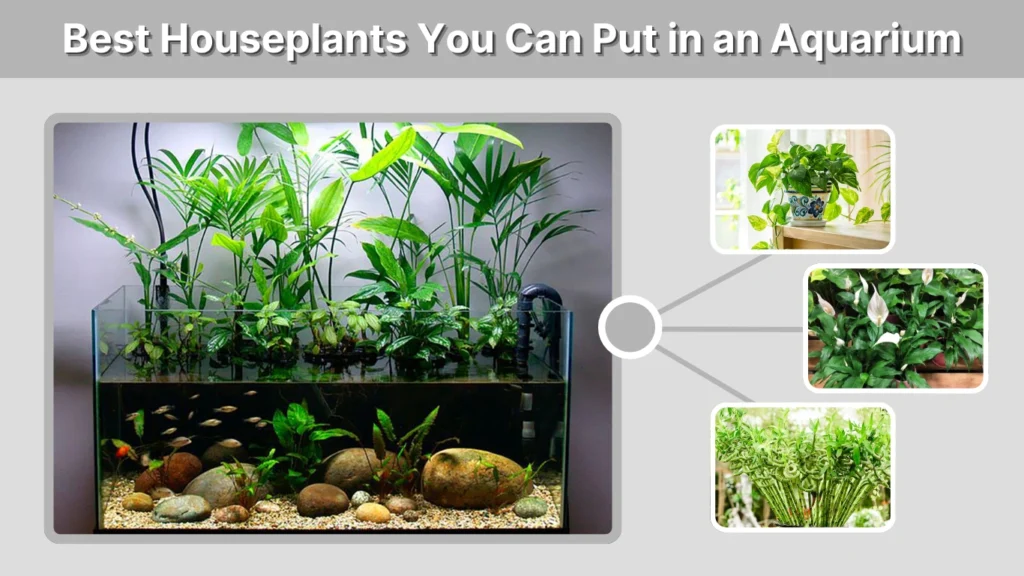
Choosing the right plants is essential for success. The best options are hardy, adaptable, and able to grow in water-root conditions without much maintenance.
Pothos (Epipremnum aureum)
Pothos is one of the most popular and beginner-friendly choices for aquariums. It adapts quickly to water environments and is known for its strong ability to absorb nitrates. This helps keep the tank cleaner and healthier for fish. Its trailing vines also add a beautiful cascading effect around the aquarium.
Peace Lily (Spathiphyllum)
Peace lilies bring an elegant touch with their glossy leaves and occasional white blooms. They grow well with their roots submerged and are effective at filtering impurities from the water. This makes them both decorative and functional.
Lucky Bamboo (Dracaena sanderiana)
Lucky bamboo is commonly seen in water-based arrangements, making it a natural fit for aquariums. It grows upright and adds height to your setup. However, it’s important to keep its leaves above water, as submerging them can cause rot.
Spider Plant (Chlorophytum comosum)
Spider plants are known for their adaptability and fast growth. They produce small offshoots that can easily be placed into water, making them ideal for aquarium use. Their roots absorb nutrients efficiently, helping to maintain water balance.
Philodendron
Philodendrons are another excellent choice due to their resilience and lush appearance. They behave similarly to pothos and can tolerate water-based root systems. Their broad leaves create a fuller, greener look around the tank.
Small Houseplants for Aquariums
If you have a smaller tank or limited space, compact plants are a better fit. These options provide the same benefits without overwhelming your setup.
Fittonia, also known as the nerve plant, is a popular choice thanks to its colorful, patterned leaves. It thrives in humid environments and adapts well when its roots are placed in water. Baby Tears is another delicate option that adds a soft, decorative touch, though it may require a bit more attention. Small ferns, such as button ferns, also work well since they naturally enjoy moist conditions and can handle high humidity around aquariums.
How to Add Houseplants to Your Aquarium
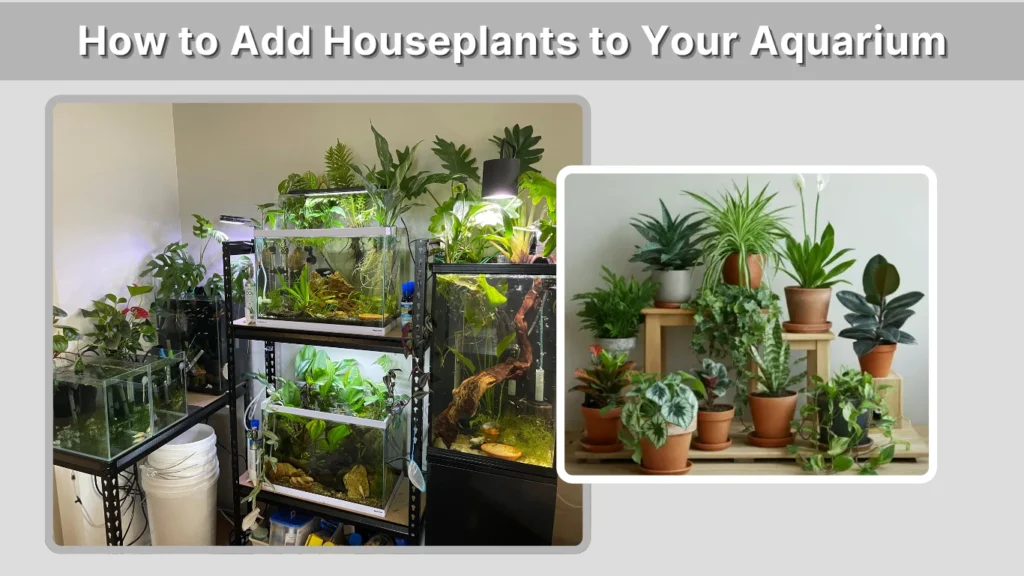
Setting up houseplants in your aquarium is simple, but doing it correctly is important for both plant health and fish safety. The first step is to remove all soil from the plant roots. Soil can cloud the water and introduce unwanted bacteria or chemicals, so rinse the roots thoroughly under clean water.
Once cleaned, gently place the roots into the aquarium while keeping the leaves above the waterline. You can use aquarium plant holders, suction cups, or even rest the plant on the tank lid to keep it stable. The goal is to allow the roots to hang freely in the water without fully submerging the plant.
After placement, monitor both the plant and your fish for a few days. Healthy roots should remain firm and light in color, while fish should behave normally. If you notice any signs of rot or stress, adjust the setup immediately.
Benefits of Using Houseplants in Fish Tanks
Adding houseplants to your aquarium offers several practical advantages beyond just appearance. One of the biggest benefits is natural filtration. Houseplants absorb nitrates and other waste compounds from the water, helping maintain a healthier environment for fish.
They also improve water clarity over time by reducing excess nutrients that can lead to algae growth. In addition, the roots create a more natural ecosystem, offering hiding spots and shade that can make fish feel more secure.
From a visual standpoint, houseplants soften the look of an aquarium and connect it with your indoor space. The combination of greenery and water creates a calm, balanced atmosphere that enhances any room.
Common Mistakes to Avoid
While adding houseplants is easy, there are a few common mistakes that can lead to problems. One of the most frequent errors is submerging the entire plant. Most houseplants are not designed for this and will quickly rot if their leaves stay underwater.
Another mistake is introducing plants without properly cleaning the roots. Residual soil or chemicals can harm fish and disrupt water quality. Overcrowding is also an issue—too many roots in the tank can limit swimming space and affect oxygen levels.
It’s also important not to ignore lighting needs. Even though the roots are in water, the leaves still require adequate light to grow. Poor lighting can lead to weak or dying plants.
Are Houseplants Safe for Fish?
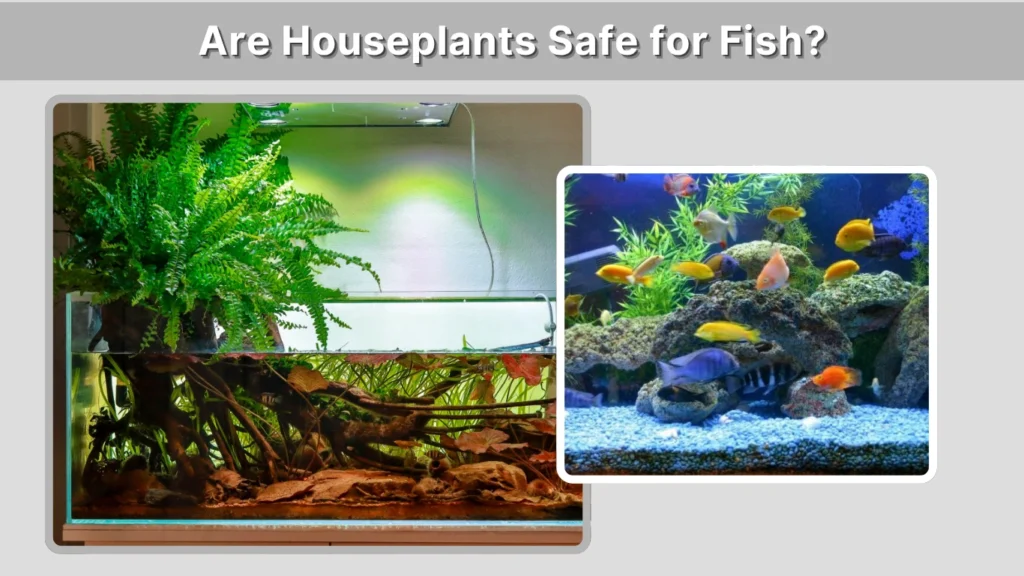
In most cases, houseplants are safe for aquariums when used correctly. The key is ensuring that only the roots are submerged and that the plant is non-toxic in typical conditions. Many popular options like pothos and spider plants are widely used without issues.
However, some plants can release sap or compounds that may be harmful if damaged or fully submerged. That’s why it’s important to monitor your tank after introducing any new plant. Watch for unusual fish behavior, such as lethargy or stress, and remove the plant if needed.
Tips for Success
To get the best results, start with hardy plants that are known to adapt well to aquarium conditions. Maintain moderate lighting so the leaves can photosynthesize properly, and trim the roots occasionally to prevent overgrowth.
Regular water changes are still necessary, even though plants help with filtration. Keeping a balanced routine ensures both your plants and fish stay healthy. It’s also helpful to observe your setup regularly so you can catch any issues early.
FAQs
Can houseplants live fully underwater in an aquarium?
Most houseplants cannot survive fully submerged because they are not adapted for underwater life. They rely on access to air for proper respiration. Keeping only the roots in water allows them to thrive while still benefiting the aquarium environment.
What is the easiest houseplant to use in a fish tank?
Pothos is often considered the easiest choice for beginners. It grows quickly, adapts well to water-root conditions, and helps remove excess nutrients from the tank. Its low maintenance nature makes it ideal for first-time setups.
Do houseplants clean aquarium water?
Yes, houseplants can help clean aquarium water by absorbing nitrates and other waste products. This natural filtration process supports a healthier tank environment and can reduce algae growth when combined with proper maintenance.
Can I put any houseplant in my aquarium?
Not all houseplants are suitable for aquariums. Some may rot quickly or release harmful substances into the water. It’s best to choose plants known to tolerate having their roots submerged while keeping their leaves above water.
How do I keep houseplants from falling into the tank?
You can secure plants using aquarium holders, suction cups, or by resting them on the tank lid. Some people also use clips or mesh supports to keep the plant stable while allowing the roots to hang freely in the water.
Conclusion
Using houseplants in an aquarium is a simple way to enhance both the beauty and health of your setup. With the right plants and proper placement, you can create a balanced environment that benefits your fish while adding natural greenery to your space. Starting with easy options like pothos or spider plants is a great way to experiment and build confidence.