
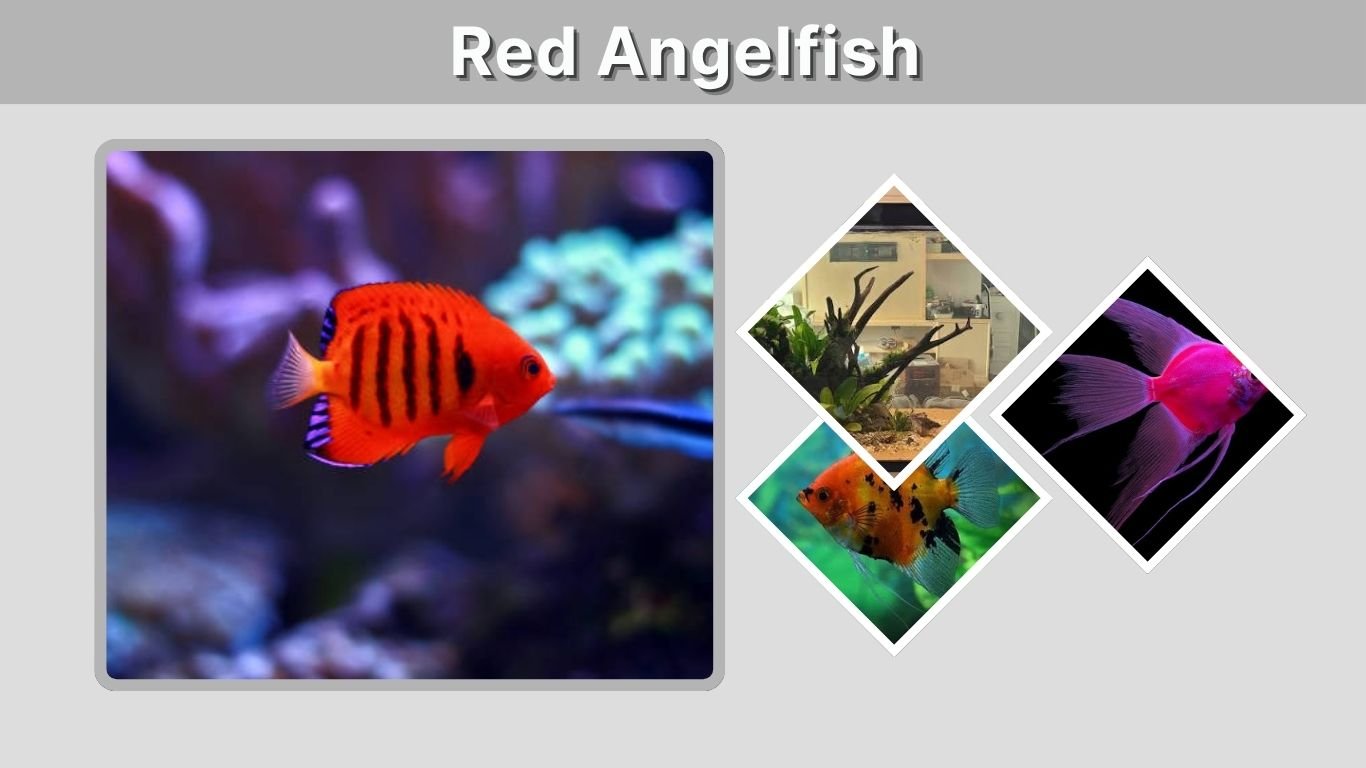
Red angelfish are freshwater aquarium fish admired for their orange, scarlet, pink, and red-patterned bodies. The term does not identify one separate species. It usually describes selectively bred forms of the common freshwater angelfish, Pterophyllum scalare, including red koi, red devil, red dragon, red cap, and fluorescent Starfire Red varieties.
What Is a Red Angelfish?
Most freshwater red angelfish belong to the cichlid species Pterophyllum scalare. Wild fish are normally silver with dark vertical bars, while selective breeding has produced numerous colors, patterns, and fin shapes. The species has a laterally compressed body, tall dorsal and anal fins, and long threadlike pelvic fins.
Wild P. scalare occurs in the Amazon River basin and connected waters of South America. Adults inhabit slow, vegetated swamps and flooded areas. Domestic red angelfish retain the same basic body shape and general care needs despite looking very different from their wild ancestors.
Popular Types of Red Angelfish
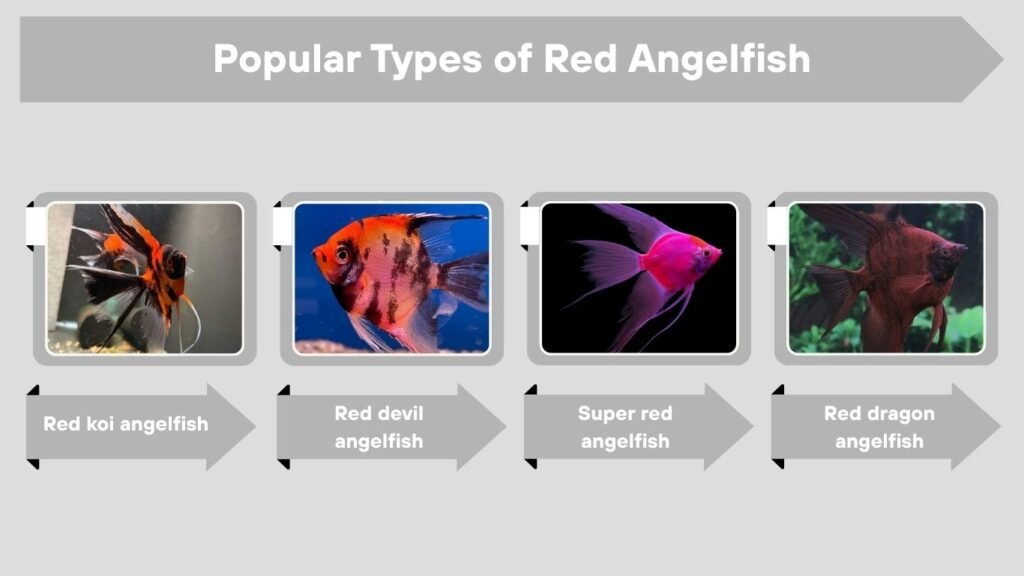
Names used for red angelfish are not always standardized. A fish sold under one name may look different when produced by another breeder. Buyers should examine the individual fish rather than relying entirely on the variety name.
| Variety | Typical appearance | Important note |
| Red koi angelfish | Red or orange with white and black patches | A koi-patterned freshwater variety |
| Red devil angelfish | Strong orange-red or scarlet coloration | A trade name, not a separate species |
| Super red angelfish | Selected for extensive red pigmentation | Color intensity varies by breeding line |
| Red dragon angelfish | Red-orange body with variable dark markings | Another breeder or seller designation |
| Red cap angelfish | Pale body with red or orange over the head | Often associated with koi or albino lines |
| Starfire Red angelfish | Bright fluorescent red or pink | An official GloFish variety |
| Red-shoulder angelfish | Silver body with reddish upper back or shoulder | Often linked with Manacapuru-type fish |
Red Koi Angelfish
Red koi angelfish usually display a combination of red, orange, white, and black. Some have nearly solid orange-red bodies, while others have white areas and irregular black marbling.
The word “koi” describes the color pattern. These fish are not hybrids between angelfish and koi carp. Their red coverage depends mainly on genetics, age, and the quality of the breeding line.
Red Devil and Super Red Angelfish
Red devil, German red devil, super red devil, and solid red select are commercial names commonly applied to domestic angelfish with extensive red or orange pigmentation.
They should not be confused with the red devil cichlid, Amphilophus labiatus, which is a different, much heavier-bodied Central American cichlid. Because red-angelfish names vary between sellers, photographs of the parents and adult specimens are more useful than the label alone.
Red Dragon Angelfish
Red dragon angelfish generally have vivid red-orange bodies, sometimes combined with black, silver, or marbled markings. “Guyana red dragon” and similar labels may suggest a particular breeding line, but they are not universally defined scientific varieties.
Juveniles may not show their final color. Red pigmentation and dark markings can become more noticeable as the fish grows.
Manacapuru Red-Shoulder Angelfish
Manacapuru red-shoulder angelfish have a more natural-looking silver body with dark vertical bands and red or orange coloring across the upper back and shoulder. They are associated with Pterophyllum scalare and differ visually from nearly solid-red domestic strains.
Labels such as red back, super red Manacapuru, and red shoulder may describe wild-type ancestry, tank-raised descendants, or selectively enhanced lines. Ask whether the fish is wild-caught or captive-bred before purchasing.
Starfire Red GloFish Angelfish
The Starfire Red angelfish is a fluorescent GloFish variety. Its red or pink coloration appears especially intense under blue aquarium lighting because fluorescent tissue absorbs light and re-emits visible color. It does not create its own light in complete darkness.
The manufacturer states that Starfire Red angelfish have the same general care requirements as their nonfluorescent counterparts. Patterned and dark-finned versions may also develop black patches, speckles, or marbling.
Red Angelfish Size and Appearance
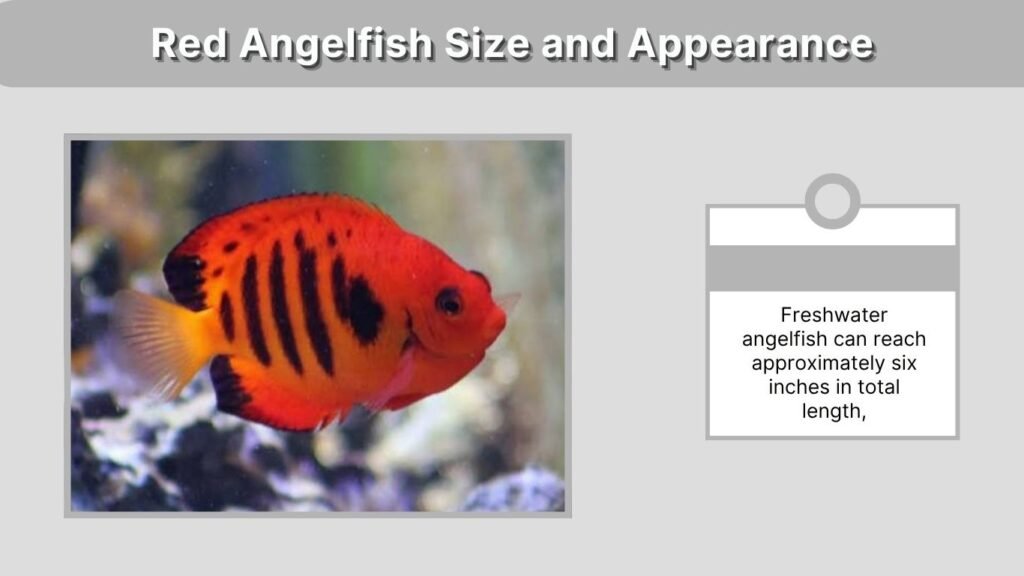
Freshwater angelfish can reach approximately six inches in total length, although published measurements vary. Their extended dorsal and anal fins make them much taller than their body length suggests.
Identification Features
- Tall, triangular body profile
- Strongly compressed body
- Long dorsal and anal fins
- Two thin pelvic-fin filaments
- Red, orange, white, silver, or black patterning
- Rounded forehead and small mouth
- Vertical bands or marbling in some varieties
A healthy angelfish should hold its fins open, swim steadily, respond to food, and breathe without persistent gasping.
Red Angelfish Tank and Care Requirements
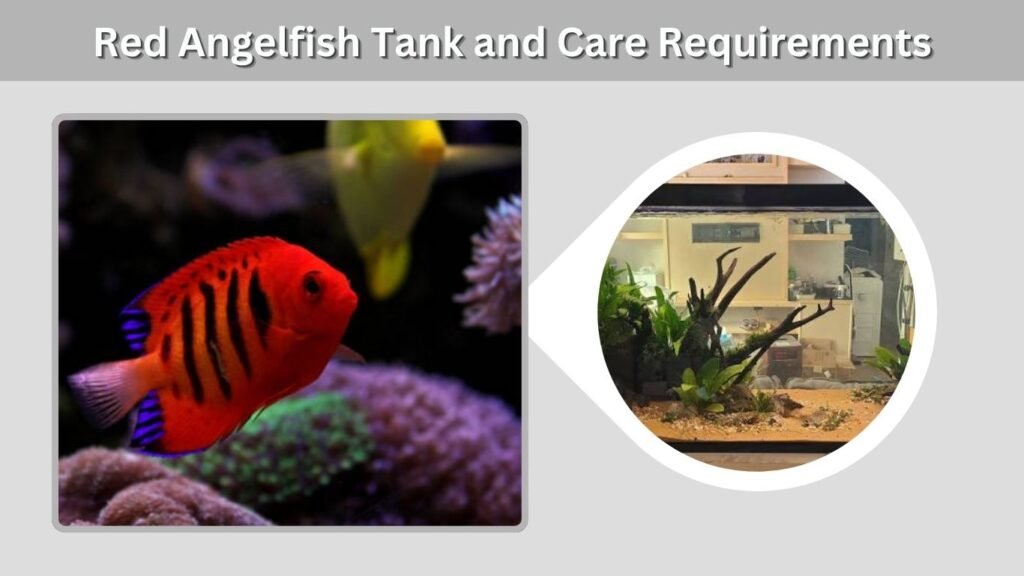
Although young angelfish are small, adults need considerable vertical swimming room. A tall aquarium is better than a shallow tank. One established care guide recommends 55 gallons or more for full-grown angelfish, particularly when maintaining several fish or a community setup.
Water and Aquarium Setup
A suitable setup should include:
- Warm, stable water
- Effective biological and mechanical filtration
- Gentle or moderate water movement
- Tall plants and vertical driftwood
- Open swimming areas
- A secure aquarium lid
- Regular water testing and partial changes
Captive-raised angelfish tolerate a range of conditions, but sudden changes are stressful. A commonly recommended temperature range is approximately 78–84°F, with a slightly acidic to slightly alkaline pH.
Diet
Red angelfish are omnivorous. A varied diet may include quality flakes or pellets, frozen brine shrimp, mysis shrimp, bloodworms, and other appropriately sized foods.
Feed modest portions once or twice daily rather than providing excessive food. Overfeeding increases waste, which can overload the biological filter and raise ammonia levels.
Red Angelfish Tank Mates
Angelfish are often peaceful in community aquariums, but they are cichlids and may become territorial when pairing or guarding eggs. They can also eat sufficiently small fish. Suitable companions generally include similarly sized, nonaggressive fish that do not nip long fins.
Avoid housing them with:
- Very small fish that could be swallowed
- Persistent fin-nipping species
- Highly aggressive cichlids
- Fish requiring substantially cooler water
- Crowded groups without enough territories
Can Angelfish Live With a Red-Tail Shark?
It may work in a spacious, carefully arranged aquarium, but the combination is not reliably peaceful. Red-tail sharks become territorial as they mature, while breeding angelfish may also defend an area.
Provide caves for the shark, tall cover for the angelfish, and enough open space to prevent either fish from controlling the entire aquarium. Be prepared to separate them if chasing or fin damage continues.
Why Does an Angelfish Have Red Eyes or Gills?
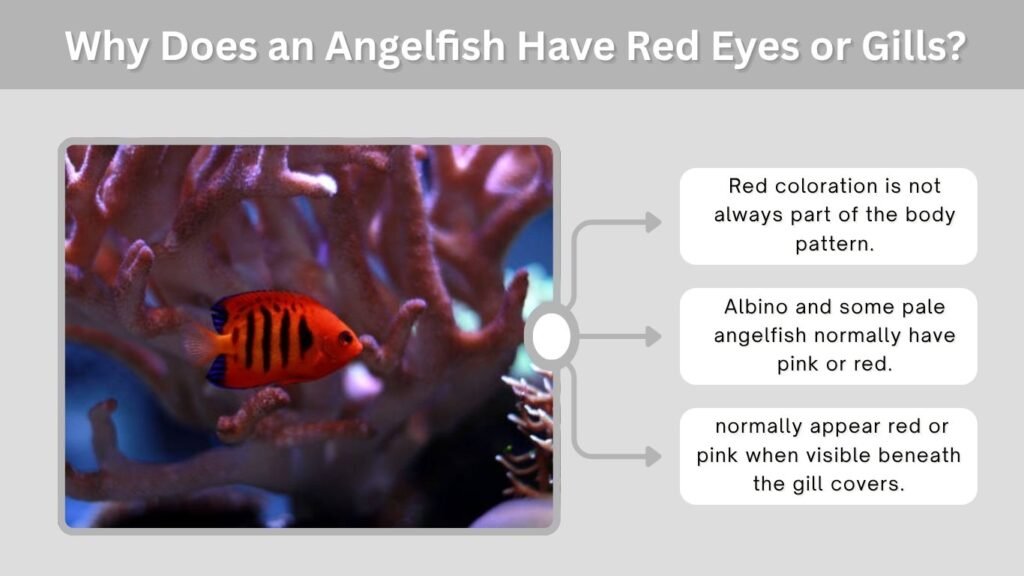
Red coloration is not always part of the body pattern. The location and timing of the redness help determine whether it is natural or concerning.
Red Eyes
Albino and some pale angelfish normally have pink or red-looking eyes because they possess less dark pigment. This is inherited and does not require treatment.
Redness that appears suddenly, particularly with swelling, cloudiness, injury, or abnormal swimming, should not be assumed to be a normal color trait. Check water quality and isolate the fish if tank mates are attacking it.
Red Gills
Fish gills naturally contain many blood vessels and normally appear red or pink when visible beneath the gill covers. Persistent flared gills, rapid breathing, surface gasping, swelling, or unusually exposed red tissue may indicate irritation.
Ammonia can damage gill tissue, while infections and other environmental problems can also produce gill disorders. Test ammonia, nitrite, pH, temperature, and oxygen whenever several fish develop breathing problems.
Red Spots or Streaks
Stable red markings may simply be part of the fish’s variety. New streaks, ulcers, bleeding spots, raised areas, or rapidly spreading discoloration are more concerning.
Do not medicate based only on color. Correct poor water conditions first and seek help from an aquatic veterinarian or experienced fish-health professional when lesions progress.
Freshwater vs Saltwater Red Angelfish
Not every red angelfish is a freshwater Pterophyllum. The flame angelfish, Centropyge loriculus, is a small orange-red marine species with dark side bars and blue-edged fins. It requires a saltwater reef-style environment and cannot live with freshwater angelfish.
A Red Sea regal angelfish is also a marine fish. “Red Sea” refers to part of its geographic range rather than an entirely red body color. Regal angelfish belong to the marine family Pomacanthidae and require specialized saltwater care.
FAQs
Are red angelfish naturally occurring?
Some wild angelfish develop reddish areas, particularly around the upper back or shoulder. However, nearly solid-red, red koi, red devil, and fluorescent varieties are largely the result of captive selection or specialized breeding.
How big does a red devil angelfish get?
A red devil angelfish generally reaches the same adult dimensions as other domestic Pterophyllum scalare. Its tall fins make aquarium height especially important, even when its body length appears moderate.
Is a Starfire Red angelfish a freshwater fish?
Yes. The Starfire Red GloFish angelfish is a freshwater angelfish. It requires a heated, filtered freshwater aquarium and should never be placed in saltwater. Its fluorescence appears strongest under suitable blue lighting.
Why is my red angelfish losing color?
Color may fade because of stress, poor water quality, unsuitable lighting, bullying, illness, or normal changes in age and mood. Test the water and observe appetite, breathing, fins, waste, and behavior before using medication.
Are red angelfish aggressive?
They are usually manageable community fish but can become territorial toward other angelfish, particularly when forming pairs or spawning. Adequate space, visual barriers, and compatible tank mates reduce conflict but cannot eliminate it completely.